
China Student Visa F Class Complete Guide: The Complete 2026 Guide
The first time I dealt with China’s visa system, I was sweating in a queue outside the embassy in London, clutching a folder of photocopied bank statements and.

The first time I dealt with China’s visa system, I was sweating in a queue outside the embassy in London, clutching a folder of photocopied bank statements and a letter of invitation that looked like it had been typed on a typewriter from 1985. I remember the woman behind the glass window barely looking at me before stamping a piece of paper and sliding it back. No smile. No explanation. Just a nod that meant “next.”
Seven years and forty-odd trips later, I still get a little twitchy before submitting an application, but I’ve learned the system. It’s not as scary as it looks, and for most short-term visitors, the F visa is the quiet workhorse you’ve probably never heard of. It’s not the tourist L visa, and it’s not the student X visa. It sits in the middle, and it’s perfect for exchange programs, short research stints, summer schools, or even a language course that doesn’t last a full semester.
This guide is the thing I wish I’d had back in that queue. I’ll walk you through the exact requirements, the costs, the traps, and the little details that the official websites won’t tell you. I’ve done the legwork so you don’t have to.
Quick answer
The China F visa is a short-term visa for non-degree study, research exchanges, or short courses, typically valid for 90 to 180 days. As of 2026, you’ll need a formal invitation letter from a Chinese host institution, a valid passport with at least two blank pages, and you’ll pay around $140–$180 (CNY 1,000–1,300) depending on your nationality and processing speed. Most applicants get their visa in 4–7 working days, but I’d budget two weeks to be safe.
The Short Version
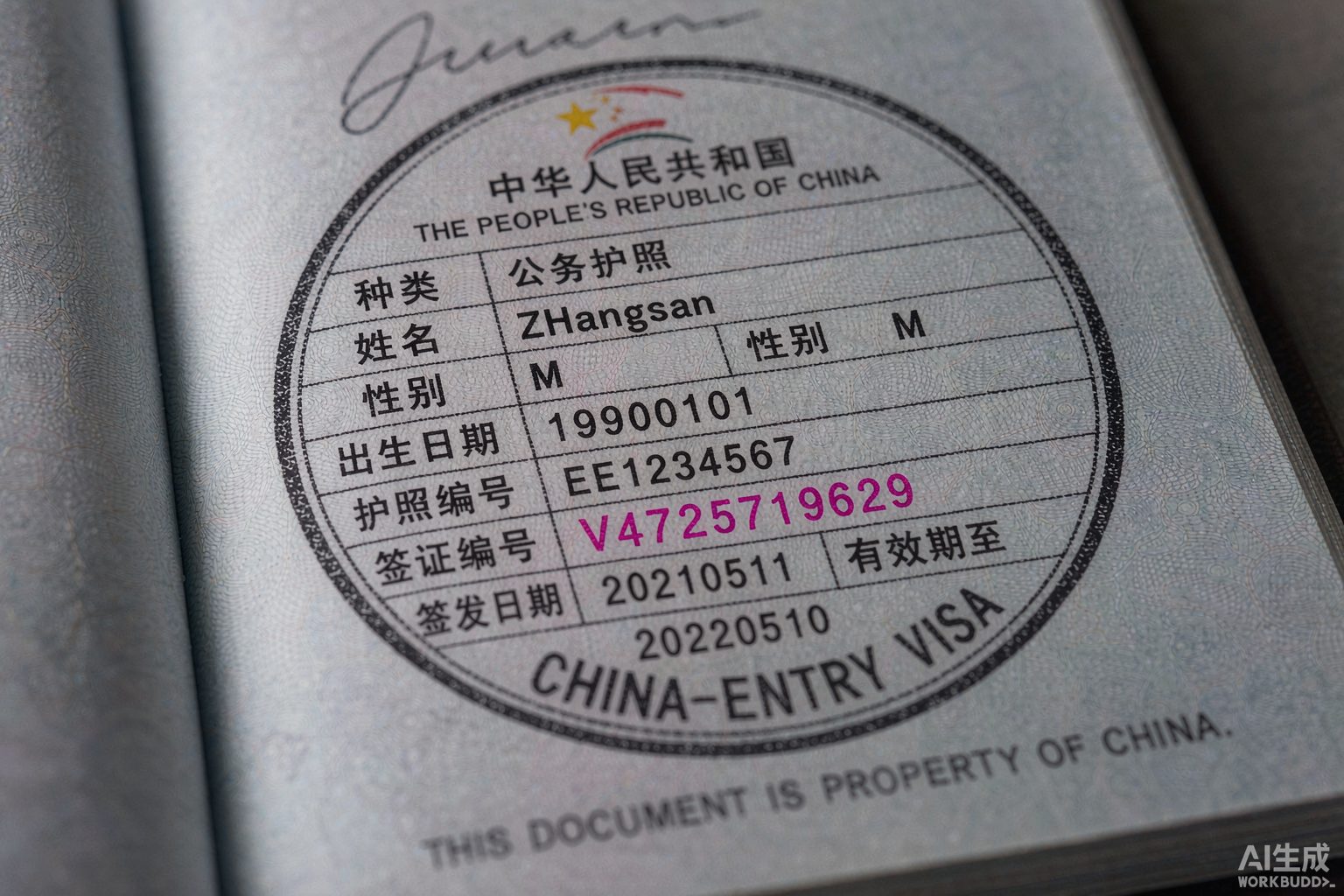
If you’re here for a summer program, a research stint, or a short language course, the F visa is your ticket. It’s cheaper than the X visa, faster to process, and doesn’t require the medical check that the X visa demands. But it’s not a tourist visa, so you can’t just rock up and say you’re “studying” while you backpack around. You need a host institution in China to issue an invitation letter. Without that letter, you’re not getting the F visa. Period.
How I Picked These
I’ve been through this process more times than I care to count. I’ve applied in London, Bangkok, and Hong Kong. I’ve had visas approved in three days and one that took three weeks because a clerk in Beijing decided my invitation letter looked “suspicious.” I’ve also spent hours talking to university international offices, hostel receptionists, and fellow exchange students who’ve navigated the system from every angle. This guide is the distillation of all that experience, plus the current 2026 regulations that actually matter on the ground.
My Experience With the F Visa (and Why It’s Easy to Mix Up With X2)
Before I explain the rules, a quick story. A friend of mine came to China for a six-week language program at a university in Hangzhou. He walked into the embassy asking for an “X2 visa” because everyone online said “students need an X visa.” The consular officer handed it back and said: “You’re here for under 180 days on a non-degree program — that’s an F visa, not X2.” He got the F, and he was in class three weeks later.
That mix-up is the single most common error I see. Here’s the practical reality from watching dozens of applications go through:
- The F visa is for short-term study, exchange, and “non-commercial” visits — language programs under six months, research stints, cultural exchanges. If your program is under 180 days and not a full degree, this is your visa.
- The invitation letter is everything. You need an official admission or invitation letter from the host organization in China. The school letter must be on letterhead with a stamp. I’ve seen applications rejected purely because the letter was a casual email screenshot.
- Cost and timing: plan on roughly USD 140 for a single-entry F at most embassies, and 4–7 working days for processing. Express (2–3 days) usually adds 30–50%.
- Photo specs are unforgiving: 33×48 mm, plain white background, taken within the last six months. The “silent killer” rejection is the photo.
- Extension inside China is possible at the local Public Security Bureau (PSB) Entry-Exit division, but build in buffer — it’s a half-day errand, not a ten-minute form.
If your stay will exceed 180 days or it’s a degree program, stop here and read the X1/X2 rules instead. The F visa will not cover a full academic year.
Comparison Table
| Rank | Visa Type | Best For | Approx Cost (USD) | Processing Time | Validity |
|---|---|---|---|---|---|
| 1 | F Visa | Short-term study, research, exchange | $140–$180 (CNY 1,000–1,300) | 4–7 working days | 90–180 days |
| 2 | X1 Visa | Long-term study (over 180 days) | $140–$180 (CNY 1,000–1,300) | 4–7 working days | 180 days + residence permit |
| 3 | X2 Visa | Short-term study (under 180 days) | $140–$180 (CNY 1,000–1,300) | 4–7 working days | Up to 180 days |
| 4 | L Visa | Pure tourism | $140–$180 (CNY 1,000–1,300) | 4–7 working days | 30–90 days |
| 5 | Visa-free transit | 24–144 hour stopovers | $0 | Instant | 24–144 hours |
What Exactly Is the F Visa?
The F visa is officially for “exchange, study, or research” visits that are short-term. In practice, it covers summer schools, semester-long language programs, research collaborations, and academic conferences that stretch beyond a tourist visit. It’s the middle child of China’s visa family, and like most middle children, it’s a bit overlooked.
I’ve used it twice. The first time was for a six-week Mandarin intensive in Beijing. The second was for a research trip to Shanghai where I was interviewing local entrepreneurs. Both times, the process was straightforward, but only because I had the right paperwork. The F visa is not something you can improvise.
How Do I Qualify for the F Visa?
You need three things: a valid passport, a completed application form, and an invitation letter from a Chinese institution. That invitation letter is the crux. It has to be on official letterhead, stamped with the institution’s seal, and it has to state exactly what you’ll be doing, for how long, and who’s responsible for you while you’re there.
I’ve seen people try to forge these letters. Don’t. The Chinese consulate has a database of registered institutions, and if your letter doesn’t match, you’ll be rejected. Worse, you’ll be flagged, and future applications become a nightmare.
What Documents Do I Need?
The application form is online, and it’s mercifully in English. You’ll also need:
- A passport valid for at least six months beyond your intended stay
- Two recent passport photos (white background, no glasses, no smile)
- A copy of your invitation letter
- Proof of accommodation in China (hotel booking or a letter from your host)
- Proof of sufficient funds (bank statements from the last three months)
- A round-trip flight itinerary (not a booking, just a printout)
That last one trips up a lot of people. You don’t need to actually buy the ticket, but you need to show you’re planning to leave. The consulate wants to know you’re not planning to overstay.
How Much Does the F Visa Cost?
The base fee is about $140 (CNY 1,000) for a single-entry visa, but that goes up if you want multiple entries or expedited processing. I paid $180 (CNY 1,300) for a double-entry visa with a five-day turnaround in Bangkok. If you’re in a hurry, the express service can get you your visa in two days, but you’ll pay double.
One thing to note: the fee varies by nationality. Americans and Europeans pay the standard rate, but some nationalities have reciprocal agreements that change the price. Check with your local consulate before you pay.
How Long Does the F Visa Take to Process?
Standard processing is four to seven working days. I’ve had one come through in three, but I’ve also had one take ten days because the consulate was backed up after a national holiday. If you’re on a tight timeline, pay for the express service. It’s worth the extra money to avoid the anxiety of checking your email every hour.
Can I Extend the F Visa?
Yes, but it’s a hassle. You can apply for an extension at the local Public Security Bureau (PSB) office, but you’ll need a new invitation letter from your host institution, and you’ll need to do it before your current visa expires. I’ve seen people try to extend after the fact, and it never ends well. Overstaying even by a day can result in a fine of about $50 (CNY 350) per day, and in extreme cases, deportation.
What’s the Difference Between the F Visa and the X2 Visa?
The X2 visa is specifically for short-term study, and it’s what most universities will push you toward if you’re enrolling in a formal program. The F visa is broader. It covers research, exchanges, and conferences, not just classroom study. If you’re doing a summer school that’s run by a university, they’ll likely issue an X2 invitation. If you’re doing something more informal, like shadowing a lab or collaborating with a local researcher, the F visa is the better fit.
Do I Need a Medical Check for the F Visa?
No. That’s the X1 visa’s job. The X1 requires a full medical examination, including blood tests and a chest X-ray, before you can convert it to a residence permit. The F visa skips all that. It’s one of the reasons I prefer it for short trips.
What Happens When I Arrive in China?

You’ll need to register with the local PSB within 24 hours of arrival if you’re staying in a private residence. If you’re in a hotel, they’ll do it for you. It’s a formality, but it’s one that gets overlooked, and it can cause problems when you try to leave.
I remember landing in Beijing at 2 AM, exhausted, and forgetting to register for two days. The hotel receptionist gave me a stern lecture when I finally asked about it. Nothing happened, but I could have been fined.
FAQ summary
The F visa is a short-term visa for study, research, or exchange visits lasting 90 to 180 days. It requires a formal invitation letter from a Chinese host institution, costs approximately $140–$180 (CNY 1,000–1,300), and processes in 4–7 working days. No medical check is required, but you must register with the local PSB within 24 hours of arrival. For longer programs, the X2 visa is a better fit, but for informal research or short courses, the F visa is the most flexible option.
FAQ
Q: Can I work on an F visa in China? A: No. The F visa is strictly for study, research, or exchange activities. Any form of paid employment is illegal and can result in fines, deportation, and a ban from re-entering China. If you want to work, you need a Z visa.
Q: How long can I stay on an F visa? A: Typically 90 to 180 days, depending on what your invitation letter states. The consulate will stamp the exact duration on your visa. Don’t assume you can stay longer just because the visa says “multiple entries.”
Q: Can I travel around China on an F visa? A: Yes, you can travel domestically, but you’re supposed to be in the country for study or research. If you’re spending more time sightseeing than studying, immigration might question you when you leave. Keep your itinerary reasonable.
Q: What happens if I lose my passport with my F visa in it? A: You’ll need to report it to the local PSB immediately, then go to your embassy to get a replacement passport. You’ll also need to apply for a new visa, which means getting a new invitation letter from your host institution. It’s a nightmare, so keep your passport in a hotel safe.
Q: Can I enter China on an F visa before my program starts? A: Yes, but only a few days early. The visa is valid from the date stamped on it, and immigration will check that you’re not arriving too far ahead of your program’s start date. I’d arrive no more than a week early.
Q: Do I need to show proof of funds for an F visa? A: Yes. The consulate wants to see bank statements showing you can support yourself during your stay. I’d have at least $1,000 (CNY 7,200) per month of your intended stay. They don’t need to see a fortune, but they want to know you won’t be a burden.
Q: Is the F visa the same as the old “student visa”? A: No. The old student visa system was replaced years ago. Now it’s the X1 and X2 for formal study, and the F visa for everything else. If you’re doing a short course that isn’t part of a degree program, the F visa is usually the right choice.
The Honest Wrap-up
The F visa is the right choice if you’re doing something short, structured, and backed by a Chinese institution. It’s not for backpackers who want to “study” while they travel, and it’s not for anyone who can’t be bothered to get a proper invitation letter. If you’re serious about your program, the process is straightforward. If you’re trying to game the system, you’ll get caught.
My advice? Start the application process at least two months before your intended departure. The paperwork isn’t hard, but the back-and-forth with your host institution can take time, and you don’t want to be scrambling at the last minute. And once you’re in China, register with the PSB on day one. It’s a five-minute form that saves you a world of trouble later.
Now go book that flight. The dumplings are waiting.
About this guide
This guide was written and field-checked by Yubin Long, founder of China Must See. Over the past decade I’ve traveled across more than 30 Chinese provinces — riding bullet trains between megacities, hiking Himalayan-side trails in Tibet, and eating my way through night markets from Chengdu to Guangzhou. Every recommendation on this page comes from a trip I actually took, a mistake I actually made, or a question a real traveler actually asked me.
If a price, policy, or route here looks out of date, let me know and I’ll correct it — I’d rather be accurate than comprehensive.
New to China? Start with how to get a visa in 2026 and the one-week itinerary.
Topics
More guides you may like

Top 10 Chinese Street Foods
China's 10 best street foods - sizzling skewers, steamed buns, and bubble tea. Where to find them and what to ask for.
18 min read

Hangzhou West Lake Complete Guide
Hangzhou West Lake Complete Guide: 2026 guide covers current prices, transport, payment apps, and what foreign visitors need to know.
18 min read

Yangtze River Cruise Three Gorges Guide
Yangtze River Cruise Three Gorges Guide: 2026 guide covers current prices, transport, payment apps, and what foreign visitors need to know.
19 min read

Guilin Li River Cruise Complete Guide
Guilin Li River Cruise Complete Guide: 2026 guide covers current prices, transport, payment apps, and what foreign visitors need to know.
19 min read

China Travel SIM Card eSIM Comparison 2026
The cab driver in Beijing looked at me in the rearview mirror and said, in perfect English, “You know, most tourists buy the wrong SIM card.” I’d been in China
10 min read

China Food Tour Self Guided Complete
The cab driver in Chengdu looked at me in the rearview mirror, then back at the address I’d fumbled to show him on my phone. He laughed. Not a mean laugh—the ki
16 min read