
Ali Tibet Wild West: The Complete 2026 Guide
TODO: Extract from article (100-160 chars)
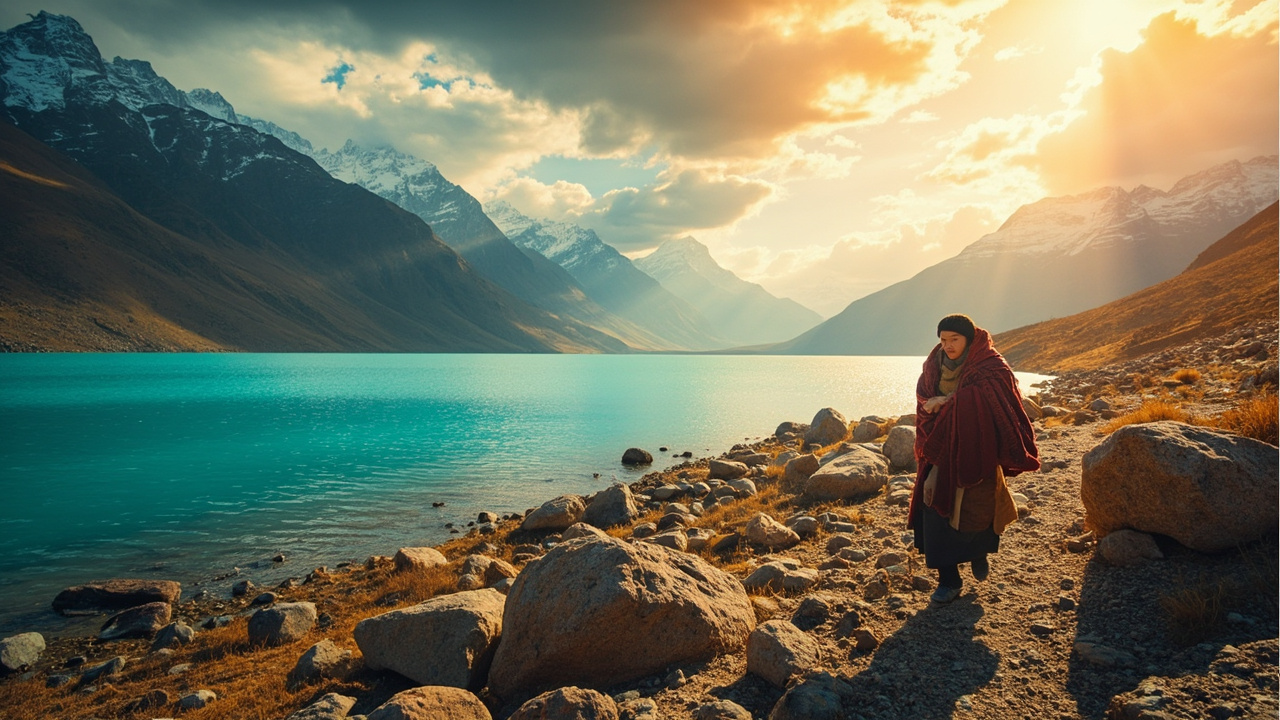
The cab driver in Lhasa looked at me in the rearview mirror and said, in the kind of English that gets the job done, “You go Ali? Why?” He wasn’t being rude. He was genuinely confused. Most tourists fly to Lhasa, see the Potala Palace, maybe drive to Namtso Lake, and fly home. The idea of heading further west, into the empty quarter of Tibet, seemed as strange to him as booking a vacation to the moon.
I get it. Ali Prefecture is not a vacation. It’s a pilgrimage, a geological fever dream, and a logistical puzzle all rolled into one. This is the Tibet of turquoise lakes that look like spilled paint, of ruined kingdoms crumbling into the desert, of the highest passes on Earth where the wind sounds like a jet engine. It’s where the Himalayas meet the Karakoram, and where the landscape is so vast it makes the Grand Canyon feel like a backyard ditch.
This guide is the one I wish I had before my first trip. It’s built on two separate journeys, dozens of conversations with truck drivers, monks, and homestay owners, and a lot of trial and error. I’ll tell you what’s worth the bone-rattling drives, what you can skip, and exactly how to pull it off without a tour company bleeding your wallet dry.
Quick answer
Ali Tibet (“Western Tibet”) is the wild, high-altitude region of the Tibet Autonomous Region, famous for its superlative lakes, the ruined Guge Kingdom, and the sacred Mount Kailash. For international tourists in 2026, the easiest way to visit is with a licensed tour operator due to permit restrictions, with costs ranging from $180 to $350 per day (CNY 1,300-2,500) all-inclusive. The best season is May through October, and you must have a Tibet Travel Permit plus an Ali Region permit, which your tour company arranges.
The Short Version
If you only have 90 seconds, here’s the deal. Ali is not a side trip. It’s a 10-14 day commitment that starts and ends in Lhasa, involving 3,000+ kilometers of driving on roads that range from perfect asphalt to washboard gravel. The highlights are Mount Kailash, Lake Manasarovar, the Guge Kingdom ruins, and the otherworldly landscapes of Tsho Ngonpo and the Darchen plains. It’s expensive, it’s physically demanding, and the altitude will humble you. But it’s also the most profound landscape I’ve ever experienced. If you’re short on time or money, do a shorter loop from Lhasa to Shigatse and Everest Base Camp instead. If you want the real deal, read on.
How I Picked These
I’ve been based in Beijing for seven years and have made two dedicated trips to Ali. The first was a rushed 8-day loop that left me breathless (literally and figuratively). The second was a more relaxed 16-day journey where I spent extra time in Darchen and drove the northern route back via Gerze. I’ve also spoken with dozens of other travelers, a few overland truck drivers who know every pothole, and a Tibetan guide named Tenzin who grew up in a village near the Guge Kingdom. This list reflects what I’d do again, and what I’d skip. I’ve left out places like the far western Pangong Tso (the Chinese side) because the logistics are a nightmare for the payoff, and I’ve included some spots most guidebooks miss.
Comparison Table
| Rank | Place | Best For | Approx Cost (USD) | Time Needed | When to Go |
|---|---|---|---|---|---|
| 1 | Mount Kailash & Lake Manasarovar | Pilgrimage, raw nature, spiritual energy | $0 (permit needed) | 3-4 days | May-Jun, Sep-Oct |
| 2 | Guge Kingdom Ruins | History, archaeology, desert scenery | $10 (CNY 70) | Half day | May-Oct |
| 3 | Tsho Ngonpo (Dark Blue Lake) | Photography, solitude, geology | $0 | 2-3 hours | Jun-Sep |
| 4 | Zanda Earth Forest | Unique landscapes, sunset views | $5 (CNY 35) | 2-3 hours | May-Oct |
| 5 | Lake Manasarovar | Sacred lake, reflection, camping | $0 | 1-2 days | May-Oct |
| 6 | Darchen Town | Base camp for Kailash, local culture | $0 (hotels extra) | 1 day | May-Oct |
| 7 | Tirthapuri Hot Springs | Relaxation, local pilgrimage | $3 (CNY 20) | 2-3 hours | Jun-Sep |
| 8 | Raka Monastery | Off-the-beaten-path, ancient art | $0 | 1-2 hours | May-Oct |
| 9 | The Northern Route (Gerze to Lhasa) | Vast landscapes, wildlife, true wilderness | $0 (fuel costs) | 2-3 days | Jun-Sep |
| 10 | Mount Everest Base Camp (detour) | Iconic views, bucket-list check | $28 (CNY 200) | 1-2 days | Apr-May, Sep-Oct |
Mount Kailash —The Center of the World
I remember standing at the Dolma La pass, the highest point of the kora (circumambulation) at 5,630 meters, watching a group of Tibetan pilgrims prostrate themselves on the frozen ground. They’d been walking for days. I’d been walking for two. The wind was howling, my lungs were burning, and I felt an overwhelming sense of smallness. That’s the point.
Kailash is sacred to four religions - Hindu, Buddhist, Jain, and Bon - and it’s not just a mountain. It’s a mandala, a cosmic axis, a place where the physical and spiritual worlds blur. The 52-kilometer kora around the mountain is the journey of a lifetime for many. You don’t need to be religious to feel the weight of the place. The sheer scale of the landscape, the silence, the devotion of the pilgrims - it gets under your skin.
Location: Darchen Township, Burang County, Ngari Prefecture Entry fee: Free (but you need the Ali Region permit, arranged by your tour operator) Opening hours: The kora is open year-round, but the Dolma La pass is often blocked by snow from November to April How to get there: From Lhasa, it’s a 2-3 day drive via Shigatse and Saga (about 1,200 km). Most tours break this up with overnight stops. Alternatively, fly from Lhasa to Ngari Gunsa Airport (NGQ), then drive 3-4 hours to Darchen When to visit: Late May to early June, or September to October. Avoid the July-August monsoon season when the trails turn to mud Insider tips:
- Rent a horse or yak for the kora if you’re not acclimatized. It costs about $50-80 (CNY 350-550) and saves your knees on the descent
- Start the kora at 4 AM to avoid the afternoon winds on the pass
- The guesthouse at Dirapuk (the start of the kora) is basic - bring your own sleeping bag
- Drink 4-5 liters of water a day. The altitude will dehydrate you faster than you think
- Don’t skip the side trip to the “Sky Burial” site near the start of the kora. It’s a sobering glimpse into Tibetan culture
I met a German woman named Katrin at the Dirapuk guesthouse who was doing the kora for the third time. She told me, “The first time is for the photos. The second time is for the experience. The third time is for yourself.” I thought she was being dramatic. Now I get it.
Guge Kingdom Ruins —A City of Ghosts
The wind whistles through the empty windows of the Guge Kingdom ruins like the place is trying to speak. And in a way, it is. This was once the capital of a powerful kingdom that ruled western Tibet from the 10th to the 17th century. At its peak, it was a center of Buddhist learning and art. Then, in 1630, it was invaded and destroyed. The kingdom vanished, leaving behind this honeycomb of caves, temples, and palaces carved into a massive earthen cliff.
Walking through the ruins is like stepping into an Indiana Jones movie. You climb narrow staircases, squeeze through tunnels, and emerge into vast halls decorated with fading murals that are still vibrant after 400 years. The Red Temple and White Temple are the highlights, with their intricate paintings of Buddhist deities and scenes of daily life. It’s haunting, beautiful, and utterly unlike anything else in Tibet.
Location: Zanda County, about 18 km from the town of Zanda Entry fee: $10 (CNY 70) for the main ruins, plus $3 (CNY 20) for the museum Opening hours: 9 AM to 6 PM, daily How to get there: From Darchen, it’s a 4-5 hour drive south through the stunning Zanda Earth Forest. Your tour will likely include this as a day trip When to visit: May to October. The site is dusty and exposed, so go early morning or late afternoon to avoid the heat Insider tips:
- Hire a local guide at the entrance for about $15 (CNY 100). They’ll show you the hidden caves most tourists miss
- The climb to the top of the cliff is steep and unshaded. Bring water and a hat
- The murals are fragile - don’t touch them, and be careful with flash photography (it’s usually banned)
- Combine this with a visit to the nearby Tsaparang village, where you can see how locals live in the shadow of the ruins
- The sunset from the top of the cliff is spectacular - the entire valley glows orange
I made the mistake of trying to climb to the top of the ruins in the midday sun. I was gasping for air within ten minutes, and a young Tibetan monk who was also visiting laughed at me and offered me a sip of his sweet tea. Lesson learned: respect the altitude.
Tsho Ngonpo —The Lake That Shouldn’t Exist
I’ve seen a lot of lakes. This one made me question my eyes. Tsho Ngonpo, which translates to “Dark Blue Lake,” is a body of water so intensely colored it looks like someone poured a bottle of blue ink into the desert. It’s not just blue - it’s electric, surreal, almost radioactive. The color comes from the high mineral content in the water, and on a sunny day, it’s almost too bright to look at.
The lake sits at 4,500 meters in the middle of nowhere, surrounded by barren hills and vast plains. There are no villages nearby, no tourist facilities, just you and this impossible blue expanse. It’s the kind of place that makes you feel like you’ve discovered something no one else knows about, even though it’s become increasingly popular with Chinese tourists on self-drive trips.
Location: Approximately 100 km northwest of Gerze County, on the road between Gerze and Shiquanhe Entry fee: Free Opening hours: Always open (it’s a lake) How to get there: This is a stop on the northern route between Gerze and Shiquanhe. You’ll need a 4x4 vehicle and a driver who knows the roads When to visit: June to September, when the weather is stable and the lake is at its most vivid Insider tips:
- The best views are from the small hill on the western shore. It’s a 10-minute walk from the road
- Bring a polarizing filter for your camera. It makes the blue even more intense
- There’s a small dirt road that loops around the lake. It’s rough, but the views from the far side are worth the bumpy ride
- Don’t swim in it. The water is freezing and the mineral content is high enough to irritate your skin
- If you’re lucky, you’ll spot wild donkeys (kiang) grazing on the plains nearby
A truck driver named Phurbu told me that the lake is so sacred to locals that they won’t even fish in it. “The water is too pure,” he said. “It belongs to the gods.” I’m not sure about the theology, but I believe him on the purity.
Zanda Earth Forest —A Martian Landscape
If you’ve ever wondered what it would be like to walk on Mars, the Zanda Earth Forest is your answer. This is a vast expanse of eroded mudstone formations that look like a city of giant termite mounds, or a surrealist painting of spires, pillars, and canyons. The colors range from deep red to pale yellow to gray, and the shapes are so bizarre they seem impossible.
The “forest” is actually the result of millions of years of erosion, carving the soft sedimentary rock into these otherworldly forms. It’s most dramatic at sunset, when the low angle of the sun turns the entire landscape into a glowing, fiery spectacle. It’s also the setting for the Guge Kingdom ruins, which are carved into the cliffs at the edge of this formation.
Location: Zanda County, along the Sutlej River valley Entry fee: $5 (CNY 35) for the main viewing platform Opening hours: Sunrise to sunset How to get there: The Zanda Earth Forest is on the road between Darchen and the Guge Kingdom ruins. Your tour will pass through it When to visit: Sunset is the magic hour. The colors are most intense in the last 30 minutes before the sun dips below the horizon Insider tips:
- The main viewing platform is worth the small fee, but the best views are from the dirt roads that wind through the formations
- If you have a drone, this is one of the few places in Tibet where you might get away with flying it (check with your guide first)
- The road through the forest is rough. Hold on to your lunch
- Bring a wide-angle lens. The scale of the formations is hard to capture with a phone
- Look for the small caves in the cliffs - some of them were used as meditation retreats by monks centuries ago
I sat on the edge of a cliff watching the sunset paint the formations in shades of orange and purple. A Tibetan shepherd boy walked by with his flock, completely unimpressed by the spectacle. To him, this was just home. To me, it was a religious experience.
Lake Manasarovar —The Sacred Waters
The first time I saw Lake Manasarovar, I was coming over a pass and the lake appeared below me like a giant mirror reflecting the sky. It’s the highest freshwater lake in the world at 4,590 meters, and it’s sacred to Hindus, Buddhists, and Jains. According to legend, bathing in its waters cleanses all sins. I didn’t bathe - the water is freezing - but I did dip my toes in, and I felt something. Maybe it was the altitude. Maybe it was the place. Either way, it was powerful.
The lake is vast, stretching over 90 kilometers in circumference, and it’s surrounded by snow-capped peaks, including the towering Gurla Mandhata. The water is so clear you can see the bottom from the shore, and on calm days, the reflections of the mountains are perfect. It’s a place of profound stillness, broken only by the occasional pilgrim performing rituals on the shore.
Location: Burang County, about 30 km south of Darchen Entry fee: Free Opening hours: Always open How to get there: From Darchen, it’s a 30-40 minute drive. Most tours include a visit as part of the Kailash circuit When to visit: May to October. The winter months are brutally cold and the lake can freeze Insider tips:
- The best spot for reflection photos is the small pier near the Chiu Monastery, on the western shore
- If you’re feeling adventurous, you can do a partial kora (circumambulation) of the lake. It takes 2-3 days and requires camping
- The guesthouse at the lake is basic but has hot water. Book ahead in peak season
- Bring a thermos of hot tea. The wind off the lake is biting even in summer
- The sunrise over the lake, with Kailash in the background, is one of the most beautiful sights I’ve ever seen
I met a group of Indian pilgrims who had traveled for weeks to reach the lake. They were singing and chanting, tears streaming down their faces. I didn’t share their faith, but I felt their joy. It was impossible not to.
Darchen Town —The Gateway to the Sacred
Darchen is not a beautiful town. It’s a dusty collection of guesthouses, restaurants, and shops that exists for one purpose: to serve pilgrims heading to Mount Kailash. But it’s also the most fascinating place in Ali, because it’s where the world comes together. You’ll see Tibetan nomads in traditional dress, Indian sadhus with matted hair, Western backpackers with trekking poles, and Chinese tourists with selfie sticks, all converging on this tiny outpost.
The town has grown significantly in recent years, with new hotels and restaurants springing up. But it still has a frontier feel, like a Wild West town in the Himalayas. The main street is lined with shops selling prayer flags, yak butter, and trekking gear, and the air is filled with the smell of diesel and incense.
Location: Burang County, at the foot of Mount Kailash Entry fee: Free Opening hours: Always open How to get there: Darchen is the main hub for the Kailash region. Most tours start and end here When to visit: May to October, when the pilgrimage season is in full swing Insider tips:
- The best restaurant in town is the Lhasa Restaurant, which serves decent Tibetan and Chinese food. The momos (dumplings) are excellent
- Stock up on supplies here before starting the kora. The shops are well-stocked, but prices are higher than in Lhasa
- The Darchen Guesthouse is the most popular place to stay, but the newer hotels on the outskirts are more comfortable
- If you need to change money, there’s a small bank in town, but it’s often out of cash. Bring enough from Lhasa
- The town is at 4,575 meters. Take it easy for the first day to acclimatize before attempting the kora
I spent an evening at a rooftop restaurant in Darchen, watching the sunset paint Kailash in shades of pink and gold. A group of pilgrims from Nepal were singing songs in the corner, and the owner of the restaurant joined in. It was one of those moments where everything feels right with the world.
Tirthapuri Hot Springs —Soak Away the Dust
After days of driving on dusty roads and sleeping in basic guesthouses, the Tirthapuri Hot Springs feel like a miracle. This is a small complex of natural hot springs, sacred to both Buddhists and Hindus, located about 2 hours from Darchen. The water is hot, mineral-rich, and believed to have healing properties. Locals come here to soak, wash, and pray.
The setting is beautiful - the springs are in a narrow valley, with a small monastery perched on the cliffs above. There are several pools of varying temperatures, and the main pool is large enough to swim in. It’s not a fancy spa - it’s a functional, sacred place. But after a week of roughing it, a soak in these waters is pure bliss.
Location: Approximately 70 km southwest of Darchen, near the village of Tirthapuri Entry fee: $3 (CNY 20) for the main pool Opening hours: Sunrise to sunset How to get there: From Darchen, it’s a 2-hour drive on a rough road. Your tour can arrange a day trip When to visit: June to September, when the weather is warm enough to enjoy the outdoor pools Insider tips:
- Bring a swimsuit and a towel. There are changing rooms, but they’re basic
- The hottest pool is at the top of the complex. The water is almost scalding, so ease in slowly
- Locals believe the water is sacred, so be respectful. Don’t splash or make a lot of noise
- The monastery above the springs is worth a visit. It’s small but has some beautiful murals
- Combine this with a visit to the nearby ruins of the Tirthapuri Monastery, which was destroyed in the 1960s
I soaked in the hot springs for an hour, watching the steam rise into the cold mountain air. A Tibetan woman next to me was washing her hair, singing softly to herself. It was the most relaxed I’d felt in weeks.
Raka Monastery —A Hidden Gem
Most tourists don’t make it to Raka Monastery. It’s off the main route, tucked away in a remote valley, and it requires a detour that most tour companies won’t bother with. But if you’re willing to make the effort, you’ll be rewarded with one of the most atmospheric monasteries in Tibet.
Raka was founded in the 11th century and has been a center of the Sakya school of Buddhism ever since. It’s not grand or ornate like the big monasteries in Lhasa. Instead, it’s a collection of whitewashed buildings clustered around a central courtyard, with a small temple that houses some stunning ancient murals. The monks here are friendly and welcoming, and they’re used to very few visitors.
Location: Approximately 40 km north of the town of Tsada, in a side valley off the main road Entry fee: Free (donations welcome) Opening hours: Daylight hours How to get there: From Tsada, it’s a 1-2 hour drive on a rough dirt road. You’ll need a 4x4 and a driver who knows the way When to visit: May to October. The road can be impassable in winter Insider tips:
- The monks will happily show you around and explain the history of the monastery. They speak some English
- The murals in the main temple are over 500 years old and remarkably well-preserved. Ask to see the one of the Mandala of the Five Dhyani Buddhas
- There’s a small guesthouse near the monastery if you want to stay overnight. It’s basic but clean
- Bring some small gifts for the monks - snacks, tea, or writing materials are always appreciated
- The views from the monastery roof are spectacular, especially at sunset
I spent an afternoon at Raka, drinking butter tea with a young monk named Tenzin (not the same Tenzin as my guide). He told me he’d been at the monastery since he was 8 years old, and he’d never been to Lhasa. “Maybe one day,” he said, with a smile that suggested he was in no hurry.
The Northern Route —The Real Wild West
If you want to see the true heart of Ali, skip the tourist route and take the northern road from Shiquanhe to Gerze. This is the Ali that most people never see - a vast, empty landscape of rolling plains, snow-capped peaks, and lakes that stretch to the horizon. It’s a 2-3 day drive through some of the most remote terrain on Earth, and it’s absolutely unforgettable.
The road is rough in places, and you’ll go hours without seeing another vehicle. But that’s the point. This is where you’ll see wild donkeys, Tibetan antelope, and maybe even a snow leopard if you’re incredibly lucky. The villages are few and far between, and the people you meet are some of the friendliest I’ve encountered anywhere in the world.
Location: The road between Shiquanhe (the capital of Ali) and Gerze County Entry fee: Free Opening hours: Always open (weather permitting) How to get there: You’ll need a 4x4 vehicle and an experienced driver. Most tour companies can arrange this, but it’s not a standard route When to visit: June to September. The road can be impassable in winter Insider tips:
- Bring extra fuel. There are no gas stations for long stretches
- The guesthouses along the route are basic - expect shared bathrooms and no heating
- Stock up on food and water in Shiquanhe before setting out
- The wildlife is most active at dawn and dusk. Keep your camera ready
- If you see a nomad camp, stop and say hello. They’re incredibly hospitable and will often invite you in for tea
I spent a night at a nomad camp near the village of Yare, sharing dinner with a family of five. They didn’t speak any English, and my Tibetan was limited to “thank you” and “delicious,” but we managed to communicate through smiles and gestures. It was one of the most memorable nights of my life.
Mount Everest Base Camp —The Detour Worth Taking
Okay, this isn’t technically in Ali, but it’s on the way, and it’s worth the detour. If you’re driving from Lhasa to Ali, you’ll pass through Shigatse, and from there, it’s a 4-5 hour drive to Everest Base Camp (EBC). It’s a detour that adds 2-3 days to your trip, but the chance to see the world’s highest mountain up close is something you’ll never forget.
The view of Everest from EBC is different from what you see in photos. It’s not a dramatic peak rising from the jungle - it’s a massive, imposing presence that dominates the skyline, surrounded by other giants like Lhotse and Makalu. The base camp itself is a collection of tents and prayer flags, and the atmosphere is one of quiet reverence.
Location: Tingri County, Shigatse Prefecture Entry fee: $28 (CNY 200) for the park entrance, plus $3 (CNY 20) for the shuttle bus Opening hours: 6 AM to 8 PM How to get there: From Shigatse, drive to the park entrance at the village of Chay, then take the shuttle bus to the base camp (about 1 hour) When to visit: April to May and September to October, when the skies are clearest Insider tips:
- The best views are at sunrise and sunset, when the mountain glows pink and gold
- Stay at the Rongbuk Monastery guesthouse, which is the highest monastery in the world at 5,100 meters
- Bring a warm jacket - it gets cold at night, even in summer
- The altitude is brutal. Take it slow and drink plenty of water
- Don’t expect to see the summit from the base camp. The mountain is so massive it fills the entire view
I woke up at 5 AM to watch the sunrise over Everest. It was -10 degrees Celsius, and my hands were shaking as I tried to take photos. But when the first rays of light hit the summit, I forgot about the cold. It was worth every shiver.
FAQ summary
For international tourists in 2026, visiting Ali Tibet requires a licensed tour operator due to permit restrictions, with all-inclusive costs ranging from $180 to $350 per day. The best time to visit is May through October, and you should plan for at least 10-14 days to cover the highlights. The main attractions are Mount Kailash, Lake Manasarovar, the Guge Kingdom ruins, and the otherworldly landscapes of the Zanda Earth Forest. You’ll need a Tibet Travel Permit and an Ali Region permit, both arranged by your tour company.
FAQ
Q: Do I need a special permit to visit Ali Tibet? A: Yes. In addition to the standard Tibet Travel Permit, you need an Ali Region permit (also called a “Military Permit” or “Frontier Pass”). Your tour operator will arrange both for you. You cannot obtain these permits on your own as an individual traveler.
Q: How much does a trip to Ali Tibet cost? A: Expect to pay $180 to $350 per day (CNY 1,300-2,500) for a private tour with a driver, guide, accommodation, and meals. A 12-day trip will cost roughly $2,500 to $4,000 (CNY 18,000-29,000) per person. The main cost drivers are fuel, permits, and the remote location.
Q: What is the best time of year to visit Ali Tibet? A: May through October is the best window. Late May to June and September to October offer the clearest skies and most stable weather. July and August can bring rain and muddy roads. The rest of the year, most roads are impassable due to snow.
Q: How do I get to Ali Tibet from Lhasa? A: You have two options. The first is to drive, which takes 2-3 days via Shigatse and Saga (about 1,200 km). The second is to fly from Lhasa to Ngari Gunsa Airport (NGQ), which takes about 2 hours, then drive 3-4 hours to Darchen. Most tours drive one way and fly back to save time.
Q: Is it safe to travel to Ali Tibet? A: Yes, but it’s physically demanding. The altitude (most of Ali is above 4,500 meters) is the biggest risk. Acclimatize in Lhasa for at least 2-3 days before heading west. The roads are generally safe, but you should always travel with an experienced driver.
Q: Can I visit Ali Tibet independently without a tour? A: No. International tourists are required to have a licensed guide and driver for travel in Ali. This is a government regulation, not just a recommendation. You can arrange a private tour, but you can’t self-drive or travel independently.
Q: What should I pack for a trip to Ali Tibet? A: Warm layers (temperatures can drop below freezing even in summer), a good sleeping bag, sunscreen, sunglasses, lip balm, a water bottle, and any personal medications. The sun is intense at high altitude, and the air is very dry. Also bring a power bank, as electricity can be unreliable in remote guesthouses.
The Honest Wrap-up
This list is for travelers who want to see a side of China that few foreigners ever experience. It’s for people who don’t mind rough roads, basic accommodation, and days spent in a 4x4 with nothing but the landscape for company. It’s not for everyone - if you prefer luxury hotels and easy logistics, stick to Lhasa and the main tourist circuit.
But if you’re willing to put in the effort, Ali will reward you in ways you can’t imagine. The landscapes are unlike anything else on Earth, the people are some of the most welcoming I’ve met, and the sense of being truly off the beaten path is priceless. My final advice? Take your time. Don’t rush. The mountains aren’t going anywhere, and the best moments often happen when you stop trying to see everything and just let the place work its magic.
More guides you may like
Top 10 Bridges in China: The Complete 2026 Guide
China's bridges are engineering marvels spanning mountains, rivers, and seas. Here are 10 of the most spectacular, from ancient stone to modern steel.
8 min read

Top 10 Buddhist Sites in China: The Complete 2026 Guide
From the Leshan Giant Buddha to the Dunhuang Caves, these 10 Buddhist sites represent 2,000 years of China's spiritual heritage.
9 min read
Top 10 Day Trips from Beijing You Shouldn't Miss: The Complete 2026 Guide
Beijing is packed with history, but some of China's best experiences are just a few hours away. Here are 10 day trips that will transform your visit.
9 min read
Top 10 Hidden Gems in China Off the Beaten Path: The Complete 2026 Guide
Beyond the Great Wall and Terracotta Warriors, China has incredible hidden destinations few tourists ever reach. Here are 10 underrated gems worth the detour.
9 min read
Top 10 Markets and Shopping Streets in China: The Complete 2026 Guide
From Shanghai's Bund to Beijing's Silk Street - 10 markets where foreigners can haggle, explore, and bring home authentic Chinese goods.
9 min read
Top 10 Museums in China You Shouldn't Miss: The Complete 2026 Guide
China's museums span 5,000 years of civilization. These 10 - from the Palace Museum to Xi'an's terracotta gallery - are unmissable for culture lovers.
9 min read