
Ejina Populus Euphratica Autumn: The Complete 2026 Guide
TODO: Extract from article (100-160 chars)
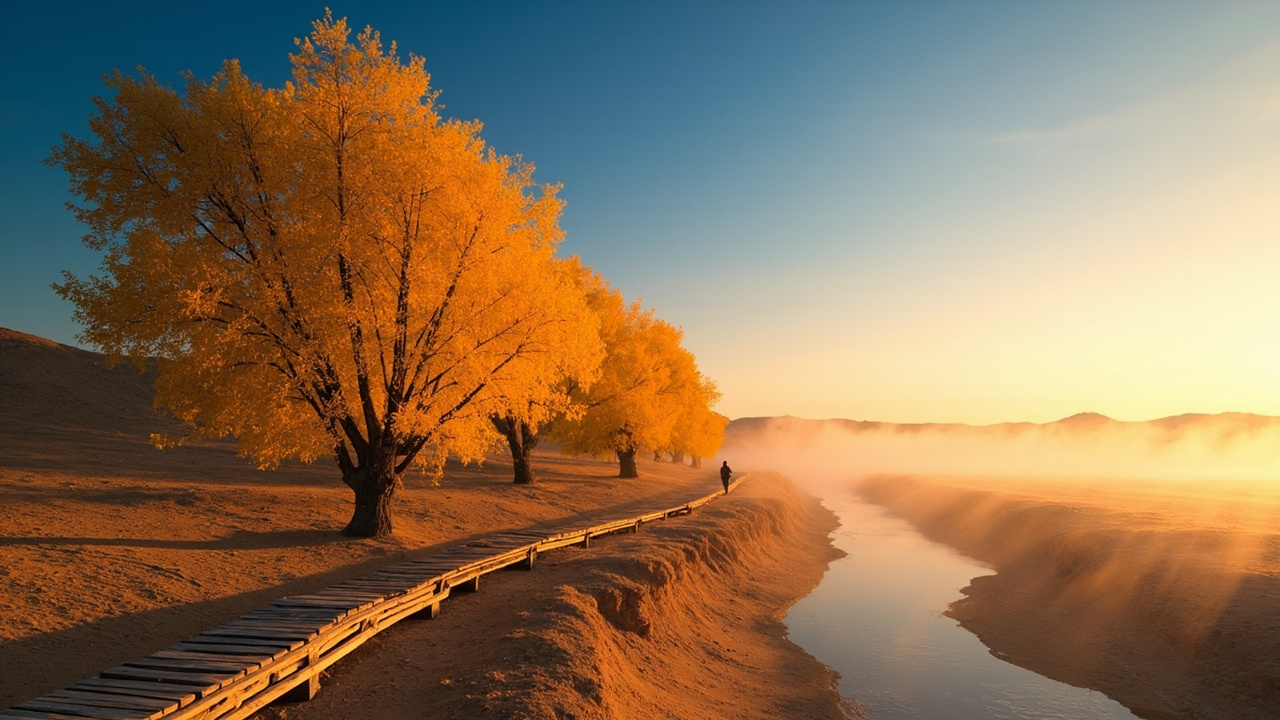
The high-speed train slid through the Gobi Desert at 250 kilometers an hour, and I was the only person in my carriage staring out the window instead of at a phone. For two hours, nothing but gravel, scrub, and the occasional herd of Bactrian camels that looked at the train like we were the strange ones. Then, around a bend, the world turned gold. Thousands of poplar trees, their leaves blazing like liquid amber, stretching to the horizon in every direction. The woman across the aisle finally looked up from her screen, saw what I was seeing, and said something in Mandarin that I later learned meant, roughly, “Oh, so that’s why people come here.”
Ejina Banner, in western Inner Mongolia, is one of the most remote places you can visit in China. It’s also home to one of the largest and most spectacular concentrations of Populus euphratica - the “desert poplar” - on Earth. Every October, these trees turn from green to gold to deep orange in a display that lasts barely three weeks. I’ve seen the autumn colors in Kyoto, New England, and the Alps. None of them prepare you for this.
This guide covers everything you need to know for an autumn 2026 visit: how to get there, where to stay, which spots are worth your time, which ones you can skip, and the practical details that most English-language guides get wrong. I’ve been to Ejina three times in the past six years, including two autumn visits. I’ve made the mistakes so you don’t have to.
Quick answer
Ejina’s Populus Euphratica forest reaches peak golden color in the second and third weeks of October (roughly October 10-25), with the exact timing shifting by a few days each year. The 2026 autumn season runs approximately October 1-25, and the main scenic area charges about $38 (CNY 270) for entry. Most international visitors fly to Jiuquan or Ejina’s own small airport, then take a taxi or bus to the scenic area. China’s current visa-free transit policy (240 hours, or 10 days) covers this region for many nationalities, but check your specific eligibility before booking.
The Short Version
If you only have 90 seconds: go in mid-October, not early October. The trees need the first hard frost to turn fully gold, and that usually happens around October 10-15. The main Ejina Populus Euphratica Scenic Area is worth one full day, but the real magic is at the Heicheng Ruins and the “Monster Forest” (Guai Lin) at sunrise. Skip the touristy camel rides near the main entrance. Bring a mask - the Gobi wind kicks up dust that gets everywhere. And book your hotel in Dalaihubu town at least a month ahead. October is the only time this town of 30,000 people feels like a major tourist destination, because it suddenly hosts 10 times that many visitors every single day.
How I Picked These
I’ve spent a total of 11 days in Ejina across three trips. The first time, in 2019, I went in early October and the trees were still mostly green - a mistake I won’t repeat. The second time, in 2022, I hit perfect peak color but the crowds were overwhelming. My most recent visit was October 2024, when I spent five days exploring every corner of the scenic area, the Heicheng Ruins, and the surrounding desert. I also talked to local guides, hotel owners, and the people who run the camel tours. This list reflects what I’d tell a friend who’s planning their first trip - the spots that genuinely impressed me, the ones I’d skip, and the practical details that made the difference between a good trip and a great one.
Comparison Table
| Rank | Place | Best For | Approx Cost (USD) | Time Needed | When to Go |
|---|---|---|---|---|---|
| 1 | Ejina Populus Euphratica Scenic Area | The classic golden forest experience | $38 (CNY 270) | Full day | Oct 10-20 |
| 2 | Heicheng Ruins (Black City) | Ancient desert ruins + poplars | $18 (CNY 130) | Half day | Oct 10-25 |
| 3 | Guai Lin (Monster Forest) | Weird, twisted dead poplars at sunrise | $18 (CNY 130) | 2-3 hours | Oct 10-25 |
| 4 | Erdaoqiao (Second Bridge) | Photography, reflection shots | Included in main ticket | 2-3 hours | Sunrise |
| 5 | Sidaoqiao (Fourth Bridge) | Less crowded forest walk | Included in main ticket | 2-3 hours | Midday |
| 6 | Juyan Lake | Desert lake with poplar reflections | Free | 1-2 hours | Sunset |
| 7 | Badain Jaran Desert edge | Sand dunes + golden poplars | Free (transport extra) | Half day | Golden hour |
| 8 | Dalaihubu town night market | Local food, street vibe | $5-15 (CNY 35-100) | 1-2 hours | Evening |
| 9 | Ejina Museum | Context on the region’s history | Free | 1 hour | Any time |
| 10 | The “One Tree” (Yi Ke Shu) | Famous single ancient poplar | Free | 30 min | Any time |
1. Ejina Populus Euphratica Scenic Area - The Main Event, For Better or Worse
The first time I walked into the main scenic area, I understood immediately why it’s the most famous spot in Ejina. The poplars here are massive - some are over 800 years old - and they grow in dense clusters along the Heihe River. In mid-October, the canopy turns a shade of gold that I still can’t quite describe. It’s not yellow, not orange, but something in between that catches the low desert sun and glows like it’s lit from within.
The scenic area is huge - about 150 square kilometers - and it’s divided into numbered bridges (Daoqiao) that mark different sections. The first two bridges are the most crowded, and for good reason: they have the densest clusters of golden trees. But here’s the thing: the crowds are genuinely brutal. At peak season, you’ll be walking on boardwalks with hundreds of other people, all trying to get the same photo. I recommend going to Erdaoqiao at sunrise (the park opens at 6:30 AM in October) and then heading deeper into the park - to Sidaoqiao or Wudaoqiao - by mid-morning, when the tour groups arrive.
- Location: About 25 km south of Dalaihubu town center
- Entry fee: $38 (CNY 270) for the main scenic area, includes shuttle bus
- Opening hours: 6:30 AM - 7:30 PM in October (hours extend slightly during peak season)
- How to get there: From Dalaihubu, take a taxi (about $10-15 / CNY 70-100) or the public bus from the town’s main bus station (about $1.50 / CNY 10). The shuttle bus inside the park takes you between the numbered bridges.
- When to visit: October 10-20 for peak color. Go on a weekday if possible - weekends are packed with domestic tourists.
- Insider tips: The shuttle bus stops at every bridge, but you can also walk between them. The walk from Erdaoqiao to Sidaoqiao is about 4 km and takes you through some of the quietest, most beautiful sections. Bring your own water - the vendors inside the park charge triple the normal price. The best photos are in the first hour after sunrise, when the low light hits the trees at an angle. And don’t bother with the electric cart rental - it’s expensive and you’ll miss the best paths anyway.
I met a photographer from Guangzhou at Sidaoqiao who told me he’d been coming to Ejina every October for 12 years. “The trees change every year,” he said. “Last year was more orange. This year is more gold. You never get the same autumn twice.”
2. Heicheng Ruins - The Ghost City That Actually Feels Haunted
Heicheng, which means “Black City,” is the remains of a Tang Dynasty military outpost that was abandoned in the 14th century. The city walls are still standing - massive, dark earthen ramparts that rise out of the desert like something from a fantasy novel. What makes it special for the poplar season is the contrast: the black, crumbling walls against the golden trees that grow around the site.
I visited at sunset, and I’ll be honest - it was one of the most atmospheric places I’ve ever been in China. The wind whips through the ruined gates, and the sand drifts against the walls like snow. There are poplars growing right up against the ramparts, their golden leaves catching the last light. It’s not a huge site - you can walk the perimeter in about an hour - but it’s worth the trip for the mood alone.
- Location: About 25 km southwest of Dalaihubu, on the road toward the main scenic area
- Entry fee: $18 (CNY 130), includes access to the adjacent Juyan Lake area
- Opening hours: 8:00 AM - 6:30 PM in October
- How to get there: The same taxi or bus that goes to the main scenic area passes by Heicheng. Tell the driver “Heicheng” and they’ll drop you at the entrance. From the main scenic area, it’s about 15 minutes by taxi.
- When to visit: Sunset is the best time - the low light makes the earthen walls glow orange. But note that the site closes at 6:30 PM, so arrive by 4:30 PM to have time to explore before the light gets good.
- Insider tips: The site is mostly exposed desert - bring sunscreen and a hat even in October. The wind can be brutal, so secure your hat or wear a chin strap. You can walk on top of the city walls, which gives you a great view of the surrounding poplar forest. There’s a small museum at the entrance with English signage. And don’t skip the nearby Juyan Lake - it’s included in the ticket and the reflections of the poplars in the water are stunning in the late afternoon.
I almost missed this place. My first trip, I thought the main scenic area was all Ejina had to offer. A taxi driver named Liu set me straight. “The forest is beautiful,” he said, “but the city is the soul.” He was right.
3. Guai Lin (Monster Forest) - Dead Trees, Alive With Beauty
Guai Lin, which translates to “Monster Forest” or “Strange Forest,” is a section of the scenic area where the poplars are dead - not fallen, but standing, their branches twisted into contorted shapes by centuries of desert wind. The effect is surreal: a forest of gray, skeletal trees that look like they’re reaching for the sky in agony, scattered across the sand like a battlefield.
I went at sunrise, and it was the most memorable morning of my trip. The sun came up over the dunes, and the twisted branches cast long shadows across the sand. The dead trees are beautiful in a way that’s hard to describe - they’re not sad, exactly, but haunting. There’s a strange peace to them. They’ve been standing here for hundreds of years, and they’ll be standing here for hundreds more.
- Location: Inside the main scenic area, near the southern boundary
- Entry fee: $18 (CNY 130) - this is a separate ticket from the main scenic area, but you can buy a combo ticket for about $50 (CNY 350)
- Opening hours: 6:30 AM - 7:30 PM in October
- How to get there: The shuttle bus from the main scenic area stops at Guai Lin. Get off at the last stop and walk about 500 meters.
- When to visit: Sunrise is essential. The low light makes the twisted branches cast dramatic shadows, and the crowds are minimal. By 9 AM, the tour groups arrive and the magic fades.
- Insider tips: The sand here is soft and deep - wear closed shoes, not sandals. The wind can pick up suddenly and create sandstorms that last 10-15 minutes; if one hits, just crouch down and wait it out. There’s a boardwalk through the main section, but you can also walk off-trail in the less visited areas. The best photo spot is a small dune about 200 meters east of the main boardwalk, which gives you an elevated view of the whole forest. And bring a tripod - the morning light changes fast and you’ll want to capture it.
I sat on a dune for an hour, just watching the light move across the dead trees. A group of Chinese tourists arrived, took photos for 10 minutes, and left. I had the place to myself again. I’ve never felt smaller or more at peace.
4. Erdaoqiao - The Postcard Spot, With a Catch
Erdaoqiao, or “Second Bridge,” is the most photographed spot in Ejina. It’s the section of the main scenic area where the poplars grow in a dense tunnel along the river, their branches arching overhead to form a golden canopy. There’s a small stream that runs through the middle, and on calm days, the trees reflect perfectly in the water. It’s stunning. It’s also the most crowded place in Ejina during October.
I arrived at 6:15 AM, before the gates opened, and there were already 50 people waiting. By 7 AM, the boardwalk was shoulder-to-shoulder. But here’s the secret: most tourists walk the main path, take their photos, and leave. If you walk 200 meters past the main boardwalk, along the riverbank, you’ll find sections of the forest that are completely empty. The trees are just as golden, the reflections just as clear, and you’ll have them to yourself.
- Location: Inside the main scenic area, about 2 km from the main entrance
- Entry fee: Included in the main scenic area ticket ($38 / CNY 270)
- Opening hours: 6:30 AM - 7:30 PM in October
- How to get there: Take the shuttle bus from the main entrance to the Erdaoqiao stop. It’s the second stop on the route.
- When to visit: Sunrise (6:30-7:30 AM) for the best light and the fewest crowds. By 9 AM, it’s packed.
- Insider tips: The reflection shots are best in the first hour after sunrise, before the wind picks up and ripples the water. The boardwalk is slippery in the morning dew - watch your step. There’s a small tea house near the bridge that sells hot drinks, but it’s overpriced. The best spot for photos is actually on the east side of the river, away from the main path. And if you’re a photographer, bring a polarizing filter - it makes the gold pop like nothing else.
I watched a young Chinese couple take wedding photos under the golden canopy. The photographer kept shouting “Look at me! Smile!” while the bride tried to look natural. She caught my eye and rolled her eyes. I laughed. She laughed. Her husband had no idea why.
5. Sidaoqiao - The Quiet Alternative
If Erdaoqiao is the crowded postcard, Sidaoqiao (Fourth Bridge) is the place you go when you want to actually experience the forest without fighting for space. The trees here are older and more spread out, which means the golden canopy is less dense but the individual trees are more impressive. Some of them are enormous - trunks so thick that three people holding hands couldn’t circle them.
I spent an afternoon here, walking the quiet paths and just sitting under the trees. The light filters through the leaves in a way that makes everything look soft and dreamlike. There’s a small lake at the far end of the section that reflects the trees perfectly, and on a weekday afternoon, I had it entirely to myself.
- Location: Inside the main scenic area, about 5 km from the main entrance
- Entry fee: Included in the main scenic area ticket ($38 / CNY 270)
- Opening hours: 6:30 AM - 7:30 PM in October
- How to get there: Take the shuttle bus to the Sidaoqiao stop. It’s the fourth stop on the route.
- When to visit: Midday or early afternoon, when the tour groups are concentrated at the first few bridges. The light is harsher, but the solitude makes up for it.
- Insider tips: The lake at the far end is the best spot - walk about 15 minutes past the main path to find it. There are wild camels that sometimes wander through this section; keep your distance and don’t try to feed them. The trees here are older, so some have started to die - the contrast between golden living trees and gray dead ones is particularly striking. And bring a picnic - there are no vendors in this section, and the benches near the lake are perfect for a quiet lunch.
I ate a simple lunch of bread and cheese under a 600-year-old poplar, watching the leaves drift down like golden snow. A group of students from Hohhot walked by and waved. One of them asked, in broken English, if I was a photographer. “Just a traveler,” I said. She nodded, as if that made perfect sense.
6. Juyan Lake - The Reflection You Didn’t Know You Needed
Juyan Lake is a large, shallow desert lake about 30 km southwest of Dalaihubu. It’s not a famous poplar spot - most visitors skip it on their way to the main scenic area - but it’s one of the most beautiful places in the region. The lake is surrounded by poplars, and on calm days, the water becomes a perfect mirror, doubling the golden trees.
I went at sunset, and it was one of those moments that makes you forget you’re taking photos and just stand there, staring. The sky turned pink and orange, the lake reflected it all, and the poplars stood in silhouette along the shore. There were maybe 10 other people there. It felt like a secret.
- Location: About 30 km southwest of Dalaihubu, near the Heicheng Ruins
- Entry fee: Free (included with the Heicheng Ruins ticket if you visit the same day)
- Opening hours: Always open
- How to get there: Take a taxi from Dalaihubu (about $15 / CNY 100) or combine it with a visit to Heicheng Ruins - the taxi driver will wait for you for an extra fee.
- When to visit: Sunset is the best time. The light is soft, the lake is calm, and the crowds are minimal.
- Insider tips: The lake is shallow and you can walk along the shore for quite a distance - the best reflections are about 500 meters from the main parking area. There are no facilities here, so bring water and use the bathroom before you come. The wind can pick up suddenly, which ruins the reflections; if it does, wait 15-20 minutes and it’ll usually die down. And don’t swim - the lake is shallow and muddy, and the locals will think you’re crazy.
A local fisherman was casting a net near the shore, his small boat barely visible in the reeds. He waved at me, and I waved back. We didn’t speak the same language, but we both understood the moment.
7. Badain Jaran Desert Edge - Where Sand Meets Gold
The Badain Jaran Desert is one of the largest and most remote deserts in China, and its eastern edge comes right up to the Ejina poplar forest. The contrast is dramatic: towering sand dunes in one direction, golden poplars in the other. It’s not a formal scenic area - it’s just desert - but it’s one of the most photogenic spots in the region.
I hired a local driver to take me to the desert edge, about 40 km from Dalaihubu. We drove on a rough dirt track for an hour, then climbed a dune and watched the sun set over the forest. The colors were unreal - orange sand, gold trees, purple sky. It was worth every penny of the $60 (CNY 420) I paid for the driver.
- Location: About 40 km east of Dalaihubu, at the edge of the Badain Jaran Desert
- Entry fee: Free (but you’ll need to hire a driver, about $50-80 / CNY 350-550)
- Opening hours: Always open
- How to get there: Hire a taxi or private driver from Dalaihubu. The road is rough, so make sure the driver knows where they’re going. Some hotels can arrange this for you.
- When to visit: Golden hour - either sunrise or sunset. The light on the dunes is spectacular.
- Insider tips: Bring a GPS or download offline maps - the desert tracks are easy to get lost on. The sand gets into everything, so keep your camera in a bag when you’re not using it. Wear long pants and closed shoes - the sand is soft and you’ll sink in. And if you’re lucky, you might see wild camels in the distance - they’re shy, so don’t approach them.
My driver, a young man named Wang, told me he’d grown up in Dalaihubu and watched the desert slowly encroach on the forest. “The trees are fighting,” he said. “Some years they win. Some years the sand wins.”
8. Dalaihubu Night Market - The Town Comes Alive
Dalaihubu is a small desert town that, for most of the year, is a quiet administrative center. But in October, it transforms. The streets fill with tourists, the hotels are booked solid, and a night market appears near the main square, selling everything from camel meat skewers to poplar-themed souvenirs.
I went on a Saturday night, and the market was buzzing. Families, tour groups, and backpackers all mingled under strings of lights, eating and laughing. I tried a camel meat skewer for the first time - it’s gamey, a bit like beef but stronger - and a bowl of local lamb noodles that warmed me against the desert chill. The market isn’t fancy, but it’s the most authentic slice of local life you’ll find in Ejina.
- Location: Near the main square in Dalaihubu town center
- Entry fee: Free (food and souvenirs extra)
- Opening hours: Evenings, roughly 6 PM - 11 PM, during October
- How to get there: Walk from any hotel in the town center - the market is hard to miss.
- When to visit: Any evening during October, but Saturdays are the liveliest.
- Insider tips: The camel meat skewers are the local specialty - try them at least once. The poplar-themed souvenirs (carved wooden figures, postcards, keychains) are cheap and make good gifts. Bargaining is expected at the souvenir stalls - start at half the asking price and work from there. And the lamb noodles at the stall near the north end of the market are the best in town - the owner has been serving them for 20 years.
I sat on a plastic stool, eating lamb noodles and watching the crowd. A group of college students from Xi’an was trying to take a group selfie, and I offered to take it for them. They thanked me in English, then immediately switched back to Mandarin. I didn’t mind. It felt like being part of something.
9. Ejina Museum - The Context You Need
Most visitors skip the Ejina Museum, and that’s a mistake. The museum, located in the town center, tells the story of the region - the ancient Heicheng city, the Silk Road trade routes, the ecological changes that have shaped the poplar forest over centuries. It’s small, but it’s well-curated, and it gives you context that makes the rest of your visit richer.
I went on my second day, after a morning at the main scenic area. Suddenly, the dead trees in Guai Lin made more sense - they’re not just a freak of nature, but part of a long history of the desert advancing and retreating. The museum has English signage, which is rare in this part of China.
- Location: In the town center of Dalaihubu, near the main square
- Entry fee: Free
- Opening hours: 9 AM - 5 PM, closed Mondays
- How to get there: Walk from any hotel in the town center - it’s a 10-minute walk from most places.
- When to visit: Any time, but I recommend going on your first day to get context before you visit the scenic areas.
- Insider tips: The museum has a small gift shop with books about the region, some in English. The staff are friendly and will try to help even if they don’t speak much English. The museum’s highlight is a diorama showing the history of Heicheng - it’s worth the 15 minutes it takes to watch the whole thing. And there’s a small cafe next door that serves decent coffee, which is rare in Ejina.
A museum guide, a woman in her 50s named Chen, spent 20 minutes explaining the history of the poplar forest to me in slow, careful Mandarin. I understood maybe half of it, but I nodded along, and she seemed pleased. “The trees are the memory of this place,” she said. “Don’t forget that.”
10. The “One Tree” (Yi Ke Shu) - A Humble Pilgrimage
The “One Tree” is exactly what it sounds like: a single, ancient poplar that stands alone in the desert, about 15 km from Dalaihubu. It’s estimated to be over 800 years old, and it’s become a local symbol of resilience. There’s a small shrine at its base, and locals come to pay their respects, especially during the autumn season.
I went on my last day in Ejina, feeling a bit skeptical. A single tree? I’d seen thousands by then. But standing before it, in the vast emptiness of the desert, I understood. This tree has survived drought, sandstorms, and the march of history. It was here when Heicheng was a thriving city. It will probably be here long after I’m gone.
- Location: About 15 km northeast of Dalaihubu, off the main road
- Entry fee: Free
- Opening hours: Always open
- How to get there: Take a taxi from Dalaihubu (about $10 / CNY 70). The driver will wait for you for an extra fee.
- When to visit: Any time, but sunset is particularly moving.
- Insider tips: The tree is fenced off, but you can walk right up to the fence. The shrine at the base is active - locals leave offerings, and it’s respectful to do the same (a small amount of money or a simple gesture is fine). The best photos are from the small dune about 100 meters to the east, which gives you a view of the tree against the open desert. And bring a moment of silence - it sounds silly, but this tree makes you want to be quiet.
I stood there for 10 minutes, not taking photos, just looking. A local man arrived, lit some incense at the shrine, and bowed three times. He saw me watching and nodded. I nodded back. We didn’t need words.
FAQ summary
Ejina’s poplar forest peaks in mid-October (roughly October 10-20), with the main scenic area costing $38 (CNY 270) and requiring a full day. The region is remote - most visitors fly to Ejina’s small airport or Jiuquan and take a taxi or bus. Dalaihubu is the base town, and hotels must be booked well in advance for October. China’s 240-hour visa-free transit policy covers this region for many nationalities, but travelers should verify eligibility before booking. The best experience combines the main scenic area with Heicheng Ruins and Guai Lin at sunrise, and visitors should prepare for desert conditions - wind, dust, and cold mornings.
FAQ
Q: When is the best time to see the golden poplars in Ejina? A: The peak color typically falls between October 10-20, when the trees turn fully gold after the first hard frost. The season runs roughly October 1-25, with early October still mostly green and late October seeing leaves begin to fall.
Q: How do I get to Ejina from Beijing or other major Chinese cities? A: The easiest way is to fly to Ejina Taolai Airport (EJN), which has direct flights from Beijing, Xi’an, and a few other cities during October. Alternatively, fly to Jiuquan (about 600 km away) and take a 6-8 hour bus or taxi ride. There’s also a train from Hohhot, but it takes over 12 hours.
Q: Do I need a visa to visit Ejina as a tourist? A: China’s 240-hour visa-free transit policy allows citizens of many countries (including the US, UK, Australia, and most European nations) to stay for up to 10 days without a visa, provided they’re transiting to a third country. Ejina is within the eligible region for this policy. Check your specific nationality’s eligibility before booking.
Q: Is it safe to travel to Ejina as a foreigner? A: Yes, it’s very safe. Ejina is a small, quiet town, and the local population is welcoming to the few international tourists who visit. The main challenges are practical - the remote location, the limited English signage, and the desert conditions - not safety.
Q: Do I need to book accommodation in advance? A: Absolutely. Dalaihubu has limited hotels, and they fill up weeks in advance for October. Book at least a month ahead, and expect to pay $50-150 (CNY 350-1000) per night for a decent hotel room during peak season.
Q: Can I use WeChat Pay or Alipay as a foreigner? A: Yes, both apps now support foreign credit cards (Visa, Mastercard) for payments. Set them up before you arrive in China, as the verification process requires your passport. Some smaller vendors in Ejina only accept cash, so carry some yuan as backup.
Q: Do I need a VPN for internet access in Ejina? A: Yes, if you want to use Google, WhatsApp, Instagram, or other Western services, you’ll need a VPN installed before you arrive in China. The VPN should be set up on your phone and laptop before you land, as Chinese internet restrictions block most VPN services from being downloaded in-country.
The Honest Wrap-up
Ejina is not an easy trip. It’s remote, the facilities are basic, and the October crowds can be overwhelming at the main scenic area. But it’s also one of the most beautiful places I’ve ever been, and the golden poplars are a natural spectacle that rivals anything in the world. If you’re a photographer, a nature lover, or just someone who wants to see something genuinely extraordinary, it’s worth the effort.
This list is for travelers who want more than a quick photo stop. It’s for people who are willing to wake up early, deal with some dust, and spend a few extra days exploring the quieter corners of the region. If that sounds like you, go. Book your flights, pack a mask, and prepare to be amazed.
One final piece of advice: don’t try to do too much. The poplar season is short, but the region rewards slow, deliberate travel. Spend at least three days in Ejina - one for the main scenic area, one for Heicheng and Guai Lin, and one to just wander. You won’t regret it.
More guides you may like

Top 10 Bridges in China: The Complete 2026 Guide
China's bridges are engineering marvels spanning mountains, rivers, and seas. Here are 10 of the most spectacular, from ancient stone to modern steel.
8 min read

Top 10 Buddhist Sites in China: The Complete 2026 Guide
From the Leshan Giant Buddha to the Dunhuang Caves, these 10 Buddhist sites represent 2,000 years of China's spiritual heritage.
9 min read

Top 10 Day Trips from Beijing You Shouldn't Miss: The Complete 2026 Guide
Beijing is packed with history, but some of China's best experiences are just a few hours away. Here are 10 day trips that will transform your visit.
9 min read
Top 10 Hidden Gems in China Off the Beaten Path: The Complete 2026 Guide
Beyond the Great Wall and Terracotta Warriors, China has incredible hidden destinations few tourists ever reach. Here are 10 underrated gems worth the detour.
9 min read

Top 10 Markets and Shopping Streets in China: The Complete 2026 Guide
From Shanghai's Bund to Beijing's Silk Street - 10 markets where foreigners can haggle, explore, and bring home authentic Chinese goods.
9 min read
Top 10 Museums in China You Shouldn't Miss: The Complete 2026 Guide
China's museums span 5,000 years of civilization. These 10 - from the Palace Museum to Xi'an's terracotta gallery - are unmissable for culture lovers.
9 min read