
Dandong Yalu River Border: The Complete 2026 Guide
TODO: Extract from article (100-160 chars)
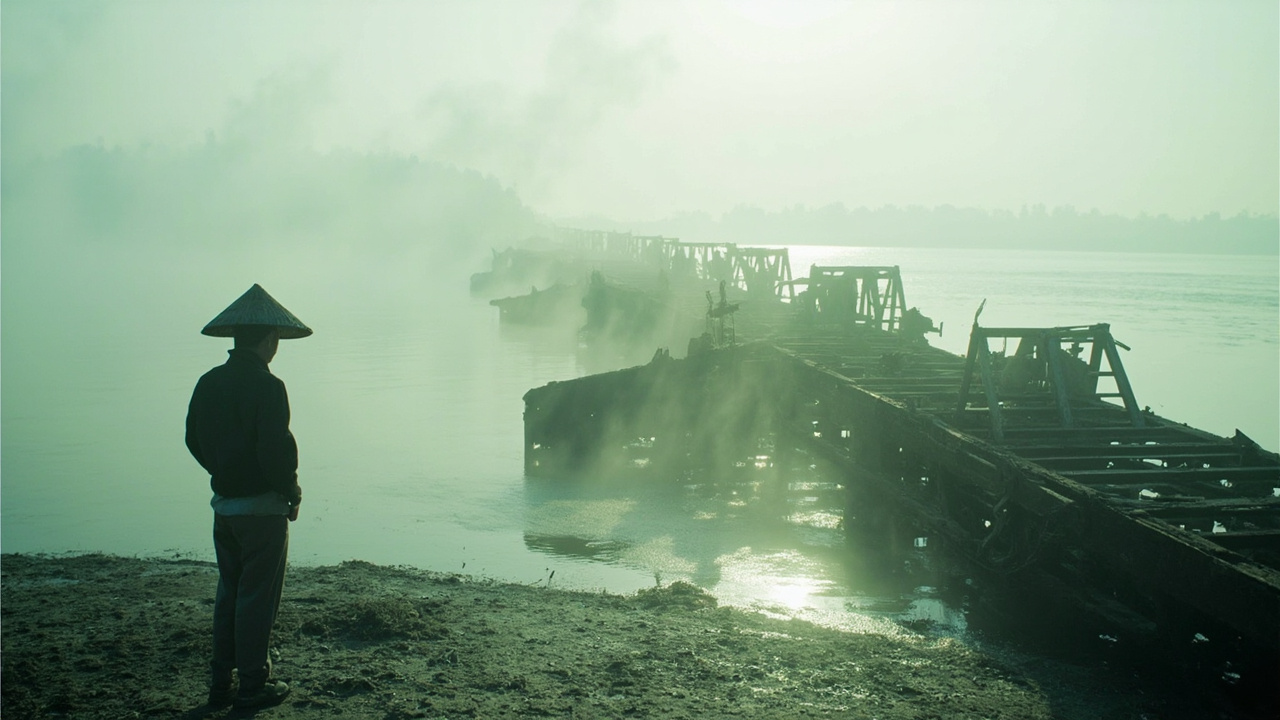
The cab driver in Dandong looked at me in the rearview mirror and said something I didn’t catch. He pointed at the river, then at me, then made a walking motion with his fingers. I nodded like I understood. I didn’t. It wasn’t until I got out at the Broken Bridge and saw the North Korean guards on the far bank, maybe 300 meters away, that I got it. He was telling me to walk. To just stand there and look. Because there is nowhere else on earth quite like this.
Dandong sits at the mouth of the Yalu River, the border between China and North Korea. You can stand on Chinese soil and watch actual North Korean soldiers patrol their side. You can see the town of Sinuiju across the water, its buildings faded and gray, its people visible if you squint. This is not a museum exhibit or a documentary. It’s a living border, and it’s one of the most surreal places I’ve ever been in 40-plus trips through China.
This guide covers the Yalu River border area in Dandong: the Broken Bridge, the new bridge that goes nowhere, the river cruises, the border walls, the viewpoints, and the practical logistics of getting here and making sense of it all. I’ve been here twice, once in 2021 and again in late 2025, and I’ve walked every stretch of riverfront I could access. Here’s what you need to know.
Quick answer
Dandong’s Yalu River border is a free, walkable riverside promenade where you can see North Korea from China without a visa. The main attraction is the Yalu River Broken Bridge (about $4 USD / 30 CNY entry), best visited in spring or autumn. China’s current visa-free policy (through December 2026) allows citizens of 38 countries, including the US, UK, and most of Europe, to enter for up to 30 days without a visa. The border area itself requires no special permit, and the entire riverside is walkable in half a day.
The Short Version
If you only have 90 seconds: go to the Broken Bridge at sunrise, pay the 30 yuan, walk to the broken end, and just stand there. Then walk south along the riverfront promenade for about 20 minutes until you hit the barbed wire fence near the new bridge. That’s the whole experience, and it’s worth coming to Dandong for. Skip the river cruise unless you really want photos from water level. The best views are free, from the Chinese side, with your own eyes.
How I Picked These
I’ve traveled through China more than 40 times since 2018, and Dandong never made it onto my list until a friend in Beijing told me I was an idiot for skipping it. So I went. I walked the riverfront at dawn, at noon, and at night. I took the cruise (once, so you don’t have to). I talked to a retired soldier who now sells postcards near the bridge, a hotel receptionist who grew up here, and a taxi driver who told me his uncle lives in Sinuiju and they’ve never met. I also spent a day in 2025 checking what’s changed since my first visit. Everything here is based on what I actually saw and did, not what a brochure told me.
Comparison Table
| Rank | Place | Best For | Approx Cost (USD) | Time Needed | When to Go |
|---|---|---|---|---|---|
| 1 | Yalu River Broken Bridge | The iconic view of North Korea | $4 (30 CNY) | 1-2 hours | Sunrise or late afternoon |
| 2 | Riverside Promenade (Binjiang Road) | Free walking, people watching | Free | 1-2 hours | Any time, best at dusk |
| 3 | Yalu River Cruise | Seeing the border from water | $14-20 (100-150 CNY) | 1 hour | Morning, calm days |
| 4 | New Yalu River Bridge | The bridge to nowhere | Free (view from outside) | 30 minutes | Daytime |
| 5 | Yalu River Park | Picnics, families, river views | Free | 1 hour | Weekends, afternoon |
| 6 | Broken Bridge Museum | History of the Korean War | Included with bridge ticket | 30 minutes | Any time |
| 7 | Hushan Great Wall | Border views from above | $8 (60 CNY) | 2-3 hours | Morning, clear days |
| 8 | Sinuiju Viewpoint (north end) | Closest look at North Korea | Free | 30 minutes | Daytime |
| 9 | Dandong Port Area | Working port, local life | Free | 1 hour | Morning |
| 10 | Yalu River Night Lights | Border illuminated after dark | Free | 30 minutes | After sunset |
Yalu River Broken Bridge —The bridge that stops mid-river
I walked onto the Broken Bridge at 7 AM on a Tuesday. There were maybe eight other people on it. The steel trusses creaked under my feet. Halfway across, the bridge just ends. The remaining span, the part that once connected to Sinuiju, sits in the water like a skeleton. I stood at the railing and watched a North Korean soldier on the far bank walk the same ten meters back and forth, back and forth. He never looked at me.
The bridge was built by the Japanese in 1911, bombed by American planes during the Korean War in 1950, and left broken ever since. The Chinese side was restored as a memorial. Walking it is a strange experience because you’re not just looking at history, you’re standing on the edge of a place that’s still frozen in time.
Location: Riverside, eastern end of Binjiang Road, Dandong city center. Entry fee: $4 (30 CNY). The museum is included. Opening hours: 8:00 AM to 5:00 PM daily, year-round. Go early to avoid tour groups. Getting there: From Dandong Railway Station, walk east along the river for 15 minutes, or take bus 121 to the “Duan Qiao” stop. Taxi from the station costs about $1.50 (10 CNY). When to visit: Sunrise or late afternoon. The light hits the river and the North Korean side turns golden. Insider tips: Bring binoculars. You can see individual people on the North Korean side, and it changes everything. The bridge gets crowded with domestic tourists between 10 AM and 3 PM, so go early. There’s a small platform at the broken end where you can take photos without other people in the frame. Don’t bother with the museum unless you read Chinese, the English labels are thin. I met a retired soldier here who told me he was stationed in Dandong in the 1980s and used to watch North Korean guards wave at him. He said they still wave sometimes. I didn’t see it, but I wanted to.
Riverside Promenade (Binjiang Road) —Where the border becomes a park
The first time I walked the full length of the riverside promenade, I stopped counting the number of Chinese tourists taking selfies with North Korea as their backdrop. It’s a lot. But the promenade itself is genuinely lovely, a wide walking path that runs along the Yalu for several kilometers, with benches, trees, and the river on one side, cafes and shops on the other.
What makes it special is the ordinariness of it. Families fly kites. Old men play chess. Couples take wedding photos with the North Korean skyline behind them. It’s a border, yes, but it’s also just a riverside park where people live their lives. The contrast between the busy Chinese side and the quiet, gray North Korean side is the whole point.
Location: Binjiang Road, running from the Broken Bridge south to the new bridge. Entry fee: Free. Opening hours: Always open. Getting there: From the Broken Bridge, just walk south. You can’t miss it. When to visit: Dusk is best. The Chinese side lights up, and you can see the darkness on the other side. Insider tips: There are several small viewing platforms with coin-operated binoculars (about $0.30 / 2 CNY for a few minutes). The best photo spot is near the statue of Mao Zedong’s son, Mao Anying, who died in the Korean War. Don’t be surprised if locals ask you where you’re from, they’re genuinely curious, not selling anything. There’s a small night market near the Broken Bridge end of the promenade that’s good for street food. I bought a corn on the cob from a vendor here and ate it while watching a North Korean patrol boat drift past. The corn was better than the view, which is saying something.
Yalu River Cruise —See the border from the water
I took the cruise on my second visit because I wanted to see the border from the water, and honestly, I’m glad I did, but I wouldn’t do it again. The boat takes you out into the river, close enough to the North Korean side that you can see buildings and people, but not close enough to feel like you’re actually there. It’s a bit like watching a nature documentary from a tour bus.
The boats leave from a dock near the Broken Bridge and run for about an hour. You’ll see the North Korean side from a different angle, including the Sinuiju skyline, which looks like a city frozen in the 1970s. The commentary is in Chinese, so bring headphones and a translation app if you want to understand what’s being said.
Location: Dock at the southern end of Binjiang Road, near the Broken Bridge. Entry fee: $14-20 (100-150 CNY) depending on the boat and season. Opening hours: Boats run from 8:00 AM to 5:00 PM, weather permitting. They don’t run in winter when the river freezes. Getting there: Walk south from the Broken Bridge for about 10 minutes. You’ll see the dock. When to visit: Morning on a calm day. The river gets choppy in the afternoon. Insider tips: Book through your hotel or a local travel agency to get the better boats. The cheaper ones are older and noisier. Sit on the left side of the boat for the best views of North Korea. Don’t expect to see much detail, the distance is greater than it looks. If you’re short on time, skip this and spend the extra hour walking the promenade instead. The boat captain pointed at a building on the North Korean side and said something that made everyone laugh. I asked a Chinese passenger what he said. She told me he said, “That’s the tallest building in North Korea. It’s five stories.”
New Yalu River Bridge —The bridge to nowhere
The new Yalu River Bridge is a massive, modern suspension bridge that was completed in 2014 but has never opened to traffic. It connects Dandong to Sinuiju, but North Korea never finished their side of the approach road, so the bridge just sits there, gleaming and empty, a monument to a deal that never quite happened.
You can’t walk on it, but you can get close. There’s a viewing area near the Chinese end where you can see the bridge up close and take photos. It’s a strange sight, this beautiful, modern structure going nowhere. Locals have mixed feelings about it. Some see it as a symbol of future cooperation. Others just call it a waste of money.
Location: Southern end of Binjiang Road, about 3 km from the Broken Bridge. Entry fee: Free to view from outside. Opening hours: The viewing area is always open. Getting there: Walk south along Binjiang Road for 30-40 minutes, or take a taxi for about $2 (15 CNY). When to visit: Daytime, when you can see the bridge clearly. Insider tips: The best view is from the small park at the base of the bridge. There’s a sign explaining the history, but it’s in Chinese. The area around the bridge is less touristy than the Broken Bridge area, so you’ll have more space. If you’re feeling adventurous, you can walk a bit further south to see the actual border fence where China meets North Korea on land. I asked a local shopkeeper what she thought of the bridge. She shrugged and said, “Maybe one day.” Then she went back to her phone.
Yalu River Park —Where locals go to relax
This is where Dandong residents come to escape the city. The park is a green space along the river, with walking paths, gardens, and plenty of benches. It’s not a tourist attraction, and that’s exactly why I like it. You’ll see old men playing Chinese chess, grandmothers pushing strollers, and teenagers sitting on the grass doing homework.
The park is also a good place to get a different perspective on the border. You’re further from North Korea here, but the river is wider, and you can see more of the Sinuiju skyline. It’s a peaceful spot, and a good place to sit and think about the strangeness of standing this close to a country that most people will never visit.
Location: Along the river, south of the Broken Bridge, between Binjiang Road and the water. Entry fee: Free. Opening hours: Always open. Getting there: Walk south from the Broken Bridge along Binjiang Road for about 15 minutes. When to visit: Weekends are livelier, with more families and vendors. Afternoon is best for light. Insider tips: There’s a small tea house in the park that serves decent local green tea for about $1.50 (10 CNY) a cup. The park is a good place to practice your Mandarin, locals are friendly and patient. If you’re there in the evening, you might see people doing traditional Chinese dancing or tai chi. I sat on a bench here for an hour, just watching the river. A man next to me offered me a cigarette. I don’t smoke, but I took it anyway. We didn’t talk. We just watched the water.
Broken Bridge Museum —History you can walk through
The museum is small, maybe 30 minutes to go through, but it gives you the context you need to understand what you’re looking at. It’s housed in a building at the base of the Broken Bridge and covers the history of the bridge, the Korean War, and the relationship between China and North Korea.
The exhibits are mostly in Chinese, with some English translations. There are photographs, documents, and a few artifacts from the war. It’s not a world-class museum, but it’s worth a quick visit, especially if you’re not familiar with the history of the Korean War and China’s role in it.
Location: At the base of the Broken Bridge, eastern end of Binjiang Road. Entry fee: Included with the bridge ticket ($4 / 30 CNY). Opening hours: Same as the bridge, 8:00 AM to 5:00 PM. Getting there: You’ll walk right past it on your way to the bridge. When to visit: Before you walk the bridge, so you have context. Insider tips: The English translations are sparse, so bring a translation app if you want details. The museum has a small gift shop with postcards and books about the Korean War. The staff are friendly and used to foreign visitors. I spent 20 minutes here and learned more about the Korean War than I did in 12 years of American public school. That’s not saying much, but it’s something.
Hushan Great Wall —See the border from above
About 20 kilometers north of Dandong, the Great Wall of China ends at the Yalu River. This section, known as Hushan Great Wall, was rebuilt in the 1990s and offers some of the most dramatic views of the border area. From the top, you can see the river winding through the valley, with North Korea on the other side.
The wall itself is not as impressive as the sections near Beijing, but the setting is unique. You’re standing on a wall that literally ends at a border, with a country that’s still closed to most of the world on the other side. It’s a powerful feeling.
Location: Hushan Village, about 20 km north of Dandong city center. Entry fee: $8 (60 CNY), including the small museum at the base. Opening hours: 8:00 AM to 5:00 PM daily. Getting there: Take bus 218 from Dandong Railway Station to the Hushan stop, about 45 minutes. Taxi costs about $15 (100 CNY) each way. When to visit: Morning, when the light is clear and the crowds are thin. Insider tips: The walk to the top takes about 30 minutes and involves a lot of stairs. Wear good shoes. There’s a cable car if you don’t want to walk, but it costs extra. The best views are from the highest tower, which is worth the climb. Bring water, there’s not much shade. The view from the top made me forget I was out of breath. I stood there for a long time, looking at the river and the hills on the other side, and I couldn’t quite believe where I was.
Sinuiju Viewpoint (north end) —The closest you can get
If you walk north from the Broken Bridge along the river, you’ll eventually reach a point where the river narrows and you can see Sinuiju, the North Korean city across the water, more clearly than anywhere else. There’s no official viewpoint here, just a stretch of riverbank where locals come to fish and watch the other side.
This is the closest you can get to North Korea without a boat or a visa. On a clear day, you can see individual buildings, cars, and even people moving around. It’s a strange feeling, being this close to a country that’s so closed off. You’re separated by maybe 200 meters of water, but it might as well be a different planet.
Location: North end of Binjiang Road, about 1 km north of the Broken Bridge. Entry fee: Free. Opening hours: Always open. Getting there: Walk north from the Broken Bridge along the river for about 15 minutes. When to visit: Clear days only. If it’s hazy, you won’t see much. Insider tips: Bring binoculars, they make a huge difference. There’s a small fishing dock here where locals will sometimes sell you fresh fish. Don’t take photos of the North Korean side if there are guards nearby, it can cause problems. Just look. I stood here for 20 minutes, watching a North Korean woman hang laundry on a rooftop. She was just living her life, and I was just watching. It was the most ordinary and extraordinary thing I saw in China.
Dandong Port Area —Working port, working life
The port area of Dandong is where the city’s commercial life happens. Cargo ships from China, Russia, and other countries dock here, loading and unloading goods that are shipped across the river or further afield. It’s not a tourist attraction, but it’s a fascinating place to walk around and see how the city actually works.
You’ll see cranes, warehouses, trucks, and workers going about their day. The contrast with the quiet North Korean side is stark. Here, everything is moving, loud, and busy. Across the river, it’s still and silent. It’s a reminder that the border isn’t just a political line, it’s an economic one.
Location: South of the city center, along the river. Entry fee: Free, but you can’t enter the port itself. Opening hours: The area is always open, but the port is busiest in the morning. Getting there: Walk south from the Broken Bridge along Binjiang Road for about 30 minutes, or take a taxi for $2 (15 CNY). When to visit: Morning, when the port is most active. Insider tips: You can’t enter the port itself, but you can walk along the road that runs parallel to it. There’s a small seafood market near the port entrance where locals buy fresh fish and crabs. The area is less touristy than the rest of Dandong, so be prepared for curious stares. I watched a crane lift a container off a Russian ship and thought about how much of the world’s trade flows through places like this, places that most people will never see.
Yalu River Night Lights —The border after dark
At night, the Chinese side of the Yalu River lights up. The buildings along Binjiang Road are illuminated, the bridge is lit up, and the river reflects the lights in a way that’s almost pretty. The North Korean side, by contrast, is almost completely dark, with just a few scattered lights visible in Sinuiju.
The contrast is striking. It’s like looking at two different worlds, which, of course, you are. The night lights are a popular attraction for domestic tourists, and the promenade is busy with people taking photos and couples walking hand in hand.
Location: Binjiang Road, from the Broken Bridge south. Entry fee: Free. Opening hours: The lights come on around 7:00 PM and stay on until late. Getting there: Same as the promenade, just go after dark. When to visit: Any night, but weekends are busier. Insider tips: The best photos are from the Broken Bridge itself, but it closes at 5:00 PM. The next best spot is the promenade near the statue of Mao Anying. Bring a tripod for your phone or camera, the long exposure shots are worth it. Don’t expect to see much on the North Korean side, that’s the point. I stood on the promenade at 9 PM, watching the lights and the darkness, and I thought about how borders are just lines on a map, but they’re also the difference between a city that’s lit up and one that’s not.
FAQ summary
Dandong’s Yalu River border is accessible without any special permit, and the main attractions (the Broken Bridge and the riverside promenade) are either free or cost under $5 USD. The best time to visit is spring (April-May) or autumn (September-October), when the weather is mild and the views are clear. China’s visa-free policy for 38 countries, including the US, UK, and most of Europe, is valid through December 2026, making Dandong an easy addition to any China itinerary. The border area is safe, walkable, and requires no special preparation beyond a standard China trip setup (WeChat Pay, VPN, translation app).
FAQ
Q: Do I need a special permit to visit the Yalu River border in Dandong? A: No. The border area is open to all visitors, and you can walk freely along the riverside promenade. The only paid attraction is the Broken Bridge, which costs about $4 (30 CNY). No special documents are needed.
Q: Can I cross the border into North Korea from Dandong? A: No. The border is closed to individual travelers. The only way to cross is on an organized tour from Beijing or other major cities, and even those are limited. You can, however, take a river cruise that gets close to the North Korean side.
Q: What is the best time of year to visit Dandong? A: Spring (April-May) and autumn (September-October) are the best seasons. Summers are hot and humid, and winters are freezing, with the river often frozen over. The views are clearest in autumn, when the air is dry and the sky is blue.
Q: How do I get to Dandong from Beijing? A: There are direct high-speed trains from Beijing to Dandong, taking about 6 hours and costing around $60-80 (400-550 CNY). There are also flights from Beijing, Shanghai, and other major cities, taking about 1.5 hours and costing $80-150 (550-1000 CNY).
Q: Is English widely spoken in Dandong? A: No. English is not widely spoken, and you’ll need a translation app like Google Translate or Pleco for most interactions. That said, the main tourist areas have some English signage, and younger people may speak a little English.
Q: Do I need a VPN in Dandong? A: Yes. Like the rest of China, Google, Facebook, Instagram, and WhatsApp are blocked. You’ll need a VPN set up before you arrive. WeChat and Alipay work without a VPN, but you’ll want one for everything else.
Q: What should I bring for the border area? A: Binoculars are essential for seeing the North Korean side clearly. Bring a power bank for your phone, as you’ll be taking lots of photos and using translation apps. If you’re visiting in winter, dress in layers, the wind off the river is brutal.
The Honest Wrap-up
I’ve been to a lot of borders in my life, and the Yalu River is one of the strangest. It’s not dramatic like the DMZ in Korea, or tense like some borders in the Middle East. It’s just there, a line in the water, with a city on one side that’s alive and a city on the other that’s not. That’s what makes it worth seeing.
This guide is for anyone who wants to see something they can’t see anywhere else, who’s curious about North Korea but doesn’t want to deal with the hassle of actually going there, who wants to understand China’s relationship with its most mysterious neighbor. It’s not for people who want luxury resorts or nightlife. Dandong is a working city, and the border is a working border.
If you’re planning a trip to China, add Dandong to your list. It’s not the easiest place to get to, but it’s one of the most memorable. And if you go, stand on the Broken Bridge at sunrise, watch the river, and think about how close we all are to each other, even when we’re not.
More guides you may like
Top 10 Bridges in China: The Complete 2026 Guide
China's bridges are engineering marvels spanning mountains, rivers, and seas. Here are 10 of the most spectacular, from ancient stone to modern steel.
8 min read

Top 10 Buddhist Sites in China: The Complete 2026 Guide
From the Leshan Giant Buddha to the Dunhuang Caves, these 10 Buddhist sites represent 2,000 years of China's spiritual heritage.
9 min read
Top 10 Day Trips from Beijing You Shouldn't Miss: The Complete 2026 Guide
Beijing is packed with history, but some of China's best experiences are just a few hours away. Here are 10 day trips that will transform your visit.
9 min read
Top 10 Hidden Gems in China Off the Beaten Path: The Complete 2026 Guide
Beyond the Great Wall and Terracotta Warriors, China has incredible hidden destinations few tourists ever reach. Here are 10 underrated gems worth the detour.
9 min read
Top 10 Markets and Shopping Streets in China: The Complete 2026 Guide
From Shanghai's Bund to Beijing's Silk Street - 10 markets where foreigners can haggle, explore, and bring home authentic Chinese goods.
9 min read
Top 10 Museums in China You Shouldn't Miss: The Complete 2026 Guide
China's museums span 5,000 years of civilization. These 10 - from the Palace Museum to Xi'an's terracotta gallery - are unmissable for culture lovers.
9 min read