
Weizhou Island Volcano: The Complete 2026 Guide
TODO: Extract from article (100-160 chars)
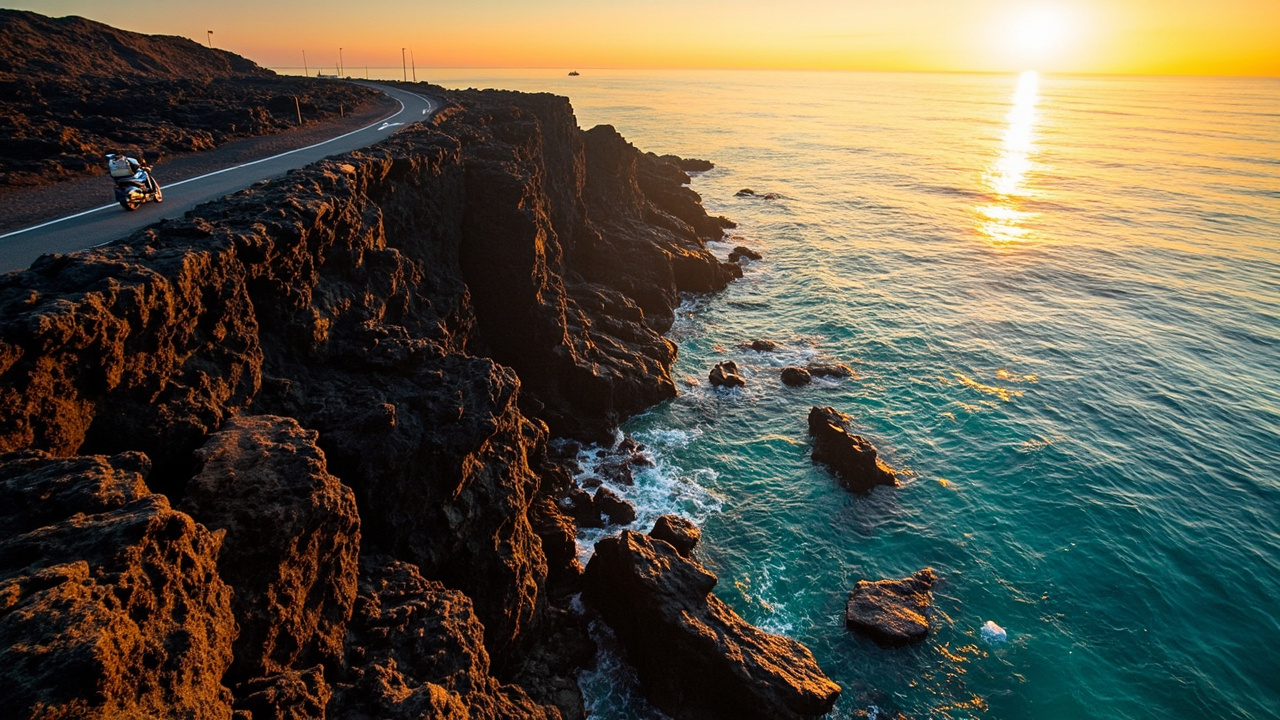
The ferry horn blared three times, a sound that bounced off the concrete pier and startled a group of chickens pecking at discarded noodle boxes. I was standing on the dock at Beihai International Passenger Port, watching a line of travelers hauling roller bags and fishing rods onto the boat. A woman next to me was trying to explain to her toddler that the lump of dark rock on the horizon was actually an island. That was my first glimpse of Weizhou Island, a volcanic outpost floating in the Gulf of Tonkin, about 30 miles off China’s southern coast. I had spent seven years in Beijing and traveled through most of China’s famous sights, but somehow this place had slipped past me. It took a taxi driver in Nanning asking why I hadn’t been there yet to finally push me onto that ferry.
Weizhou Island is China’s youngest volcanic island, formed by eruptions roughly 7,000 years ago. It is small, about 10 square miles, with a population of around 16,000 people living mostly in two villages. The island is famous for its black lava rock formations, Catholic churches built by French missionaries in the 1800s, and beaches that rival anything you will find in Southeast Asia, minus the crowds. For international tourists, it is still relatively undiscovered, which is exactly why you should go now, before the mainland tour groups fully figure it out.
This guide covers everything you need to know: how to get there, where to stay, which spots are worth your time, which ones you can skip, and the practical details like payments, SIM cards, and visa rules that can trip up first-time visitors to China.
Quick answer
Weizhou Island is a volcanic island off the coast of Beihai in Guangxi Province, reachable by a 70-90 minute ferry ride. Most international visitors can enter China visa-free for up to 30 days if they are from one of the approved countries (including the US, UK, and most of Europe) under the 2024-2025 visa waiver policy, which has been extended through 2026. A 2-3 day trip costs roughly $150-250 (CNY 1,080-1,800) per person including ferry, accommodation, and food, with the best season being April through October.
The Short Version
Go. Weizhou Island is the kind of place that makes you feel like you discovered something. The volcano crater at South Bay, the black sand beaches, and the coral reef snorkeling are all genuinely impressive. But the real draw is the pace of life, scooters instead of cars, seafood pulled from the water hours before you eat it, and sunsets that turn the lava rock a deep red. Skip the tourist-trap “scenic area” packages and just rent a scooter, get lost, and follow the smell of grilled squid. Two days is enough. Three is better. You will not need a tour guide.
How I Picked These
I visited Weizhou Island twice in 2025, once in April and again in October, to see how the island changed between seasons. I stayed in a family-run guesthouse in the village of Sheng Tang, rented a scooter from a man named Uncle Chen who charged me $6 (CNY 43) per day, and spent about 40 hours driving every road on the island. I talked to ferry workers, a French priest who has lived there for 11 years, and a local fisherman who showed me where to find the best grilled sea urchin. I also made plenty of mistakes, paying double for snorkeling gear, getting caught in a rainstorm with no shelter, and nearly running out of gas on the far side of the island. Everything below is based on what I actually saw and did, not what a brochure told me.
Comparison Table
| Rank | Place | Best For | Approx Cost (USD) | Time Needed | When to Go |
|---|---|---|---|---|---|
| 1 | South Bay Volcano Crater | The main volcanic landscape | $15 (CNY 108) | 2-3 hours | Early morning or late afternoon |
| 2 | Sheng Tang Catholic Church | History and architecture | Free | 30-45 min | Any time, but mornings are quieter |
| 3 | Crocodile Mountain Scenic Area | Cliff views and lava formations | $20 (CNY 144) | 2 hours | Sunset |
| 4 | Shiluo Beach | Swimming and sunsets | Free | 1-2 hours | Late afternoon |
| 5 | Colorful Beach | Coral reef snorkeling | Free (gear rental $5-10) | 1-2 hours | High tide, midday |
| 6 | Shell Beach | Beachcombing and quiet | Free | 1 hour | Low tide |
| 7 | Weizhou Island Lighthouse | Panoramic views | $3 (CNY 22) | 30 min | Clear days only |
| 8 | Catholic Church in Chengzai Village | Quieter alternative to Sheng Tang | Free | 20 min | Any time |
| 9 | Dripping Screen (Dishui) Rock | Sea stacks and photography | Free | 45 min | Golden hour |
| 10 | Local Seafood Night Market | Food and local life | $10-20 per meal | 1-2 hours | 6-9 PM |
1. South Bay Volcano Crater - The reason the island exists
The first time I stood at the edge of the South Bay crater, I understood why people make the trip. The black lava rock curves down toward the turquoise water in a massive amphitheater shape, with layers of basalt stacked like burnt pancakes. It is not a dramatic, Yellowstone-style crater. It is quieter than that, a collapsed volcanic cone that the sea has slowly carved into terraces and arches. You walk down a series of wooden staircases to reach the shoreline, where the waves slap against rock formations that look like frozen black waterfalls.
This is the island’s signature sight, and it earns the hype. The geological formations are genuinely unusual, columnar basalt, sea caves, and a natural arch that frames the ocean perfectly. The park is well-maintained with clear paths, and the signage is bilingual, which is rare on the island. Give yourself two to three hours here, because you will want to sit on the rocks and just watch the water for a while.
- Location: Southern tip of the island, about 15 minutes by scooter from Sheng Tang village
- Entry fee: $15 (CNY 108) for the combined scenic area ticket, which also covers Crocodile Mountain and the lighthouse
- Opening hours: 8:00 AM to 6:00 PM daily, but the light is best before 10 AM
- How to get there: From the ferry port, turn left and follow the main road south for about 4 miles. You will see the large parking lot and ticket office on your left. If you are on a scooter, park at the lot and walk in, or pay a local to watch your bike for $1 (CNY 7)
- When to visit: Go at 8 AM when the gates open. By 10 AM the tour groups arrive and the staircases get crowded
- Insider tips: The wooden stairs are slippery when wet, wear shoes with grip. Bring water, there are no shops inside the crater area. The view from the top platform is better than the view from the bottom, so take photos from both levels. If you see a small path leading off the main trail near the arch, it leads to a secluded cove where locals swim, but only go if the tide is low
- A specific mistake I made: I wore flip-flops and nearly slid down a wet staircase. A grandmother selling cold drinks nearby laughed at me and handed me a pair of rubber sandals she had for rent, $0.50 (CNY 3.50). I bought them and she refused to take my money. We shared a bottle of water and watched the waves for ten minutes.
2. Sheng Tang Catholic Church - A French ghost in the tropics
The church rises out of the village like a mirage. A Gothic-style Catholic cathedral, built in 1880 by French missionaries, with walls made of local coral and volcanic rock, standing in the middle of a Chinese fishing village. It is the kind of architectural collision that makes you do a double-take. The twin bell towers are visible from half a mile away, and when you get closer, you notice the building materials, chunks of black lava and white coral embedded in the plaster.
The church is still active, with a small congregation of mostly elderly locals and a priest who has been there for over a decade. On Sunday mornings, you can hear hymns drifting out of the open doors, sung in a mix of Mandarin and the local dialect. The interior is simple, wooden pews, a plain altar, and stained glass windows that cast colored light on the stone floor. It is not grand, but it feels real, like a place where people actually pray rather than a photo opportunity.
- Location: Sheng Tang village, the main settlement on the island, about 10 minutes from the ferry port
- Entry fee: Free
- Opening hours: Open daily, roughly 8 AM to 6 PM. Mass is at 9 AM on Sundays and is open to visitors
- How to get there: From the ferry port, walk straight into the village for about 15 minutes. The church is impossible to miss, just follow the bell towers
- When to visit: Weekday mornings are the quietest. Sunday mass is worth attending if you are interested in local culture, but be respectful and sit in the back
- Insider tips: The courtyard behind the church has a small garden where you can sit in the shade. The church walls contain fossilized coral, look closely and you will see the patterns. There is a small shop across the street that sells excellent coconut milk, freshly cracked, for $1.50 (CNY 11). The priest speaks some English and is happy to chat if he is not busy
- A specific person I met: The priest, Father Zhang, told me that the church survived the Cultural Revolution because locals hid the statues in their homes. He showed me a small wooden Madonna that had been passed between families for decades. He said, “This island has a way of holding onto things.”
3. Crocodile Mountain Scenic Area - The cliffs that bite the sea
Crocodile Mountain is a misnomer. It is not a mountain, it is a headland of volcanic cliffs that juts into the sea, shaped vaguely like a crocodile’s snout if you squint hard enough. The name is less important than the view. From the top, you look down at a coastline of black rock formations, sea arches, and blowholes that shoot water into the air when the waves are strong. The trail winds along the cliff edge for about a mile, with several platforms that hang over the water.
This is the most exposed spot on the island, and on windy days, the spray from the waves can soak you even from 50 feet up. The rock formations here are more dramatic than at South Bay, with towering sea stacks and a natural bridge that has been carved by centuries of wave action. The sunset from the western edge of the trail is the best on the island, better than any beach, because the black rock reflects the orange light in a way that makes the whole cliff glow.
- Location: Western coast of the island, about 20 minutes by scooter from Sheng Tang village
- Entry fee: Included in the combined ticket ($15 / CNY 108)
- Opening hours: 8 AM to 6 PM, but the best time is 4-6 PM for sunset
- How to get there: Follow the coastal road west from Sheng Tang. The entrance is marked with a large sign and a parking area. From the ticket gate, it is a 15-minute walk uphill to the trailhead
- When to visit: Late afternoon for sunset. The trail is exposed, so avoid midday in summer when the heat is brutal
- Insider tips: The blowholes are most active two hours before high tide, check a tide chart before you go. The trail is not fully shaded, bring a hat and sunscreen. There is a small pavilion at the far end of the trail that most tourists miss, it has the best view of the sea stacks. If the wind is strong, hold onto the railings, the gusts can be sudden
- A specific observation: I sat on a bench at the far end of the trail for an hour, watching a fishing boat bob in the swell below. A Chinese couple next to me was taking engagement photos, the bride’s white dress whipping in the wind. The photographer kept shouting “Look at the volcano, not the camera!” and she kept laughing. It was the most joyful thing I saw on the island.
4. Shiluo Beach - Where the island comes to swim
Shiluo Beach is the island’s social hub. On any given afternoon, you will find families with inflatable flamingos, teenagers playing beach volleyball, and old men napping under umbrellas. The sand is a mix of white and black, giving it a salt-and-pepper look that photographs beautifully. The water is calm and shallow for a long way out, making it the safest swimming spot on the island.
The beach is also the best place to watch the sunset without paying for a scenic area ticket. Locals gather around 5:30 PM with folding chairs and cold beers, and the atmosphere is relaxed and welcoming. There are a few small restaurants at the back of the beach that serve grilled seafood and cold noodles, and the prices are reasonable, about $5 (CNY 36) for a plate of grilled squid.
- Location: Western side of the island, about 10 minutes by scooter from Sheng Tang village
- Entry fee: Free
- Opening hours: Always open, but the lifeguards are only on duty from 9 AM to 6 PM
- How to get there: From Sheng Tang, follow the main road west. The beach entrance is marked with a large archway. Park your scooter in the lot and walk through the arch to the sand
- When to visit: Late afternoon for swimming and sunset. The water is warmest from June to September
- Insider tips: The beach chairs are free if you buy a drink from the nearby stalls. The water gets deep quickly on the north end, so stay near the lifeguard tower if you are not a strong swimmer. There is an outdoor shower at the back of the beach, but it only has cold water. The grilled corn from the vendors is excellent, $1 (CNY 7), and they will add chili powder if you ask
- A specific food I tried: A vendor named Auntie Wei sold me a skewer of grilled sea urchin, which I had never eaten before. It tasted like the ocean, briny and slightly sweet, with a texture that was surprisingly creamy. She saw my face and laughed, then handed me a piece of grilled corn to “cleanse the palate.” I went back to her stall every day after that.
5. Colorful Beach - Snorkeling without the crowds
Colorful Beach is the island’s best-kept secret, and I almost missed it. The name comes from the coral fragments that wash up on the shore, creating a mosaic of pink, purple, and white in the sand. The water here is clear and shallow over a reef that extends about 100 yards from the shore, making it ideal for snorkeling. Unlike Shiluo Beach, this spot is rarely crowded, mostly because it is a bit harder to find.
The reef is not the Great Barrier Reef, but it has a decent variety of fish, parrotfish, damselfish, and the occasional pufferfish. The coral is mostly dead, unfortunately, a result of rising water temperatures and overfishing, but the fish life is still active. If you are a beginner snorkeler, this is a safe and easy place to practice. The water is calm, the current is gentle, and you can stand up almost anywhere.
- Location: Eastern coast of the island, about 15 minutes by scooter from Sheng Tang village
- Entry fee: Free. Snorkel gear rental is $5-10 (CNY 36-72) from the small shop at the beach entrance
- Opening hours: Always open, but best at high tide when the water is deeper
- How to get there: From Sheng Tang, head east on the main road. Look for a small sign that says “Colorful Beach” in English and Chinese, it is easy to miss. Turn down the dirt road and follow it to the parking area
- When to visit: Midday, when the sun is high and the water is clearest. Check the tide chart and aim for high tide
- Insider tips: The rental shop also sells waterproof phone pouches for $3 (CNY 22), worth it if you want photos. Bring your own snorkel mask if you have one, the rental ones are basic. There are no lifeguards here, so swim with a buddy. The beach has a small changing room but no showers, bring a towel and wet wipes. If you see a group of locals with spearfishing gear, they are usually happy to show you what they caught
- A specific moment: I swam out to the edge of the reef and floated on my back, staring at the sky. A jellyfish drifted past, translucent and glowing in the sunlight. It was beautiful and terrifying in equal measure. I swam back to shore faster than I have ever swum in my life.
6. Shell Beach - A quiet corner for beachcombers
Shell Beach is the kind of place you go when you want to be alone. It is on the northern coast, far from the main tourist routes, and the only sounds are the waves and the occasional cry of a seabird. The beach is covered in shells, hence the name, but not the kind you would put in a display case. These are broken fragments, worn smooth by the sea, in shades of white, pink, and pale orange.
The beach is not great for swimming, the water is shallow and rocky, but it is perfect for walking and collecting. I spent an hour here one afternoon, filling my pockets with smooth pieces of coral and shell, and I did not see another person the entire time. If you want a break from the crowds and the heat, this is the place.
- Location: Northern coast, about 25 minutes by scooter from Sheng Tang village
- Entry fee: Free
- Opening hours: Always open
- How to get there: Follow the road north from Sheng Tang, past the lighthouse turnoff, until you reach the coast. The beach is at the end of a dirt track that is easy to miss
- When to visit: Low tide, when the beach is widest and the shells are most exposed
- Insider tips: Do not take the shells home. China’s customs regulations prohibit exporting natural items like shells and coral, and you will have them confiscated at the airport. Take photos instead. The beach has no facilities, bring water and a bag for your trash. The sun is intense here, there is no shade, so bring a hat
- A specific observation: I found a piece of sea glass, smooth and frosted, the color of a pale green beer bottle. I held it up to the sun and watched the light pass through it. I left it on a rock for someone else to find. Some things are better left where they are.
7. Weizhou Island Lighthouse - A short climb for a long view
The lighthouse is not a destination in itself, but it is worth the detour. It stands on a hill in the center of the island, a white tower with red stripes that looks like it was lifted from a New England postcard. The climb to the top is 120 steps, and the view from the top is the best on the island, a 360-degree panorama of the coastline, the villages, and the sea stretching to the horizon.
The lighthouse is not particularly tall, maybe 60 feet, but because the island is flat, you can see everything. On a clear day, you can see the mainland in the distance, a hazy line on the horizon. The lighthouse keeper, an old man named Mr. Lin, has been there for 20 years and is happy to chat if you speak Chinese or use a translation app. He told me that he once saw a typhoon from the top of the tower, and the waves were so high they looked like moving mountains.
- Location: Central hill of the island, about 10 minutes by scooter from Sheng Tang village
- Entry fee: $3 (CNY 22), payable at the small ticket booth at the base
- Opening hours: 9 AM to 5 PM, but the light is best in the late afternoon
- How to get there: Follow the road uphill from the center of the island. The lighthouse is visible from most of the island, so just head toward it
- When to visit: Clear days only. If it is cloudy, the view is not worth the climb
- Insider tips: The stairs are narrow and spiral, so do not bring a large backpack. The top platform is small, so go early or late to avoid crowds. Mr. Lin keeps a guestbook at the base, and it is fun to read the entries from travelers from all over the world. Bring cash, the ticket booth does not accept mobile payments
- A specific person I met: Mr. Lin told me that he has seen the island change dramatically in his 20 years. “When I started, there were no tourists and no scooters. Now, in summer, it is like a city.” He said it with a smile, but there was a hint of sadness in his voice. He pointed to the sea and said, “But the water is still the same. The water does not change.”
8. Catholic Church in Chengzai Village - The quieter twin
Most visitors see the Sheng Tang church and assume that is the only one on the island. They are wrong. The Chengzai church, built in the same era by the same French missionaries, is smaller and less well-preserved, but it has a charm that the main church lacks. It sits in a village that feels frozen in time, with narrow lanes, old stone houses, and chickens wandering freely.
The church is not as photogenic as its twin, the facade is plainer and the paint is peeling, but that is part of its appeal. It feels like a building that is still living, not a museum piece. The interior is dim and cool, with wooden pews worn smooth by decades of use. If you are lucky, you might find the elderly caretaker, who will show you the small garden behind the church where she grows vegetables.
- Location: Chengzai village, on the eastern side of the island, about 20 minutes by scooter from Sheng Tang
- Entry fee: Free
- Opening hours: Open during daylight hours, but the door is sometimes locked if the caretaker is away
- How to get there: From Sheng Tang, head east and follow the signs for Chengzai. The church is in the center of the village, next to a small square
- When to visit: Any time, but morning is best when the light comes through the windows
- Insider tips: The caretaker, Auntie Liu, speaks only the local dialect, but she will understand if you smile and point. She sells small bags of dried longan fruit for $2 (CNY 14), and they are excellent. The village has a small noodle shop that serves a local specialty, seafood noodles with a broth made from dried shrimp, $3 (CNY 22). The church is not on any tour route, so you will likely have it to yourself
- A specific moment: I sat in the back pew for 20 minutes, just breathing in the cool air. The only sound was the wind rattling a loose window frame. I am not a religious person, but I understood why people build places like this. There is a peace here that is hard to find anywhere else on the island.
9. Dripping Screen (Dishui) Rock - Where the lava meets the sea
Dripping Screen Rock is a geological oddity that looks like a frozen waterfall of black lava. The rock formation, created by a lava flow that cooled rapidly when it hit the sea, is a series of vertical columns that drip down into the water. The name comes from the way the rock seems to be melting into the ocean. It is one of the most photographed spots on the island, and for good reason.
The best time to visit is golden hour, when the low sun catches the texture of the rock and makes it glow. The area around the rock is also good for tide pooling, with small pools that trap sea creatures at low tide. I found a tiny crab, a starfish, and a sea anemone in one pool, and I spent a happy half hour just watching them.
- Location: Southeastern coast, about 15 minutes by scooter from Sheng Tang village
- Entry fee: Free
- Opening hours: Always open
- How to get there: Follow the coastal road southeast from Sheng Tang. The rock is visible from the road, and there is a small parking area nearby
- When to visit: Late afternoon for the light. Low tide for the tide pools
- Insider tips: The rocks are sharp, wear closed-toe shoes if you want to explore the tide pools. Do not touch the sea creatures, some of them are fragile and easily harmed. There is a small stall nearby that sells fresh coconut water, $1.50 (CNY 11), and it is the best on the island. If you are a photographer, bring a tripod, the long exposures of the water against the black rock are stunning
- A specific observation: I watched a heron stand perfectly still on a rock for 15 minutes, waiting for a fish. It did not move a muscle. Then, in a flash, its beak plunged into the water and came up with a small silver fish. It swallowed it whole and resumed its vigil. I felt like I had witnessed something ancient and patient.
10. Local Seafood Night Market - Eat where the island eats
The night market in Sheng Tang village is not a tourist attraction. It is a street of stalls and plastic tables where locals come to eat dinner, and that is exactly why you should go. The market starts around 6 PM, when the fishing boats come in and the day’s catch is laid out on ice. You can pick your seafood, a crab, a fish, a pile of shrimp, and the stall owner will grill it or stir-fry it on the spot.
The prices are remarkably cheap. A whole grilled fish costs about $6 (CNY 43), a plate of stir-fried clams is $4 (CNY 29), and a skewer of grilled squid is $1.50 (CNY 11). The quality is exceptional, the seafood is caught the same day, and the flavors are simple, garlic, chili, and salt. This is not fancy dining, but it is the best food on the island.
- Location: Main street of Sheng Tang village, near the church
- Entry fee: Free, but budget $10-20 (CNY 72-144) per person for a full meal
- Opening hours: 6 PM to 10 PM, but the best selection is before 8 PM
- How to get there: From the church, walk toward the center of the village. The market is on the main street, and you will see the smoke from the grills before you see the stalls
- When to visit: Go early, before 7:30 PM, when the stalls are fully stocked. The market is busiest on weekends
- Insider tips: Point at what you want rather than trying to order by name. Most stall owners do not speak English, but they are patient and friendly. Ask for “bu la” (no spice) if you cannot handle chili, otherwise, assume everything is spicy. The grilled oysters with garlic are a must-try, $2 (CNY 14) for six. Bring cash, some stalls do not accept mobile payments. If you see a stall with a long line of locals, join it, that is where the good stuff is
- A specific person I met: I sat next to a fisherman named Chen who had been working the waters around the island for 30 years. He insisted on buying me a beer and taught me how to eat a crab properly, which involves a lot of cracking and sucking and very little elegance. He told me that the sea around the island is getting warmer, and the fish are getting smaller. “But what can we do?” he said, shrugging. “We eat what the sea gives us.” He raised his glass and we drank to the sea.
FAQ summary
Weizhou Island is a volcanic island off the coast of Beihai, China, reachable by a 70-90 minute ferry from Beihai International Passenger Port. The island is small, about 10 square miles, and best explored by scooter, which can be rented for approximately $6 (CNY 43) per day. The main attractions include the South Bay Volcano Crater, two Catholic churches built by French missionaries, and several beaches with volcanic black sand. The combined scenic area ticket costs $15 (CNY 108) and covers the crater, Crocodile Mountain, and the lighthouse. The best time to visit is April through October, and a 2-3 day trip costs approximately $150-250 (CNY 1,080-1,800) per person. International visitors from approved countries can enter China visa-free for up to 30 days under the policy extended through 2026.
FAQ
Q: Do I need a visa to visit Weizhou Island? A: If you are from an approved country (including the US, UK, Canada, Australia, and most of Europe), you can enter China visa-free for up to 30 days under the policy extended through 2026. You will need a passport valid for at least 6 months and a return ticket. Confirm your eligibility with the Chinese embassy before you travel.
Q: How do I get to Weizhou Island from the mainland? A: Take a ferry from Beihai International Passenger Port. The high-speed ferry takes 70-90 minutes and costs approximately $25 (CNY 180) one way. Book tickets in advance through the Weizhou Island official WeChat account, as ferries sell out in peak season.
Q: Is WeChat Pay or Alipay accepted on the island? A: Yes, most shops, restaurants, and guesthouses accept WeChat Pay and Alipay. However, some small stalls and the lighthouse ticket booth only accept cash, so carry about $50 (CNY 360) in cash as backup. Set up WeChat Pay or Alipay before you arrive, as the process requires a foreign passport and a Chinese bank card or international credit card.
Q: Do I need a VPN for my phone in China? A: Yes. Google, Instagram, Facebook, and WhatsApp are blocked in China. Download a reliable VPN before you arrive and test it before you land. You will also need a Chinese SIM card or an international roaming plan, as your home carrier may not work well. Buy a SIM card at the airport or in Beihai city before taking the ferry.
Q: Is English widely spoken on Weizhou Island? A: No. English is very limited, even in hotels and restaurants. Download a translation app like Google Translate (with the Chinese language pack downloaded for offline use) or Pleco before you arrive. Learn a few basic phrases like “xie xie” (thank you) and “duo shao qian” (how much), and you will get by fine.
Q: What is the best time of year to visit Weizhou Island? A: April through October is the best season, with warm temperatures and calm seas. July and August are the hottest and most crowded, with temperatures around 90°F (32°C). Typhoon season runs from June to September, and ferries can be canceled during storms. October is the sweet spot, warm, dry, and less crowded.
Q: How many days do I need on Weizhou Island? A: Two full days is the minimum to see the main sights. Three days is better if you want to relax, swim, and eat your way through the night market. The island is small, and with a scooter, you can cover most of it in a day, but you will want time to slow down.
The Honest Wrap-up
This guide is for travelers who want to see a side of China that most tourists never find. It is for people who are comfortable with a bit of chaos, who do not need everything to be polished and organized, and who are willing to rent a scooter and get lost. It is not for luxury travelers, the island has no high-end resorts, no spas, and no fine dining. It is not for people who need constant entertainment, the main activity here is doing nothing, beautifully.
If you are planning a trip to China and have a few extra days, skip the crowds in Beijing and Shanghai and head south. Weizhou Island is a place that will stay with you long after you leave. The black rock, the turquoise water, the old churches, and the fishermen who share their beer with strangers, these are the memories that make travel worth it.
One final piece of advice: book your ferry tickets before you fly to China. The ferries sell out days in advance during peak season, and the last thing you want is to arrive in Beihai and find out you cannot get to the island. And when you get there, put down your phone, rent a scooter, and just drive. You will find what you are looking for.
More guides you may like
Top 10 Bridges in China: The Complete 2026 Guide
China's bridges are engineering marvels spanning mountains, rivers, and seas. Here are 10 of the most spectacular, from ancient stone to modern steel.
8 min read

Top 10 Buddhist Sites in China: The Complete 2026 Guide
From the Leshan Giant Buddha to the Dunhuang Caves, these 10 Buddhist sites represent 2,000 years of China's spiritual heritage.
9 min read

Top 10 Day Trips from Beijing You Shouldn't Miss: The Complete 2026 Guide
Beijing is packed with history, but some of China's best experiences are just a few hours away. Here are 10 day trips that will transform your visit.
9 min read

Top 10 Hidden Gems in China Off the Beaten Path: The Complete 2026 Guide
Beyond the Great Wall and Terracotta Warriors, China has incredible hidden destinations few tourists ever reach. Here are 10 underrated gems worth the detour.
9 min read

Top 10 Markets and Shopping Streets in China: The Complete 2026 Guide
From Shanghai's Bund to Beijing's Silk Street - 10 markets where foreigners can haggle, explore, and bring home authentic Chinese goods.
9 min read
Top 10 Museums in China You Shouldn't Miss: The Complete 2026 Guide
China's museums span 5,000 years of civilization. These 10 - from the Palace Museum to Xi'an's terracotta gallery - are unmissable for culture lovers.
9 min read