
Western Xia Imperial Tombs: The Complete 2026 Guide
TODO: Extract from article (100-160 chars)
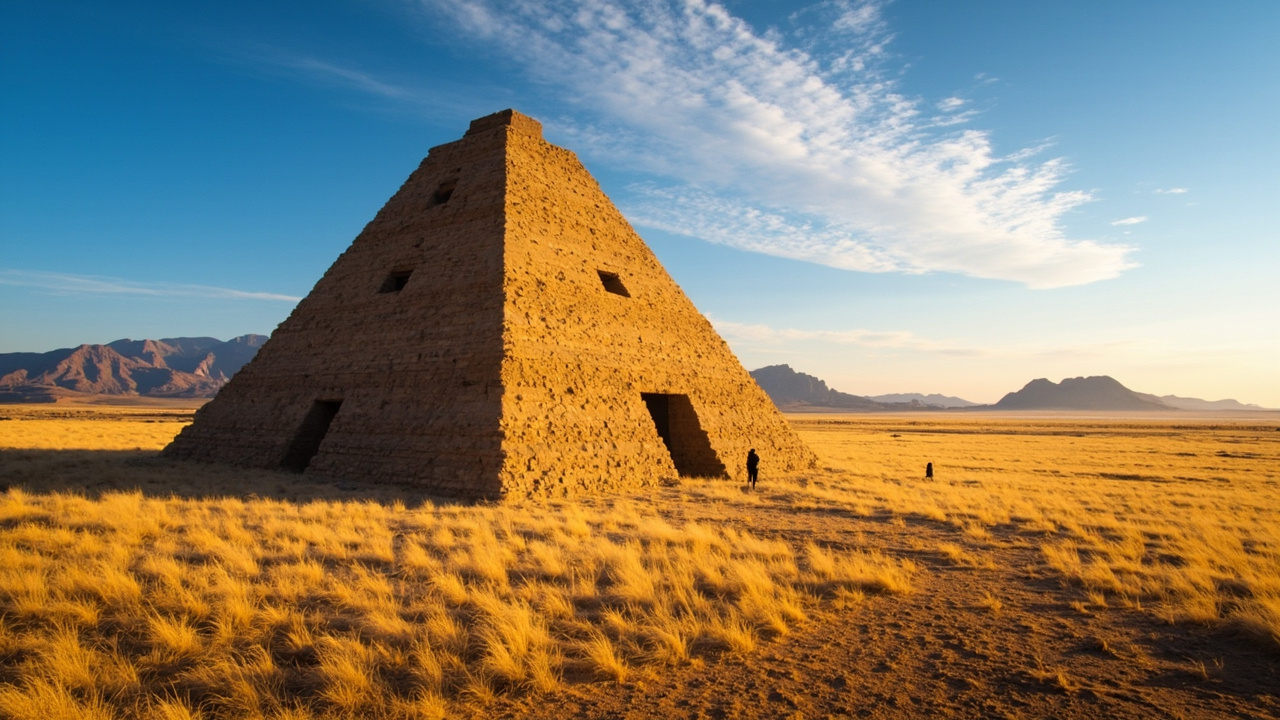
The rain came down hard the day I first saw the Western Xia Imperial Tombs. Not a drizzle - a proper Yinchuan downpour that turned the gravel paths into rivers and made the distant Helan Mountains disappear behind a gray curtain. I stood under the ticket office awning with a Chinese tour group, all of us watching the water hammer the earth, and I remember thinking: this is what 190 years of history feels like when it finally lets go.
The tombs sit in a wide, flat valley about 30 kilometers west of Yinchuan, the capital of Ningxia Hui Autonomous Region. They belong to the Western Xia dynasty, a kingdom that ruled this corner of northwest China from 1038 to 1227. The Mongols under Genghis Khan wiped them out so completely that for centuries, almost no one knew these ruins existed. The site wasn’t even properly identified until the 1930s. That obscurity is exactly why I keep coming back.
This guide covers everything you need to plan a visit: how to get there from Yinchuan, what you’ll actually see on the ground, how much it costs, and the mistakes I made so you don’t have to. I’ve been to this site four times over the past seven years, in summer heat, autumn wind, and once in a freak April snowstorm. I’ll tell you what’s worth your time and what you can skip.
Quick answer
The Western Xia Imperial Tombs are a 40-minute drive west of Yinchuan, China, and cost about $7 (50 CNY) for entry. The site is open year-round, but October is the best month to visit - the Helan Mountains behind the tombs turn gold, and the light is spectacular. Most international visitors combine this with a trip to the nearby Helan Mountain rock art, and you’ll need a taxi or private driver since there’s no direct public bus.
The Short Version
If you only have 90 seconds, here’s the deal. The Western Xia Tombs are not Xi’an’s Terracotta Army. They’re quieter, stranger, and far less polished. You’ll see nine large earthen pyramids - the mausoleums of Western Xia emperors - scattered across a vast plain, plus 250+ smaller tombs and burial sites. The on-site museum is genuinely excellent and tells a story most Westerners have never heard. Come for the history, stay for the emptiness. The site gets almost no international tourists, which means you’ll likely have the place mostly to yourself. That’s the whole appeal.
How I Picked These
I’ve lived in Beijing since 2019 and have made four dedicated trips to Yinchuan and the Western Xia sites. The first time, I hired a driver through my hotel and paid way too much. The second time, I took a public bus to the wrong stop and walked two hours in 35-degree heat. By the third and fourth visits, I had the logistics dialed in. I’ve also spent time with a local historian named Ma Wenbin, who runs a small teahouse near the tombs and has spent 20 years collecting Western Xia artifacts. He’s the one who showed me the hidden sections of the site that most visitors walk right past. This guide reflects what I learned from those trips - the practical stuff and the stories that make this place stick with you.
Comparison Table
| Rank | Place | Best For | Approx Cost (USD) | Time Needed | When to Go |
|---|---|---|---|---|---|
| 1 | No. 3 Tomb (Li Yuanhao) | The iconic pyramid view | $7 (50 CNY) site-wide | 2-3 hours | Oct, early morning |
| 2 | Western Xia Museum | Understanding the dynasty | Included in entry | 1-1.5 hours | Any time, weekdays |
| 3 | No. 1 & 2 Tombs | Twin mausoleums, fewer crowds | Included in entry | 1 hour | Spring or autumn |
| 4 | Helan Mountain Rock Art | Ancient petroglyphs nearby | $9 (60 CNY) | 2-3 hours | Morning, before noon heat |
| 5 | Yinchuan Old City | Hui Muslim culture, food | Free | Half day | Evening for night market |
| 6 | Ningxia Museum | Free local history | Free | 1-2 hours | Weekday mornings |
| 7 | Chengtian Temple Pagoda | 11th-century Buddhist tower | $3 (20 CNY) | 45 min | Late afternoon |
| 8 | Sand Lake | Desert + lake combo | $15 (100 CNY) | Half day | May-Sept |
| 9 | Shuidonggou Ruins | Ancient military outpost | $12 (80 CNY) | 2-3 hours | Spring/autumn |
| 10 | Helan Mountain East Foothills | Vineyards, wineries | Varies | Half day | Sept-Oct harvest |
No. 3 Tomb (Li Yuanhao) - The One on Every Postcard
The first time I saw the No. 3 Tomb, I actually laughed out loud. It looks like a giant earthen pyramid that someone forgot to finish - a massive truncated cone rising maybe 20 meters out of the flat valley floor. The guidebooks call it a “mausoleum,” but that undersells it. It’s a statement. Li Yuanhao, the founding emperor of Western Xia, built this thing to say: we’re here, we matter, and we’re not going anywhere. The Mongols disagreed, but the pyramid survived.
What makes this tomb special is the sheer scale of the emptiness around it. You walk from the entrance through a long sacred way lined with stone statues - civil officials, military officers, mythical beasts - and then the pyramid just appears on the horizon. No crowds, no rope barriers, no gift shop at the base. Just you and a 900-year-old pile of rammed earth.
Location: Western Xia Imperial Tombs Scenic Area, Xixia District, Yinchuan, Ningxia Entry fee: $7 (50 CNY) for the entire site, including the museum Opening hours: 8:00 AM - 6:00 PM (May-Oct), 8:30 AM - 5:30 PM (Nov-Apr) How to get there: No direct public bus. Take a taxi from Yinchuan city center - it’s about 40 minutes and should cost $10-15 (70-100 CNY). Or hire a driver for a half-day trip that includes the rock art sites. When to visit: October, early morning. The light hits the pyramid face-on and the Helan Mountains behind it are gold. Weekdays are nearly empty. Insider tips:
- Walk past the main viewing platform to the back of the tomb. There’s a small path that circles the base where you can touch the rammed earth. It’s not forbidden, just not advertised.
- The museum at the entrance is actually better than the tomb itself. Go there first, then walk out to the pyramid with context.
- Bring water. There’s a small shop at the entrance, but nothing once you’re out on the site.
- The shuttle bus inside the site costs an extra $1.50 (10 CNY). Skip it - the walk is flat and takes 15 minutes.
I met an elderly Uyghur man at the base of this tomb who told me his grandfather used to bring sheep to graze here in the 1950s, before the site was officially protected. He pointed at the pyramid and said, “My grandfather always said the kings were still sleeping inside. We never let the sheep near it.”
Western Xia Museum - The Story You Never Learned
Here’s the thing about the Western Xia dynasty: almost nobody outside China knows it existed. The museum at the tomb site fixes that. It’s a modern, well-designed building that walks you through the dynasty’s 190-year history, its unique writing system (the Tangut script looks like Chinese but isn’t - it’s a completely invented script with over 6,000 characters), and its brutal destruction by the Mongols.
I spent two hours in here on my second visit and came out genuinely moved. The centerpiece is a reconstructed Tangut manuscript and a set of carved stone tablets that show the bilingual Chinese-Tangut inscriptions. There’s also a section on the dynasty’s Buddhist art that rivals anything you’d see in a bigger city museum.
Location: Inside the Western Xia Imperial Tombs Scenic Area, same entrance as the tombs Entry fee: Included in the $7 (50 CNY) site ticket Opening hours: Same as the site: 8:00 AM - 6:00 PM (May-Oct), 8:30 AM - 5:30 PM (Nov-Apr) How to get there: Same as the tombs - taxi from Yinchuan, 40 minutes When to visit: Weekday mornings. The museum gets school groups on weekends and they’re loud. Insider tips:
- The English audio guide is worth the $2 (15 CNY). The English signage is decent but the audio adds depth.
- There’s a small cafe inside the museum. The coffee is terrible. The tea is fine. Manage expectations.
- The gift shop sells replicas of Tangut script calligraphy - these make excellent, unusual souvenirs.
- Photography is allowed but no flash on the manuscripts.
I watched a Chinese father explain the Tangut script to his daughter by drawing characters in the air. She was maybe eight years old and completely bored. I wanted to tell her she was standing in front of one of the rarest writing systems in human history, but I figured her dad had it covered.
No. 1 & 2 Tombs - The Twins Nobody Visits
About 500 meters south of the main No. 3 Tomb, you’ll find Tombs No. 1 and No. 2 sitting side by side. These are believed to belong to Li Yuanhao’s grandfather and father - the founders of the Western Xia state before it officially became an empire. They’re smaller than No. 3, but they have something better: complete silence.
On my third visit, I walked out here and didn’t see another human being for 45 minutes. The twin pyramids sit close together, and between them there’s a raised platform that was once a ceremonial altar. Standing there, with the wind coming off the Helan Mountains and nothing but dry grass in every direction, I finally understood why this place matters. It’s not about the monuments. It’s about the absence - the space where a civilization used to be.
Location: Southern section of the Western Xia Imperial Tombs Scenic Area Entry fee: Included in the site ticket Opening hours: Same as the main site How to get there: Walk south from the No. 3 Tomb along the paved path. It’s about a 10-minute walk. When to visit: Late afternoon, when the light turns the earth a deep amber color. Insider tips:
- There’s a small observation platform between the two tombs that gives you a perfect photo angle of both pyramids.
- The path continues past these tombs to a fenced-off excavation area. You can’t enter, but you can see exposed brickwork from the original tomb chambers.
- Bring binoculars if you have them - you can spot wild rabbits and occasionally foxes in the grass.
- This is the best spot for a picnic, though there are no facilities. Pack in, pack out.
I sat on the altar platform between these two tombs and ate a slightly squashed mantou (steamed bun) I’d bought from a street vendor in Yinchuan. It was the most peaceful lunch I’ve had in China.
Helan Mountain Rock Art - 10,000 Years of Graffiti
About 30 minutes further west from the tombs, the Helan Mountain foothills are covered in ancient petroglyphs - carvings of animals, hunters, and abstract symbols that date back anywhere from 3,000 to 10,000 years. The Helan Mountain Rock Art Scenic Area is a separate ticket from the tombs, but it’s worth the extra cost if you’ve come this far.
The carvings are scattered across a wide valley, and you walk a boardwalk that loops past the most significant panels. The standout is a large carving of a sun with a face, which local researchers believe was a religious symbol for the ancient peoples who lived here. There are also vivid depictions of bighorn sheep, wolves, and human figures with bows.
Location: Helan Mountain Rock Art Scenic Area, about 20 km west of the Western Xia Tombs Entry fee: $9 (60 CNY) Opening hours: 8:00 AM - 6:00 PM daily How to get there: You’ll need a taxi or driver. From the tombs, it’s about 20 minutes. Most drivers in Yinchuan know the route. When to visit: Morning, before the heat builds. The carvings are easiest to see in low-angle light. Insider tips:
- The boardwalk is shaded in parts but exposed in others. Wear a hat and sunscreen even in spring.
- Some of the best carvings are high up on cliff faces. Bring binoculars or a camera with good zoom.
- The on-site museum has casts of the most important carvings - useful if you can’t make out the originals.
- There’s a small Uyghur restaurant at the entrance that serves excellent lamb skewers. The owner is a character.
A group of schoolchildren on a field trip ran past me shouting and pointing at a carving that looked like a giant sheep. Their teacher tried to corral them, gave up, and sat down next to me. She said, in English, “Every year they come. Every year they scream at the sheep.” She shrugged. “It’s tradition.”
Yinchuan Old City - Where the Real Ningxia Lives
The tombs are the main draw, but you’ll base yourself in Yinchuan, and the old city is where you should spend your evenings. The area around Drum Tower (Gulou) and Jade Emperor Pavilion is a maze of narrow streets, Hui Muslim restaurants, and shops selling everything from dried goji berries to hand-pulled noodles.
The food here is the star. Ningxia is famous for its halal cuisine, and the lamb dishes are the best I’ve had in China. There’s a street food market that sets up near the Drum Tower every evening, and you can eat well for $3-5 (20-35 CNY). The hand-pulled noodles with cumin lamb are worth the trip alone.
Location: Xingqing District, Yinchuan city center Entry fee: Free to wander Opening hours: The night market runs roughly 6:00 PM - 11:00 PM How to get there: From anywhere in central Yinchuan, walk or take a short taxi ride. The Drum Tower is the main landmark. When to visit: Evening, for the night market and the crowds. Insider tips:
- The goji berries here are the best in China. Buy them from the specialty shops near the Drum Tower, not from the tourist stalls.
- Try “yangza sui” (lamb offal soup) at one of the small breakfast shops - it’s a local specialty that most tourists never try.
- Learn to say “bu la” (not spicy) if you can’t handle heat. Ningxia food is milder than Sichuan but still has a kick.
- The old city is walkable, but the sidewalks are uneven. Wear proper shoes.
I ate dinner at a tiny noodle shop near the Drum Tower where the owner, a woman named Aisha, insisted on teaching me to pull noodles by hand. Mine came out looking like a deformed worm. She laughed, ate my noodle, and made me a fresh bowl. I still think about that bowl.
Ningxia Museum - The Free One That’s Actually Good
If you have an extra hour in Yinchuan and want context before visiting the tombs, the Ningxia Museum is a solid choice. It’s free, well-organized, and covers the region’s history from prehistoric times through the Western Xia dynasty to the present day. The Western Xia section has some artifacts that aren’t at the tomb site museum, including a remarkable collection of Buddhist statues.
The museum is also a good place to learn about Ningxia’s Hui Muslim culture, which is a significant part of the region’s identity. There’s a section on Islamic architecture and calligraphy that’s genuinely interesting.
Location: 6 Renmin Square East Street, Jinfeng District, Yinchuan Entry fee: Free, but bring your passport for entry registration Opening hours: 9:00 AM - 5:00 PM, closed Mondays How to get there: Take a taxi from the city center, about 15 minutes. Or bus line 101 from the Drum Tower area. When to visit: Weekday mornings, before the school groups arrive. Insider tips:
- The museum has free lockers for bags.
- English signage is limited. The audio guide is in Chinese only, so bring a translation app.
- The gift shop sells excellent replicas of Western Xia coins and Tangut script bookmarks.
- Allow 1.5 hours. It’s not huge, but it’s dense.
I spent an hour in the Western Xia section and was the only visitor. A guard followed me from room to room, not suspicious, just bored. When I finally left, he nodded and said, “Zai lai” - come again. I think he meant it.
Chengtian Temple Pagoda - A Quiet Survivor
The Chengtian Temple Pagoda is a 64-meter-tall brick tower in the heart of Yinchuan, built in 1050 during the Western Xia dynasty. It’s one of the few structures from that era that still stands in the city, and it’s a peaceful place to spend 45 minutes.
The pagoda is part of a small temple complex that’s still active. You’ll see local worshippers lighting incense and praying, which adds a layer of authenticity that the more touristy sites lack. The climb to the top is steep and narrow, but the view over Yinchuan’s old city is worth it.
Location: 2 West Street, Xingqing District, Yinchuan Entry fee: $3 (20 CNY) Opening hours: 8:00 AM - 6:00 PM daily How to get there: Walk from the Drum Tower area, about 10 minutes. Or take any bus heading west on West Street. When to visit: Late afternoon, when the light hits the brickwork and the crowds have thinned. Insider tips:
- The stairs are narrow and steep. If you’re claustrophobic, skip the climb and admire the pagoda from the courtyard.
- There’s a small tea house in the temple grounds where you can sit and watch the worshippers.
- The pagoda is lit up at night - worth a quick photo stop if you’re in the area after dark.
An elderly man was praying at the base of the pagoda when I visited. He noticed me watching and smiled, then gestured for me to come closer. He pointed at the pagoda and said something I didn’t understand, but his tone was reverent. I nodded and smiled back.
Sand Lake - Desert Meets Wetland
Sand Lake is about 50 kilometers north of Yinchuan, and it’s a strange, beautiful place where a desert meets a lake. You take a boat across the lake to reach a sand dune area, where you can hike, ride camels, or just sit and watch the birds. It’s a popular weekend destination for Chinese tourists, but it’s worth the trip if you have a full day to spare.
The lake is a major stop for migratory birds, and in spring and autumn you’ll see thousands of cranes, herons, and other species. The contrast between the yellow sand and the blue water is striking, and the Helan Mountains form a dramatic backdrop.
Location: Sand Lake Scenic Area, Pingluo County, about 50 km north of Yinchuan Entry fee: $15 (100 CNY) including the boat ride Opening hours: 8:00 AM - 6:00 PM daily How to get there: No public transport. Hire a taxi or driver for the day - expect to pay $30-40 (200-280 CNY) round trip including waiting time. When to visit: May-September for the birds and warm weather. Avoid weekends and Chinese holidays. Insider tips:
- The camel rides are $5 (35 CNY) extra and worth it for the novelty.
- Bring binoculars for the bird watching.
- The sand gets extremely hot in summer. Wear closed-toe shoes.
- There’s a small restaurant at the entrance that serves decent fish from the lake.
I rode a camel across the sand here and the camel’s handler, a young man named Zhang, told me he’d been doing this job for six years. He said the camels have names and personalities, and his favorite is a grumpy female named Hua who bites tourists who try to feed her. I believed him.
Shuidonggou Ruins - The Ancient Military Outpost
Shuidonggou, about 30 kilometers east of Yinchuan, is an ancient military outpost that dates back to the Ming Dynasty. It’s not Western Xia, but it’s close enough to combine with a day trip, and it offers a different perspective on the region’s history.
The site is a network of underground tunnels, trenches, and watchtowers that were used for defense against Mongol raids. You can walk through the tunnels, which are surprisingly well-preserved, and there’s a small museum explaining the site’s history.
Location: Shuidonggou Scenic Area, Lingwu City, about 30 km east of Yinchuan Entry fee: $12 (80 CNY) Opening hours: 8:00 AM - 6:00 PM daily How to get there: Taxi from Yinchuan, about 40 minutes. Expect to pay $15-20 (100-140 CNY) each way. When to visit: Spring or autumn. The tunnels are cool in summer but the above-ground sections get hot. Insider tips:
- The tunnels are dark and narrow. Bring a flashlight or use your phone.
- The site includes a reconstructed Ming Dynasty village with actors in period costume. It’s cheesy but fun.
- Combine this with a visit to the nearby Ningxia Wine Region for a full day out.
I got lost in the tunnels here for 20 minutes. It was dark, cold, and genuinely unsettling. When I finally found the exit, I emerged into bright sunlight and a group of Chinese tourists who applauded. I bowed. It felt appropriate.
Helan Mountain East Foothills - The Wine Country
Ningxia is China’s most important wine region, and the eastern foothills of the Helan Mountains are where most of the wineries sit. The area has been producing wine since the 1980s, and the quality has improved dramatically in recent years. Several wineries offer tours and tastings, and the setting - vineyards against the dramatic mountain backdrop - is stunning.
The most accessible winery is Chateau Changyu Moser XV, which was established in 2013 with the help of Austrian winemaker Lenz Moser. It’s a modern facility with a sleek tasting room and a restaurant. Tours cost around $10-15 (70-100 CNY) and include tastings of four to six wines.
Location: Helan Mountain East Foothills Wine Region, about 20 km west of Yinchuan Entry fee: Varies by winery. Tours typically $10-15 (70-100 CNY) Opening hours: Most wineries are open 10:00 AM - 5:00 PM, but call ahead How to get there: Taxi from Yinchuan, about 30 minutes. Most drivers know the wineries. When to visit: September-October during the harvest season, when the vineyards are golden and the wineries are most active. Insider tips:
- The wines are good but not cheap. Expect to pay $15-30 (100-200 CNY) per bottle.
- Book ahead for tours, especially on weekends.
- The restaurant at Changyu Moser XV serves excellent food with wine pairings.
- Bring a jacket even in summer - the foothills get cool in the evening.
I did a tasting at Changyu Moser XV and ended up chatting with a winemaker from Shandong who had moved to Ningxia for the terroir. He said, “People think China is all about baijiu. But we’re making real wine here now.” He was right.
FAQ summary
The Western Xia Imperial Tombs are located about 40 minutes west of Yinchuan, Ningxia, and cost $7 (50 CNY) for entry, which includes the museum. The best time to visit is October, when the weather is mild and the Helan Mountains are golden. There’s no direct public transport, so plan to take a taxi or hire a driver for the day. The site is open year-round, with slightly shorter hours in winter. Most visitors combine the tombs with the nearby Helan Mountain rock art, which costs an additional $9 (60 CNY).
FAQ
Q: Do I need a visa to visit China in 2026? A: Citizens of many countries, including the US, UK, Canada, Australia, and most of Europe, can visit China visa-free for up to 30 days through 2025 and 2026. Check the latest policy with your local Chinese embassy, as rules can change. If you’re not eligible for visa-free entry, you’ll need a standard L tourist visa.
Q: How do I get from Yinchuan to the Western Xia Tombs? A: There’s no direct public bus. Your best options are a taxi (about 40 minutes, $10-15 or 70-100 CNY) or hiring a driver for a half-day trip that includes the tombs and the Helan Mountain rock art (about $30-40 or 200-280 CNY). Some hotels in Yinchuan can arrange a driver for you.
Q: Is the Western Xia Tombs site accessible for people with mobility issues? A: Partially. The main paths are flat and paved, and there’s a shuttle bus that covers the distance from the entrance to the main tomb. However, the walk to Tombs No. 1 and 2 is on gravel, and the museum has stairs. If you have significant mobility issues, you can still see the main tomb and museum.
Q: Can I pay with a credit card at the tombs? A: Credit cards are accepted at the ticket office and museum gift shop, but cash is easier for smaller purchases like the shuttle bus and snacks. More importantly, set up Alipay or WeChat Pay before you arrive in China - they’re accepted everywhere and you’ll need them for taxis, restaurants, and most shops.
Q: Do I need a VPN for my phone in China? A: Yes. Google, WhatsApp, Instagram, and many other Western apps are blocked in China. Download a reliable VPN before you arrive and test it. I recommend Astrill or ExpressVPN. Also, buy a Chinese SIM card or eSIM at the airport - your home carrier’s roaming plan may not work well.
Q: Is English spoken at the tombs? A: Limited. The museum has English signage and audio guides, but the staff speak minimal English. Download a translation app like Google Translate (with offline packs) or Pleco before you go. You’ll also want to have the Chinese name for the tombs written down: 西夏王陵 (Xixia Wangling).
Q: What should I wear when visiting the tombs? A: Comfortable walking shoes and layers. The site is exposed, so in summer you’ll need sun protection, and in winter it can be bitterly cold with wind off the mountains. Spring and autumn are the best seasons, but bring a light jacket even in May or September.
The Honest Wrap-up
This list is for travelers who want something quieter than the Great Wall, something stranger than the Terracotta Army. It’s for people who are curious about the parts of Chinese history that don’t make it into the standard tour circuit. If you’re on a tight schedule and only have one day in Ningxia, do the tombs and the museum, then eat lamb noodles in the old city and call it a day. If you have two days, add the rock art and a winery.
This list isn’t for anyone who needs polished, heavily curated attractions with gift shops at every turn. The Western Xia Tombs are raw, exposed, and unapologetically empty. That’s the point.
One final piece of advice: when you’re standing at the base of the No. 3 Tomb, turn around and look at the Helan Mountains. The Mongols came over those peaks in 1227 and ended this civilization. But the tombs are still here, 800 years later. There’s something in that stubbornness that sums up this entire region. Bring a good jacket, a translation app, and an open mind. You’ll leave with a story most travelers never get to tell.
More guides you may like

Top 10 Bridges in China: The Complete 2026 Guide
China's bridges are engineering marvels spanning mountains, rivers, and seas. Here are 10 of the most spectacular, from ancient stone to modern steel.
8 min read

Top 10 Buddhist Sites in China: The Complete 2026 Guide
From the Leshan Giant Buddha to the Dunhuang Caves, these 10 Buddhist sites represent 2,000 years of China's spiritual heritage.
9 min read

Top 10 Day Trips from Beijing You Shouldn't Miss: The Complete 2026 Guide
Beijing is packed with history, but some of China's best experiences are just a few hours away. Here are 10 day trips that will transform your visit.
9 min read
Top 10 Hidden Gems in China Off the Beaten Path: The Complete 2026 Guide
Beyond the Great Wall and Terracotta Warriors, China has incredible hidden destinations few tourists ever reach. Here are 10 underrated gems worth the detour.
9 min read

Top 10 Markets and Shopping Streets in China: The Complete 2026 Guide
From Shanghai's Bund to Beijing's Silk Street - 10 markets where foreigners can haggle, explore, and bring home authentic Chinese goods.
9 min read
Top 10 Museums in China You Shouldn't Miss: The Complete 2026 Guide
China's museums span 5,000 years of civilization. These 10 - from the Palace Museum to Xi'an's terracotta gallery - are unmissable for culture lovers.
9 min read