
Kumbum Taer Monastery Qinghai: The Complete 2026 Guide
TODO: Extract from article (100-160 chars)
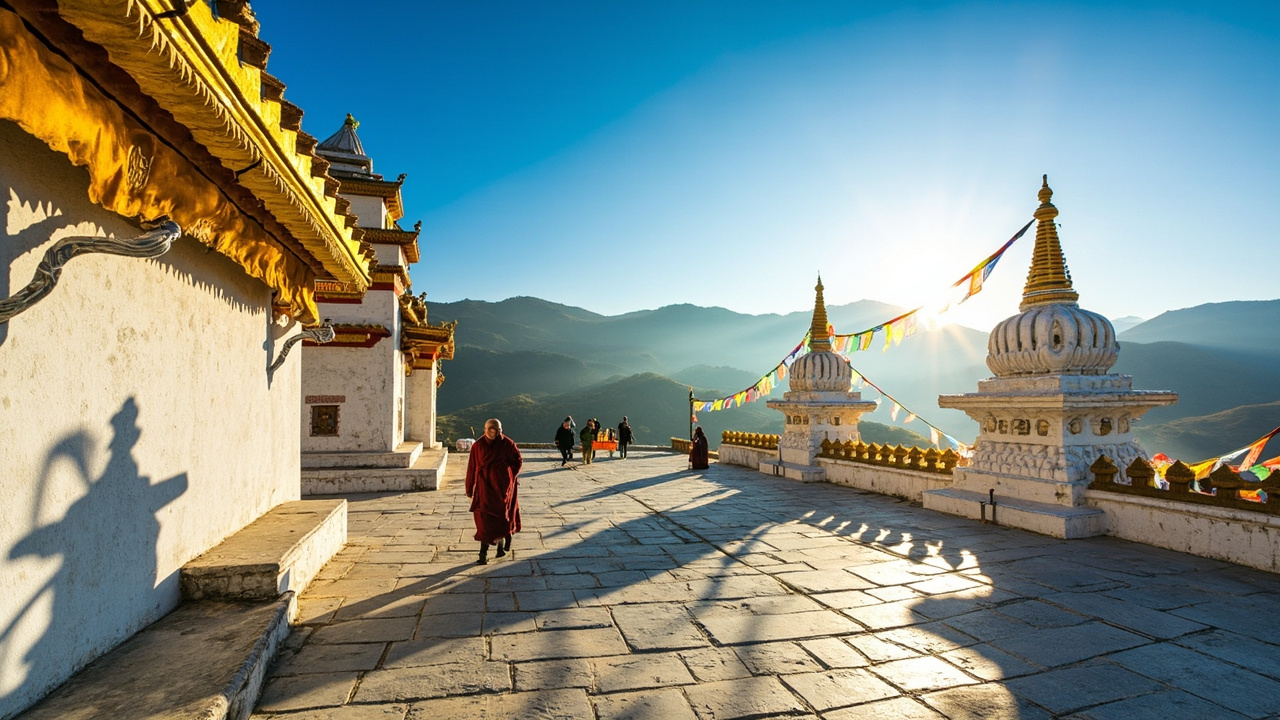
The cab driver from Xining looked at me in the rearview mirror and said, in careful English, “You go to see the butter sculptures?” I nodded. He laughed, not unkindly, and said, “Everyone goes for the butter. But the real thing is the sound of the monks arguing at dawn.” I didn’t know what he meant then. I do now.
Kumbum Taer Monastery (塔尔寺, Tǎ’ěr Sì) sits in the small town of Lushaer, about 25 kilometers southwest of Xining, the capital of Qinghai Province. It’s one of the six great monasteries of the Gelug school of Tibetan Buddhism, the birthplace of Tsongkhapa, the school’s founder, and a place that has been operating continuously since 1379. For international visitors, it’s the most accessible slice of Tibetan Buddhist culture in China, far easier to reach than Lhasa, and it rewards you with a level of living, breathing religious practice that most famous temples in eastern China have long since lost to the tour groups.
This guide covers everything you need to know: how to get there, what you’ll actually see, what’s worth your money, and the things nobody tells you until you’ve already made the mistake. I’ve been to Taer Monastery six times over the past seven years, in every season, and I’m still finding things I missed the first five visits.
Quick answer
Kumbum Taer Monastery is a working Tibetan Buddhist monastery in Lushaer town, 25 km from Xining, Qinghai Province. Entry costs about $11 (CNY 80) and takes 3-4 hours to visit properly. The 2026 China visa-free policy (240-hour transit visa-free) applies to Xining, so many international visitors can enter without a full visa if they’re transiting through a third country. The best time to visit is May through September, with the annual butter sculpture festival held during the first lunar month (usually February).
The Short Version
If you only have 90 seconds, here’s the deal. Taer Monastery is not a museum, it’s a living religious community, and you’ll see more genuine Buddhist practice in one morning here than in a week of Beijing temples. Go early, before 9am, when the monks are doing their morning debates in the courtyard. Pay the $11 (CNY 80) entrance fee, see the butter sculptures, the golden roof, and the murals, then wander the side alleys where the real life happens. Skip the overpriced “Tibetan cultural” shops near the gate. Bring cash or WeChat Pay, wear comfortable shoes, and don’t touch anything that looks like it shouldn’t be touched.
How I Picked These
I’ve spent the better part of seven years living in Beijing and traveling through western China, and Taer Monastery has become something of a personal obsession. I’ve visited in summer heat, winter snow, and the chaos of Tibetan New Year. I’ve sat through morning debates, watched butter sculpture masters at work, and gotten lost in the back alleys of Lushaer town more times than I can count. I’ve also made every mistake a foreign visitor can make: showing up at noon on a holiday, paying for a “guide” who knew less than I did, and almost missing the last bus back to Xining. This guide is the result of those visits, plus conversations with monks, taxi drivers, and the woman who runs the tea stall near the East Gate.
Comparison Table
| Rank | Place | Best For | Approx Cost (USD) | Time Needed | When to Go |
|---|---|---|---|---|---|
| 1 | Great Hall of Golden Roof | Iconic architecture, photos | Included in entry | 30 min | Morning, before crowds |
| 2 | Butter Sculpture Hall | The famous sculptures | Included in entry | 20 min | Any time, but no photos |
| 3 | Monk Debate Courtyard | Living religious practice | Included in entry | 30-45 min | 8-10am, best in summer |
| 4 | Tsongkhapa’s Birthplace | Historical significance | Included in entry | 15 min | Any time |
| 5 | Eight Pagodas | Photos, entry point | Free (outside) | 10 min | Early morning light |
| 6 | Murals Hall | Art, Buddhist iconography | Included in entry | 20 min | Any time |
| 7 | Lushaer Town | Local life, food | Free | 1-2 hours | Lunch time |
| 8 | Tibetan Medicine Hall | Cultural education | Included in entry | 20 min | Any time |
| 9 | Kumbum Art School | See artists at work | Included in entry | 30 min | Weekdays |
| 10 | Surrounding Hills | Views, quiet reflection | Free | 1 hour | Late afternoon |
1. Great Hall of Golden Roof - The Postcard View Is Real
The first time I saw the golden roof, it was raining, and the water ran off the gilded tiles in sheets that caught the grey light and turned it into something almost liquid. I stood there for ten minutes, getting soaked, because I couldn’t look away. The roof is covered in gold leaf applied over copper, and it’s been regilded multiple times over the centuries. It’s genuinely stunning, not in the brochure sense, but in the sense that you understand why people travel across continents to see it.
The hall itself, also called the Great Hall of the Golden Roof (大金瓦殿), houses a 12-meter-tall silver pagoda that contains relics associated with Tsongkhapa. The interior is dark, smoky from centuries of butter lamps, and smells of yak butter and incense. You can’t take photos inside, and honestly, you won’t want to. It’s one of those places where the camera feels like an intrusion.
- Location: Center of the monastery complex, Lushaer town
- Entry fee: Included in the $11 (CNY 80) monastery ticket
- Opening hours: 8:00am-5:00pm (shorter in winter, roughly 8:30am-4:30pm)
- Getting there: Follow the main path from the East Gate past the Eight Pagodas, then turn right at the first major intersection. You can’t miss it, just follow the gold.
- When to visit: Go at 8am when the gates open. The light is better, and you’ll have the courtyard mostly to yourself for about 30 minutes.
- Insider tips: The butter lamps inside are fed continuously by pilgrims. If you want to make an offering, buy a small jar of yak butter from the stalls outside for about $1 (CNY 7) and add it to the lamps. The monks will nod at you. They don’t expect this from foreigners, and it’s a gesture that’s remembered.
- I watched a monk spend twenty minutes cleaning a single butter lamp with a piece of cloth, moving with a patience I still think about.
2. Butter Sculpture Hall - The Art That Melts
Butter sculptures are unique to Tibetan Buddhist monasteries, and Taer Monastery is famous for them. The monks make these intricate sculptures from yak butter mixed with flour and colored pigments, and they’re kept in a refrigerated hall to prevent melting. The detail is absurd. I’m talking individual petals on lotus flowers, tiny figures with expressive faces, entire scenes from Buddhist cosmology rendered in a medium that would turn to soup in your hands.
The hall itself is small, maybe the size of a large living room, and the sculptures are displayed behind glass in cabinets. You’ll walk through in about ten minutes, but you’ll want to go slowly. The craftsmanship deserves it. There’s also a butter sculpture workshop where you can sometimes watch monks creating new pieces, though it’s not always open to visitors.
- Location: Northeast section of the monastery, near the Murals Hall
- Entry fee: Included in the monastery ticket
- Opening hours: Same as monastery, 8:00am-5:00pm
- Getting there: From the Great Hall, follow the signs pointing northeast. The hall is clearly marked in both Chinese and English.
- When to visit: Any time, but the refrigeration means the hall is always cool, which is a relief in summer.
- Insider tips: No photography inside, and the guards are strict about it. Don’t argue. The sculptures are fragile and the flash damages the butter. Also, the most impressive pieces are usually the ones in the center cabinet, so don’t spend all your time on the first ones you see.
- I once saw a tourist try to touch one of the sculptures through a gap in the glass. The monk on duty didn’t shout. He just shook his head slowly, and the tourist’s face went red. Don’t be that person.
3. Monk Debate Courtyard - The Sound of Thinking
This is the thing the cab driver was talking about. Every morning, usually between 8am and 10am, monks gather in the debate courtyard to practice their philosophical arguments. It’s not a quiet, contemplative affair. It’s loud, animated, and physical. The monks clap their hands, stamp their feet, and shout at each other in Tibetan. To an outsider, it looks like an argument. To the monks, it’s a formalized method of training the mind.
The courtyard is a walled open space with trees and stone paving, and visitors can sit on the perimeter and watch. Nobody will stop you, but nobody will explain what’s happening either. The debates are conducted in Tibetan, so you won’t understand the content, but you’ll understand the energy. It’s one of the most genuinely alive religious practices I’ve witnessed anywhere in the world.
- Location: West side of the monastery, behind the Great Hall
- Entry fee: Included in the monastery ticket
- Opening hours: Debates typically run 8:00am-10:00am, but this varies by season and monastic schedule
- Getting there: From the Great Hall, walk west through the small courtyard and you’ll hear the clapping before you see it.
- When to visit: Summer mornings are best, when the debates happen outdoors. In winter, they move inside and you won’t see them.
- Insider tips: Sit quietly, don’t take photos during the debates (the monks find it distracting), and don’t try to join in. Some visitors have tried to mimic the hand-clapping, and it’s not appreciated. Also, the debates are more active on weekdays when the monks are in training mode. Weekends can be quieter.
- I sat through an hour of debates once, understanding nothing, and left feeling like I’d seen something important. I still can’t explain what.
4. Tsongkhapa’s Birthplace - Where It All Started
Tsongkhapa was born in 1357 in a village that’s now part of the monastery complex. The exact spot is marked by a small shrine, and it’s a place of enormous significance for Tibetan Buddhists. Pilgrims come from all over the Tibetan plateau to pay their respects here, and you’ll see them prostrating on the stone floor, their hands and foreheads touching the ground in a rhythm that’s both hypnotic and humbling.
The shrine itself is modest, especially compared to the golden excess of the Great Hall. There’s a small statue of Tsongkhapa, some offering bowls, and a sense of quiet that’s hard to find elsewhere in the complex. It’s worth spending a few minutes here just to absorb the contrast between this humble birthplace and the grand monastery that grew up around it.
- Location: Northern section of the monastery, near the Kumbum Art School
- Entry fee: Included in the monastery ticket
- Opening hours: Same as monastery hours
- Getting there: Follow the path north from the Butter Sculpture Hall, past the small shops selling prayer flags and incense.
- When to visit: Early morning, before the tour groups arrive. The shrine is small and gets crowded fast.
- Insider tips: You’ll see pilgrims prostrating here. Don’t walk between them and the shrine, it’s considered disrespectful. Walk behind them. Also, the offering bowls often contain small amounts of money, and it’s customary to add a coin if you have one. It’s not required, but it’s a gesture that’s appreciated.
- I watched a grandmother, probably 70 years old, do 108 full prostrations here without stopping. I counted. She didn’t seem tired. I was exhausted just watching.
5. Eight Pagodas - The Photo Op That’s Actually Worth It
The Eight Pagodas (如来八塔) stand in a row just inside the East Gate, and they’re the first thing most visitors see. They’re white, with a distinctly Tibetan style, and they commemorate eight major events in the life of the Buddha. They’re also, honestly, the most photographed spot in the entire monastery, and for good reason. They’re beautiful, especially in the early morning light when the sun hits them at an angle.
The pagodas are outside the paid ticket area, which means you can see them without paying the entrance fee. If you’re on a tight budget or just passing through Lushaer, you can get a decent sense of the monastery’s aesthetic from this spot alone. But you’ll be missing the interior, which is where the real experience lives.
- Location: Just inside the East Gate, before the ticket checkpoint
- Entry fee: Free, outside the paid area
- Opening hours: Always accessible
- Getting there: From the bus stop in Lushaer, walk toward the monastery and you’ll see the pagodas within five minutes.
- When to visit: Sunrise, when the light is golden and the crowds haven’t arrived. By 10am, you’ll be fighting tour groups for photo space.
- Insider tips: The pagodas are a popular spot for locals to take wedding photos, especially on weekends. If you see a bride and groom, step aside and let them have their moment. Also, the stone path in front of the pagodas is worn smooth from centuries of pilgrims walking it. Take a moment to notice that.
- I once saw a Chinese tourist ask a Tibetan pilgrim to take their photo with the pagodas, and the pilgrim, who spoke no Mandarin, nodded and took the photo with a perfectly steady hand. Communication doesn’t always need words.
6. Murals Hall - The Art You’ll Miss If You Rush
The Murals Hall (壁画殿) houses some of the finest examples of Tibetan Buddhist mural painting in China. The murals cover the walls floor to ceiling, depicting scenes from Buddhist mythology, historical events, and the lives of important lamas. The colors are still vivid after centuries, thanks to the mineral pigments the artists used.
Here’s the thing about the murals: most visitors walk through in about three minutes, glance at the walls, and leave. That’s a mistake. The murals reward slow looking. The details are extraordinary, tiny figures, intricate patterns, expressions on faces that you only notice if you stop and actually look. Give yourself twenty minutes minimum.
- Location: Northeast section, adjacent to the Butter Sculpture Hall
- Entry fee: Included in the monastery ticket
- Opening hours: Same as monastery hours
- Getting there: From the Butter Sculpture Hall, it’s a two-minute walk through a connecting corridor.
- When to visit: Mid-morning, after the debate session, when the tour groups are at the Great Hall.
- Insider tips: The murals are fragile and the lighting is dim to protect them. Give your eyes time to adjust before you start looking. Also, some of the murals have been restored, and the restored sections are noticeably brighter than the originals. It’s interesting to compare the two. The originals have a depth that the restorations lack.
- I spent forty minutes in this hall once, and a monk who was sweeping the floor nodded at me when I left. I like to think it was approval.
7. Lushaer Town - The Real Life Outside the Monastery
The monastery gets the attention, but the town of Lushaer is where the real life happens. It’s a small Tibetan town that exists almost entirely to serve the monastery, and it’s full of tea houses, noodle shops, and stalls selling prayer flags, butter lamps, and religious artifacts. The main street is a five-minute walk from the East Gate, and it’s worth spending an hour or two here.
The food is the highlight. There’s a noodle shop on the main street, I don’t know the name, it’s the one with the blue sign and the plastic tables, that serves the best hand-pulled noodles I’ve had in China. The broth is rich, the noodles are chewy, and a bowl costs about $2 (CNY 15). There’s also a tea house where old men sit for hours, drinking butter tea and playing a Tibetan board game called “go” that I’ve never been able to understand.
- Location: Surrounding the monastery, 5-minute walk from the East Gate
- Entry fee: Free
- Opening hours: Shops open around 9am, close around 7pm. Tea houses stay open later.
- Getting there: Exit the monastery through the East Gate, walk straight, and you’ll hit the main street in five minutes.
- When to visit: Lunch time, when the noodle shops are at their best.
- Insider tips: The butter tea is an acquired taste. It’s salty, not sweet, and it’s made with yak butter. Try it once, and if you don’t like it, order sweet tea instead. Also, the prayer flags for sale here are cheaper than the ones sold inside the monastery, and the quality is the same. Buy them here if you want souvenirs.
- I once spent an entire afternoon in a tea house here, drinking butter tea and watching the town go about its business. The woman who ran the place refused to let me pay for my third cup. She just shook her head and smiled.
8. Tibetan Medicine Hall - The Healing You Didn’t Know About
The Tibetan Medicine Hall (藏医堂) is one of the lesser-known parts of the monastery, and it’s easy to miss. It’s a small building that houses a traditional Tibetan medicine practice, where monks who have trained in the centuries-old medical tradition see patients. You can’t get a consultation as a tourist, but you can see the medicine cabinets, the dried herbs, and the texts that the practitioners use.
The hall also has a small display of traditional medical instruments and a collection of thangka paintings depicting the human body according to Tibetan medical tradition. These paintings are fascinating, showing the body as a landscape of energy channels and pressure points, a completely different way of understanding human anatomy than the Western model.
- Location: Western section of the monastery, near the debate courtyard
- Entry fee: Included in the monastery ticket
- Opening hours: Same as monastery hours, but the medical practice is busiest in the morning
- Getting there: From the debate courtyard, follow the path west. The hall is marked with a sign in Chinese and Tibetan, but not English. Look for the building with the medicine cabinet visible through the window.
- When to visit: Late morning, after the morning rush.
- Insider tips: If you have a specific health question, don’t expect to get it answered here. The practitioners are busy with actual patients. But the display cases are worth a close look, especially the thangka paintings. Also, the hall sometimes has a monk on duty who speaks basic English and can explain the basics. Don’t be afraid to ask.
- I asked a monk here about the difference between Tibetan and Chinese medicine, and he gave me a ten-minute explanation that I understood maybe half of. But the half I understood was fascinating.
9. Kumbum Art School - Where the Artists Learn
The Kumbum Art School (塔尔寺艺术学校) is where young monks learn the traditional arts of thangka painting, butter sculpture, and sand mandala creation. It’s a working school, not a museum, and you can sometimes watch the students at work. The school is housed in a modern building on the north side of the monastery, and it’s one of the few places in the complex where you might see art being created in real time.
The students are young, mostly teenagers, and they train for years before they’re allowed to work on major pieces. Watching them paint is mesmerizing. They work with tiny brushes, their faces inches from the canvas, and they don’t look up when visitors walk past. The concentration is total.
- Location: North section of the monastery, near Tsongkhapa’s birthplace
- Entry fee: Included in the monastery ticket
- Opening hours: Weekdays, 9:00am-4:00pm. Closed on weekends and during exam periods.
- Getting there: From the birthplace shrine, follow the path north. The school is the modern building with the large windows.
- When to visit: Weekday mornings, when the students are most likely to be working.
- Insider tips: The students are used to visitors, but they’re not performers. Don’t try to get their attention or take close-up photos of their work without asking. A simple nod of acknowledgment is appreciated. Also, some of the finished pieces are for sale, but they’re expensive, thousands of dollars for major works. The small pieces, bookmarks and small thangkas, are more affordable, around $20-50 (CNY 150-350).
- I watched a student spend an hour painting a single eye on a thangka. Just the eye. I left before he finished.
10. The Surrounding Hills - The View Worth the Climb
Most visitors never leave the monastery complex, which is a shame because the hills surrounding Lushaer offer some of the best views in the region. There’s a path that leads up the hill behind the monastery, and from the top, you can see the entire complex spread out below you, the golden roofs catching the light, the white pagodas standing in a row, the town of Lushaer clustered around the edges.
The climb takes about 30-40 minutes, depending on your fitness level, and it’s not particularly difficult. The path is well-worn, and you’ll pass prayer flags fluttering in the wind. At the top, there’s a small stupa and a bench, and you can sit and watch the monastery below. It’s a good place to reflect on what you’ve seen.
- Location: Behind the monastery, accessible from the north side
- Entry fee: Free
- Opening hours: Always accessible, but best in daylight
- Getting there: From the north side of the monastery, follow the path that leads uphill. You’ll see it, it’s the one with the prayer flags.
- When to visit: Late afternoon, when the light is golden and the monastery below is at its most photogenic.
- Insider tips: Bring water, there’s nowhere to buy it on the hill. Also, the altitude is around 2,700 meters (8,850 feet), so if you’re not used to it, take the climb slowly. And watch where you step, the path is rocky in places.
- I sat on the bench at the top for an hour once, watching the sun move across the monastery below. It was the most peaceful hour of that entire trip.
FAQ summary
Kumbum Taer Monastery is a working Tibetan Buddhist monastery in Lushaer town, 25 km from Xining, Qinghai Province. The entrance fee is approximately $11 (CNY 80), and the monastery is open from 8:00am to 5:00pm daily. The best time to visit is May through September, with the butter sculpture festival held during the first lunar month (usually February). Visitors can reach the monastery by bus from Xining’s center for about $1.50 (CNY 10), or by taxi for approximately $15-20 (CNY 100-140). The 2026 China visa-free policy (240-hour transit visa-free) applies to Xining, making it accessible for many international travelers without a full visa. WeChat Pay is widely accepted, and visitors should bring cash as backup. English signage is limited, so a translation app is recommended.
FAQ
Q: Do I need a visa to visit Kumbum Taer Monastery in 2026? A: If you’re eligible for China’s 240-hour transit visa-free policy, which applies to Xining, you can enter without a full visa if you’re transiting through a third country. Otherwise, you’ll need a standard Chinese tourist visa. Check with your local Chinese embassy for the latest rules, as policies can change.
Q: How do I get from Xining to Kumbum Taer Monastery? A: Take bus 909 from the Xining bus station to Lushaer town, which takes about 45 minutes and costs approximately $1.50 (CNY 10). Alternatively, take a taxi for about $15-20 (CNY 100-140), depending on traffic. The monastery is a 5-minute walk from the Lushaer bus stop.
Q: How much time do I need to visit the monastery? A: Plan for at least 3-4 hours to see the main halls properly. If you want to watch the morning debates, attend the butter sculpture festival, or explore Lushaer town, budget a full day. You can see the highlights in 2 hours if you’re pressed for time, but you’ll be rushing.
Q: Is the monastery open year-round? A: Yes, the monastery is open every day of the year, but hours are shorter in winter (roughly 8:30am-4:30pm). The best time to visit is May through September, when the weather is mild and the debates happen outdoors. The butter sculpture festival in February is spectacular but crowded.
Q: Can I take photos inside the monastery? A: Photography is allowed in most outdoor areas and some halls, but it’s strictly prohibited in the Butter Sculpture Hall and the Great Hall of the Golden Roof. Look for the “No Photography” signs, which are in Chinese and English. When in doubt, ask a monk.
Q: Do I need WeChat Pay or Alipay to visit? A: WeChat Pay and Alipay are widely accepted in Lushaer, including at the ticket office and local shops. However, it’s wise to carry some cash as backup, especially for small purchases at tea houses and stalls. Set up WeChat Pay before you arrive, as the registration process requires a foreign passport.
Q: Will I need a VPN for my phone in Qinghai? A: Yes, if you want to access Google, WhatsApp, Instagram, or other Western services, you’ll need a VPN installed before you arrive in China. The monastery itself has no Wi-Fi, and your hotel in Xining may have limited connectivity. Purchase a Chinese SIM card or an international roaming plan for data.
The Honest Wrap-up
Taer Monastery is not for everyone. If you’re looking for a quick photo stop to check off a list, you’ll be disappointed. It’s a working religious community, which means it’s sometimes chaotic, sometimes confusing, and occasionally smells strongly of yak butter. But if you’re willing to slow down, sit in a courtyard, and watch monks go about their daily practice, it’s one of the most genuinely rewarding places in China.
This guide is for the traveler who wants to understand what they’re seeing, not just photograph it. It’s for the person who’s willing to get lost in Lushaer town, try the butter tea, and climb the hill behind the monastery. If that sounds like you, go. Go early, go slow, and let the place work its way into you.
One final piece of advice: don’t try to see everything. Pick two or three halls that interest you, and give them your full attention. You’ll leave with more than if you’d rushed through all ten.
More guides you may like
Top 10 Bridges in China: The Complete 2026 Guide
China's bridges are engineering marvels spanning mountains, rivers, and seas. Here are 10 of the most spectacular, from ancient stone to modern steel.
8 min read

Top 10 Buddhist Sites in China: The Complete 2026 Guide
From the Leshan Giant Buddha to the Dunhuang Caves, these 10 Buddhist sites represent 2,000 years of China's spiritual heritage.
9 min read
Top 10 Day Trips from Beijing You Shouldn't Miss: The Complete 2026 Guide
Beijing is packed with history, but some of China's best experiences are just a few hours away. Here are 10 day trips that will transform your visit.
9 min read
Top 10 Hidden Gems in China Off the Beaten Path: The Complete 2026 Guide
Beyond the Great Wall and Terracotta Warriors, China has incredible hidden destinations few tourists ever reach. Here are 10 underrated gems worth the detour.
9 min read
Top 10 Markets and Shopping Streets in China: The Complete 2026 Guide
From Shanghai's Bund to Beijing's Silk Street - 10 markets where foreigners can haggle, explore, and bring home authentic Chinese goods.
9 min read
Top 10 Museums in China You Shouldn't Miss: The Complete 2026 Guide
China's museums span 5,000 years of civilization. These 10 - from the Palace Museum to Xi'an's terracotta gallery - are unmissable for culture lovers.
9 min read