
Taining Danxia Fujian: The Complete 2026 Guide
TODO: Extract from article (100-160 chars)
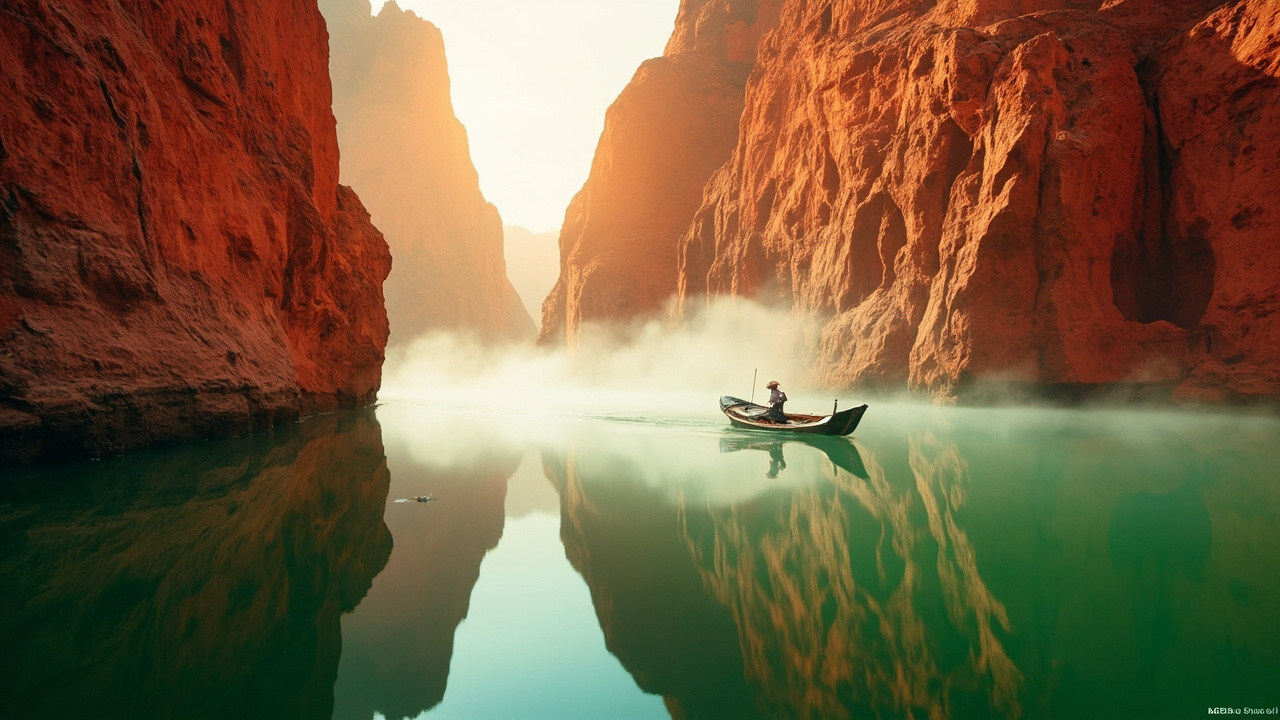
The rain came down sideways off the mountains, and for a moment the red cliffs disappeared entirely behind a wall of gray water. I was standing on a wooden walkway in Taining, soaked through, watching the outlines of the Danxia formations fade in and out like something from a Chinese ink painting. A local woman selling rain ponchos from a plastic tub laughed at me. “You picked the wrong day,” she said in Mandarin, handing me a bright blue poncho that I still have somewhere in my apartment in Beijing.
That was my first trip to Taining, and I’ve been back three times since. The Danxia landforms in this corner of Fujian province don’t get the international attention that Zhangye’s rainbow mountains in Gansu do, and that’s exactly why you should go. Taining is quieter, greener, and far more integrated with the daily life of the people who live there. The red cliffs rise out of subtropical forest, the Jinhu River winds through the valleys, and the whole area feels like a national park that hasn’t quite figured out how to market itself to the world yet.
This guide covers the ten places I think matter most in the Taining Danxia area, with real prices, real directions, and the kind of practical details that only come from standing in the rain and figuring it out yourself.
Quick answer
Taining Danxia is a UNESCO World Heritage Site in Fujian Province, China, known for its red sandstone cliffs, river gorges, and cave formations. The best time to visit is April through October, with a typical visit lasting 2-3 days and costing roughly $100-150 (CNY 700-1000) per person excluding accommodation. As of 2026, most Western passport holders can enter China visa-free for up to 30 days, so you can visit Taining without a visa if your trip is under a month.
The Short Version
Taining is the Danxia site you go to when you want to see the red cliffs without the crowds and the commercial circus of Zhangye. The main attractions are the Jinhu River cruise, the Shangqingxi rafting, and the Dajin Lake area, but the real magic is in the smaller spots like the Zhaixia Grand Canyon and the Mingshui Caves. You need at least two full days. Three is better. The food is excellent, the locals are genuinely friendly, and the English signage is better than you’d expect for a site this far off the standard tourist trail.
How I Picked These
I’ve been to Taining four times since 2019, most recently in October 2025. I’ve walked the main trails, taken the river cruises, gotten lost in the back streets of the old town, and eaten my way through the night market. I’ve also talked to a lot of travelers who visited on day trips from Xiamen or Fuzhou and regretted not staying longer. The ten places below are the ones I’d actually recommend to a friend, ranked by how much they matter to a first-time visitor. I’ve skipped a few official “scenic areas” that I think are overpriced or underwhelming, and I’ve included a couple of spots that aren’t in the standard guidebooks.
Comparison Table
| Rank | Place | Best For | Approx Cost (USD) | Time Needed | When to Go |
|---|---|---|---|---|---|
| 1 | Jinhu River Cruise | First-time overview | $25 (CNY 180) | 3-4 hours | Apr-Oct |
| 2 | Shangqingxi Rafting | Scenic boat ride | $30 (CNY 215) | 2-3 hours | May-Sep |
| 3 | Zhaixia Grand Canyon | Hiking and geology | $20 (CNY 140) | Half day | Oct-Nov |
| 4 | Ganlu Temple | Cliffside temple | $15 (CNY 105) | 2 hours | Year-round |
| 5 | Mingshui Caves | Cave exploration | $18 (CNY 130) | 2-3 hours | Year-round |
| 6 | Taining Ancient Town | Local culture | Free | 2-3 hours | Evening |
| 7 | Dajin Lake | Photography | $20 (CNY 140) | Half day | Apr-Jun |
| 8 | Maodong Mountain | Sunrise views | $10 (CNY 70) | 3-4 hours | Early morning |
| 9 | Shangqingxi Village | Rural life | Free | 1-2 hours | Year-round |
| 10 | Jiulongtan Waterfall | Short hike | $5 (CNY 35) | 1-2 hours | After rain |
1. Jinhu River Cruise - The best way to see the Danxia from the water
The first time I took the Jinhu River cruise, I spent the entire ride trying to figure out why the cliffs looked so different from the photos I’d seen online. Then I realized the photos were all taken from the water. The red sandstone walls rise straight out of the river, and the reflections double the visual impact. It’s the single best introduction to the Taining Danxia landscape.
The cruise takes about three hours and covers the main stretch of the Jinhu River, which was actually created by a dam built in the 1980s. The water level rose and flooded the valleys, leaving only the tops of the Danxia formations poking above the surface. The result is a landscape that feels like a flooded canyon, with cliffs, caves, and small islands scattered along the route.
Location: Jinhu River, Taining County, Sanming City, Fujian Province
Entry fee: $25 (CNY 180) for the standard cruise ticket, which includes the boat ride and entry to the riverside scenic areas
Opening hours: 8:00 AM to 5:00 PM daily, with the last boat departing around 3:30 PM
How to get there: From Taining Ancient Town, take a taxi or local bus to the Jinhu Scenic Area entrance. The ride takes about 15 minutes and costs around $3 (CNY 20) by taxi. The bus stops right at the main gate.
When to visit: April through October is the best window. Weekdays are significantly quieter than weekends, when local tour groups arrive in waves. Go on the first boat of the day if you want the river to yourself.
Insider tips: The upper deck of the boat gets the best views but also the most sun. Bring a hat. The commentary is in Mandarin, but the scenery speaks for itself. If you’re traveling with a group, ask about the private boat option, which costs more but lets you set your own pace.
I met a retired couple from Shanghai on the cruise who had been to Zhangye the previous year. “This is better,” the husband said, gesturing at the green forest and the water. “Zhangye is a postcard. This is a place you can live in.”
2. Shangqingxi Rafting - A quieter, more intimate river experience
If the Jinhu cruise is the blockbuster, Shangqingxi is the indie film. This is a smaller river that winds through a narrower valley, and the rafting trip takes you past rice paddies, bamboo groves, and small villages where people still live exactly the way they did fifty years ago. The rafts are flat-bottomed wooden boats poled by a single boatman, and the whole experience feels like something out of a different century.
The trip takes about two hours and covers roughly six kilometers of river. The scenery is less dramatic than Jinhu, but it’s more personal. You’re close enough to the banks to see the individual plants and the birds, and the boatmen often point out things you’d miss on your own, even if you can’t understand what they’re saying.
Location: Shangqingxi River, about 20 kilometers north of Taining County town
Entry fee: $30 (CNY 215) per person for the rafting trip
Opening hours: 8:00 AM to 4:00 PM daily, weather permitting
How to get there: Take a taxi from Taining town to the Shangqingxi Scenic Area, which takes about 30 minutes and costs around $8 (CNY 55). Alternatively, there’s a local bus that runs from the town bus station, but it’s infrequent and the taxi is worth the extra money.
When to visit: May through September is the best time, when the water level is high enough for the rafts to run smoothly. October is also fine, but the river can get shallow in November and December.
Insider tips: Sit in the front of the raft if you want the best views and don’t mind getting a little spray. The boatmen expect a small tip, around $2-3 (CNY 15-20), at the end of the trip. Bring a waterproof bag for your phone and camera. The rafting is not at all dangerous, but you will get splashed.
My boatman on my second visit was a man in his sixties named Chen, who had been poling rafts on this river for over thirty years. He didn’t speak a word of English, but he taught me the names of three different birds by pointing and making sounds, and we laughed about it the whole way down.
3. Zhaixia Grand Canyon - The hike that makes you work for the views
Zhaixia is the place I almost skipped, and I’m glad I didn’t. It’s the most physically demanding spot on this list, but it’s also the one that gives you the best sense of what the Danxia landscape actually is, up close and personal. The canyon cuts through the red sandstone, and the trail climbs up and down along the cliff faces, with sections that require you to squeeze through narrow gaps and climb steep staircases.
The full loop takes about four hours, and the elevation gain is significant. You’ll be sweating. But the views from the top, looking down into the canyon and across the forested hills, are worth every step. The rock formations here are more varied than anywhere else in the Taining area, with arches, caves, and pillars that have been carved by wind and water over millions of years.
Location: Zhaixia Grand Canyon, about 15 kilometers southeast of Taining County town
Entry fee: $20 (CNY 140) for the main trail, which includes access to the canyon and the viewpoints
Opening hours: 7:30 AM to 5:00 PM daily
How to get there: Take a taxi from Taining town, which takes about 25 minutes and costs around $7 (CNY 50). The road is winding and scenic, so the ride itself is part of the experience.
When to visit: October and November are ideal, when the summer heat has faded and the autumn colors start to appear. Go on a weekday if you can, because the trail gets crowded with tour groups on weekends.
Insider tips: Wear proper hiking shoes, not sneakers. The stone steps get slippery, especially after rain. Bring at least two liters of water per person, because there are no shops inside the canyon. The trail is a loop, so you don’t have to backtrack, but the second half is steeper than the first, so pace yourself.
I made the mistake of doing this hike in August, and by the time I reached the top I was drenched in sweat and out of water. A group of elderly Chinese hikers took pity on me and shared their watermelon, which is still the best watermelon I’ve ever eaten.
4. Ganlu Temple - A temple that shouldn’t exist, but does
Ganlu Temple is built into a cave in the side of a Danxia cliff, and it’s the kind of place that makes you wonder how humans managed to construct anything this ambitious without modern machinery. The temple dates back over 800 years, and the wooden structures are wedged into the natural rock formations, with some buildings hanging out over the valley below.
The approach is a steep climb up stone steps that are cut directly into the cliff face. The temple itself is a maze of small halls, shrines, and walkways that wind through the cave system. The atmosphere is genuinely spiritual, not just because of the religious significance, but because the space itself feels sacred, carved out of the earth by forces that have been at work for millions of years.
Location: Ganlu Temple, on the western edge of the Taining Danxia Scenic Area
Entry fee: $15 (CNY 105) for the temple and the surrounding scenic area
Opening hours: 8:00 AM to 5:30 PM daily
How to get there: The temple is about 10 kilometers from Taining town. Take a taxi, which costs around $5 (CNY 35), or catch the local bus that runs between the town and the scenic area.
When to visit: Year-round, but the temple is at its most atmospheric in the early morning, when the mist hangs in the valley and the incense smoke drifts through the cave.
Insider tips: The climb to the temple is about 300 steps, and there’s no elevator, so be prepared. The temple is still active, so dress respectfully and avoid taking photos of the monks without asking. There’s a small tea house near the entrance where you can rest and enjoy the view.
I sat in the tea house for an hour after visiting the temple, watching the clouds roll through the valley below. A monk came out and sat down next to me, and we didn’t say a word to each other, but it was one of the most peaceful hours of my entire trip.
5. Mingshui Caves - Where the Danxia landscape goes underground
The Mingshui Caves are a series of interconnected cave systems that have been carved out of the Danxia rock by underground rivers. The caves are less famous than the surface formations, but they’re just as impressive, with massive chambers, underground lakes, and stalactite formations that have been growing for thousands of years.
The tour takes about two hours and involves a combination of walking and a short boat ride through one of the underground rivers. The lighting is dramatic, with colored lights highlighting the rock formations, and the temperature inside the caves stays cool year-round, making this a good option for hot summer days.
Location: Mingshui Caves, about 12 kilometers east of Taining County town
Entry fee: $18 (CNY 130) for the cave tour, which includes the boat ride
Opening hours: 8:00 AM to 5:00 PM daily
How to get there: Take a taxi from Taining town, which takes about 20 minutes and costs around $6 (CNY 40). There’s also a shuttle bus that runs from the main scenic area entrance.
When to visit: Year-round, but the caves are especially welcome in July and August, when the surface temperatures can be brutal.
Insider tips: The caves are slippery, so wear shoes with good grip. The boat ride through the underground river is short but memorable, and you’ll want a waterproof camera case if you plan to take photos. The tour groups can be large, so try to time your visit for the early morning or late afternoon.
The underground lake in the deepest chamber is so clear and still that it acts like a mirror, and the reflections of the stalactites are so perfect that it’s hard to tell which way is up. I stood there for a long time, just looking.
6. Taining Ancient Town - The real life of the place
Taining Ancient Town is not a museum piece. It’s a living town where people go about their daily lives, and the old streets are lined with shops, tea houses, and restaurants that serve the local community. The town has been here for over a thousand years, and the architecture reflects that history, with Ming and Qing dynasty buildings mixed in with more modern structures.
The main street is pedestrianized, and it’s best visited in the evening, when the lanterns come on and the night market sets up. The food is excellent, with local specialties like Taining fish head, which is a spicy stew that’s served in a huge clay pot, and a variety of grilled skewers that you can buy from street vendors.
Location: Taining County town, the main urban center of the Taining Danxia area
Entry fee: Free to enter the town and walk the streets
Opening hours: The town is always open, but the shops and restaurants operate roughly from 9:00 AM to 10:00 PM
How to get there: Taining has a train station on the Nanlong Railway, with connections to Fuzhou, Xiamen, and other major cities. From the station, it’s a 10-minute taxi ride to the old town.
When to visit: Evening is the best time, when the lanterns are lit and the night market is in full swing. The town is also worth a morning visit, when it’s quiet and the light is soft.
Insider tips: The night market food is cheap and excellent, but be prepared for spicy. The fish head stew is a must-try, but it’s meant for sharing, so bring friends or be prepared to take leftovers. The town has a small museum dedicated to the history of the Danxia area, which is worth a quick visit if you’re interested in the geology.
I got lost in the back streets of the old town on my first evening there, and I ended up in a small courtyard where an old woman was making tofu by hand. She gave me a piece to try, still warm, and it was the best tofu I’ve ever had.
7. Dajin Lake - The photograph you’ll actually want to frame
Dajin Lake is a reservoir that was created in the 1980s when the Jinhu River was dammed, and it’s now one of the most photographed spots in the Taining area. The lake is surrounded by Danxia cliffs, and the water is so still that the reflections are almost perfect, especially in the early morning and late afternoon.
The main activity here is a boat tour that takes you around the lake and stops at a few of the islands. The islands are small and mostly undeveloped, with a few walking trails and viewpoints. The highlight is the “Water Cave,” a natural arch that you can boat through, which is one of the most dramatic features in the entire Danxia area.
Location: Dajin Lake, about 8 kilometers southeast of Taining County town
Entry fee: $20 (CNY 140) for the boat tour, which includes stops at the islands
Opening hours: 8:00 AM to 5:00 PM daily
How to get there: Take a taxi from Taining town, which takes about 15 minutes and costs around $5 (CNY 35). The lake is also accessible by bicycle if you’re feeling energetic, but the road is hilly.
When to visit: April through June is the best time, when the water level is high and the vegetation is lush. Early morning is the best time of day for photography, when the mist hangs over the water.
Insider tips: The boat tour stops at two or three islands, and the last one is the best for photography. If you want to avoid the tour groups, go on a weekday and take the first boat of the day. The “Water Cave” is the highlight, so make sure your camera is ready when you approach it.
The reflections on Dajin Lake are so perfect that when I showed my photos to a friend in Beijing, she asked if I’d edited them. I hadn’t. The water was just that still.
8. Maodong Mountain - The sunrise you’ll never forget
Maodong Mountain is the highest point in the Taining Danxia area, and it’s the best place to watch the sunrise. The mountain is not particularly high, but it’s positioned so that you get a panoramic view of the entire landscape, with the Danxia cliffs, the river, and the forest all spread out below you.
The hike to the summit takes about an hour and a half, and it’s a steady climb with no particularly difficult sections. The trail is well-maintained, and there are several viewpoints along the way. The summit has a small pavilion where you can sit and watch the sunrise, and on clear days you can see for miles in every direction.
Location: Maodong Mountain, about 5 kilometers north of Taining County town
Entry fee: $10 (CNY 70) for the scenic area
Opening hours: The trail is open from 6:00 AM to 6:00 PM, but you’ll want to start early to catch the sunrise
How to get there: Take a taxi from Taining town to the trailhead, which takes about 15 minutes and costs around $4 (CNY 28). The trailhead is well-marked.
When to visit: The best time for sunrise is October through April, when the skies are clearer. Summer mornings can be hazy, but the sunrise is still worth the early wake-up.
Insider tips: Bring a headlamp or flashlight for the hike up, because you’ll be starting before dawn. The temperature at the summit is significantly cooler than at the base, so bring a jacket even in summer. The sunrise is around 5:30 AM in summer and 6:30 AM in winter, so plan accordingly.
I woke up at 4:30 AM to make this hike, and I was the only person on the trail. When I reached the summit, the sky was just starting to lighten, and I watched the sun come up over the Danxia cliffs with the whole world to myself. It was worth every minute of lost sleep.
9. Shangqingxi Village - The China that’s disappearing
Shangqingxi Village is a small rural settlement that sits at the edge of the Shangqingxi River, and it’s the kind of place that makes you feel like you’ve stepped back in time. The village has been here for centuries, and the traditional wooden houses, stone bridges, and ancient trees give it a sense of permanence that’s increasingly rare in China.
The village is not a tourist attraction in the traditional sense. There are no ticket booths or souvenir shops. Instead, you’ll find farmers tending their fields, old men playing chess under the trees, and women washing clothes in the river. It’s a glimpse of rural Chinese life that’s disappearing fast, and it’s worth spending an hour or two here just to slow down and observe.
Location: Shangqingxi Village, about 20 kilometers north of Taining County town
Entry fee: Free
Opening hours: Always open, but the village is most active in the morning and late afternoon
How to get there: The village is on the way to the Shangqingxi Rafting, so you can combine the two. Take a taxi from Taining town, which takes about 30 minutes and costs around $8 (CNY 55).
When to visit: Spring and autumn are the best times, when the weather is mild and the fields are green or golden.
Insider tips: The villagers are friendly and used to visitors, but they’re not used to foreign tourists, so be respectful and ask before taking photos of people. There’s a small tea house in the center of the village where you can sit and watch the world go by. The village is also a good place to buy local produce, like dried mushrooms and tea.
I sat in the tea house for an hour, watching a group of children play in the river. One of them waved at me, and I waved back, and for a moment I felt like I was part of the village, not just a visitor passing through.
10. Jiulongtan Waterfall - The hidden gem that’s worth the detour
Jiulongtan Waterfall is the least-known spot on this list, and it’s the one I almost didn’t include because it’s so small. But the waterfall is special, not because of its size, but because of its setting. The water falls over a Danxia cliff face into a deep pool, and the surrounding forest is so dense that the light filters through the canopy in shafts.
The hike to the waterfall takes about 30 minutes from the parking area, and it’s an easy walk along a well-maintained trail. The waterfall is at its best after heavy rain, when the water is flowing at full force and the pool is a deep, clear green. It’s a peaceful spot, and you’ll likely have it to yourself.
Location: Jiulongtan Waterfall, about 18 kilometers southeast of Taining County town
Entry fee: $5 (CNY 35) for the scenic area
Opening hours: 8:00 AM to 5:00 PM daily
How to get there: Take a taxi from Taining town, which takes about 30 minutes and costs around $8 (CNY 55). The road is narrow and winding, so the ride can be slow.
When to visit: After heavy rain is the best time, when the waterfall is at its most dramatic. The trail can be muddy, so wear appropriate shoes.
Insider tips: The pool at the base of the waterfall is deep enough to swim in, and on hot days it’s a welcome relief. There are no facilities at the waterfall, so bring water and snacks. The trail is short, but it’s worth taking your time and enjoying the forest.
I went to the waterfall on a whim, and I ended up staying for two hours, sitting on a rock and watching the water fall. It was the most peaceful afternoon of my entire trip to Taining.
FAQ summary
Taining Danxia is a UNESCO World Heritage Site in Fujian Province, China, known for its red sandstone cliffs, river gorges, and cave formations. The best time to visit is April through October, with 2-3 days needed to see the main attractions. Most Western passport holders can enter China visa-free for up to 30 days as of 2026, making Taining accessible without a visa for trips under a month. The area is best reached by high-speed rail to Taining Station, with the main attractions accessible by taxi or local bus. Expect to spend $100-150 (CNY 700-1000) per person for tickets and transport, excluding accommodation.
FAQ
Q: Do I need a visa to visit Taining Danxia in 2026? A: Most Western passport holders can enter China visa-free for up to 30 days as of 2026, so you can visit Taining without a visa if your trip is under a month. Check the latest policy with your local Chinese embassy before booking, as rules can change.
Q: How do I get to Taining Danxia from major Chinese cities? A: The easiest way is by high-speed rail to Taining Station, which has connections from Fuzhou, Xiamen, and other major cities. From the station, it’s a 10-minute taxi ride to the old town and about 15-30 minutes to the main scenic areas.
Q: How many days do I need to see Taining Danxia? A: You need at least two full days to see the main attractions, and three days is better if you want to include the less-visited spots like Jiulongtan Waterfall and Shangqingxi Village. The area is compact enough that you can base yourself in Taining town and do day trips.
Q: What is the best time of year to visit Taining Danxia? A: April through October is the best window, with May, September, and October being the most comfortable months. Summer can be hot and humid, but the caves and the river offer relief. Winter is quiet but can be cold and damp.
Q: Is English widely spoken in Taining? A: No, English is not widely spoken in Taining, and you’ll need a translation app like Google Translate or Pleco for most interactions. The major scenic areas have some English signage, but the town and the smaller attractions are almost entirely Mandarin-only.
Q: Do I need cash or can I use mobile payments in Taining? A: Mobile payments like WeChat Pay and Alipay are accepted almost everywhere in Taining, but you’ll need a Chinese bank card or a foreign card linked to these apps. Cash is still accepted at most places, but you’ll get better exchange rates using mobile payments.
Q: What should I pack for a trip to Taining Danxia? A: Comfortable walking shoes are essential, as most of the attractions involve significant walking. Bring a rain jacket or umbrella, especially in summer, and a light jacket for the cooler mornings and evenings. A waterproof bag for your phone and camera is also a good idea for the river cruises and rafting.
The Honest Wrap-up
Taining is not for everyone. If you want the postcard-perfect views of Zhangye’s rainbow mountains or the convenience of a major tourist infrastructure, you might find Taining a little rough around the edges. The English signage is limited, the tour groups can be loud, and some of the scenic areas feel a bit dated. But if you want to see the Danxia landscape the way it’s meant to be seen, with the red cliffs rising out of green forest and the river winding through the valleys, Taining is the place. It’s a place that rewards patience, where the best moments come when you slow down and let the landscape work its magic. My advice to a friend about to book the flight: give yourself three days, not two, and don’t skip the small stuff. The waterfall, the village, the old woman making tofu. Those are the memories you’ll keep.
More guides you may like
Top 10 Bridges in China: The Complete 2026 Guide
China's bridges are engineering marvels spanning mountains, rivers, and seas. Here are 10 of the most spectacular, from ancient stone to modern steel.
8 min read

Top 10 Buddhist Sites in China: The Complete 2026 Guide
From the Leshan Giant Buddha to the Dunhuang Caves, these 10 Buddhist sites represent 2,000 years of China's spiritual heritage.
9 min read

Top 10 Day Trips from Beijing You Shouldn't Miss: The Complete 2026 Guide
Beijing is packed with history, but some of China's best experiences are just a few hours away. Here are 10 day trips that will transform your visit.
9 min read
Top 10 Hidden Gems in China Off the Beaten Path: The Complete 2026 Guide
Beyond the Great Wall and Terracotta Warriors, China has incredible hidden destinations few tourists ever reach. Here are 10 underrated gems worth the detour.
9 min read

Top 10 Markets and Shopping Streets in China: The Complete 2026 Guide
From Shanghai's Bund to Beijing's Silk Street - 10 markets where foreigners can haggle, explore, and bring home authentic Chinese goods.
9 min read
Top 10 Museums in China You Shouldn't Miss: The Complete 2026 Guide
China's museums span 5,000 years of civilization. These 10 - from the Palace Museum to Xi'an's terracotta gallery - are unmissable for culture lovers.
9 min read