
China Anniversary Trip Ideas: The Complete 2026 Guide
TODO: Extract from article (100-160 chars)
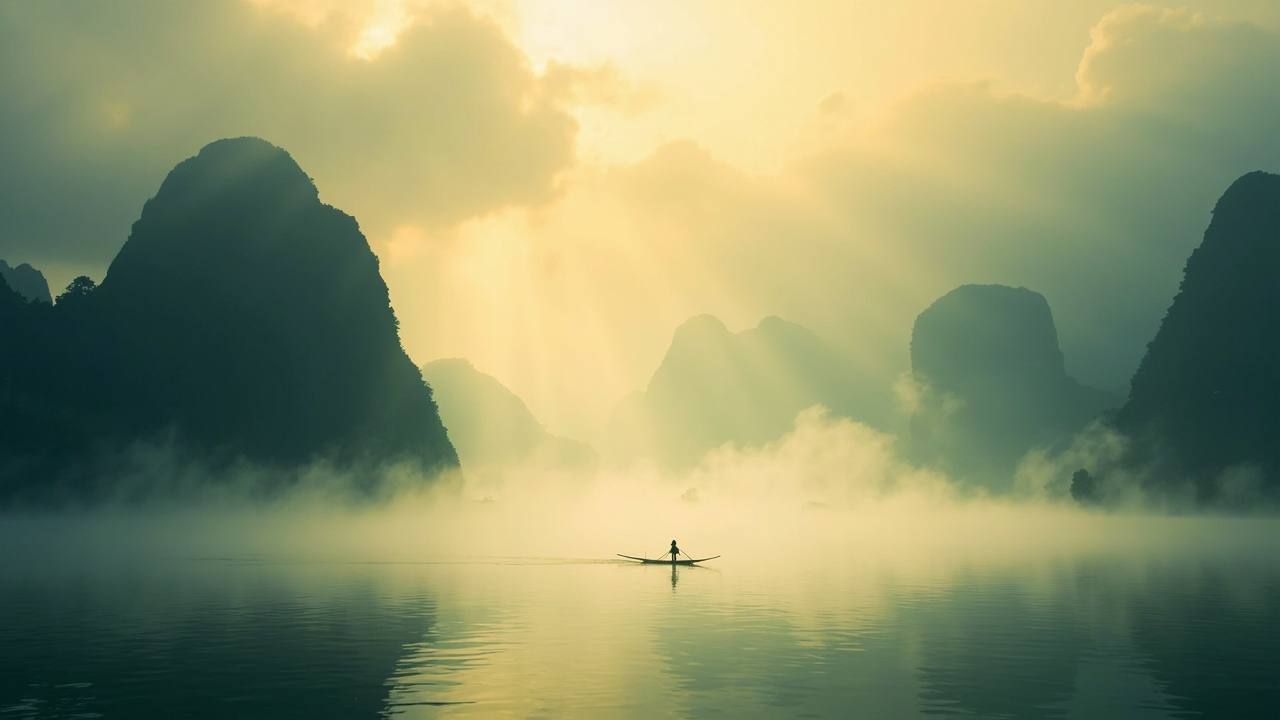
The first time I saw the Great Wall, it wasn’t from a postcard angle. It was from the back of a sweaty public bus, pressed against a window streaked with dust, watching the stone snake over a ridge so steep my stomach dropped. I’d been in China for three weeks, my Mandarin was a disaster, and I was pretty sure I’d gotten on the wrong bus. But then the wall appeared, and I forgot to be nervous.
That was seven years ago. Since then, I’ve crossed this country forty-something times, from the frozen grasslands of Inner Mongolia to the rice terraces of Yunnan. I’ve eaten things I can’t name, gotten lost in cities with no English signs, and learned that the best moments in China almost never happen on the itinerary.
Anniversaries are tricky. You want something special, but you also don’t want to spend the whole trip stressed about logistics. This guide is for couples who want the romance without the chaos. I’ve picked ten places that deliver on both. Some are obvious. Some you’ve never heard of. All of them I’ve visited myself, usually more than once, and I’m telling you straight which ones are worth the hassle and which ones you can skip.
Quick answer
For a first-time anniversary trip to China in 2026, the best options are Xi’an for history, Guilin/Yangshuo for scenery, and Suzhou for romance. Most Western passport holders can visit visa-free for up to 30 days through December 31, 2026, so you don’t need to apply in advance unless you’re staying longer. Budget $150-250 per person per day for comfortable mid-range travel, and book high-speed rail tickets at least a week ahead during peak seasons.
The Short Version
If you only have 90 seconds, here’s the deal. China is easier than you think and harder than you expect. The visa-free policy is a game-changer, but you still need WeChat Pay or Alipay set up before you arrive, because cash is dying here. High-speed rail is your best friend, and it’s better than flying for anything under 800 miles. Skip Beijing and Shanghai if you want romance, or use them as bookends and spend the middle in places like Suzhou or Yangshuo. And whatever you do, don’t try to see everything. Pick two or three places and go deep.
How I Picked These
I’ve been to every place on this list at least twice, and most of them more than that. I’ve shown up in the rain, during Golden Week (mistake), in the dead of winter, and once during a typhoon that I didn’t realize was coming. I’ve also talked to a lot of travelers, both foreign and Chinese, about what they loved and what they regretted. Some picks are here because they’re genuinely world-class. Others are here because they’re practical, which matters when you’re on a tight timeline and don’t want to spend your anniversary arguing about train schedules. I’ve skipped places like Zhangjiajie’s glass bridge because it’s a tourist trap, and I’ve included places like Pingyao because it’s criminally underrated by international visitors.
Comparison Table
| Rank | Place | Best For | Approx Cost (USD) | Time Needed | When to Go |
|---|---|---|---|---|---|
| 1 | Xi’an | History, food, culture | $100-150/day | 3-4 days | Mar-May, Sep-Nov |
| 2 | Guilin & Yangshuo | Scenery, outdoor romance | $80-120/day | 3-4 days | Apr-Oct |
| 3 | Suzhou | Classical gardens, canals | $100-140/day | 2-3 days | Mar-May, Sep-Nov |
| 4 | Hangzhou | Lake views, tea culture | $120-160/day | 2-3 days | Apr-Jun, Sep-Oct |
| 5 | Chengdu | Pandas, food, laid-back vibe | $90-130/day | 3-4 days | Mar-Jun, Sep-Nov |
| 6 | Pingyao | Ancient town, walled city | $70-100/day | 2 days | Apr-Oct |
| 7 | Lijiang | Old town, mountains | $90-140/day | 3-4 days | Apr-Jun, Sep-Nov |
| 8 | Huangshan | Hiking, sea of clouds | $110-150/day | 2-3 days | Apr-Nov |
| 9 | Zhangjiajie | Avatar mountains, hiking | $100-140/day | 3 days | Apr-Oct |
| 10 | Sanya | Beaches, resort relaxation | $150-250/day | 4-5 days | Nov-Mar |
Xi’an - Where the History Actually Hits You
I remember standing in front of the Terracotta Warriors and feeling my throat tighten. I wasn’t expecting that. You see the photos, you know the story, but nothing prepares you for the sheer scale of it, or the fact that every single face is different. A farmer discovered this place in 1974 while digging a well. Now it’s a cathedral of clay and silence.
Xi’an is the right choice if you want your anniversary to feel like an epic. This was the starting point of the Silk Road, the capital of 13 dynasties, and the city walls are still intact, which is rare in China. You can rent a bike and ride the full 14 kilometers around the top. Do it at sunset. The light turns the old bricks gold and the city sprawls out below you like a living map.
Location: Lintong District, about 40 minutes east of central Xi’an. The city wall is in the center of Xi’an proper.
Entry fee: Terracotta Warriors $30 (CNY 120). City wall $8 (CNY 54). The Muslim Quarter is free.
Opening hours: Terracotta Warriors 8:30-18:00 (winter), 8:00-18:30 (summer). City wall 8:00-22:00.
How to get there: For the warriors, take Metro Line 1 to Fangzhicheng Station, Exit A, then transfer to bus 306 or the tourist bus. It takes about 1.5 hours total. For the city wall, take Metro Line 2 to Yongningmen Station, Exit D, and you’re at the South Gate.
When to visit: March to May or September to November. Weekdays are much quieter. Go to the warriors at opening time, not mid-morning.
Insider tips: Hire a guide at the warriors, but negotiate the price first. The Muslim Quarter is for tourists, but the side streets off it are where locals eat. Try the biang biang noodles and the roujiamo (Chinese hamburger). Don’t bother with the Tang Dynasty Show, it’s cheesy. And bring cash for small vendors, some still don’t take cards.
I ate a lamb skewer from a street vendor who’d been working the same corner for 22 years. He didn’t speak English, I didn’t speak Mandarin, but he taught me how to eat it properly, which apparently involves a lot of cumin and zero utensils.
Guilin & Yangshuo - The Landscape That Made Chinese Paintings Famous
The karst peaks rise out of the mist like something from a dream, and the Li River curls between them, green and slow. I took a bamboo raft down it once and the only sound was the pole hitting the water and a rooster crowing somewhere on the bank. It was the quietest I’ve ever been in China.
This is the scenery that’s been painted on Chinese scrolls for a thousand years, and it’s real. It’s not a filter. The best way to see it is to take the cruise from Guilin to Yangshuo, which takes about four hours and feels like floating through a museum. But the real magic is in Yangshuo itself, a small town surrounded by peaks where you can cycle through rice paddies, climb Moon Hill, or just sit by the river and watch the light change.
Location: Guilin city is the gateway. Yangshuo is about 80 kilometers south, reachable by bus, car, or the Li River cruise.
Entry fee: Li River cruise $50-80 (CNY 350-550) depending on boat class. Moon Hill $3 (CNY 20). Cycling is free.
Opening hours: The cruise runs 9:30-10:30 departures daily. Moon Hill is open 7:00-18:30.
How to get there: Fly into Guilin Liangjiang International Airport, then take the airport shuttle to the city center. From Guilin, take a bus from the main station to Yangshuo, about 1.5 hours. Or take the cruise, which is more scenic.
When to visit: April to October. The rice paddies are green from May to September. Avoid Golden Week in October if you can.
Insider tips: Skip the West Street nightlife in Yangshuo, it’s all bars and souvenir shops. Instead, rent an e-bike and head to the countryside, specifically the Yulong River area. The bamboo rafting there is more intimate than the big Li River cruise. Try the beer fish, it’s a local specialty. And if you’re fit, hike up Moon Hill at sunrise, you’ll have the place to yourself.
I got hopelessly lost cycling through the countryside and ended up in a village where an old woman invited me into her home for tea. She showed me photos of her grandchildren and fed me oranges from her tree. I never figured out where I was, but I didn’t care.
Suzhou - The Gardens That Whisper
The Humble Administrator’s Garden is the kind of place that makes you want to sit down and write poetry, even if you’ve never written a poem in your life. I spent an hour watching a koi fish circle a lotus pond while the afternoon light filtered through willow branches. It was the most peaceful hour of my year.
Suzhou is the city of gardens, and it’s the perfect counterpoint to the chaos of Shanghai, which is only 30 minutes away by high-speed rail. The gardens are designed to feel like miniature worlds, with rocks, water, pavilions, and plants arranged to create the illusion of infinite space. It’s a philosophy, not just a landscape. You’re supposed to walk slowly, pause, and let the scene unfold.
Location: The gardens are scattered through the old city of Suzhou, which is in Jiangsu Province, about 100 kilometers west of Shanghai.
Entry fee: Humble Administrator’s Garden $11 (CNY 80). The Master of the Nets Garden $5 (CNY 40). The Lion Grove Garden $5 (CNY 40).
Opening hours: Most gardens are open 7:30-17:30 in winter, 7:30-18:00 in summer. Check individual gardens, some close earlier in winter.
How to get there: Take the high-speed train from Shanghai Hongqiao Station to Suzhou Station, about 30 minutes. From Suzhou Station, take Metro Line 4 to Beisita Station, Exit 1, and walk 10 minutes to the Humble Administrator’s Garden.
When to visit: March to May for spring blossoms, September to November for autumn colors. Go early morning on weekdays to avoid tour groups.
Insider tips: The Master of the Nets Garden is smaller but more intimate, and it’s the one locals recommend. There’s a night tour in summer where they light lanterns. Don’t skip the Pingjiang Road area, it’s a canal street with traditional architecture and good teahouses. Try the squirrel-shaped mandarin fish, it’s a Suzhou classic, and yes, it actually looks like a squirrel.
I met a retired calligrapher in the garden who offered to write my name in Chinese characters for a small donation. He laughed at my attempt to explain my name, then produced something beautiful that I still have framed on my wall.
Hangzhou - The Lake That Inspired Dynasties
The first time I saw West Lake, it was raining, which turned out to be the best possible introduction. The rain blurred the edges of everything, the pagodas faded into the mist, and the willow trees dripped like they were crying tears of joy. I understood in that moment why this lake has been the subject of Chinese poetry for a thousand years.
Hangzhou is the city that Marco Polo called the finest in the world, and while it’s changed a lot since then, the lake still has a magic that’s hard to explain. You can walk the entire perimeter in about three hours, or you can rent a boat and drift across the water. The best move is to do both, and to save the sunset for the western side of the lake, where the light hits the mountains.
Location: West Lake is in the center of Hangzhou, the capital of Zhejiang Province.
Entry fee: West Lake itself is free. The Lingyin Temple is $6 (CNY 45). The Leifeng Pagoda is $6 (CNY 40).
Opening hours: The lake is always open. Lingyin Temple is 7:00-18:00. Leifeng Pagoda is 8:00-20:00 in summer, 8:00-17:30 in winter.
How to get there: Take the high-speed train from Shanghai Hongqiao to Hangzhou East, about 45 minutes. From the station, take Metro Line 1 to Longxiangqiao Station, Exit C, and walk 15 minutes to the lake.
When to visit: April to June for spring, September to October for autumn. The lake is beautiful in all seasons, but winter can be cold and foggy.
Insider tips: Rent a boat with a boatman, not the big tourist ferries. The boatmen tell stories and know the hidden spots. Walk the Su Causeway at sunrise, it’s the most beautiful stretch. Try Longjing tea at a teahouse in the hills above the lake, it’s the real deal. And skip the Songcheng theme park, it’s a tourist trap.
I had a conversation with a boatman who’d been rowing on West Lake for 30 years. He told me he’d seen the lake in every weather, every season, every time of day, and he still wasn’t bored. I believed him.
Chengdu - The City That Taught Me to Slow Down
The pandas were cute, obviously. But the thing I remember most about Chengdu is the teahouse. I sat in a bamboo chair for three hours, drinking jasmine tea, watching old men play mahjong and argue about nothing, while the afternoon dissolved around me. Nobody rushed. Nobody checked their phone. It was the most relaxed I’ve ever been in China.
Chengdu is the capital of Sichuan Province, and it’s famous for two things: pandas and food. The pandas are worth seeing, especially at the breeding base where they’re active in the morning. But the food is the real reason to come. Sichuan cuisine is bold, spicy, and unapologetic, and the city is full of restaurants where the menu is in Chinese and the waiters don’t speak English. That’s a good thing. Point at what the table next to you is eating.
Location: The panda base is in the northern suburbs of Chengdu. The city center is where you’ll find the teahouses and food.
Entry fee: Panda Base $7 (CNY 55). Most teahouses charge $2-5 (CNY 15-35) for tea.
Opening hours: Panda Base is 7:30-18:00, but go early because the pandas sleep in the afternoon. Teahouses are typically open 9:00-22:00.
How to get there: Fly into Chengdu Shuangliu International Airport, then take Metro Line 10 to Taipingyuan, transfer to Line 3 and get off at Panda Avenue Station, Exit B. The base is a 10-minute walk from there.
When to visit: March to June or September to November. The pandas are most active in the cooler months. Go on a weekday, and get there when the gates open.
Insider tips: The hotpot is a must, but order the mild broth if you’re not used to Sichuan spice. The People’s Park teahouse is the most famous, but any teahouse with bamboo chairs and mahjong tables is good. Try the dan dan noodles and the mapo tofu. And if you’re brave, try the rabbit head, it’s a local delicacy that’s surprisingly good.
I watched a man at the teahouse win a mahjong hand and celebrate by pouring his tea into his saucer and drinking it that way, which I later learned is a traditional way to cool it down. He saw me watching and raised his saucer in a toast.
Pingyao - The Walled City Time Forgot
I walked the walls of Pingyao at dusk, and the only sound was my own footsteps and a dog barking somewhere in the maze of grey-tiled roofs below. The city was empty, or close to it, and I felt like I’d stumbled into a place that had been waiting for me for 600 years.
Pingyao is a perfectly preserved Ming and Qing dynasty walled city in Shanxi Province. It’s not as polished as Lijiang, and that’s exactly why I love it. The streets are rough, the buildings are old, and there’s a sense that this place is still living its own life, not just performing for tourists. It’s the kind of place where you can wander for hours without a plan and feel like you’ve discovered something.
Location: Pingyao is in central Shanxi Province, about 600 kilometers southwest of Beijing. The old city is entirely within the walls.
Entry fee: The city walls are $4 (CNY 25). A combined ticket for all the attractions inside is $18 (CNY 130).
Opening hours: The walls are open 8:00-18:00. The individual museums and houses vary, but most are open 8:30-17:30.
How to get there: Take the high-speed train from Beijing West to Pingyao Ancient City Station, about 4 hours. From the station, it’s a 10-minute taxi ride to the old city walls.
When to visit: April to October. The city is beautiful in autumn, when the light is soft and the crowds are thinner. Avoid Golden Week.
Insider tips: Stay inside the walls, in one of the converted courtyard guesthouses. It’s worth the extra money. Walk the walls at sunrise, when the light is golden and the city is still waking up. Try the pingyao beef, it’s a local specialty that’s been cured for centuries. And don’t miss the Rishengchang, the first bank in China, which is now a museum.
I got lost in the back streets and ended up in a courtyard where an old woman was making noodles by hand. She waved me over, gave me a bowl, and refused to take any money. It was the best meal of my trip.
Lijiang - The Old Town With a Secret
The first time I went to Lijiang, I hated it. The main street was packed with tourists, the shops all sold the same souvenirs, and the music was terrible. But then I turned a corner, walked down a side alley, and found a courtyard with a fountain and a cat and an old man playing a traditional instrument. That’s the real Lijiang. It’s just hiding.
Lijiang is a Naxi minority town in Yunnan Province, at the foot of the Jade Dragon Snow Mountain. The old town is a UNESCO World Heritage site, and it’s beautiful, with canals running through the streets and wooden houses with carved balconies. But the crowds are brutal. The trick is to get up early, walk the empty streets at dawn, and then escape to the countryside or the mountains.
Location: The old town is in the center of Lijiang city, in northwestern Yunnan Province.
Entry fee: The old town is free, but there’s a $7 (CNY 50) “maintenance fee” that’s technically required. It’s rarely enforced. The Jade Dragon Snow Mountain is $30 (CNY 200) plus a cable car fee.
Opening hours: The old town is always open. The mountain is open 7:00-18:00.
How to get there: Fly into Lijiang Sanyi Airport, then take a taxi or shuttle to the old town, about 30 minutes. From the old town, you can take a bus to the mountain.
When to visit: April to June and September to November. The weather is mild and the crowds are smaller. Avoid the summer holidays.
Insider tips: The Black Dragon Pool is a great spot for photos of the mountain reflected in the water. Take the cable car up the mountain but don’t go all the way to the summit, the altitude can be brutal. Try the Naxi baba, a fried bread that’s a local staple. And if you want to escape the crowds, head to Shuhe, a smaller old town 15 minutes away that’s much quieter.
I met a Naxi woman who ran a small shop selling hand-woven scarves. She told me about her grandmother, who had walked the Tea Horse Road to Tibet, and she showed me a photo of her grandmother wearing the same patterns she still weaves today.
Huangshan - The Mountain That Changes Everything
I woke up at 4 AM to see the sunrise from the summit of Huangshan, and I wasn’t the only one. There were maybe 200 people on the peak, all wrapped in rented down jackets, all shivering, all waiting. And then the sun came up, and the sea of clouds turned pink and gold, and the granite peaks rose out of it like islands. Nobody said a word. It was the quietest 200 people I’ve ever been around.
Huangshan, the Yellow Mountain, is the most famous mountain in China, and for good reason. It’s where the Chinese landscape painting tradition was born, and once you see it, you understand why. The granite peaks, the twisted pines, the sea of clouds, it’s all there, exactly like the paintings. But it’s also a serious hike, with steep stairs and unpredictable weather. This is not a casual visit.
Location: Huangshan is in southern Anhui Province, about 400 kilometers west of Shanghai.
Entry fee: The mountain is $30 (CNY 190). The cable cars are $15-20 (CNY 80-100) each way.
Opening hours: The mountain is open 24 hours, but the cable cars run 6:30-17:00 in summer, 7:00-16:30 in winter.
How to get there: Take the high-speed train from Shanghai Hongqiao to Huangshan North Station, about 3 hours. From the station, take a bus to the Tangkou town at the base of the mountain, about 1 hour.
When to visit: April to November. The sea of clouds is most common in the spring and autumn. Avoid weekends and holidays, the mountain gets packed.
Insider tips: Stay overnight on the mountain, in one of the hotels near the summit. It’s expensive, but you get the sunrise and the sunset, and you avoid the day-tripper crowds. Bring layers, the weather changes fast. The stairs are brutal, so bring good shoes and a walking stick. And don’t be afraid to take the cable car up and hike down, it’s easier on the knees.
I shared a room with a Chinese couple who were on their honeymoon. They’d brought a bottle of baijiu, the strong Chinese liquor, and insisted I have a glass with them. We toasted the sunrise, and I still don’t know their names, but I’ll never forget that morning.
Zhangjiajie - The Mountains That Made Avatar Famous
The first time I saw the pillar mountains of Zhangjiajie, I thought I was looking at a special effect. They rise out of the mist like giant stone fingers, hundreds of them, covered in green, defying every law of geology I thought I understood. The movie Avatar supposedly borrowed from this landscape, but honestly, the real thing is more impressive.
Zhangjiajie is in Hunan Province, and it’s a national forest park that’s been on the UNESCO list since 1992. The main attraction is the pillar mountains, which were formed by millions of years of erosion. You can see them from the cable car, from the glass bridge, or from the hiking trails that wind between them. The glass bridge is terrifying, but it’s also the best view you’ll get.
Location: Zhangjiajie National Forest Park is in the Wulingyuan Scenic Area, about 30 kilometers from Zhangjiajie city.
Entry fee: The park is $30 (CNY 225) for a 4-day pass. The glass bridge is $25 (CNY 160) extra.
Opening hours: The park is open 7:00-18:00 in summer, 7:30-17:30 in winter.
How to get there: Fly into Zhangjiajie Hehua International Airport, then take a shuttle bus to the park entrance. The high-speed rail now connects Zhangjiajie to Changsha, about 3 hours.
When to visit: April to October. The mist is more common in the spring and autumn, which makes the mountains look even more dramatic. Avoid Golden Week.
Insider tips: Take the cable car up, it’s the best view. The Bailong Elevator, the world’s tallest outdoor elevator, is a gimmick but worth doing once. The hiking trails are well-marked, but bring water and snacks, the food options on the mountain are limited. And if you’re scared of heights, skip the glass bridge and do the hiking trails instead.
I stood on the glass bridge for 20 minutes, frozen, while a group of Chinese tourists laughed at me and took photos. Finally, a little girl, maybe 8 years old, walked up to me, took my hand, and led me across. Her parents were cheering. I’ve never been so humiliated and so grateful at the same time.
Sanya - The Beach You Didn’t Know China Had
I was skeptical about Sanya. China’s answer to Hawaii? Really? But then I swam in the water, which was warm and clear and the color of jade, and I walked on the sand, which was soft and white, and I watched the sunset turn the sky orange and pink, and I had to admit it. This place is beautiful.
Sanya is on the southern tip of Hainan Island, which is China’s tropical province. It’s where Chinese people go for their beach holidays, and it’s got the infrastructure to prove it, with resorts, golf courses, and duty-free shopping. The beaches are genuinely good, especially Yalong Bay and Dadonghai, and the water is swimmable most of the year. It’s not Bali, but it’s a lot closer than you’d expect.
Location: Sanya is on the southern coast of Hainan Island, about 1,500 kilometers south of Beijing.
Entry fee: The beaches are free. Some resorts charge for beach access, but most don’t. The Wuzhizhou Island is $30 (CNY 200) including the ferry.
Opening hours: The beaches are always open. The island is open 8:00-17:00.
How to get there: Fly into Sanya Phoenix International Airport, then take a taxi to your resort. The airport is about 15 minutes from the main beach areas.
When to visit: November to March is the best time, when the rest of China is cold and Sanya is warm. Summer is hot and humid, and it’s typhoon season from June to October.
Insider tips: Yalong Bay is the best beach, but it’s also the most developed. Dadonghai is more local and has better food. The seafood market is worth a visit, but negotiate the price hard. And if you want to escape the crowds, head to the quieter beaches on the west side of the island.
I ate dinner at a seafood restaurant where the owner, a woman who’d been fishing these waters for 30 years, insisted on teaching me how to eat crab properly. She cracked it open with her hands, showed me the meat, and then watched me struggle with my own. She was very patient. I was very messy.
FAQ summary
For a first-time anniversary trip to China in 2026, the visa-free policy allows most Western passport holders to stay up to 30 days, which is enough for a two-destination trip. Budget $150-250 per person per day for comfortable travel, including hotels, meals, transport, and entry fees. High-speed rail is the best way to travel between cities, with major routes like Beijing to Xi’an taking about 4.5 hours. Set up Alipay or WeChat Pay before you arrive, as cash is rarely used and many places don’t accept foreign credit cards. English is limited outside major tourist areas, so download a translation app like Pleco or Google Translate before you go.
FAQ
Q: Do I need a visa to visit China in 2026? A: Most Western passport holders, including US, UK, Canadian, Australian, and EU citizens, can enter China visa-free for up to 30 days through December 31, 2026. This policy applies to tourism, business, and family visits. If you’re staying longer or planning to work, you’ll need to apply for a visa at your nearest Chinese embassy.
Q: How much does a 10-day trip to China cost? A: A comfortable mid-range trip costs about $1,500-2,500 per person, including flights, hotels, meals, transport, and entry fees. Budget options can be as low as $1,000, while luxury trips can easily exceed $5,000. The biggest costs are international flights and hotels, while food and local transport are surprisingly cheap.
Q: Is it safe to travel in China as a tourist? A: Yes, China is generally very safe for tourists. Violent crime is rare, and the country is well-policed. The main risks are petty scams and pickpocketing in tourist areas, which you can avoid by staying alert and not flashing valuables. The biggest practical challenge is the language barrier, not safety.
Q: Do I need WeChat Pay or Alipay to travel in China? A: Yes, you should set up both before you arrive. Cash is rarely used in China, and many places don’t accept foreign credit cards. WeChat Pay and Alipay both support foreign cards now, so you can link your Visa or Mastercard. Set them up before you travel, because the verification process is easier with a stable internet connection.
Q: Is it easy to get around China without speaking Chinese? A: It’s getting easier, but it’s still challenging. Major tourist areas have English signs and some English-speaking staff, but most of the country operates in Chinese. Download a translation app like Pleco or Google Translate, and use the Metro apps that have English interfaces. High-speed rail stations have English signs, and the ticketing apps have English versions.
Q: Do I need a VPN for my phone in China? A: Yes, if you want to use Google, Facebook, Instagram, WhatsApp, or any Western social media. The Chinese government blocks these services, and you’ll need a VPN to access them. Download and test your VPN before you arrive, because the app stores in China don’t have them. Some hotels have international Wi-Fi that bypasses the firewall, but don’t rely on it.
Q: What’s the best way to travel between cities in China? A: High-speed rail is the best option for most routes. It’s fast, comfortable, and affordable, and the stations are usually well-connected to city centers. Trains like the Beijing to Xi’an route take about 4.5 hours and cost $60-100 (CNY 400-700) for second class. Book tickets in advance on the Trip.com app, which has an English interface.
The Honest Wrap-up
This list is for couples who want to see the real China without spending their whole trip stressed out. It’s for people who are willing to get lost, try strange food, and accept that things won’t always go according to plan. It’s not for people who want a perfectly curated, Instagram-perfect vacation, because China doesn’t work that way. It’s messy, it’s chaotic, and it’s wonderful.
If I had to give you one piece of advice, it’s this: slow down. Don’t try to see five cities in ten days. Pick two, maybe three, and give yourself time to wander. The best moments in China happen when you’re not looking for them, in a teahouse, on a mountain, in a courtyard you stumbled into by accident. That’s where the magic is.
And when you book that flight, send me a message. I’ll tell you where to eat.
More guides you may like
Top 10 Bridges in China: The Complete 2026 Guide
China's bridges are engineering marvels spanning mountains, rivers, and seas. Here are 10 of the most spectacular, from ancient stone to modern steel.
8 min read

Top 10 Buddhist Sites in China: The Complete 2026 Guide
From the Leshan Giant Buddha to the Dunhuang Caves, these 10 Buddhist sites represent 2,000 years of China's spiritual heritage.
9 min read
Top 10 Day Trips from Beijing You Shouldn't Miss: The Complete 2026 Guide
Beijing is packed with history, but some of China's best experiences are just a few hours away. Here are 10 day trips that will transform your visit.
9 min read
Top 10 Hidden Gems in China Off the Beaten Path: The Complete 2026 Guide
Beyond the Great Wall and Terracotta Warriors, China has incredible hidden destinations few tourists ever reach. Here are 10 underrated gems worth the detour.
9 min read
Top 10 Markets and Shopping Streets in China: The Complete 2026 Guide
From Shanghai's Bund to Beijing's Silk Street - 10 markets where foreigners can haggle, explore, and bring home authentic Chinese goods.
9 min read
Top 10 Museums in China You Shouldn't Miss: The Complete 2026 Guide
China's museums span 5,000 years of civilization. These 10 - from the Palace Museum to Xi'an's terracotta gallery - are unmissable for culture lovers.
9 min read