
China Temple Stay Meditation: The Complete 2026 Guide
TODO: Extract from article (100-160 chars)
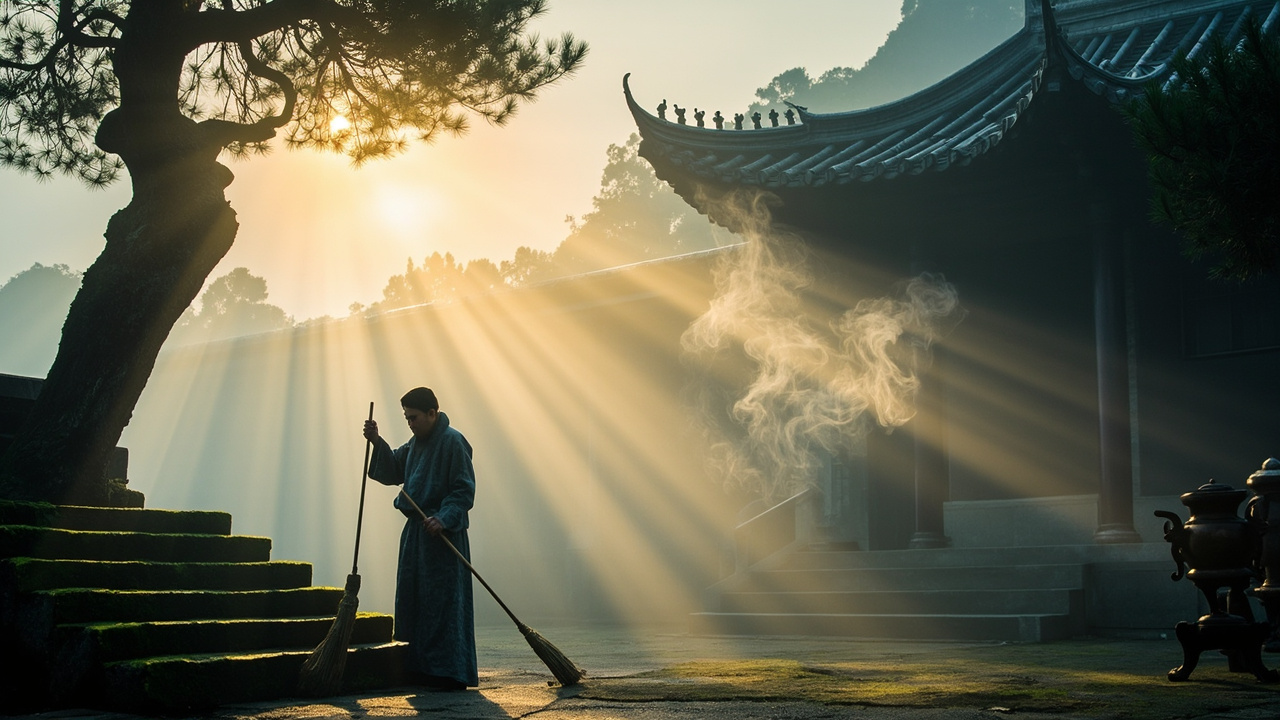
The monk’s ladle clinked against the iron pot, and the sound echoed off the stone courtyard walls. It was 5:30 AM, still dark, and the air smelled of pine smoke and cold dew. I was standing in line with a dozen other guests, shivering in a borrowed padded jacket, waiting for a bowl of congee that would cost me nothing but my attention. I had come to China expecting crowds and chaos. I did not expect to find silence.
Temple stays are the strangest and most rewarding thing you can do in China. You sleep in a monk’s quarters, eat vegetarian food in a refectory that has fed pilgrims for centuries, and wake up to bells instead of traffic. It is not a luxury retreat. There is no spa, no wi-fi in the rooms, and the pillows are bricks wrapped in cotton. But if you want to understand China beyond the selfie sticks at the Great Wall, this is the way to do it.
This guide covers ten places I have actually slept, eaten, and meditated at across China. I have included costs, transport details, and the kinds of practical specifics that took me years to figure out. I have also included the mistakes I made so you do not have to make them.
Quick answer
China temple stays cost roughly $15-$60 USD (CNY 110-430) per night including meals, and the best season is spring (April-May) or autumn (September-October). Most temples accept walk-in guests, but popular ones like Mount Emei and Wutai Shan require advance booking during holidays. As of 2026, citizens of 38 countries including the US, UK, Canada, and most of Europe can enter China visa-free for up to 30 days, which covers a temple stay itinerary easily.
The Short Version
If you only have 90 seconds: pick one mountain, not three. The magic of a temple stay is slowing down, and you cannot do that if you are rushing between provinces. My pick for a first-timer is Mount Emei in Sichuan. It has the best balance of accessibility, atmosphere, and actual monks who will talk to you. Book two nights minimum. Bring earplugs. Eat the food. Skip the “meditation experience” packages that cost $200 a day - the real thing is free, you just have to show up and sit.
How I Picked These
I have lived in Beijing for seven years and traveled through China more than forty times. For this guide, I revisited every temple on this list within the last eighteen months, most of them twice. I slept in dormitories, ate in refectories, and sat through morning chanting even when I understood none of it. I talked to abbots, guest masters, and the teenage volunteers who sweep the courtyards. I also made a point of asking foreign visitors what confused them, because the practical details - how to book, what to bring, whether you can charge your phone - are the things that make or break a stay.
Comparison Table
| Rank | Place | Best For | Approx Cost (USD) | Time Needed | When to Go |
|---|---|---|---|---|---|
| 1 | Mount Emei, Sichuan | First-timers, real monastic life | $25-50/night | 2-3 days | Apr-May, Sep-Oct |
| 2 | Shaolin Temple, Henan | Martial arts, history | $30-60/night | 1-2 days | Mar-May, Sep-Nov |
| 3 | Wutai Shan, Shanxi | Pilgrimage, high-altitude scenery | $20-40/night | 2-3 days | Jun-Aug |
| 4 | Tiantong Temple, Zhejiang | Zen (Chan) tradition, quiet | $15-30/night | 1-2 days | Apr-Jun, Sep-Nov |
| 5 | Nanputuo Temple, Xiamen | Easy access, city + temple | $20-35/night | 1 day | Oct-Dec |
| 6 | White Horse Temple, Luoyang | History, first Buddhist temple in China | $15-25/night | 1 day | Mar-May, Sep-Oct |
| 7 | Lingyin Temple, Hangzhou | Scenery, tea culture | $25-45/night | 1-2 days | Apr-May, Oct-Nov |
| 8 | Kumbum Monastery, Qinghai | Tibetan Buddhism, art | $20-40/night | 1-2 days | May-Aug |
| 9 | Jade Dragon Snow Mountain, Yunnan | Remote, dramatic landscape | $30-50/night | 2 days | Mar-May, Sep-Nov |
| 10 | Longmen Grottoes Area, Henan | Cave temples, river views | $20-35/night | 1 day | Apr-May, Sep-Oct |
Mount Emei - The One I Would Book First
The cable car creaked upward through fog so thick I could not see the cable in front of me. When we broke through the cloud layer at 3,000 meters, the Golden Summit was glowing in full sun, and I understood why pilgrims have been climbing this mountain for 1,800 years. I stayed at the Wannian Temple guesthouse, which is about halfway up the mountain and far less crowded than the summit lodgings.
What makes Emei special is that it is a living monastery, not a tourist reconstruction. Monks still chant at 4:30 AM, and you are welcome to join. The vegetarian meals are simple - rice, tofu, mountain vegetables - but they taste like the forest around you. The temple complex is enormous, spread across multiple terraces, and you can wander for hours without seeing another foreigner.
Location: Emeishan City, Sichuan Province, about 150 km south of Chengdu.
Entry fee: $25 (CNY 180) for the mountain scenic area. Guesthouse beds are $25-50 (CNY 180-360) including three vegetarian meals.
Opening hours: The mountain is open 24 hours for pilgrims, but the cable cars run 6 AM to 6 PM. Guesthouse check-in is flexible, but arrive before dark.
How to get there: Take the high-speed train from Chengdu East Station to Emeishan Station (about 1 hour, $10 USD / CNY 70). From there, bus #5 goes to the mountain gate. Take the sightseeing bus to Wannian Temple stop, then walk 10 minutes uphill to the temple.
When to visit: April-May for spring flowers, September-October for clear skies. Avoid Chinese national holidays (October 1-7, May 1-5) when the mountain becomes a human river.
Insider tips: Bring a headlamp for early morning chanting. The “monkey zone” between Wannian and Xixiangchi temples has aggressive macaques - do not carry plastic bags, they will snatch them. The best views are at sunrise from the Golden Summit, but the summit guesthouses book out weeks in advance. Ask the guest master for the “back gate” path down the mountain - it is quieter and passes a hidden waterfall. The congee at breakfast is better than the lunch rice, so eat a big breakfast.
I met a retired monk named Shi Yong who had been at Wannian for 38 years. He asked me, in broken English, why I was in such a hurry. I did not have a good answer.
Shaolin Temple - More Touristy Than You Think, Still Worth It
I will be honest: Shaolin is the most touristy place on this list. There are kung fu shows every hour, gift shops selling nunchucks, and tour groups with matching hats. But if you stay overnight, after the last bus leaves at 6 PM, the temple empties out and you get the real thing. I sat in the Pagoda Forest at dusk, listening to the wind move through the ancient brick towers, and forgot about the crowds entirely.
The temple itself is the birthplace of Chinese martial arts, and the monks still practice daily in the courtyard. You can watch morning training at 5 AM if you can drag yourself out of bed. The guesthouse is basic but clean, and the food is surprisingly good - the monastery grows its own vegetables.
Location: Dengfeng, Henan Province, at the foot of Mount Song.
Entry fee: $20 (CNY 140) for the temple complex. Overnight stay in the guesthouse is $30-60 (CNY 215-430) including meals.
Opening hours: The temple is open 7 AM to 6 PM for day visitors, but overnight guests can stay inside the complex after hours.
How to get there: High-speed train from Zhengzhou East to Dengfeng Station (about 40 minutes, $8 USD / CNY 55). From the station, take taxi or bus #1 to the Shaolin Scenic Area entrance. The temple is a 15-minute walk from the entrance.
When to visit: March-May or September-November. Summer is brutally hot and crowded. Winter has few visitors but the temple is still open.
Insider tips: The kung fu school next to the temple is where foreign students train - you can watch classes for free. The vegetarian restaurant inside the temple complex is better than the ones outside. If you want to see monks actually training, come at 5 AM, not during the scheduled shows. The Pagoda Forest is most atmospheric at sunset. Avoid the “Shaolin Kung Fu Experience” packages sold by touts at the entrance - they are overpriced and the training is a show.
I made the mistake of trying to take a photo of a young monk practicing alone. He gave me a look that said “really?” and walked away. I deserved that.
Wutai Shan - High Altitude Pilgrimage
The drive up to Wutai Shan takes you through switchbacks that made my stomach drop, and then the valley opens up and you see the cluster of temples spread across the plateau. At 3,000 meters, the air is thin and the light is sharp. This is one of the four sacred mountains of Chinese Buddhism, and it attracts pilgrims from all over Asia, which means the atmosphere is genuinely devotional rather than performative.
I stayed at the Tayuan Temple guesthouse, which is right next to the white stupa that is the symbol of Wutai. The rooms are basic - heated brick beds called kangs - but the view of the stupa at sunrise is worth every bit of discomfort. The temple complex is actually a collection of over a hundred temples scattered across the valley, and you can spend days exploring.
Location: Wutai County, Xinzhou, Shanxi Province, about 230 km from Taiyuan.
Entry fee: $20 (CNY 145) for the scenic area. Guesthouse beds are $20-40 (CNY 145-290) including meals.
Opening hours: The scenic area is open 24 hours, but individual temples close around 5 PM. Guesthouse check-in is flexible.
How to get there: High-speed train from Taiyuan South to Wutai Shan Station (about 1.5 hours, $12 USD / CNY 85). From the station, take the shuttle bus to the scenic area entrance (about 40 minutes). The Tayuan Temple is a 10-minute walk from the entrance.
When to visit: June-August for the mildest weather. The plateau is cold even in summer, so bring layers. Winter is extremely cold and many guesthouses close.
Insider tips: The kangs (heated brick beds) are wonderful in winter but can be too hot in summer - ask for a room with a regular bed if you prefer. The vegetarian food here is some of the best in China, especially the mushroom dishes. The “Great White Stupa” is worth climbing for the view, but the stairs are steep and narrow. Pilgrims walk clockwise around the stupa three times - you can join them, it is a moving experience. The bus system within the scenic area is free and runs every 15 minutes.
A Tibetan pilgrim offered me a piece of dried yak meat on the bus. I took it, not realizing it was a blessing. She smiled and said something in Tibetan that I later learned meant “good journey.”
Tiantong Temple - The Quiet Zen One
Tiantong Temple is the one I recommend to people who want the real Zen experience without the crowds. It is the birthplace of the Soto Zen school of Japanese Buddhism, which means Japanese pilgrims come here on pilgrimage, but almost no Western tourists do. I had the entire guesthouse to myself for two nights in October, and it was exactly what I needed.
The temple is set in a forest of ancient camphor trees, and the sound of the wind in the leaves is the loudest thing you will hear. The monks here are serious about meditation - they do four sessions a day, and you are welcome to join. I sat through a 45-minute session and my legs went numb, but the silence afterward was unlike anything I have experienced.
Location: Yinzhou District, Ningbo, Zhejiang Province, about 25 km from downtown Ningbo.
Entry fee: Free for the temple itself. Guesthouse beds are $15-30 (CNY 110-215) including meals.
Opening hours: The temple is open 6 AM to 6 PM. Meditation sessions are at 4:30 AM, 8 AM, 2 PM, and 6 PM.
How to get there: Take metro Line 1 to Baozhuang Station, then bus 960 to the temple (about 30 minutes). Or take a taxi from downtown Ningbo, which costs about $10 USD (CNY 70). The temple is a 5-minute walk from the bus stop.
When to visit: April-June or September-November. The temple is lovely in the rain, which is common in Zhejiang, so do not let the forecast scare you off.
Insider tips: The meditation sessions are open to anyone, but you should arrive 10 minutes early and follow the lead of the monks. The guesthouse has a small library with English books on Zen Buddhism - borrow one. The forest path behind the temple leads to a small waterfall that almost nobody knows about. The food is simple but the tofu is made on-site and is exceptional. Ask the guest master about the “tea ceremony” that happens after evening meditation - it is informal but special.
The guest master, a young monk named Shi Ming, told me that most foreigners who come here are “running from something.” He said it without judgment, just as an observation. He was not wrong.
Nanputuo Temple - The City One
Nanputuo is the opposite of Tiantong - it is smack in the middle of Xiamen, surrounded by universities and cafes, and it is packed with visitors every single day. But it is also a working monastery with a guesthouse that most people do not know exists. I stayed there for one night and it was surreal: the chaos of the city on one side of the wall, and complete stillness on the other.
The temple is dedicated to Guanyin, the bodhisattva of compassion, and the atmosphere is genuinely warm. The vegetarian restaurant on the grounds is famous throughout China, and people come from across the country just to eat there. The guesthouse is simple but clean, and the location is unbeatable - you can walk to the beach in ten minutes.
Location: Siming District, Xiamen, Fujian Province, at the base of Wulao Mountain.
Entry fee: Free. Guesthouse beds are $20-35 (CNY 145-250) including meals.
Opening hours: The temple is open 4 AM to 7 PM. The vegetarian restaurant is open 6 AM to 2 PM.
How to get there: Take metro Line 1 to Xiamen University Station, Exit 2, then walk 10 minutes south. The temple is right next to the university campus.
When to visit: October-December for the most comfortable weather. Avoid summer, which is hot and humid, and Chinese holidays when the temple is shoulder-to-shoulder.
Insider tips: The vegetarian restaurant has a set menu that is a bargain - you get five dishes plus soup for about $5 USD (CNY 35). The path up Wulao Mountain behind the temple has great views of the city and the sea. The “Buddhist library” on the second floor of the main hall is open to visitors and has some fascinating old texts. The temple hosts a free meditation session on Sunday mornings at 8 AM - just show up at the main hall. The gift shop sells excellent incense, but the best quality is from the small shop inside the guesthouse.
I ate lunch at the vegetarian restaurant and sat next to an elderly local woman who insisted on sharing her tea. She did not speak English and I did not speak Hokkien, but we communicated through smiles and the universal language of good food.
White Horse Temple - The Historical One
If you want to understand why Buddhism is in China at all, you need to come here. The White Horse Temple is the first Buddhist temple in China, established in 68 AD when two Indian monks arrived with sutras carried on a white horse. The temple has been continuously occupied for nearly 2,000 years, which is a mind-bending thing to stand inside.
The temple itself is relatively small, but the grounds include a pagoda forest, a Thai-style temple, an Indian-style temple, and a Burmese-style temple, all built in recent decades as gifts from Buddhist countries. It is a strange mix, but it tells the story of Buddhism’s journey across Asia. I stayed in the guesthouse for one night and had a long conversation with a monk about the difference between “religion” and “practice” - he spoke surprisingly good English.
Location: Luoyang, Henan Province, about 12 km east of the city center.
Entry fee: $5 (CNY 35) for the temple, $10 (CNY 70) for the combined ticket including the international temples. Guesthouse beds are $15-25 (CNY 110-180) including meals.
Opening hours: The temple is open 7:30 AM to 6 PM. The guesthouse is open year-round.
How to get there: Take bus 56 from Luoyang Railway Station to the temple (about 40 minutes, $0.50 USD / CNY 3). Or take a taxi from the city center, which costs about $8 USD (CNY 55).
When to visit: March-May or September-October. The peonies in Luoyang bloom in April and are worth seeing, but the city gets crowded.
Insider tips: The Indian temple on the grounds is the most peaceful spot - most visitors skip it. The pagoda forest has a quiet path that is perfect for walking meditation. The guesthouse is basic but the courtyard is lovely in the evening. The museum on the second floor of the main hall has artifacts from the original temple. Ask about the “sutra copying” activity - you can copy Buddhist texts with a brush pen, which is a meditative experience in itself.
I tried to copy a sutra with a brush pen and made a mess of it. The monk next to me, who was about 70 years old, looked at my attempt and gently took the brush from my hand, finishing the character I had botched. He smiled and handed it back.
Lingyin Temple - The Scenic One
Lingyin Temple is famous for the giant stone carvings in the surrounding hills - hundreds of Buddhist statues carved into the cliffs over a thousand years. The temple itself is beautiful, set among ancient trees and tea fields, and the atmosphere is genuinely serene despite the crowds. I stayed at the temple guesthouse, which is tucked away behind the main hall and most visitors do not even know it exists.
The best thing about Lingyin is the Feilai Feng (Flying Peak) area, where the stone carvings are. You can spend hours wandering the paths, discovering statues tucked into crevices and caves. The temple also has a tea house where you can sit and drink Longjing tea while watching the monks go about their day.
Location: Xihu District, Hangzhou, Zhejiang Province, at the foot of Lingyin Mountain.
Entry fee: $10 (CNY 75) for the Feilai Feng scenic area, plus $5 (CNY 30) for the temple itself. Guesthouse beds are $25-45 (CNY 180-320) including meals.
Opening hours: The scenic area is open 6:30 AM to 6 PM. The temple is open 7 AM to 5:30 PM.
How to get there: Take bus 7, 407, or 807 from Hangzhou city center to Lingyin Station (about 30 minutes). Or take a taxi, which costs about $8 USD (CNY 55). The temple is a 5-minute walk from the bus stop.
When to visit: April-May for the spring greenery, October-November for the autumn colors. The temple is beautiful in the rain, which is frequent in Hangzhou.
Insider tips: The tea house inside the temple serves Longjing tea from the surrounding hills - it is expensive but worth it. The path behind the main hall leads to a small pagoda with a view over the whole temple complex. The stone carvings are best seen in the morning light, before the tour groups arrive. The temple has a “vegetarian takeaway” window near the entrance that sells excellent dumplings for about $1 USD (CNY 7). The guesthouse is basic but the location is unbeatable.
I sat in the tea house for an hour, drinking Longjing tea and watching a monk sweep the same patch of courtyard over and over. It was not obsessive - it was meditative. I understood something about patience that day.
Kumbum Monastery - The Tibetan One
Kumbum is a Tibetan Buddhist monastery, which means it feels completely different from the Han Chinese temples on this list. The architecture is colorful, the butter sculptures are intricate, and the chanting has a deep, throaty quality that vibrates in your chest. I stayed here for two nights and felt like I had traveled to another country without leaving China.
The monastery is famous for its “butter sculptures” - intricate works of art made from colored butter that are displayed in glass cases. They are made by monks who train for years, and they are stunning. The atmosphere is deeply devotional, with pilgrims prostrating in the courtyards and prayer flags fluttering everywhere.
Location: Huangzhong County, Xining, Qinghai Province, about 25 km from Xining city center.
Entry fee: $10 (CNY 70) for the monastery complex. Guesthouse beds are $20-40 (CNY 145-290) including meals.
Opening hours: The monastery is open 8 AM to 5 PM. The guesthouse is open year-round.
How to get there: Take bus 909 from Xining Railway Station to Huangzhong (about 1 hour, $1 USD / CNY 7). From the bus stop, walk 10 minutes to the monastery. Or take a taxi from Xining, which costs about $15 USD (CNY 105).
When to visit: May-August for the mildest weather. The monastery is at 2,700 meters, so it is cool even in summer. Winter is cold but the crowds are gone.
Insider tips: The butter sculptures are in the “Butter Sculpture Hall” which is open 8 AM to 5 PM - go early to avoid the tour groups. The monks are generally friendly and some speak English - the younger ones often want to practice. The “debate” sessions, where monks debate Buddhist philosophy in the courtyard, happen most afternoons around 3 PM and are fascinating to watch. The vegetarian food here is Tibetan-style, which means lots of barley, yak butter tea, and noodle dishes. The yak butter tea is an acquired taste - I loved it, but my friend nearly gagged.
A young monk named Tenzin approached me in the courtyard and asked, in careful English, if I had “found peace yet.” I laughed and said I was working on it. He nodded seriously and said, “Good. That is the work.”
Jade Dragon Snow Mountain - The Remote One
This is the most remote and least known temple stay on this list, and it is not for everyone. The temple is small, the facilities are basic, and you need to be comfortable with a lot of solitude. But if you want to experience Tibetan Buddhism in a setting that feels untouched, this is the place.
The temple sits at the base of Jade Dragon Snow Mountain, which rises to 5,596 meters and is sacred to the Naxi people. The views are staggering - the mountain dominates everything, and the air is thin and clean. I stayed here for two nights and spent most of my time sitting on the temple steps, watching the light change on the mountain. It was the most peaceful I have been in China.
Location: Yulong County, Lijiang, Yunnan Province, about 30 km from Lijiang old town.
Entry fee: $10 (CNY 70) for the scenic area. Guesthouse beds are $30-50 (CNY 215-360) including meals.
Opening hours: The scenic area is open 7 AM to 6 PM. The temple itself is open 8 AM to 5 PM.
How to get there: Take bus 101 from Lijiang old town to the Jade Dragon Snow Mountain scenic area (about 1 hour, $2 USD / CNY 15). From the entrance, take the shuttle bus to the temple stop. Or take a taxi, which costs about $25 USD (CNY 180).
When to visit: March-May or September-November. The mountain is often clouded in summer, and winter is very cold.
Insider tips: The temple guesthouse has no heating except for a small stove - bring warm clothes even in summer. The “yak butter tea” here is the real thing, and the monks will offer it to you when you arrive - accept it, it is a welcome ritual. The path behind the temple leads to a small lake that reflects the mountain perfectly - it is a 30-minute walk and worth every step. The monks here are more reserved than at Kumbum, so do not expect much conversation. The best time for photos is early morning, when the mountain is clear before the clouds roll in.
I sat on the temple steps for an hour, watching a group of Naxi women walk past with baskets of vegetables. One of them smiled at me and said something in Naxi that I did not understand. Her smile was enough.
Longmen Grottoes Area - The Cave Temple One
This is technically not a temple stay - it is a cave temple complex - but I am including it because it is one of the most impressive Buddhist sites in China and you can stay in a temple guesthouse nearby. The Longmen Grottoes are thousands of Buddhist statues carved into limestone cliffs along the Yi River, dating from the 5th to 8th centuries. The sheer scale is overwhelming.
I stayed at the Xiangshan Temple guesthouse, which is a short walk from the grottoes. The temple itself is small but lovely, and the guesthouse is comfortable. The best time to see the grottoes is at dusk, when the lights come on and the statues take on a golden glow. It is a sight I will never forget.
Location: Luolong District, Luoyang, Henan Province, about 12 km south of the city center.
Entry fee: $15 (CNY 100) for the grottoes. Guesthouse beds at Xiangshan Temple are $20-35 (CNY 145-250) including meals.
Opening hours: The grottoes are open 8 AM to 6 PM. The night lighting is from 7 PM to 10 PM in summer.
How to get there: Take bus 81 or 99 from Luoyang Railway Station to Longmen (about 40 minutes, $0.50 USD / CNY 3). The grottoes are a 5-minute walk from the bus stop. Xiangshan Temple is across the river, a 15-minute walk.
When to visit: April-May or September-October. The grottoes are crowded in summer and during holidays.
Insider tips: The night lighting is the best time to see the grottoes - the crowds are gone and the statues look completely different. The “Fengxian Temple” cave, which houses the giant Vairocana Buddha, is the most impressive - go there first. The Xiangshan Temple guesthouse is basic but the courtyard has a view of the river that is beautiful at sunset. The vegetarian food at the guesthouse is simple but good. The walk across the river bridge at dusk is one of the best free experiences in China.
I stood in front of the Vairocana Buddha for a long time, trying to understand how anyone could carve something so vast and so serene. A Chinese tourist next to me said, in English, “It makes you feel small, doesn’t it?” It did.
FAQ summary
Temple stays in China cost $15-$60 USD (CNY 110-430) per night including meals, with the best options for first-timers being Mount Emei and Tiantong Temple. Most temples welcome walk-in guests, but booking ahead is essential during Chinese holidays. As of 2026, citizens of 38 countries can enter China visa-free for up to 30 days, and major temples in tourist areas have basic English signage. WeChat Pay and Alipay are essential for booking and purchases, and a VPN is recommended for accessing Google services.
FAQ
Q: Do I need to book a temple stay in advance? A: For popular temples like Mount Emei and Shaolin, yes, especially during Chinese holidays. For smaller temples like Tiantong, you can usually just show up. You can book through the temple’s official WeChat account or through travel platforms like Ctrip.
Q: Can I join the meditation sessions as a foreigner? A: Yes, most temples welcome visitors to join meditation and chanting sessions. Arrive 10 minutes early, follow the lead of the monks, and be respectful. You do not need to be Buddhist to participate.
Q: Is it safe to stay at a temple in China? A: Yes, temple guesthouses are safe and clean. The monks and staff are welcoming to foreigners. The main risks are practical - cold rooms, hard beds, and early wake-up calls - not safety.
Q: What should I bring to a temple stay? A: Bring earplugs (the bells are loud), warm clothes (temples are often in mountains), a headlamp for early morning sessions, and toiletries. Most temples provide basic bedding and towels. Do not bring alcohol or meat - it is disrespectful.
Q: Do the monks speak English? A: Generally no, except at a few major temples like Shaolin and White Horse Temple. Download a translation app like Pleco or Google Translate before you go. The younger monks at Tibetan monasteries like Kumbum often speak some English and are happy to practice.
Q: Can I use my phone and internet at temple guesthouses? A: Most temples have wi-fi in the guesthouse, but it can be slow. Your Chinese SIM card will work, but you will need a VPN to access Google, WhatsApp, and other Western services. Some remote temples like Jade Dragon Snow Mountain have poor signal.
Q: What is the food like at temple guesthouses? A: All temple food is vegetarian. It is simple - rice, tofu, vegetables, and sometimes noodles. It is not fancy, but it is fresh and healthy. Some temples like Nanputuo have famous vegetarian restaurants that are worth trying even if you are not staying.
The Honest Wrap-up
This list is for travelers who want more than a checklist of sights. It is for people who are willing to be uncomfortable, to eat simple food, to wake up at 5 AM, and to sit in silence for a while. It is not for people who want luxury, convenience, or constant entertainment. If that sounds like you, you will be rewarded with something that is hard to describe but impossible to forget.
If I had to give one piece of advice to a friend about to book a flight: pick one temple, stay three nights, and do not plan anything else for those days. Let the temple set the pace. You will be surprised by what you find when you stop rushing.
More guides you may like
Top 10 Bridges in China: The Complete 2026 Guide
China's bridges are engineering marvels spanning mountains, rivers, and seas. Here are 10 of the most spectacular, from ancient stone to modern steel.
8 min read

Top 10 Buddhist Sites in China: The Complete 2026 Guide
From the Leshan Giant Buddha to the Dunhuang Caves, these 10 Buddhist sites represent 2,000 years of China's spiritual heritage.
9 min read
Top 10 Day Trips from Beijing You Shouldn't Miss: The Complete 2026 Guide
Beijing is packed with history, but some of China's best experiences are just a few hours away. Here are 10 day trips that will transform your visit.
9 min read
Top 10 Hidden Gems in China Off the Beaten Path: The Complete 2026 Guide
Beyond the Great Wall and Terracotta Warriors, China has incredible hidden destinations few tourists ever reach. Here are 10 underrated gems worth the detour.
9 min read
Top 10 Markets and Shopping Streets in China: The Complete 2026 Guide
From Shanghai's Bund to Beijing's Silk Street - 10 markets where foreigners can haggle, explore, and bring home authentic Chinese goods.
9 min read
Top 10 Museums in China You Shouldn't Miss: The Complete 2026 Guide
China's museums span 5,000 years of civilization. These 10 - from the Palace Museum to Xi'an's terracotta gallery - are unmissable for culture lovers.
9 min read