
Shigatse Tibet Gateway: The Complete 2026 Guide
TODO: Extract from article (100-160 chars)
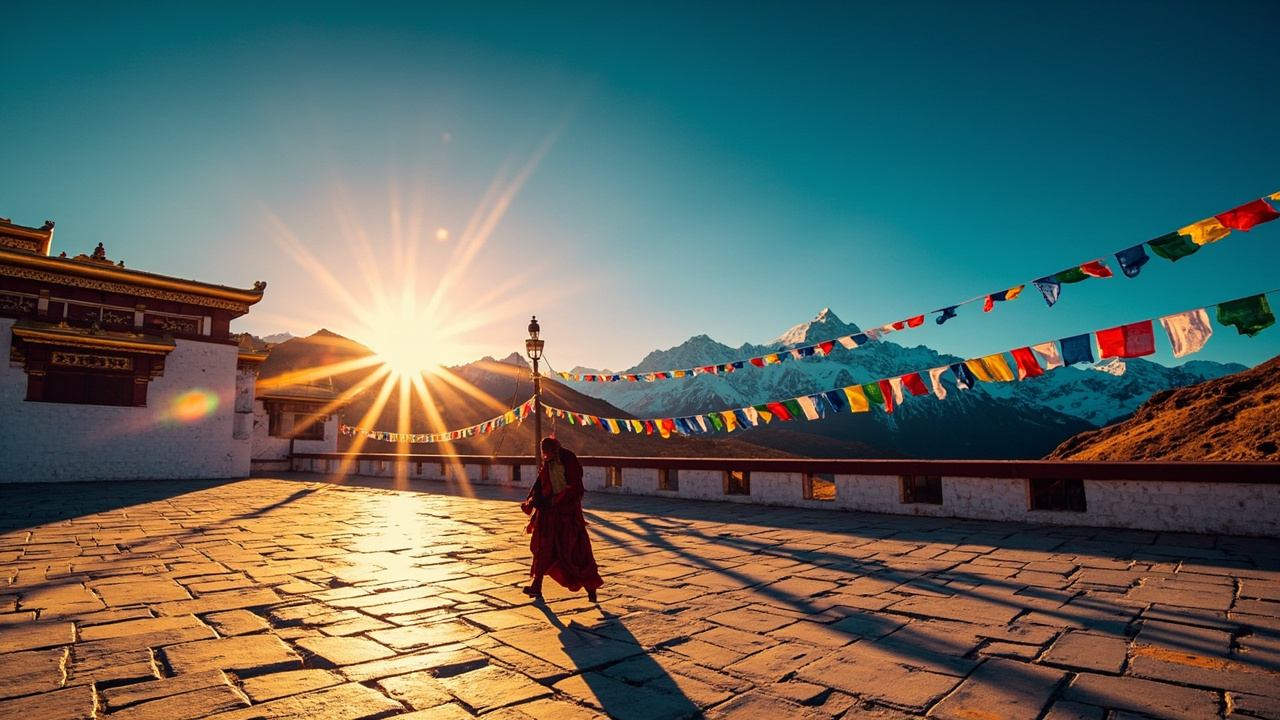
The cab driver from the airport kept glancing at me in his rearview mirror, a half-smile on his face. We were driving past the massive new train station on the edge of Shigatse, and he pointed at it, then at me, then made a walking motion with his fingers. “You walk?” he asked in broken English. “Big walk. High place.” He was right about the altitude, but he undersold the walking. Shigatse sits at 3,836 meters (12,582 feet), and the first time I climbed the steps to Tashilhunpo Monastery, I had to stop twice to catch my breath. The air is thin, the sun is fierce, and the sky is a shade of blue that makes you question every sky you’ve seen before.
Shigatse is Tibet’s second city, but it’s not really a city in the way you’re thinking. It’s a dusty, sprawling town of about 100,000 people, spread across a wide valley where the Yarlung Tsangpo River (the Brahmaputra’s upper reaches) meets the Nyang River. It’s the gateway to Everest Base Camp, the home of the Panchen Lama, and the heart of traditional Tibetan culture in a way that Lhasa, with its Chinese tourists and souvenir shops, sometimes isn’t. Most international visitors rush through here on their way to see the world’s highest mountain. That’s a mistake. Shigatse deserves at least two full days, and this guide will tell you exactly how to spend them.
Quick answer
Shigatse is Tibet’s second-largest city and the gateway to Everest Base Camp, located about 5 hours by road or 2 hours by train from Lhasa. International tourists need a Tibet Travel Permit plus a Chinese visa (or visa-free entry if eligible under China’s 2026 transit policies), and the best time to visit is April through October when the weather is mildest. Budget at least $150-200 (CNY 1,080-1,440) per day for a private tour with driver, which is the only realistic way to see the region’s key sites.
The Short Version
If you only have 90 seconds, here’s the deal: Shigatse is worth two days, not one. Day one is Tashilhunpo Monastery and the old town market. Day two is a day trip to Gyantse and the stunning Pelkor Chode stupa, or a drive toward Everest Base Camp if you have more time. The train from Lhasa is the smart way to arrive - it’s cheap, comfortable, and the views are absurd. Skip the group tours that try to squeeze Shigatse into a single rushed afternoon. The altitude will kick your ass if you don’t give yourself time to adjust. And for the love of everything holy, bring sunscreen. The UV index here is not a joke.
How I Picked These
I’ve been to Shigatse four times over the past seven years, most recently in October 2025. I’ve arrived by train, by private car, and once by a shared van that broke down twice in the mountains (that’s a story for another time). I’ve talked to monks at Tashilhunpo, noodle shop owners in the old town, and a German couple who’d just come down from Everest Base Camp. I’ve made the classic mistakes - showing up at monasteries on their rest days, paying tourist prices for yak butter tea, and trying to walk too fast at altitude. This list is the result of all that trial and error. Every price, hour, and direction below is what I found on my most recent visits, but things change in Tibet, so always double-check with your hotel or tour operator before heading out.
Comparison Table
| Rank | Place | Best For | Approx Cost (USD) | Time Needed | When to Go |
|---|---|---|---|---|---|
| 1 | Tashilhunpo Monastery | Tibetan Buddhism, history | $14 (CNY 100) | 3-4 hours | Apr-Oct, morning |
| 2 | Everest Base Camp | The big mountain | Free (permit required) | 2-3 days round trip | Apr-May, Sep-Oct |
| 3 | Pelkor Chode & Kumbum | Architecture, art | $7 (CNY 50) | 2-3 hours | Apr-Oct, any time |
| 4 | Gyantse Old Town | Local life, food | Free | 1-2 hours | Year-round |
| 5 | Tashilhunpo Kora | Walking, views | Free | 1-2 hours | Sunrise or sunset |
| 6 | Shigatse Old Market | Souvenirs, people-watching | Free | 1-2 hours | Morning |
| 7 | Yamdrok Lake | Scenery, photos | $8 (CNY 60) | Half day | May-Oct |
| 8 | Samzhubzê Market | Food, local produce | Free | 1 hour | Morning |
| 9 | Shigatse Dzong | Views, history | Free | 1 hour | Late afternoon |
| 10 | The Panchen Lama’s Summer Palace | Gardens, quiet | $5 (CNY 35) | 1-2 hours | Apr-Oct |
Tashilhunpo Monastery - The Heart of Shigatse
The first time I walked through the main gate of Tashilhunpo, a young monk in maroon robes smiled at me and said, “Welcome. Walk slow.” I didn’t listen, and ten minutes later I was leaning against a wall, dizzy and embarrassed. He was right. At 3,800 meters, walking slow is not a suggestion - it’s survival.
Tashilhunpo is the seat of the Panchen Lama, the second-highest figure in Tibetan Buddhism after the Dalai Lama. Founded in 1447 by the First Dalai Lama, it’s one of the largest functioning monasteries in Tibet, with over 800 monks in residence. The complex is a maze of whitewashed buildings, golden roofs, and narrow alleyways that smell of butter lamps and incense. The highlight is the Maitreya Chapel, which houses a 26-meter (85-foot) gilded bronze statue of the Future Buddha. It’s the largest bronze Buddha statue in the world, and standing at its base, craning your neck to see the face, is one of those moments that makes you forget to breathe - which, at this altitude, is a real problem.
- Location: Jihua Road, central Shigatse, about a 15-minute walk from the main square
- Entry fee: $14 (CNY 100), includes access to all chapels
- Opening hours: 9:00 AM - 12:00 PM, 2:00 PM - 5:00 PM daily. Go in the morning - the light is better and the crowds are thinner.
- How to get there: From Shigatse train station, take a taxi (about $3 / CNY 20) or the local bus marked “Tashilhunpo” (about $0.30 / CNY 2). The bus drops you at the main gate.
- When to visit: April-October, weekday mornings are best. The monastery is busiest during Tibetan festivals like Saga Dawa (May-June).
- Insider tips: Hire a local guide at the entrance (about $10 / CNY 70) - they’ll explain the murals and statues in ways you’d never figure out on your own. Bring small bills (CNY 5-10) for offering to the monks. The rooftop of the Maitreya Chapel has incredible views over the city, but the stairs are steep and the altitude makes them brutal. Take your time. And don’t miss the butter sculpture room - it’s easy to walk past, but the intricate yak butter sculptures are unlike anything you’ve seen.
I met an elderly monk named Tenzin who had been at Tashilhunpo for 52 years. He showed me how to spin the prayer wheels correctly (clockwise, always) and laughed when I got it wrong three times.
Everest Base Camp - The Reason You Came to Tibet
The alarm went off at 4:30 AM. I was staying at a guesthouse in the town of Rongbuk, and the room was so cold I could see my breath. The toilet was a hole in the ground at the end of a frozen corridor. But when I stepped outside and saw Everest’s summit glowing pink in the first light of dawn, I forgot all of it. That’s the thing about Everest Base Camp - it makes you forget everything else.
The base camp itself is not glamorous. It’s a flat, windswept plain at 5,150 meters (16,900 feet) covered in prayer flags and tent lodges. There’s a small monastery nearby, the highest in the world, and a handful of stone buildings that house the border police and a basic shop. The views of Everest’s north face are staggering, but the real magic is the silence. When the wind drops, which happens rarely, the mountain seems to absorb all sound. You stand there, shivering, staring at the highest point on Earth, and you feel very, very small.
- Location: 320 km (200 miles) southwest of Shigatse, in the Qomolangma National Nature Reserve
- Entry fee: Free, but you need a permit (included in your Tibet Travel Permit) and a vehicle with a local driver
- Opening hours: The camp is accessible year-round, but the road is often closed in winter (December-February) due to snow
- How to get there: From Shigatse, it’s a 6-8 hour drive through some of the most dramatic mountain scenery you’ll ever see. Most visitors hire a private 4x4 with driver (about $200-300 / CNY 1,440-2,160 for the round trip) or join a group tour.
- When to visit: April-May and September-October offer the clearest views. June-August is monsoon season - you might see nothing but clouds.
- Insider tips: Spend a night at the Rongbuk Monastery guesthouse (about $15 / CNY 108 per bed) rather than trying to do it as a day trip - the sunset and sunrise views are worth the cold. Bring a sleeping bag rated for at least -10°C (14°F). The altitude will hit you hard, so drink water constantly and take it slow. And don’t expect luxury - the tent lodges at base camp are basic, with shared toilets and no showers. The road from Rongbuk to base camp is 8 km (5 miles) of rough track - you can walk it (about 2 hours) or take the shuttle bus (about $3 / CNY 20).
I met a Korean climber at base camp who’d attempted Everest twice and been turned back by weather both times. He was there for a third attempt, and I couldn’t decide if he was brave or insane. Maybe both.
Pelkor Chode & Kumbum - The Stupa That Stops You Cold
Gyantse is a two-hour drive from Shigatse, and the moment you see the Kumbum rising from the valley floor, you’ll understand why I keep coming back. It’s a whitewashed, multi-tiered chorten (stupa) that looks like a wedding cake designed by a mad architect. At 32 meters (105 feet) tall, it’s one of the largest stupas in Tibet, and it’s covered in chapels - 77 of them, each with its own murals and statues.
I spent an entire afternoon climbing the narrow, dark staircases that wind through the Kumbum’s interior. Each chapel is a tiny, incense-scented room with its own collection of Buddhist art. Some are in perfect condition, others are faded and crumbling. The climb is claustrophobic and disorienting, and when you finally emerge onto the rooftop, the view over Gyantse’s old town and the snow-capped mountains beyond is worth every dizzying step. The Pelkor Chode monastery next door is smaller and less impressive, but the combination of the two makes Gyantse an essential day trip.
- Location: Gyantse town center, about 90 km (56 miles) from Shigatse
- Entry fee: $7 (CNY 50) for the combined monastery and Kumbum ticket
- Opening hours: 9:00 AM - 6:00 PM daily, but chapels close during lunch (12:00-2:00 PM)
- How to get there: Take a shared taxi or minibus from Shigatse’s main bus station (about $5 / CNY 36, 2 hours). Or hire a private car with driver for the day (about $60 / CNY 430).
- When to visit: April-October, any day of the week. Morning light is best for photos of the Kumbum.
- Insider tips: The Kumbum’s interior is dark and cramped - bring a small flashlight to see the murals properly. Some chapels have English signage, but most don’t, so download a translation app before you go. The rooftop has no railings, so be careful with your footing. And don’t skip the small museum next to the monastery - it has a fascinating collection of thangka paintings. The old town around the Kumbum is worth wandering - you’ll see traditional Tibetan houses and maybe catch a glimpse of local life.
I got lost in the Kumbum’s staircases for twenty minutes and ended up in a chapel I’m pretty sure wasn’t on the tourist route. An old monk found me, laughed, and led me back to the main staircase without saying a word.
Gyantse Old Town - Where the Tourists Aren’t
The thing about Gyantse’s old town is that it’s not a tourist attraction - it’s just a town. Tibetan families live in whitewashed mud-brick houses, kids play soccer in the dusty streets, and old men sit outside tea houses drinking sweet milk tea and watching the world go by. There are no ticket booths, no souvenir shops, no English menus. It’s real, and that’s exactly why you should go.
I spent a morning wandering the narrow alleys, peeking into courtyards and saying “tashi delek” (hello) to everyone I met. Most people smiled and nodded. A few invited me in for tea. One old woman showed me her prayer room, a tiny, dark space filled with butter lamps and family photos. She couldn’t speak a word of English, and I couldn’t speak a word of Tibetan, but we communicated just fine. That’s the thing about travel - sometimes the best conversations happen without words.
- Location: Gyantse, surrounding the Pelkor Chode complex
- Entry fee: Free
- Opening hours: Always open
- How to get there: Walk 5 minutes east from the Pelkor Chode entrance
- When to visit: Morning, when the streets are busiest with locals going about their day
- Insider tips: The tea houses serve the best sweet milk tea in the region - it’s about $0.30 (CNY 2) a cup. Try the momos (Tibetan dumplings) at any of the small restaurants - they’re all good. If you see a group of monks walking through town, follow them - they usually know where the best tea is. And don’t be afraid to wander - the old town is safe and friendly, and getting lost is half the fun.
Tashilhunpo Kora - The Walk That Changes Your Perspective
The kora is the pilgrimage circuit that circles Tashilhunpo Monastery, and it’s the best thing I’ve done in Shigatse. Every morning, hundreds of Tibetans walk the 3-kilometer (1.9-mile) circuit, spinning prayer wheels, chanting mantras, and stopping at the small shrines that line the route. It’s not a tourist activity - it’s a daily ritual, and you’re welcome to join.
The kora starts at the main gate of the monastery and winds through the old town, past whitewashed houses and fluttering prayer flags, before climbing a small hill behind the monastery. The views from the top are spectacular - you can see the entire city spread out below, with the snow-capped Himalayas on the horizon. I walked the kora three times during my last visit, and each time I noticed something new: a small shrine I’d missed, a group of nuns chanting in a courtyard, a family picnicking on the hillside.
- Location: Starts and ends at Tashilhunpo Monastery’s main gate
- Entry fee: Free - the kora is outside the monastery walls
- Opening hours: Best at sunrise (around 7:00 AM) or sunset (around 6:00 PM)
- How to get there: Walk to the monastery’s main gate and follow the path that circles the walls
- When to visit: Year-round, but the views are best in the clear months of April-May and September-October
- Insider tips: Walk clockwise, always - that’s the Tibetan tradition. Wear comfortable shoes - the path is uneven in places. Bring water - the climb is steep and the altitude makes it harder than it looks. And don’t be shy about joining the locals - they’re used to visitors walking the kora, and most will smile and nod as you pass.
Shigatse Old Market - Souvenirs Without the Souvenir Shop
The old market in Shigatse is a maze of narrow lanes packed with stalls selling everything from yak butter to prayer flags to knock-off North Face jackets. It’s chaotic, noisy, and absolutely wonderful. The vendors are mostly Tibetan, and while some speak a little English, most don’t - which makes bargaining an interesting exercise in charades.
I bought a hand-woven wool blanket here for $15 (CNY 108) after a fifteen-minute negotiation that involved a lot of pointing, head-shaking, and eventually a shared laugh. The vendor, a woman named Drolma, threw in a small prayer flag for free and told me, in broken English, to “have good trip.” That blanket is still on my couch in Beijing, and every time I look at it, I think of her.
- Location: The old town area, south of the main square, between Jihua Road and Qingdao Road
- Entry fee: Free
- Opening hours: 9:00 AM - 7:00 PM, but mornings are best
- How to get there: Walk south from the main square for about 10 minutes
- When to visit: Morning, when the market is busiest and the produce is freshest
- Insider tips: Bargaining is expected, but be respectful - start at about 50% of the asking price and work from there. Cash is king - most vendors don’t accept cards or mobile payments. Look for the stalls selling Tibetan incense and butter tea - they’re the best quality. And if you see a stall selling traditional Tibetan boots, buy a pair - they’re handmade, warm, and make great gifts.
Yamdrok Lake - The Turquoise Detour
Yamdrok Lake is technically on the way from Lhasa to Shigatse, not in Shigatse itself, but it’s worth the detour. The lake is a stunning turquoise blue, set in a valley surrounded by snow-capped peaks, and it’s one of the most photographed spots in Tibet. The views from the Kamba La pass (4,794 meters / 15,728 feet) are jaw-dropping, and the lake itself stretches for 72 kilometers (45 miles) through the mountains.
I’ve seen Yamdrok in all seasons, and my favorite time is early morning, when the lake is glassy and still and the light is soft. The water changes color throughout the day - from deep blue to turquoise to almost green - and I’ve spent hours just watching it shift. There’s a small temple on a peninsula jutting into the lake, but the real attraction is simply the view.
- Location: About 100 km (62 miles) from Shigatse, on the road to Lhasa
- Entry fee: $8 (CNY 60) at the Kamba La pass viewpoint
- Opening hours: Always open
- How to get there: By car - most tours from Lhasa to Shigatse stop here, or you can hire a private car for a day trip
- When to visit: May-October, when the lake is ice-free and the weather is clear
- Insider tips: The viewpoint at Kamba La pass is crowded with tour groups - walk 100 meters down the hill for a quieter spot with better views. The road down to the lake is steep and winding - if you get carsick, take motion sickness medicine before you go. And don’t forget your camera - the colors are unreal.
Samzhubzê Market - Where the Locals Shop
Samzhubzê Market is where Shigatse’s residents actually do their shopping, and it’s a world away from the tourist stalls in the old town. It’s a covered market with rows of stalls selling fresh vegetables, meat, spices, and household goods. The air is thick with the smell of chilies, yak meat, and incense, and the noise is overwhelming - vendors shouting prices, customers haggling, and somewhere in the background, a radio playing Tibetan pop music.
I came here looking for a gift for my mother and left with a bag of dried apricots, a block of yak butter, and a hand-carved wooden bowl that I still use every day. The apricots were the best I’ve ever had - sweet and tangy, with a flavor that reminded me of the mountains they came from. The vendor, an old man with a weathered face and a warm smile, insisted on giving me extra “because you are my friend now.”
- Location: South of the main square, about 5 minutes’ walk from the old market
- Entry fee: Free
- Opening hours: 8:00 AM - 6:00 PM, closed on Sundays
- How to get there: Walk south from the main square for about 10 minutes
- When to visit: Morning, when the produce is freshest
- Insider tips: Bring cash - most vendors don’t accept cards. The dried fruit and nuts are excellent value - buy a bag for the road. If you see fresh yak butter, try a small piece - it’s an acquired taste, but it’s the heart of Tibetan cuisine. And don’t be afraid to ask vendors about their products - most are happy to explain, even if the language barrier makes it challenging.
Shigatse Dzong - The Fortress With a View
The Shigatse Dzong is a ruined fortress that sits on a hill overlooking the city. It was built in the 14th century and served as the seat of the local government until it was largely destroyed during the Cultural Revolution. What remains is a series of crumbling walls and towers, but the views from the top are worth the climb.
I hiked up here at sunset, and the light was magical - golden on the mountains, pink on the clouds, and the city below glowing with the first lights of evening. There was a group of Tibetan teenagers at the top, taking selfies and laughing, and they waved me over to join them. We couldn’t communicate much, but we shared the view, and that was enough.
- Location: On the hill north of the city center, about a 20-minute walk from the main square
- Entry fee: Free
- Opening hours: Always open, but best at sunset
- How to get there: Walk north from the main square, following the signs for the dzong
- When to visit: Late afternoon, when the light is golden and the temperature is cooler
- Insider tips: The climb is steep and the altitude makes it harder - take your time and bring water. The ruins are not maintained, so watch your footing. And bring a flashlight if you’re staying for sunset - the walk down is dark and uneven.
The Panchen Lama’s Summer Palace - A Quiet Surprise
The Summer Palace of the Panchen Lama is a small, unassuming complex on the outskirts of Shigatse, and it’s one of the most peaceful places I’ve visited in Tibet. The palace itself is modest - a few rooms with faded murals and simple furniture - but the gardens are beautiful, with old trees, flower beds, and a small pond.
I visited on a weekday morning and had the place almost to myself. A young monk showed me around, pointing out the rooms where the Panchen Lama had lived and the spot where he used to sit and read. The atmosphere was calm and contemplative, a world away from the crowds at Tashilhunpo. It’s not a must-see, but if you have an extra hour, it’s a lovely way to spend it.
- Location: About 3 km (1.9 miles) west of the city center
- Entry fee: $5 (CNY 35)
- Opening hours: 9:00 AM - 5:00 PM, closed on Mondays
- How to get there: Take a taxi from the city center (about $2 / CNY 15)
- When to visit: Morning, when the gardens are quietest
- Insider tips: The murals inside the palace are faded but beautiful - take time to look at them closely. The gardens are a great spot for a picnic - bring food and enjoy the peace. And if you’re lucky, you might meet the resident monk, who is happy to chat about the palace’s history.
FAQ summary
Shigatse, Tibet’s second city, is the gateway to Everest Base Camp and home to Tashilhunpo Monastery, the seat of the Panchen Lama. International tourists need a Tibet Travel Permit plus a Chinese visa (or visa-free entry under China’s 2026 transit policies), and the best time to visit is April through October. The city is accessible from Lhasa via a 2-hour train ride or a 5-hour drive, and most visitors spend 2-3 days here. Key costs include $14 (CNY 100) for Tashilhunpo Monastery, $7 (CNY 50) for Gyantse’s Pelkor Chode, and $200-300 (CNY 1,440-2,160) for a private car to Everest Base Camp. The altitude (3,836 meters) is the biggest challenge - take time to acclimatize, drink water, and walk slowly.
FAQ
Q: Do I need a special permit to visit Shigatse? A: Yes. All international tourists need a Tibet Travel Permit, which must be arranged through a licensed tour agency. You’ll also need a Chinese visa, or you may be eligible for visa-free entry under China’s 2026 transit policies if you’re transiting through a major city like Beijing or Shanghai.
Q: How do I get from Lhasa to Shigatse? A: The train from Lhasa to Shigatse takes about 2 hours and costs approximately $10 (CNY 70) for a hard seat. The train station is about 20 minutes from the city center. Alternatively, you can drive - the 5-hour journey offers spectacular mountain views.
Q: How many days should I spend in Shigatse? A: At least two full days. Day one for Tashilhunpo Monastery and the old town, day two for a day trip to Gyantse or a drive toward Everest Base Camp. If you’re planning to visit Everest Base Camp, add 2-3 more days.
Q: Is the altitude a problem in Shigatse? A: Shigatse sits at 3,836 meters (12,582 feet), so altitude sickness is a real concern. Spend at least one night in Lhasa (3,650 meters) to acclimatize before coming to Shigatse. Drink plenty of water, avoid alcohol, and take it slow for the first day.
Q: What’s the best time of year to visit Shigatse? A: April through October is the best window. May and September offer the clearest skies and mildest temperatures. June-August is monsoon season, which brings clouds and rain but also lush green landscapes. Winter (November-March) is cold and many roads close.
Q: Can I use WeChat Pay or Alipay in Shigatse? A: Yes, most hotels, restaurants, and larger shops accept WeChat Pay and Alipay. However, small vendors and markets are cash-only, so carry some yuan with you. Set up your payment apps before you arrive in Tibet - the process requires a foreign passport and can take a few days.
Q: Is English widely spoken in Shigatse? A: Not really. Most locals speak Tibetan and Mandarin, and English is limited to hotels and major tourist sites. Download a translation app like Google Translate (with the Chinese language pack) before you arrive - it’ll be your best friend.
The Honest Wrap-up
Shigatse isn’t for everyone. If you want luxury hotels, fine dining, and easy communication, this isn’t your place. But if you’re willing to trade comfort for authenticity, you’ll find one of the most fascinating corners of China. The monastery is world-class, the people are warm, and the mountains are humbling. My advice: give yourself time. Don’t rush through on your way to Everest. Sit in a tea house, walk the kora, let the altitude slow you down. Shigatse rewards patience, and if you’re patient, it will reward you with memories that last a lifetime.
More guides you may like
Top 10 Bridges in China: The Complete 2026 Guide
China's bridges are engineering marvels spanning mountains, rivers, and seas. Here are 10 of the most spectacular, from ancient stone to modern steel.
8 min read

Top 10 Buddhist Sites in China: The Complete 2026 Guide
From the Leshan Giant Buddha to the Dunhuang Caves, these 10 Buddhist sites represent 2,000 years of China's spiritual heritage.
9 min read
Top 10 Day Trips from Beijing You Shouldn't Miss: The Complete 2026 Guide
Beijing is packed with history, but some of China's best experiences are just a few hours away. Here are 10 day trips that will transform your visit.
9 min read
Top 10 Hidden Gems in China Off the Beaten Path: The Complete 2026 Guide
Beyond the Great Wall and Terracotta Warriors, China has incredible hidden destinations few tourists ever reach. Here are 10 underrated gems worth the detour.
9 min read
Top 10 Markets and Shopping Streets in China: The Complete 2026 Guide
From Shanghai's Bund to Beijing's Silk Street - 10 markets where foreigners can haggle, explore, and bring home authentic Chinese goods.
9 min read
Top 10 Museums in China You Shouldn't Miss: The Complete 2026 Guide
China's museums span 5,000 years of civilization. These 10 - from the Palace Museum to Xi'an's terracotta gallery - are unmissable for culture lovers.
9 min read