
Jiayuguan Great Wall West End: The Complete 2026 Guide
TODO: Extract from article (100-160 chars)
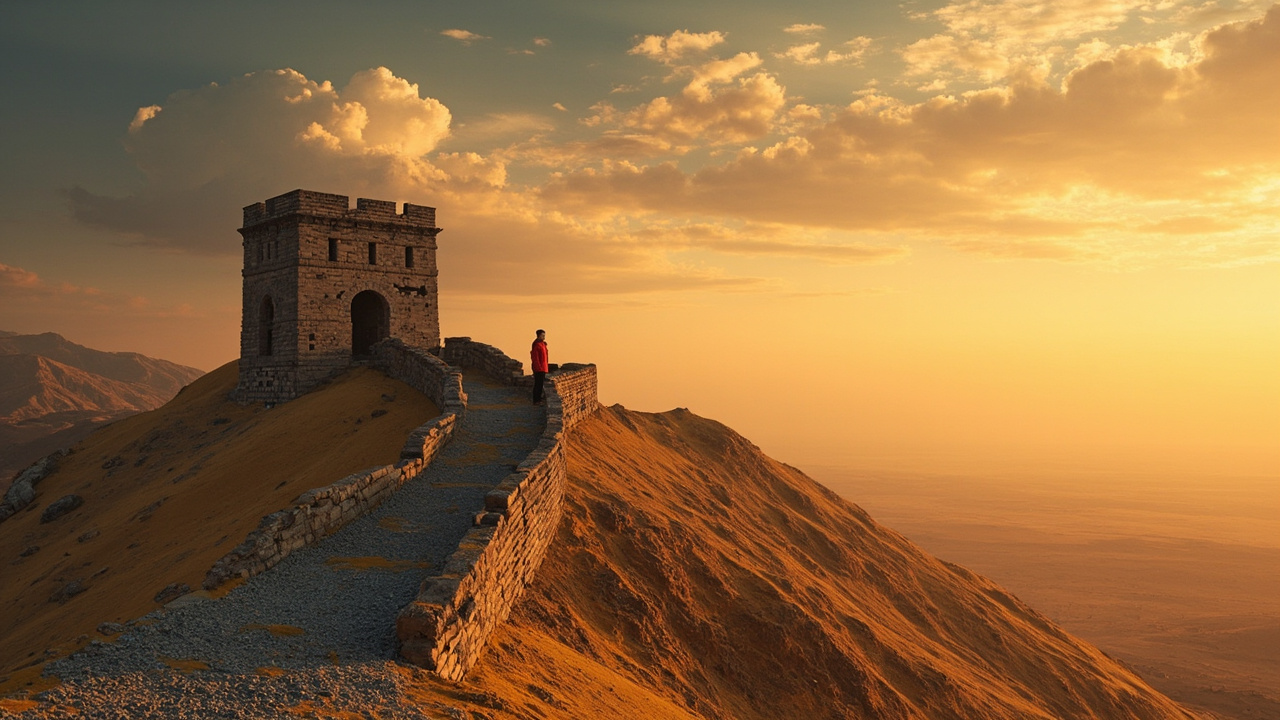
The cab driver in Jiayuguan looked at me in the rearview mirror and asked, in the universal language of confused taxi drivers everywhere, why I had come all the way to his city. I pointed at the distant silhouette of the tower rising from the Gobi Desert, its rooflines sharp against a pale blue sky. He nodded slowly, then said something I caught only half of, something about the wind and the wall and how most people just pass through on the train to Dunhuang.
He wasn’t wrong. Jiayuguan is a city people pass through. But the western end of the Great Wall, the place where the wall simply stops because there is nowhere left to build it, is one of the most haunting spots in all of China. Stand on the ramparts and you’re looking at the Gobi Desert stretching to the horizon, the same view a Ming Dynasty soldier had in 1539 when this fortress was completed. The wall doesn’t end in a dramatic cliff or a mountain pass. It just fades into the gravel and sand, because beyond it there was nothing but emptiness.
This guide covers the Jiayuguan Fort, the Overhanging Great Wall, and the First Pier of the Great Wall, plus the practical details that will keep you from making the same mistakes I made on my first visit. I’ll tell you what’s worth your time, what you can skip, and exactly how to get around this corner of Gansu Province without losing your mind or your wallet.
Quick answer
Jiayuguan is the western terminus of the Ming Dynasty Great Wall, about 5 hours by high-speed train from Lanzhou or 3.5 hours from Dunhuang. The main sites are the Jiayuguan Fort (entrance fee about $18 USD / 130 CNY), the Overhanging Great Wall ($12 USD / 85 CNY), and the First Pier of the Great Wall ($12 USD / 85 CNY). A combined ticket covering all three costs about $30 USD (220 CNY). The best time to visit is May through October, with spring and autumn offering the most comfortable temperatures. Most international visitors combine Jiayuguan with Dunhuang as part of a Gansu corridor itinerary.
The Short Version
If you have 90 seconds, here’s the deal. Jiayuguan Fort is the real deal, a fully restored Ming Dynasty fortress that actually feels authentic, not like a theme park. The Overhanging Great Wall is worth the climb if the wind isn’t trying to kill you. The First Pier is skippable unless you’re a completionist or really love desert views. Budget a full day, hire a taxi for the day (about $40-50 USD / 300-370 CNY), and bring a scarf because the wind here has no manners. The best part of Jiayuguan isn’t any single structure. It’s standing at the literal edge of the Chinese empire and feeling the weight of that.
How I Picked These
I’ve been to Jiayuguan three times since 2019, most recently in spring 2025. I spent two days walking the sites, eating my way through the night market, and sitting in tea houses watching the light change on the desert. I talked to the ticket sellers, the taxi drivers who wait outside the fort, and a retired history teacher who told me more about the Ming Dynasty’s border policies than I ever learned in any book. I also made plenty of mistakes, which I’ll share so you don’t have to. The recommendations below are based on what I actually did, what I saw with my own eyes, and what locals told me when I asked them where they’d take their own visiting relatives.
Comparison Table
| Rank | Place | Best For | Approx Cost (USD) | Time Needed | When to Go |
|---|---|---|---|---|---|
| 1 | Jiayuguan Fort | History, architecture, the main event | $18 (130 CNY) | 2-3 hours | Spring/Fall, morning |
| 2 | Overhanging Great Wall | Hiking, views, photos | $12 (85 CNY) | 1.5-2 hours | Spring/Fall, late afternoon |
| 3 | First Pier of the Great Wall | Desert views, completionists | $12 (85 CNY) | 1-1.5 hours | Spring/Fall, sunset |
| 4 | Wei-Jin Dynasty Brick Paintings | Ancient art, off-the-beaten-path | $12 (85 CNY) | 1 hour | Any season |
| 5 | Jiayuguan City Museum | Context, quick overview | Free | 1 hour | Any season |
Jiayuguan Fort —The Fortress That Guarded the End of the World
I remember walking through the main gate and hearing my own footsteps echo off the thick earthen walls. The fort is bigger than it looks in photos, a full military compound with watchtowers, barracks, and a commanding view in every direction. The wind was whipping dust across the parade ground, and for a moment I understood why the soldiers stationed here must have felt like they were guarding the edge of the earth.
The fort was built in 1372, the first major construction project of the Ming Dynasty’s western defense line. It’s not just a wall, it’s a complete fortress complex with an inner city, an outer city, and a moat. The architecture is genuinely impressive, and the restoration work has been done with enough care that it doesn’t feel fake. You can climb the towers, walk the ramparts, and imagine the signal fires that would have been lit to warn of approaching armies.
Location: Jiayuguan city center, about 5 km (3 miles) from the train station Entry fee: $18 USD (130 CNY), or $30 USD (220 CNY) for the combined ticket with all three main sites Opening hours: 8:30 AM - 6:00 PM (April-October), 9:00 AM - 5:30 PM (November-March) How to get there: From Jiayuguan South Railway Station, take a taxi (about 20 minutes, $4-5 USD / 30 CNY). From the city center, bus routes 4 and 6 go to the fort, but honestly, just take a taxi. It’s cheap and saves you the confusion. When to visit: Go early, right when it opens. The tour groups arrive around 10 AM, and the fort gets crowded and loud. Spring and autumn are ideal, summer is hot and exposed, winter is freezing. Insider tips:
- The combined ticket is worth it if you plan to see all three sites. Buy it at the fort first.
- Hire a taxi for the day from outside the fort. Negotiate hard, expect to pay around $40-50 USD (300-370 CNY) for the full circuit.
- The “drum tower” performance at the gate happens every few hours. It’s cheesy but fun.
- Bring water. There’s very little shade inside the fort.
- The gift shop near the exit sells decent postcards, but the snacks are overpriced. Skip them.
I met a retired soldier there who told me his grandfather had been stationed at the fort in the 1940s. He pointed at the desert and said, in Chinese, “Nothing has changed out there. It’s still empty.” He wasn’t wrong.
Overhanging Great Wall —The Wall That Climbs the Mountain
The Overhanging Great Wall, or Xuanbi Great Wall, is about 8 km (5 miles) north of the fort. The name comes from the way the wall appears to hang off the side of the Black Mountain. It’s a steep climb, and I’ll be honest, I was winded by the time I reached the top. The steps are uneven, the altitude is higher than you expect, and the wind makes every step feel like a negotiation.
But the view from the top is worth the burn in your legs. You can see the fort in the distance, the desert spreading out in every direction, and the wall snaking up the mountain like a stone serpent. It was rebuilt in the 1980s, so it’s not original Ming Dynasty construction, but the setting is spectacular and the climb gives you a real sense of what it took to build and defend this line.
Location: About 8 km (5 miles) north of Jiayuguan Fort, at the foot of the Black Mountain Entry fee: $12 USD (85 CNY), included in the combined ticket Opening hours: 8:30 AM - 6:00 PM (April-October), 9:00 AM - 5:30 PM (November-March) How to get there: Your day-hire taxi will take you here from the fort, about 15 minutes. If you’re on your own, take a taxi from the city center, around $6-8 USD (45-60 CNY). When to visit: Late afternoon, when the light turns golden and the crowds thin out. The morning tour groups hit this place hard. Insider tips:
- Wear proper shoes. The steps are uneven and some are quite steep.
- The cable car is a waste of money. The walk is the point.
- There’s a small section of wall you can walk on that’s not restored. It’s rougher but feels more authentic.
- The wind at the top is brutal. Bring a jacket even in summer.
- The toilets at the entrance are the last clean ones you’ll see all day. Plan accordingly.
I climbed this wall with a German couple I met at the fort. We took turns holding each other’s cameras and pretending we weren’t all gasping for air. By the top, we’d become friends. That’s the thing about shared suffering, it bonds you.
First Pier of the Great Wall —Where the Wall Meets the Desert
The First Pier of the Great Wall, or Tian Di Di Yi Dun, is the actual westernmost point of the Ming Dynasty Great Wall. It’s a single watchtower sitting in the middle of the Gobi Desert, about 7.5 km (4.7 miles) south of the fort. The name comes from the fact that this is where the wall “pierces” the desert, the first point of defense against anything coming from the west.
I’ll be honest with you, this is the weakest of the three main sites. The tower itself is small and the surrounding area is mostly gravel and scrub. But there’s something powerful about standing at the literal end of the wall, looking out at the emptiness that the Ming Dynasty was trying to keep out. The museum nearby has some interesting artifacts, including original Ming Dynasty weapons and pottery.
Location: About 7.5 km (4.7 miles) south of Jiayuguan Fort, in the Gobi Desert Entry fee: $12 USD (85 CNY), included in the combined ticket Opening hours: 8:30 AM - 6:00 PM (April-October), 9:00 AM - 5:30 PM (November-March) How to get there: Your day-hire taxi will take you here. It’s about 20 minutes from the fort. When to visit: Sunset. The light on the desert is incredible and the tower looks dramatic against the orange sky. Insider tips:
- The museum has English translations, which is rare in this area.
- Don’t bother with the camel rides. They’re expensive and the animals look tired.
- The desert here is surprisingly quiet. Take a moment to just stand still and listen.
- Bring a hat and sunglasses. There’s no shade anywhere.
- If you’re short on time, skip this one. The fort and the Overhanging Wall are the highlights.
I stood at the base of the tower for a long time, trying to imagine what the soldiers here thought about, stationed at the edge of the known world. Probably the same thing soldiers everywhere think about. Home, food, and when their shift would end.
Wei-Jin Dynasty Brick Paintings —The Hidden Gem Most Tourists Miss
About 20 km (12 miles) east of Jiayuguan, there’s a collection of brick tombs from the Wei and Jin Dynasties (220-420 AD) that almost no international tourists visit. I only found out about them because a taxi driver mentioned it when I asked what else there was to see. The tombs contain some of the most remarkable ancient paintings I’ve seen in China, depicting daily life, farming, hunting, and even a famous depiction of a postman on horseback.
The site is small and the presentation is basic, but the paintings are extraordinary. They’re simple, almost cartoonish in style, but they give you a window into what life was like in this region 1,700 years ago. The tombs themselves are open to walk through, which is rare and feels a bit like exploring.
Location: About 20 km (12 miles) east of Jiayuguan, in the Gobi Desert Entry fee: $12 USD (85 CNY) Opening hours: 8:30 AM - 6:00 PM (April-October), 9:00 AM - 5:30 PM (November-March) How to get there: You’ll need a taxi or a hired car. It’s about 30 minutes from the city center. When to visit: Any time, but morning is best to avoid the heat. Insider tips:
- The site is poorly signed. Make sure your driver knows where you’re going.
- Photography is allowed in the tombs, but no flash.
- The paintings are fragile. Don’t touch them, no matter how tempting.
- This is a good stop to combine with the First Pier if you have a full day.
- The gift shop has surprisingly good books about the paintings.
I had the place almost entirely to myself. A single caretaker followed me around, turning on the lights in each tomb as I entered. He didn’t speak English, and I didn’t speak enough Chinese to ask questions, but we communicated through nods and smiles. It was one of the most peaceful hours I spent in Gansu.
Jiayuguan City Museum —Free Context Before You See the Real Thing
If you have an extra hour and want to understand what you’re looking at, the Jiayuguan City Museum is worth a stop. It’s small, free, and has decent English signage. The exhibits cover the history of the region from prehistoric times through the Ming Dynasty, with a focus on the fort and the Great Wall.
I visited this museum before going to the fort on my second trip, and it made a real difference. I understood the layout of the fort better, appreciated the engineering challenges, and had some context for what I was seeing. It’s not a world-class museum, but it’s a solid primer.
Location: City center, near the main square Entry fee: Free Opening hours: 9:00 AM - 5:00 PM, closed Mondays How to get there: A short walk from most hotels in the city center. Ask your hotel for directions. When to visit: Before you visit the fort, so you have context. Insider tips:
- The museum is small. You can see everything in about an hour.
- The English signage is decent, but a translation app helps for the more detailed exhibits.
- There’s a small gift shop with locally made crafts.
- The museum is air-conditioned, which is a relief in summer.
- Combine this with a walk through the city’s main square, which has a statue of the famous general Feng Sheng.
I spent an hour here on a hot afternoon, grateful for the air conditioning and the chance to sit down. A group of schoolchildren came through, all in matching uniforms, and stared at me like I was a zoo animal. I waved. They giggled. It was delightful.
The Great Wall Museum —A Quick Stop for Context
Located right next to the fort, the Great Wall Museum is technically part of the same complex. It’s a modern building with exhibits about the history of the Great Wall, from its origins in the Warring States period through the Ming Dynasty. The English signage is better than most museums in China, and the exhibits are well-curated.
I found the section on the construction techniques particularly interesting. There are models showing how the wall was built, including the use of rammed earth and the famous “one brick” story about the fort’s construction. The story goes that a builder was given one extra brick, which he placed in the wall to avoid punishment for using too many materials. The brick is still there, or so they say.
Location: Adjacent to Jiayuguan Fort Entry fee: Included in the fort ticket Opening hours: Same as the fort How to get there: Walk from the fort entrance. It’s right there. When to visit: Before or after the fort, depending on your energy level. Insider tips:
- The museum is air-conditioned, which is a blessing in summer.
- The “one brick” story is a fun piece of local lore. Ask a guide to show you where it is.
- The gift shop has some of the better souvenirs in the area.
- Allow 45 minutes to an hour for the exhibits.
- The museum has a small cafe with surprisingly decent coffee.
I found the museum’s section on the Ming Dynasty’s defense strategy fascinating. It made me realize how much thought went into this wall, and how it was as much about controlling trade and movement as it was about military defense.
The Night Market —Where the Locals Actually Eat
Jiayuguan’s night market is not a tourist attraction, it’s a local institution. It’s located on Xinhua Road, near the city center, and it’s where the city comes to eat, drink, and socialize after dark. The stalls sell everything from lamb skewers to hand-pulled noodles to a local specialty called “Jiayuguan beer,” which is exactly what it sounds like.
I went here on my first night in the city, jet-lagged and hungry, and ended up having one of the best meals of my entire trip. I sat at a plastic table on the street, eating lamb skewers that were charred on the outside and juicy in the middle, watching families, couples, and groups of friends do the same thing. It was chaotic, loud, and absolutely wonderful.
Location: Xinhua Road, city center Entry fee: Free to walk around, food costs extra Opening hours: Evenings, roughly 6 PM to midnight How to get there: Walk from most hotels in the city center. Ask your hotel for directions. When to visit: Go hungry. The food is the point. Insider tips:
- Try the lamb skewers. They’re the best thing on the menu.
- The hand-pulled noodles are also excellent. Look for a stall with a long line.
- Bring cash. Some stalls don’t accept mobile payments.
- The beer is local and cheap. Try it.
- Don’t be afraid to point at what looks good. The stall owners are used to non-Chinese speakers.
I ate lamb skewers, drank local beer, and watched a group of teenagers take selfies in front of a fountain. It was a perfect night, the kind of evening that makes you fall in love with a place.
Practical Tips for Foreign Visitors
Visa and Entry: As of 2026, China’s visa-free policy allows citizens of many countries, including the US, UK, Canada, Australia, and most European nations, to enter for up to 30 days for tourism, business, or transit purposes. This policy is subject to change, so check with your local Chinese embassy or consulate before you book. If you’re not eligible for visa-free entry, a standard L tourist visa costs about $140 USD (1,000 CNY) and takes about a week to process.
Getting There: The easiest way to reach Jiayuguan is by high-speed train from Lanzhou (about 5 hours, $30-40 USD / 220-290 CNY) or from Dunhuang (about 3.5 hours, $25-35 USD / 180-250 CNY). The Jiayuguan South Railway Station is the main hub for high-speed trains. There’s also an airport with flights from major Chinese cities, but the train is more reliable and scenic.
Getting Around: Taxis are cheap and plentiful. A ride within the city costs about $2-3 USD (15-20 CNY). For the day trip to the fort and surrounding sites, hire a taxi for the day. Negotiate the price before you get in, and expect to pay around $40-50 USD (300-370 CNY). The driver will wait for you at each site.
Money and Payments: WeChat Pay and Alipay are essential in China. Set them up before you arrive, and link them to your international credit card or a prepaid travel card. Cash is still accepted, but increasingly rare. Many smaller vendors, including some market stalls, only accept mobile payments. The sites in Jiayuguan accept both cash and mobile payments.
Language: English is not widely spoken in Jiayuguan. The fort and museum have some English signage, but most people you encounter will not speak English. Download a translation app like Google Translate or Pleco before you arrive. The offline translation feature is essential, as you may not have reliable internet access everywhere.
SIM Card and VPN: You’ll need a Chinese SIM card or an international roaming plan. China Mobile, China Unicom, and China Telecom all sell tourist SIM cards at the airport. A VPN is essential if you want to access Google, Facebook, Instagram, WhatsApp, or any other blocked services. Set up your VPN before you arrive, as the Chinese app stores don’t have them.
Internet Access: Wi-Fi is available at most hotels and some cafes, but it’s often slow and may require a Chinese phone number for access. The sites themselves have limited connectivity.
Weather: Jiayuguan has a desert climate. Summers are hot and dry, with temperatures reaching 95°F (35°C). Winters are cold, with temperatures dropping to 5°F (-15°C). Spring and autumn are the best times to visit, with comfortable temperatures and clear skies. The wind is a constant presence, so bring a scarf or bandana.
FAQ summary
Jiayuguan is the western end of the Ming Dynasty Great Wall, reachable by high-speed train from Lanzhou (5 hours) or Dunhuang (3.5 hours). The main sites are the Jiayuguan Fort ($18 USD / 130 CNY), the Overhanging Great Wall ($12 USD / 85 CNY), and the First Pier of the Great Wall ($12 USD / 85 CNY), with a combined ticket available for about $30 USD (220 CNY). The best time to visit is May through October, with spring and autumn offering the most comfortable conditions. Most visitors spend one full day in Jiayuguan, hiring a taxi for the day to cover all three main sites. As of 2026, many nationalities qualify for visa-free entry to China for up to 30 days.
FAQ
Q: How do I get from Dunhuang to Jiayuguan? A: The high-speed train takes about 3.5 hours and costs $25-35 USD (180-250 CNY). There are several trains daily, and the route is scenic, passing through desert and mountain landscapes. Book your ticket in advance during peak season.
Q: Is one day enough to see Jiayuguan? A: Yes, one full day is enough to see the fort, the Overhanging Great Wall, and the First Pier. Start early, hire a taxi for the day, and you’ll have time for all three sites plus a meal in the city. If you want to visit the Wei-Jin tombs as well, you’ll need a second day.
Q: Do I need to book tickets in advance? A: You can buy tickets at the sites themselves, and there’s rarely a queue. However, during Chinese national holidays (early October and early May), the sites get crowded, so booking in advance through a platform like Trip.com or Ctrip is wise.
Q: Is the combined ticket worth it? A: Yes, if you plan to see all three main sites. The combined ticket costs $30 USD (220 CNY) and covers the fort, the Overhanging Great Wall, and the First Pier. If you only want to see the fort, buy the single ticket for $18 USD (130 CNY).
Q: What should I wear for the Overhanging Great Wall climb? A: Wear sturdy shoes with good grip, as the steps are uneven and steep. Bring a light jacket, even in summer, because the wind at the top is strong and cold. A hat and sunscreen are essential, as there’s no shade on the climb.
Q: Can I use my credit card at the sites? A: Credit cards are not widely accepted in Jiayuguan. The ticket offices accept cash and mobile payments (WeChat Pay and Alipay). Set up mobile payments before you arrive, and carry some cash as a backup.
Q: Is Jiayuguan safe for solo travelers? A: Yes, Jiayuguan is very safe. The city is small, the people are friendly, and crime is virtually nonexistent. The main risks are the weather, the wind, and getting sunburned. Take standard precautions and you’ll be fine.
The Honest Wrap-up
Jiayuguan is not for everyone. If you’re looking for the dramatic, postcard-perfect Great Wall of Beijing, you’ll find it here, but it’s different. This is the wall at its most honest, a stone and earth barrier that ends because there was nothing left to defend against. It’s quieter, more contemplative, and in some ways more powerful than the tourist-packed sections in the east.
This guide is for the traveler who wants to understand the Great Wall as a whole, not just the famous bits. It’s for the person who doesn’t mind a bit of wind and dust, who finds meaning in standing at the edge of an empire and looking out at the emptiness. If that sounds like you, book the ticket. And when you’re standing on the ramparts, looking at the Gobi stretching to the horizon, take a moment to just be quiet. That’s the point.
One last piece of advice: bring a scarf. The wind here is no joke.
More guides you may like
Top 10 Bridges in China: The Complete 2026 Guide
China's bridges are engineering marvels spanning mountains, rivers, and seas. Here are 10 of the most spectacular, from ancient stone to modern steel.
8 min read

Top 10 Buddhist Sites in China: The Complete 2026 Guide
From the Leshan Giant Buddha to the Dunhuang Caves, these 10 Buddhist sites represent 2,000 years of China's spiritual heritage.
9 min read

Top 10 Day Trips from Beijing You Shouldn't Miss: The Complete 2026 Guide
Beijing is packed with history, but some of China's best experiences are just a few hours away. Here are 10 day trips that will transform your visit.
9 min read
Top 10 Hidden Gems in China Off the Beaten Path: The Complete 2026 Guide
Beyond the Great Wall and Terracotta Warriors, China has incredible hidden destinations few tourists ever reach. Here are 10 underrated gems worth the detour.
9 min read
Top 10 Markets and Shopping Streets in China: The Complete 2026 Guide
From Shanghai's Bund to Beijing's Silk Street - 10 markets where foreigners can haggle, explore, and bring home authentic Chinese goods.
9 min read
Top 10 Museums in China You Shouldn't Miss: The Complete 2026 Guide
China's museums span 5,000 years of civilization. These 10 - from the Palace Museum to Xi'an's terracotta gallery - are unmissable for culture lovers.
9 min read