
Nanji Islands Zhejiang: The Complete 2026 Guide
TODO: Extract from article (100-160 chars)
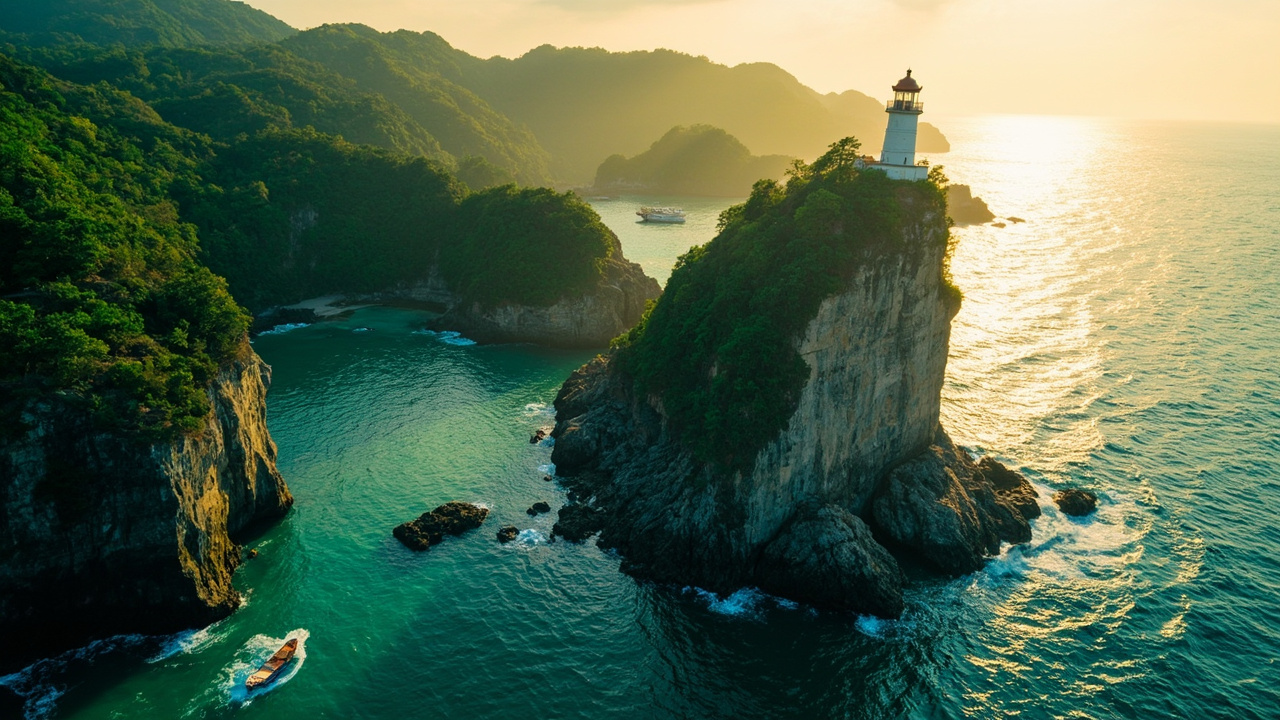
The ferry cut its engine and we drifted the last hundred meters into the harbor at Nanji Island. A dozen fishing boats were tied up along the concrete quay, their hulls painted the particular shade of blue that only seems to exist on Chinese fishing vessels. An old woman in a straw hat was sorting through a basket of sea urchins, and the whole waterfront smelled of diesel, salt, and something sweet I couldn’t identify until I realized it was the seaweed drying on tarps further up the beach.
I’d come to Nanji because friends in Wenzhou kept telling me it was “the last clean island” - a phrase you hear a lot in Zhejiang, where the coastline has been developed within an inch of its life. They weren’t wrong. Nanji is a marine nature reserve, which means the water is actually clear, the cliffs are actually dramatic, and the island hasn’t been turned into a concrete resort town. It’s not easy to get to, which is precisely the point.
This guide covers everything you need to know about visiting Nanji Islands in 2026 - how to get there, what it costs, where to sleep, and the mistakes I made so you don’t have to. I’ve been to China more than forty times and lived in Beijing for seven years, but Nanji still surprised me. It will surprise you too.
Quick answer
Nanji Islands is a marine nature reserve off the coast of Wenzhou, Zhejiang, reachable by a 90-minute high-speed ferry from Aotou Wharf. A typical 2-night trip costs $150-$250 (CNY 1,080-1,800) per person including ferry, lodging, and food. The best season is May to October, and you don’t need a visa if you qualify for China’s 240-hour visa-free transit policy, but you do need to book ferry tickets in advance during summer weekends.
The Short Version
Go for the clear water, the dramatic cliffs, and the feeling of being somewhere that hasn’t been ruined yet. Skip it if you want nightlife, luxury hotels, or easy logistics. The island is small, the infrastructure is basic, and the ferry schedule is not your friend. But if you want to see what the Chinese coast looked like before the developers got there, this is the place. Three days is enough. Two is tight but doable.
How I Picked These
I spent four days on Nanji in September 2025, which meant I got to see it in both summer and shoulder-season conditions. I stayed in a family guesthouse in the main village, ate every meal at local restaurants, hiked the full cliff trail twice, and took the ferry in both directions. I also talked to the ferry staff, a marine biology student doing research on the island, and a retired fisherman who now runs a guesthouse. The recommendations below are based on what I actually saw and did, not what the promotional materials say.
Comparison Table
| Rank | Place | Best For | Approx Cost (USD) | Time Needed | When to Go |
|---|---|---|---|---|---|
| 1 | Dasha’ao Beach | Swimming and sunset | Free | 2-3 hours | June-September |
| 2 | The Cliff Trail | Hiking and views | Free | 3-4 hours | May-October |
| 3 | Guozhang Island | Day trip and snorkeling | $20-$30 ferry | Half day | July-September |
| 4 | Marine Life Museum | Learning and rainy days | $2 (CNY 15) | 1 hour | Year-round |
| 5 | Sanpanwei Lighthouse | Photography and sunsets | Free | 1-2 hours | Year-round |
| 6 | The Grassland | Picnics and wind | Free | 1-2 hours | April-October |
| 7 | Houshan Village | Local life and seafood | Free | 1-2 hours | Year-round |
| 8 | The Cave Trail | Adventure and geology | Free | 2-3 hours | May-October |
| 9 | Sunrise Point | Early mornings | Free | 1 hour | Year-round |
| 10 | The Fishing Harbor | People watching | Free | 1 hour | Early morning |
1. Dasha’ao Beach - The beach that made me forget I was in China
The first time I walked onto Dasha’ao Beach, I stopped mid-step. The sand was that pale golden color you associate with Southeast Asia, and the water was genuinely turquoise - not the murky brown you get at most Chinese beaches. A group of local kids were chasing crabs near the tide line while their parents set up a picnic under one of the few shade structures. I sat down and watched the waves for a solid hour.
This is the main beach on Nanji, and it’s the reason most people come. The water is clean because the island is a national marine nature reserve, which means fishing is restricted and development is controlled. The beach itself is about a kilometer long, backed by low hills covered in grass and scrub. There are basic changing rooms and showers, but no beach bars, no jet skis, no vendors harassing you. It feels like a beach from thirty years ago.
The swimming is good in summer, though the water can be cold even in August. The lifeguards are present but not particularly attentive, so don’t rely on them. The beach faces west, which means sunsets here are genuinely spectacular - the sun drops behind the mainland hills and the whole sky turns orange and pink.
- Location: South side of the island, about 10 minutes by electric shuttle from the main village
- Entry fee: Free
- Opening hours: Always open, but lifeguards only during summer daylight hours
- How to get there: Take the electric shuttle from the main village (CNY 5, about $0.70) or walk 30 minutes. The shuttle runs every 15 minutes during summer, less often in shoulder season.
- When to visit: June to September for swimming, but the beach is beautiful year-round. Go at sunset for the best light.
- Insider tips: The beach gets crowded on summer weekends with domestic tourists. Go on a weekday if you can. There’s a small shop selling drinks and instant noodles at the back of the beach, but it closes early. Bring your own water. The sand flies can be bad at dusk - bring repellent.
- A specific memory: I watched a grandfather teach his grandson how to dig for clams, using nothing but his bare feet and decades of experience. The boy’s face when he found his first one was pure joy.
2. The Cliff Trail - Where the island shows off
The cliff trail on the eastern side of Nanji is the best hike I’ve done in China that doesn’t involve a famous mountain. It’s a roughly 6-kilometer path that winds along the top of sea cliffs, dropping down into small coves and climbing back up to viewpoints that make you catch your breath. The trail is well-maintained with stone steps and railings, but it’s not easy - there are sections with several hundred steps, and the sun can be brutal.
The views are the point. On a clear day you can see the mainland coast in one direction and open ocean in the other. The water below is so clear you can see the seabed in the shallows, and the cliffs themselves are striped with layers of volcanic rock in shades of gray, brown, and rust. There are several spots where the trail passes directly over the water, and you can hear the waves echoing in the caves below.
The trail starts near the Marine Life Museum and ends at a viewpoint called Wanghai Ting (Sea-Viewing Pavilion). It takes about three hours at a reasonable pace, longer if you stop for photos. There’s no shade for most of the route, so bring a hat and plenty of water. The trail is not recommended after rain, as the stone steps get slippery.
- Location: Eastern side of the island, starting near the Marine Life Museum
- Entry fee: Free
- Opening hours: Always open, but best in daylight hours
- How to get there: Take the electric shuttle to the Marine Life Museum stop, then follow the signs for the trailhead. The shuttle runs from the main village.
- When to visit: May to October, but avoid midday in summer when the sun is directly overhead. Start early (before 8am) or late (after 3pm).
- Insider tips: The trail is one-way in sections, so you can’t just turn around easily. Plan to complete the full route. There’s a small pavilion about halfway where you can rest. The last section before Wanghai Ting is the steepest - save energy for it. Don’t attempt this in flip-flops, no matter how tempting it looks.
- A specific mistake: I ran out of water about two-thirds of the way through and had to drink from a stream that a local told me was safe. It was, but I wouldn’t recommend it. Bring at least 2 liters.
3. Guozhang Island - The day trip that’s worth the extra ferry
Guozhang Island is a smaller island about 20 minutes by boat from Nanji’s main harbor. It’s less developed than Nanji - there’s one small village, a few guesthouses, and a lot of empty coastline. The main attraction is the snorkeling, which is surprisingly good for China. The water is clear enough to see fish and coral in the shallows, and there are several coves where the water is calm enough for beginners.
I took the morning ferry over and spent the day exploring. The island has a few short hiking trails that lead to viewpoints, and the beaches are emptier than Nanji’s. There’s also a small fishing village where you can watch the boats come in and buy seafood directly from the fishermen. The guesthouses are basic but clean, and the food is excellent - the island is too small for restaurants, so you eat at your guesthouse.
The snorkeling is best in July and August when the water is warmest. The visibility is not Great Barrier Reef level, but for China it’s remarkable. You can rent snorkeling gear at the guesthouses for about $5 (CNY 35) per day. There’s no dive shop, so if you want to dive, you need to bring your own gear and buddy.
- Location: 20 minutes by boat from Nanji’s main harbor
- Entry fee: Free, but the boat costs $20-$30 (CNY 140-210) round trip
- Opening hours: Boats run from about 8am to 5pm, depending on weather and season
- How to get there: Buy tickets at the small booth near the harbor on Nanji. The boat is a local fishing boat converted for passengers - it’s not luxurious, but it’s safe.
- When to visit: July to September for snorkeling. The rest of the year is fine for hiking but the water will be cold.
- Insider tips: The boat schedule is flexible - the captain will wait if there are enough passengers, but he’ll also leave early if there aren’t. Confirm your return time with the captain before you go. The guesthouses on Guozhang are cheaper than on Nanji, so consider staying overnight. Bring cash - there’s no ATM on the island and card payments are hit or miss.
- A specific person: The boat captain, a man in his sixties named Chen, told me he’d been making this crossing for thirty years. He pointed out a rock formation that he said looked like a turtle, and I couldn’t unsee it.
4. Marine Life Museum - More interesting than it sounds
I’ll be honest - I only went to the Marine Life Museum because it was raining and I had nothing else to do. It turned out to be one of the most interesting hours I spent on the island. The museum is small, maybe three rooms, but it’s packed with specimens of the marine life found around Nanji, including some creatures I’d never heard of.
The museum is run by the marine reserve authority, and it serves as both a visitor center and a research facility. There are tanks with live specimens, including some colorful reef fish and a few sea anemones, plus displays of preserved animals and information panels about the island’s ecology. The panels are in Chinese, but there’s a QR code that gives you an English guide on your phone.
The most interesting part is the section on the island’s history as a marine reserve. Nanji was designated a national nature reserve in 1990, and the museum explains how the fishing restrictions have allowed the ecosystem to recover. There’s also a section on the island’s role in the Chinese navy during the 1950s, which I hadn’t known about.
- Location: Central part of the island, near the electric shuttle stop
- Entry fee: $2 (CNY 15)
- Opening hours: 8:30am to 5pm, closed on Mondays
- How to get there: Take the electric shuttle from the main village and get off at the museum stop. It’s a 2-minute walk from the stop.
- When to visit: Year-round, but especially useful on rainy days or when you need a break from the sun.
- Insider tips: The QR code for the English guide is near the entrance - scan it before you go in. The museum has clean bathrooms, which are worth knowing about. The gift shop sells some interesting books about the island, but they’re all in Chinese. If you’re interested in marine biology, the staff are happy to chat, though their English is limited.
- A specific observation: A group of schoolchildren came through while I was there, and the way their teacher explained the marine ecosystem made me wish my high school biology classes had been this engaging.
5. Sanpanwei Lighthouse - The postcard view
The lighthouse at Sanpanwei is the image you see on every postcard of Nanji, and for good reason. It sits on a rocky promontory at the southern tip of the island, a white tower with a red top that looks like it was designed for Instagram. The setting is dramatic - the lighthouse is surrounded by cliffs on three sides, and the waves crash against the rocks below.
The lighthouse is still operational, which is rare for Chinese lighthouses - most have been automated and closed to visitors. You can’t go inside, but you can walk right up to the base and look out at the ocean. The view is spectacular, especially in the late afternoon when the light turns golden and the sea takes on a deep blue color.
There’s a small grassy area near the lighthouse where locals come to fly kites on windy days. It’s also a popular spot for couples, who come to watch the sunset. The walk from the nearest road is about 15 minutes on a paved path, and there’s a small parking area for the electric shuttles.
- Location: Southern tip of the island, about 20 minutes by electric shuttle from the main village
- Entry fee: Free
- Opening hours: Always open
- How to get there: Take the electric shuttle to the Sanpanwei stop, then walk 15 minutes on the paved path. The shuttle runs every 20 minutes during the day.
- When to visit: Year-round, but sunset is the best time. Go on a weekday if you want the place to yourself - weekends can be busy with domestic tourists.
- Insider tips: The path to the lighthouse is exposed, so it gets very windy. Hold onto your hat. There’s a small snack stand near the parking area that sells drinks and instant noodles, but it closes by 5pm. The lighthouse is a great spot for stargazing on clear nights - the island has very little light pollution.
- A specific memory: I sat on the grass near the lighthouse for an hour, watching a fishing boat work its way along the coast. The light changed from gold to orange to pink, and I didn’t want to leave.
6. The Grassland - The island’s unexpected interior
Most people come to Nanji for the coast, but the interior of the island is just as interesting. The center of Nanji is covered in grassland - rolling hills of green that look more like the Scottish Highlands than a Chinese island. The grass is kept short by grazing goats, and the views from the highest points are spectacular.
The grassland is crossed by a network of dirt paths that are easy to follow. You can walk from the main village to the highest point on the island, which is about 200 meters above sea level, in about an hour. The views from the top are worth the effort - you can see the whole island, the surrounding sea, and on a clear day, the mainland coast.
The grassland is also home to a surprising number of birds. I saw several species I couldn’t identify, including a large bird of prey that circled overhead for a while. The island is on a major migration route, and the grassland is a good place for birdwatching in spring and autumn.
- Location: Central part of the island, accessible from the main village
- Entry fee: Free
- Opening hours: Always open
- How to get there: From the main village, follow the road uphill past the school. The road becomes a dirt path after about 10 minutes.
- When to visit: April to October for the best weather. The grass is greenest in spring and early summer. Avoid midday in summer when there’s no shade.
- Insider tips: The goats are friendly but will try to eat your food - keep your snacks in your bag. There’s no water on the grassland, so bring plenty. The paths can be muddy after rain, so wear shoes you don’t mind getting dirty. If you see a shepherd, say hello - they’re usually happy to chat, though their dialect is thick.
- A specific observation: I came across a shepherd and his dog rounding up a flock of goats. The dog did most of the work while the shepherd watched from a rock, smoking a cigarette. It was a scene that could have been from any time in the past hundred years.
7. Houshan Village - Where the island’s real life happens
Nanji’s main village is where the ferry arrives and where most visitors stay, but the island’s real life happens in the smaller villages scattered along the coast. Houshan Village, on the western side, is the most interesting of these. It’s a fishing village with about a hundred residents, most of whom make their living from the sea.
The village is built around a small harbor where the fishing boats tie up. The houses are made of stone, with red-tiled roofs, and many have been in the same family for generations. There’s a small temple dedicated to the sea goddess Mazu, which is worth a visit even if you’re not religious - the incense and the offerings give you a sense of how important the sea is to these people.
The best time to visit is early morning, when the boats come in with the night’s catch. The fish are sorted on the quay and loaded onto trucks for the ferry to the mainland. It’s a busy, noisy, colorful scene that’s completely different from the tourist areas. The villagers are used to visitors but don’t get many, so they’re curious and friendly.
- Location: Western side of the island, about 15 minutes by electric shuttle from the main village
- Entry fee: Free
- Opening hours: Always open, but the harbor is busiest between 6am and 9am
- How to get there: Take the electric shuttle from the main village and ask the driver for Houshan. The shuttle stops at the edge of the village, and you walk down to the harbor.
- When to visit: Early morning for the fishing activity, or late afternoon for the golden light on the harbor.
- Insider tips: The villagers speak a local dialect that’s different from standard Mandarin - don’t be surprised if you can’t understand them. If you want to buy fish, bring cash and be prepared to negotiate. There’s a small shop in the village that sells drinks and snacks, but it opens and closes irregularly. The temple is open to visitors, but take off your shoes before entering.
- A specific person: An old woman sitting on a stool outside her house, mending a fishing net, offered me a cup of tea when I walked past. We couldn’t communicate beyond basic gestures, but the gesture itself was enough.
8. The Cave Trail - The island’s wild side
The Cave Trail is the least developed of Nanji’s hiking routes, and it’s my favorite for that reason. The trail follows the western coast, passing through a series of sea caves that have been carved into the cliffs by the waves. Some of these caves are large enough to walk into, and they’re cool and dark even on the hottest day.
The trail is not officially maintained, which means it’s rough in places. There are sections where you’ll need to scramble over rocks, and the path disappears entirely in a few spots. It’s not dangerous if you’re careful, but it’s not suitable for young children or anyone with mobility issues. I’d recommend wearing proper hiking shoes and bringing a flashlight for the caves.
The reward for the effort is a coastline that feels completely wild. There are no buildings, no roads, no other people - just cliffs, caves, and the sound of the sea. I spent an afternoon here and saw only two other people, both local fishermen collecting shellfish from the rocks.
- Location: Western coast, starting near Houshan Village
- Entry fee: Free
- Opening hours: Always open, but best at low tide when the caves are accessible
- How to get there: From Houshan Village, follow the path along the coast. The trailhead is marked by a small sign, but it’s easy to miss - ask a local if you’re unsure.
- When to visit: May to October, and check the tide times before you go. The caves are only accessible at low tide.
- Insider tips: Check the tide tables at your guesthouse before setting out. Getting caught by the tide in one of the caves would be dangerous. Bring a flashlight even if you plan to be out during the day - the caves are dark. Don’t touch the marine life in the rock pools - some of it is protected. Wear shoes with good grip, as the rocks are slippery.
- A specific moment: I sat in one of the caves for a while, listening to the waves echo off the walls. The sound was so loud it was almost physical, and I understood why the locals consider these caves sacred.
9. Sunrise Point - Worth the early alarm
I’m not a morning person, but I made an exception for Sunrise Point. The viewpoint is on the eastern side of the island, at the end of a short but steep path from the road. It’s a rocky promontory that juts out into the sea, and on a clear morning it’s the first place on the island to catch the sun.
The sunrise itself is beautiful - the sky turns from dark blue to pink to orange, and the sea reflects the colors. But the real show is the light on the cliffs. The eastern side of Nanji is the most dramatic, with sheer cliffs that drop straight into the water, and the sunrise lights them up in a way that’s hard to describe.
I went on a September morning and was surprised to find about a dozen other people already there, mostly Chinese tourists with tripods and serious cameras. We all stood in silence as the sun came up, and then everyone clapped. It was a strange and lovely moment.
- Location: Eastern side of the island, at the end of a path from the road
- Entry fee: Free
- Opening hours: Always open, but go early - the sun rises around 5:30am in summer and 6:30am in winter
- How to get there: Take the electric shuttle to the Sanpanwei stop, then walk 20 minutes along the road to the trailhead. The path is steep but short.
- When to visit: Year-round, but check the weather forecast before you go. If it’s cloudy, the sunrise will be disappointing.
- Insider tips: Bring a flashlight for the walk - it’s dark before sunrise. The path is steep and uneven, so go slowly. There’s a small platform at the viewpoint that’s good for photos. If you’re not a morning person, the same spot is beautiful at sunset, though the light is different.
- A specific memory: The clapping at the end of the sunrise. I’ve never seen that anywhere else, and it made me smile.
10. The Fishing Harbor - Where the island breathes
The main harbor on Nanji is where the ferry arrives, but it’s also the heart of the island’s daily life. The fishing boats come and go with the tides, the fish market operates in the early morning, and the waterfront is where the islanders gather to chat, play cards, and watch the world go by.
I spent a lot of time at the harbor during my visit, mostly sitting on the seawall and watching. There’s a rhythm to the place that’s calming - the boats leaving in the afternoon, returning in the evening, the sorting of the catch, the bargaining over prices. It’s a working harbor, not a tourist attraction, and that’s what makes it interesting.
The fish market is at its busiest between 5am and 8am, when the night’s catch comes in. The variety of fish is astonishing - I saw things I’d never seen before, including some creatures that looked like they belonged in an aquarium rather than on a dinner plate. The prices are much lower than on the mainland, and if you’re staying in a guesthouse with a kitchen, you can buy fish here and cook it yourself.
- Location: Main village, at the ferry terminal
- Entry fee: Free
- Opening hours: The fish market is busiest from 5am to 8am. The harbor is active all day.
- How to get there: Walk to the ferry terminal in the main village. The harbor is right there.
- When to visit: Early morning for the fish market, or late afternoon when the boats come in.
- Insider tips: If you buy fish at the market, weigh it yourself - the vendors sometimes use inaccurate scales. The restaurants along the waterfront will cook your fish for you for a small fee. The harbor is a good place to meet locals, but their English is limited - use a translation app. Watch your step on the quay - it can be slippery with fish scales.
- A specific observation: A group of women were sorting through a pile of small fish, their hands moving so fast they were almost a blur. They’d been doing this their whole lives, and it showed.
FAQ summary
Nanji Islands is a marine nature reserve off the coast of Wenzhou, Zhejiang, reachable by a 90-minute high-speed ferry from Aotou Wharf that costs about $25 (CNY 180) one way. The best time to visit is May to October, with July and August being the warmest for swimming and snorkeling. A typical 2-3 night trip costs $150-$250 (CNY 1,080-1,800) per person including ferry, lodging, and food. The island has no ATMs, so bring cash, and you’ll need WeChat Pay or Alipay for most transactions. Foreign visitors can reach the island via Wenzhou, which has an airport and high-speed rail connections from major Chinese cities.
FAQ
Q: Do I need a visa to visit Nanji Islands? A: It depends on your nationality and how you enter China. If you qualify for the 240-hour visa-free transit policy, you can stay in China for up to 10 days without a visa, which is enough time to visit Nanji. Otherwise, you’ll need a standard tourist visa (L visa). Check with the Chinese embassy in your country for the latest rules.
Q: How do I get to Nanji Islands from Shanghai? A: Take the high-speed train from Shanghai Hongqiao to Wenzhou South (about 3 hours, $50-$80 or CNY 360-580), then a taxi or bus to Aotou Wharf (about 1 hour, $15 or CNY 100), then the ferry to Nanji (90 minutes, $25 or CNY 180). The ferry runs 2-4 times daily depending on the season.
Q: Is English spoken on Nanji Islands? A: Very little. The island gets few foreign visitors, and most locals speak only Chinese, often a local dialect. Download a translation app like Pleco or Google Translate before you go, and have your guesthouse write down key phrases in Chinese to show people.
Q: Do I need to book ferry tickets in advance? A: Yes, especially during summer weekends and Chinese holidays. You can book through the official WeChat account “Nanji Ferry” or ask your guesthouse to book for you. During peak season, tickets can sell out days in advance.
Q: Is there internet access on Nanji Islands? A: Yes, but it can be slow and unreliable, especially in the evenings. Your hotel will have Wi-Fi, and mobile data works on the island. If you’re using a foreign SIM card, you’ll need a VPN to access Google, WhatsApp, and other blocked services.
Q: What should I pack for Nanji Islands? A: Bring cash (there are no ATMs on the island), sunscreen, insect repellent, comfortable walking shoes, a hat, and a light jacket for the evenings. If you plan to snorkel, consider bringing your own mask and snorkel, though rentals are available.
Q: Is Nanji Islands safe for solo travelers? A: Yes, it’s very safe. The island has a low crime rate, and the locals are friendly and helpful. The main risks are natural - slippery rocks, strong currents, and the sun. Just use common sense and you’ll be fine.
The Honest Wrap-up
Nanji Islands is not for everyone. If you want luxury resorts, nightlife, or easy logistics, go somewhere else. But if you want to see a part of China that feels like it’s been left alone, this is the place. The water is clean, the cliffs are dramatic, and the pace of life is slow in the best possible way.
I’d tell a friend who’s about to book the flight: go in September if you can. The weather is still warm, the crowds have thinned out, and the water is still swimmable. Book your ferry tickets early, bring cash, and don’t try to do too much. The island rewards people who sit still and watch.
The ferry back to the mainland was quiet. I sat on the upper deck and watched the island shrink behind us, the cliffs turning from green to gray to nothing. A woman next to me was eating a bag of shrimp crackers, and she offered me one. I took it, and we sat in silence as the mainland grew closer. That’s the kind of place Nanji is.
More guides you may like
Top 10 Bridges in China: The Complete 2026 Guide
China's bridges are engineering marvels spanning mountains, rivers, and seas. Here are 10 of the most spectacular, from ancient stone to modern steel.
8 min read

Top 10 Buddhist Sites in China: The Complete 2026 Guide
From the Leshan Giant Buddha to the Dunhuang Caves, these 10 Buddhist sites represent 2,000 years of China's spiritual heritage.
9 min read

Top 10 Day Trips from Beijing You Shouldn't Miss: The Complete 2026 Guide
Beijing is packed with history, but some of China's best experiences are just a few hours away. Here are 10 day trips that will transform your visit.
9 min read

Top 10 Hidden Gems in China Off the Beaten Path: The Complete 2026 Guide
Beyond the Great Wall and Terracotta Warriors, China has incredible hidden destinations few tourists ever reach. Here are 10 underrated gems worth the detour.
9 min read

Top 10 Markets and Shopping Streets in China: The Complete 2026 Guide
From Shanghai's Bund to Beijing's Silk Street - 10 markets where foreigners can haggle, explore, and bring home authentic Chinese goods.
9 min read
Top 10 Museums in China You Shouldn't Miss: The Complete 2026 Guide
China's museums span 5,000 years of civilization. These 10 - from the Palace Museum to Xi'an's terracotta gallery - are unmissable for culture lovers.
9 min read