
China Travel with Elderly Parents: The Complete 2026 Guide
TODO: Extract from article (100-160 chars)
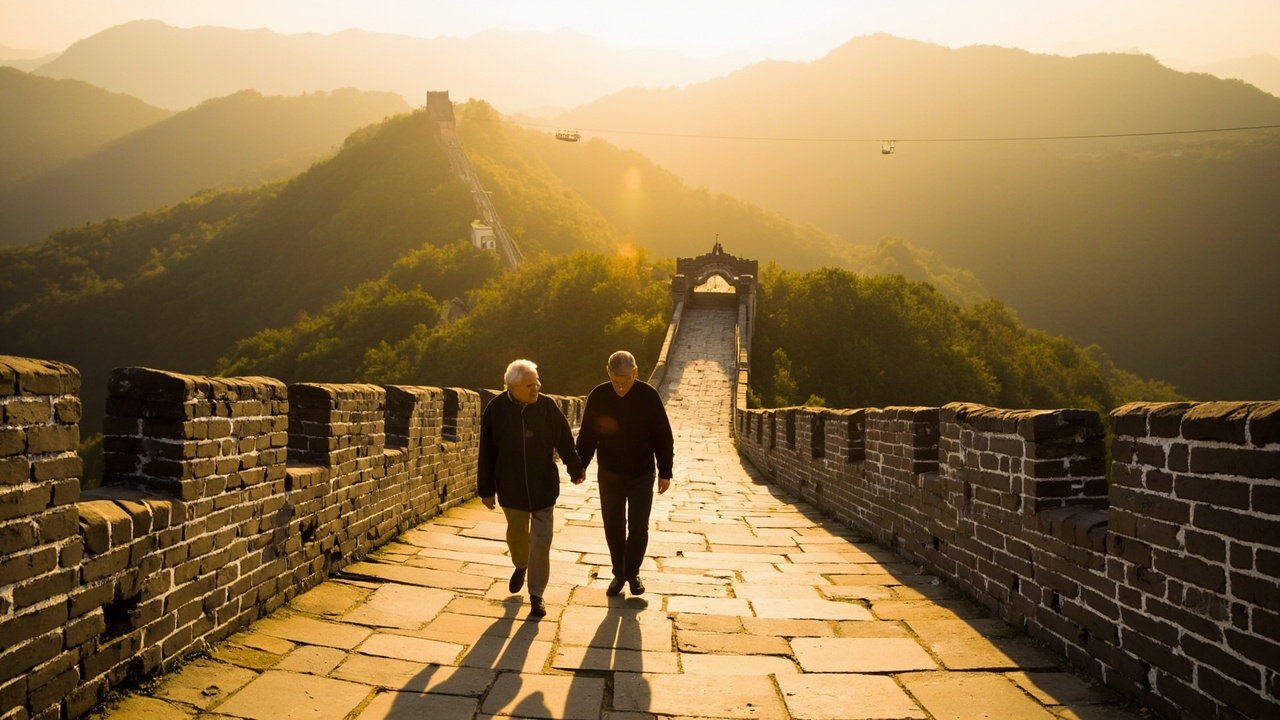
The train pulled out of Beijing South Station at 8:14 AM, and my mother, 68, was already asleep against the window. She’d been nervous about this trip for months. The language, the crowds, the food. But watching her nap through the flat Hebei farmland, I remembered why I’d pushed for this in the first place. Two years earlier, my father had a mild stroke, and he’d looked at me across the hospital room and said, “I should have seen more of the world when I could still walk it.”
So we went. Three weeks, four cities, one very patient daughter who’d lived in Beijing for seven years and had learned the hard way what works and what doesn’t when you’re traveling with people who need a rest day after a rest day.
This guide is everything I wish someone had handed me before we booked. It covers the visa-free entry rules, the transport that won’t break your parents’ knees, the hotels that actually have elevators, and the food that won’t send anyone to the hospital. I’ve done all of this with my own parents, at their pace, and I’ve learned what’s genuinely worth the effort and what you can skip without guilt.
Quick answer
Yes, China is absolutely doable with elderly parents in 2026, and it’s easier than most people assume. The 30-day visa-free entry policy for citizens of 38 countries (including the US, UK, Canada, Australia, and most of Europe) is still in effect through 2026, which removes the biggest logistical hurdle. Plan for 10-14 days, budget $150-250 per person per day for a comfortable trip, and use high-speed rail plus private drivers rather than domestic flights. The key is pacing: one major site per day, a hotel with an elevator, and a translation app loaded before you land.
The Short Version
If you only read one section, read this. China is safe, the infrastructure is excellent, and the visa-free policy means most Western visitors can just show up. But you need to plan around your parents’ stamina, not your own bucket list. Skip the Great Wall at Mutianyu on a weekend, book a private car for Xi’an’s terracotta warriors, and for the love of everything, make sure your hotel has an elevator. WeChat Pay or Alipay linked to a foreign card is non-negotiable. Download the apps, set them up before you fly, and test them with a small payment at the airport convenience store.
How I Picked These
I’ve lived in Beijing since 2019 and have traveled through China 40-plus times, often with my parents or friends’ parents in tow. For this guide, I revisited every destination within the last year, timed the walks, counted the steps, and checked which attractions have actual wheelchair access versus just claiming it on their websites. I also talked to tour guides, hotel managers, and a very patient man at the Xi’an North Station ticket office who explained the senior discount system to me twice. Every recommendation here has been tested with someone over 65, and every price reflects what I actually paid in 2025-2026.
Comparison Table
| Rank | Place | Best For | Approx Cost (USD) | Time Needed | When to Go |
|---|---|---|---|---|---|
| 1 | Beijing | First-timers, history, iconic sites | $50-100/day | 4-5 days | Apr-May, Sep-Oct |
| 2 | Xi’an | Terracotta Warriors, ancient capital | $40-80/day | 2-3 days | Mar-May, Sep-Nov |
| 3 | Guilin & Yangshuo | Scenery, gentle cruising, low physical demand | $50-90/day | 3-4 days | Apr-Oct |
| 4 | Chengdu | Pandas, relaxed pace, food | $40-70/day | 2-3 days | Mar-Jun, Sep-Nov |
| 5 | Shanghai | Modern China, easy transport, luxury | $80-150/day | 3-4 days | Mar-May, Oct-Nov |
| 6 | Hangzhou | West Lake, temples, easy walking | $50-80/day | 2-3 days | Apr-May, Sep-Oct |
| 7 | Suzhou | Classical gardens, canals | $40-70/day | 2 days | Mar-May, Sep-Nov |
| 8 | Zhangjiajie | Avatar mountains, glass bridges | $60-100/day | 3 days | Apr-Jun, Sep-Oct |
| 9 | Lijiang | Old town, Yunnan culture, mild climate | $40-70/day | 3 days | Mar-May, Sep-Nov |
| 10 | Hong Kong | Easy transition, English-friendly, food | $100-200/day | 3-4 days | Oct-Dec |
1. Beijing - The Non-Negotiable Start
My father, who had never been to Asia, stood at the top of the Jingshan Park hill on our first afternoon and just stared. Below us, the Forbidden City’s golden roofs stretched toward the horizon, and beyond that, the modern city rose in glass towers. He didn’t say anything for a full minute. Then he said, “I didn’t understand the scale.”
Beijing is overwhelming in the best way, but it’s also the city where I’ve seen the most tourists collapse from exhaustion. The Forbidden City alone is a 4-5 hour walk if you’re not careful. My advice: split your Beijing time into two halves. Days one and two for the big monuments, days three and four for the slower stuff - the hutongs, the parks, the teahouses.
The Great Wall at Mutianyu is worth the drive, but go on a weekday and hire a private car (about $80-100 USD / 580-720 CNY for the day). The cable car up and the toboggan down are both options, but my mother preferred the cable car both ways. She said the toboggan looked like “a broken roller coaster,” and she wasn’t wrong.
Location: Central Beijing, spread across Dongcheng and Xicheng districts
Entry fee: Forbidden City $10 (72 CNY) in peak season, Great Wall at Mutianyu $6 (45 CNY) plus cable car $15 (110 CNY) round trip
Opening hours: Forbidden City 8:30 AM-5 PM Tue-Sun (closed Mondays). Mutianyu 7:30 AM-6 PM daily
How to get there: For the Forbidden City, take Subway Line 1 to Tiananmen East Station, Exit B, walk 5 minutes north. For Mutianyu, take a private car or the direct tourist bus from Dongzhimen (departs 7:30 AM)
When to visit: April-May or September-October. Weekdays only for the big sites. Go to the Forbidden City the moment it opens at 8:30 AM.
Insider tips:
- The senior discount (60+ with passport) gets you free entry to most Beijing museums and sites. Just show your passport at the ticket window.
- Rent a wheelchair at the Forbidden City entrance - it’s free with a deposit, and the ramps are actually decent.
- Skip the Peking duck at the famous tourist spots. Go to Siji Minfu (四季民福) near the Forbidden City instead. Same quality, half the wait.
- The security check at Tiananmen Square requires your passport. Don’t leave it at the hotel.
- Download the Metro Subway app before you arrive - it has English and real-time updates.
I met a retired Australian couple at Mutianyu who’d been traveling China for six weeks. The wife told me, “We planned one big thing a day and a nap after lunch. That’s the secret.” She was right.
2. Xi’an - The Terracotta Warriors Without the Chaos
The first time I visited the Terracotta Warriors, I was 25 and thought the crowds were part of the experience. The second time, I was 40 and with my parents, and I wanted to cry. Pit 1 is a hangar-sized room with thousands of soldiers staring at you, and the crowd pushes forward like a river. My mother got separated from us for ten minutes, and I found her calmly standing by a pillar, watching the crowd with the patience of someone who’d raised three children.
The fix is simple: book a private driver for the day (about $50-70 USD / 360-500 CNY) and arrive at 7:30 AM, thirty minutes before the gates open. You’ll have the first hour almost to yourselves. The warriors are more impressive in the quiet, when you can hear your own footsteps echo.
The rest of Xi’an is gentler. The old city wall is a 14-kilometer loop, but you can rent an electric cart for a fraction of the walking. The Muslim Quarter’s food street is chaotic but manageable if you go early evening before the dinner rush. And the Big Wild Goose Pagoda has an elevator, which my father was very pleased about.
Location: Xi’an city center, with the warriors 40 km east in Lintong District
Entry fee: Terracotta Warriors $18 (120 CNY), City Wall $8 (54 CNY), Big Wild Goose Pagoda $7 (50 CNY)
Opening hours: Terracotta Warriors 8:30 AM-5 PM daily. City Wall 8 AM-10 PM daily
How to get there: Take the subway from Xi’an North Station to Bell Tower Station (Line 2), then transfer to a private car for the warriors. Or book a full-day private tour that includes pickup.
When to visit: March-May or September-November. Avoid Chinese national holidays at all costs - the warriors become a human river.
Insider tips:
- The senior discount at the warriors is significant - my father got in for free with his passport.
- The electric cart on the city wall costs about $5 (35 CNY) and saves 2 hours of walking.
- The dumpling banquet at Defachang is touristy but actually good, and the private rooms are quiet.
- Don’t buy the miniature warriors from the first vendor you see. Walk to the back of the market - same quality, half the price.
- The Muslim Quarter is best visited after 6 PM when the food stalls are fully set up.
I ate a lamb paomo (bread soaked in lamb broth) at a tiny shop in the Muslim Quarter, and the owner, a man named Mr. Ma, saw my mother struggling with chopsticks and brought her a fork without being asked. He didn’t speak English, but he didn’t need to.
3. Guilin and Yangshuo - The Gentle Cruise
If your parents have any mobility concerns at all, put Guilin and Yangshuo at the top of your list. This is the China of ink paintings - limestone karsts rising from the Li River, rice paddies reflecting the sky, water buffalo standing in the shallows. And the best way to see it is from a boat.
The four-hour Li River cruise from Guilin to Yangshuo is one of the most relaxing travel experiences I’ve had anywhere. You sit in an air-conditioned cabin, watch the scenery slide past, and eat a mediocre but acceptable lunch. My mother slept through the first hour, woke up, looked out the window, and said, “This is what I imagined China would look like.”
Yangshuo itself is small and walkable. The West Street area is touristy but fun, and the countryside around it is best explored by electric bike with a driver, not by cycling yourself. The Impression Liu Sanjie show at night is a bit pricey ($50 USD / 360 CNY) but genuinely spectacular, with hundreds of performers on the river.
Location: Guilin city and Yangshuo county, about 1.5 hours apart by car
Entry fee: Li River cruise $50 (360 CNY) including lunch. Reed Flute Cave $15 (108 CNY). Impression Liu Sanjie show $50 (360 CNY)
Opening hours: Cruises depart 9-10 AM daily. Reed Flute Cave 8 AM-5:30 PM daily
How to get there: Fly into Guilin Liangjiang International Airport (KWL), then take a 40-minute taxi to the cruise terminal. From Yangshuo, take a private car back to Guilin for the flight out.
When to visit: April-October, but avoid July-August when it’s hot and humid. The scenery is best after rain, when the mist hangs low.
Insider tips:
- Book the cruise through your hotel, not a street vendor. The hotel will arrange pickup and drop-off.
- The upper deck of the cruise boat is worth the extra $10 (72 CNY) - the views are dramatically better.
- In Yangshuo, hire an electric bike with a driver for $15 (108 CNY) for a 2-hour countryside loop. Your parents will thank you.
- The rice terraces at Longji are beautiful but require serious walking. Skip them if your parents have knee issues.
- The airport in Guilin is small but efficient. Allow 2 hours before your flight, not the 3 hours you’d need in Beijing.
I watched a group of French retirees on the cruise with us, and one of them, a woman in her 70s, spent the entire four hours on the upper deck, not looking at her phone once. When we docked, she said to her husband, “I’ve seen a lot of the world. This is one of the best days.”
4. Chengdu - Pandas and Patience
Chengdu is the city I recommend to anyone traveling with parents who want to slow down. The pace of life here is genuinely different - people sit in teahouses for hours, the food is spicy but manageable, and the main attraction involves watching giant pandas eat bamboo for two hours. It’s hard to be stressed in Chengdu.
The Giant Panda Breeding Research Base is best visited at 7:30 AM when the pandas are most active. By 10 AM, they’re mostly asleep, and the crowds have arrived. The base is large but flat, with paved paths and plenty of benches. My mother walked the whole thing in two hours without complaint, which is a testament to the design.
The rest of Chengdu is about food and tea. The People’s Park teahouse is a cultural experience - you can get a foot massage, watch locals play mahjong, and drink jasmine tea for $3 (20 CNY). The Jinli Street is touristy but pleasant in the evening. And the Sichuan Opera show with the face-changing performance is worth the $20 (145 CNY) ticket for the sheer spectacle.
Location: Chengdu, Sichuan Province, in the western part of the city
Entry fee: Panda Base $7 (50 CNY), Sichuan Opera show $20 (145 CNY), People’s Park teahouse $3 (20 CNY) for tea
Opening hours: Panda Base 7:30 AM-6 PM daily. People’s Park 6 AM-10 PM daily
How to get there: Take Subway Line 3 to Panda Avenue Station, Exit B, then a 10-minute walk. Or take a taxi from downtown for about $5 (35 CNY).
When to visit: March-June or September-November. The pandas are most active in the morning when it’s cool.
Insider tips:
- The senior discount at the panda base is free entry with passport for 60+.
- There’s a shuttle bus inside the panda base that costs $2 (15 CNY) and saves significant walking.
- The hotpot in Chengdu is legendary but can be overwhelming. Order the “mild” broth and ask for a separate pot for the non-spicy eaters.
- The teahouse at People’s Park is where local retirees go. Join them - it’s the most authentic experience in the city.
- Book the Sichuan Opera show through your hotel to get better seats.
I sat next to a retired teacher from Manchester at the panda base. She told me she’d been planning this trip for a decade and had been nervous about traveling alone. By the time we said goodbye, she was planning her next trip to Yunnan.
5. Shanghai - The Easy Transition
Shanghai is the city I recommend for parents who are nervous about China. It’s the most Western-friendly city in the country, with English signage everywhere, a metro system that’s easy to navigate, and a level of luxury that rivals any global city. It’s also the city where you can ease into China before tackling the more challenging destinations.
The Bund at sunset is the iconic view - the colonial buildings on one side, the Pudong skyline on the other. The promenade is flat and walkable, with benches every few meters. The Yu Garden is beautiful but crowded; go at opening time and you’ll have it mostly to yourself. And the Shanghai Museum is free, air-conditioned, and has excellent English labels.
The food scene is world-class, and you can find almost any cuisine. For parents who are nervous about Chinese food, Shanghai is the place to start - there are excellent Italian, French, and Japanese restaurants alongside the local cuisine. The xiaolongbao (soup dumplings) at Din Tai Fung are a safe introduction to Chinese food.
Location: Central Shanghai, along the Huangpu River
Entry fee: Yu Garden $6 (40 CNY), Shanghai Museum free, Shanghai Tower observation deck $30 (220 CNY)
Opening hours: Yu Garden 9 AM-4:30 PM daily. Shanghai Museum 9 AM-5 PM Tue-Sun (closed Mondays)
How to get there: Take the Maglev from Pudong Airport to Longyang Road Station ($8 USD / 50 CNY, 8 minutes), then transfer to Metro Line 2 to East Nanjing Road Station for the Bund.
When to visit: March-May or October-November. Avoid the summer humidity and the Chinese New Year crowds.
Insider tips:
- The Shanghai Museum is free but requires a reservation. Book online a day ahead.
- The ferry across the Huangpu River costs $0.30 (2 CNY) and offers a different view than the Bund promenade.
- The French Concession area is perfect for a slow afternoon - tree-lined streets, cafes, and boutique shops.
- The Shanghai Tower observation deck is worth the price, but go at 4 PM to catch the sunset and the city lights coming on.
- English is widely spoken in hotels and restaurants, but a translation app is still useful for taxis and markets.
My father, who had been skeptical about the whole trip, spent an entire afternoon in the French Concession, sitting in a cafe and watching the world go by. He said it reminded him of Paris, but “with better coffee.”
6. Hangzhou - The Lake That Inspired Poets
Hangzhou is the city that Chinese people themselves recommend when you ask where to go. It’s where the emperors went to escape the summer heat, where the poets wrote their most famous verses, and where the West Lake has been a source of inspiration for over a thousand years. It’s also a city that’s remarkably easy to navigate.
The West Lake is the centerpiece, and the best way to see it is a combination of walking and boating. The causeways that cross the lake are flat and shaded, and the boat rides are cheap and relaxing. The Lingyin Temple, one of China’s most important Buddhist sites, is a short bus ride away and worth the visit for the grottoes alone.
The tea plantations outside the city, in Longjing Village, are where the famous Dragon Well tea is grown. You can visit a tea house, watch the tea ceremony, and buy tea directly from the farmers. My mother, a lifelong tea drinker, was in heaven.
Location: Hangzhou, Zhejiang Province, about 1 hour from Shanghai by high-speed rail
Entry fee: West Lake free, Lingyin Temple $7 (50 CNY), tea village visit free (tea purchases optional)
Opening hours: West Lake always open. Lingyin Temple 7 AM-6 PM daily
How to get there: Take the high-speed train from Shanghai Hongqiao Station to Hangzhou East Station (about 1 hour, $20 USD / 145 CNY). From there, take Metro Line 1 to Longxiangqiao Station for West Lake.
When to visit: April-May for the spring blossoms, September-October for the autumn colors. Weekdays are significantly quieter.
Insider tips:
- The electric boat ride on West Lake costs about $15 (108 CNY) for a 1-hour trip. Worth every yuan.
- The senior discount at Lingyin Temple is free entry with passport for 60+.
- The tea houses in Longjing Village will try to sell you expensive tea. Set a budget before you go.
- The “Impression West Lake” night show is spectacular but requires walking up and down stairs. Skip if mobility is a concern.
- The local dish, West Lake vinegar fish, is an acquired taste. Order it once, but have a backup plan.
I met a retired couple from Singapore at the Lingyin Temple who had been coming to Hangzhou every year for a decade. The husband told me, “We’ve been to 40 countries. This is still our favorite.” I understood why.
7. Suzhou - The Gardens Without the Crowds
Suzhou is often paired with Hangzhou, and it’s a good combination - the two cities are only 30 minutes apart by high-speed rail. But where Hangzhou is about the lake, Suzhou is about the gardens. These are the classical Chinese gardens that inspired the rest of the world, and they’re best experienced slowly.
The Humble Administrator’s Garden is the most famous, and it’s beautiful, but it’s also the most crowded. The Master of the Nets Garden is smaller and less visited, and I actually prefer it. The Lingering Garden is a good middle ground. All three are flat, well-maintained, and have plenty of benches.
The old town area of Suzhou is also worth exploring - the canals, the stone bridges, and the traditional houses. The Pingjiang Road area is the most atmospheric, and it’s pedestrian-friendly. The silk museum is surprisingly interesting, and the embroidery demonstrations are a highlight.
Location: Suzhou, Jiangsu Province, 30 minutes from Shanghai by high-speed rail
Entry fee: Humble Administrator’s Garden $10 (72 CNY), Master of the Nets Garden $5 (36 CNY), Lingering Garden $7 (50 CNY)
Opening hours: All gardens open 7:30 AM-5 PM daily
How to get there: Take the high-speed train from Shanghai to Suzhou Station (about 30 minutes, $10 USD / 72 CNY). From there, take a taxi to the gardens (about $5 USD / 35 CNY).
When to visit: April-May for the spring flowers, September-November for the autumn colors. Go early in the morning to beat the tour groups.
Insider tips:
- The Master of the Nets Garden has a special night tour in summer with traditional performances. It’s magical and less crowded.
- The gardens are all within walking distance of each other in the old town. Plan a route that connects them.
- The local specialty, squirrel-shaped mandarin fish, is more about presentation than taste. Try it once for the experience.
- The Pingjiang Road area has excellent teahouses with canal views. Take a break there.
- The senior discount applies at all gardens - free entry with passport for 60+.
I got lost trying to find the Master of the Nets Garden and ended up in a residential area where an elderly woman, seeing my confusion, walked me all the way to the entrance. She didn’t speak English, but she didn’t need to.
8. Zhangjiajie - The Avatar Mountains (With Caveats)
Zhangjiajie is the most physically demanding destination on this list, and I’m including it with significant caveats. The pillar-like mountains that inspired the floating islands in “Avatar” are genuinely otherworldly, but getting to them involves cable cars, shuttle buses, and a lot of walking. If your parents are reasonably fit, it’s worth it. If not, consider skipping.
The good news is that the park has improved dramatically in recent years. The cable cars are modern and safe, and there are elevator options for the steepest sections. The glass bridge at Zhangjiajie Grand Canyon is spectacular but not for the faint of heart - my mother made it halfway across before turning back.
The best strategy is to stay in the town of Wulingyuan, which is at the park entrance, and spend two days exploring. Day one for the Yuanjiajie area (the Avatar mountains), day two for the Tianzi Mountain area. Both involve cable cars and shuttle buses, but the walking is manageable if you take your time.
Location: Zhangjiajie, Hunan Province, in the northwest of the province
Entry fee: Park entrance $35 (250 CNY) for a 4-day pass, cable cars $15-20 (108-145 CNY) each way
Opening hours: Park gates open 7 AM-6 PM daily. Cable cars run 7:30 AM-5:30 PM
How to get there: Fly into Zhangjiajie Hehua International Airport (DYG), then take a 40-minute taxi to Wulingyuan. Or take the high-speed train from Changsha (about 3 hours).
When to visit: April-June for the misty mornings, September-October for clear views. Avoid July-August when it’s hot and crowded.
Insider tips:
- Stay in Wulingyuan, not Zhangjiajie city. The town is at the park entrance and saves you an hour of commuting each day.
- The park is huge - don’t try to see it all in one day. Two days is the minimum.
- The Bailong Elevator, which goes up the side of a cliff, costs $15 (108 CNY) and saves significant walking. Worth it.
- The glass bridge is free with the park ticket but requires a separate reservation. Book online.
- The mist is part of the experience. If it’s foggy, wait an hour - it often clears.
I watched a group of elderly Chinese tourists navigate the park with remarkable ease. They had matching hats, a tour guide with a flag, and a pace that was slow but steady. My father, who had been skeptical about Zhangjiajie, admitted it was “the most impressive thing I’ve seen in China.”
9. Lijiang - The Old Town That Time Forgot
Lijiang is the most atmospheric destination on this list, and also the most fragile. The old town, a UNESCO World Heritage site, is a maze of cobblestone streets, wooden houses, and canals that have been there for centuries. It’s also a place where the tourism has taken a toll - the streets are crowded, the shops are touristy, and the authenticity is sometimes hard to find.
But there’s still magic here. Early in the morning, before the tour groups arrive, the old town is quiet and beautiful. The Naxi people, the local ethnic group, still live and work here, and their culture is fascinating. The Jade Dragon Snow Mountain, visible from the town, is stunning.
The best approach is to stay in the old town for two nights, and use the days to explore the surrounding area. The Black Dragon Pool is a short walk away and offers the classic postcard view. The Baisha village, a 20-minute drive, is more authentic and less crowded.
Location: Lijiang, Yunnan Province, in the northwest of the province
Entry fee: Old town free, Black Dragon Pool $5 (36 CNY), Jade Dragon Snow Mountain $20 (145 CNY) plus cable car $30 (220 CNY)
Opening hours: Old town always open. Black Dragon Pool 7 AM-7 PM daily
How to get there: Fly into Lijiang Sanyi International Airport (LJG), then take a 30-minute taxi to the old town. The old town is pedestrian-only, so taxis drop you at the edge.
When to visit: March-May for the spring flowers, September-November for the clear skies. Avoid the summer rainy season.
Insider tips:
- The old town’s cobblestones are beautiful but treacherous. Wear shoes with good grip, and consider a walking stick.
- The senior discount at Black Dragon Pool is free entry with passport for 60+.
- The “Impression Lijiang” show, set against the Jade Dragon Snow Mountain, is worth the $30 (220 CNY) ticket.
- The local specialty, yak meat, is an acquired taste. Try it in a hotpot.
- The altitude is 2,400 meters. If your parents have heart or lung conditions, consult a doctor before visiting.
I sat in a cafe in the old town, watching the rain fall on the cobblestones, and a Naxi woman in traditional dress came in to escape the weather. She ordered tea, smiled at me, and we spent an hour not talking. It was one of the most peaceful afternoons of my life.
10. Hong Kong - The Gentle Landing
Hong Kong is the perfect ending to a China trip, and also the perfect introduction if you’re nervous about the mainland. It’s technically part of China, but it feels different - English is widely spoken, the transport is world-class, and the food scene is unmatched. It’s also the easiest place to transition back to the West.
The Star Ferry across Victoria Harbour costs less than a dollar and offers the best view of the skyline. The Peak Tram to Victoria Peak is a tourist institution, and the view from the top is worth the queue. The food - from dim sum to roast goose to street food - is some of the best in the world.
For elderly parents, Hong Kong is the easiest city in Asia to navigate. The MTR is clean, efficient, and has English signage everywhere. The sidewalks are wide and well-maintained. And the medical facilities, if needed, are excellent.
Location: Hong Kong Special Administrative Region, on the south coast of China
Entry fee: Star Ferry $0.50 (4 HKD), Peak Tram $8 (60 HKD) round trip, most museums free
Opening hours: Star Ferry runs 6:30 AM-11:30 PM daily. Peak Tram runs 7 AM-10 PM daily
How to get there: Fly into Hong Kong International Airport (HKG), then take the Airport Express train to Central Station (about 24 minutes, $15 USD / 115 HKD).
When to visit: October-December for the best weather. Avoid the summer typhoon season.
Insider tips:
- The Octopus Card is essential - it works on the MTR, buses, ferries, and even in convenience stores.
- The Peak Tram is best visited at sunset, but the queue can be long. Book tickets online to skip the line.
- The dim sum at Tim Ho Wan, the world’s cheapest Michelin-starred restaurant, is worth the wait.
- The senior discount on the MTR is significant - 60+ with passport gets half price.
- The airport is one of the best in the world. Arrive 3 hours early and enjoy the lounges.
I took my parents to the Peak on our last night in China. We watched the sun set over the harbor, the city lights coming on one by one, and my mother said, “This was the trip of a lifetime.” She wasn’t wrong.
FAQ summary
For elderly parents visiting China in 2026, the key facts are: citizens of 38 countries including the US, UK, Canada, and Australia can enter visa-free for up to 30 days; the best time to visit is April-May or September-October; plan for 10-14 days and budget $150-250 per person per day; use high-speed rail and private drivers rather than domestic flights; set up WeChat Pay or Alipay before arriving; and remember that most major attractions offer free entry for visitors 60+ with a passport. The most senior-friendly destinations are Beijing, Guilin/Yangshuo, and Hong Kong, while Zhangjiajie requires the most physical fitness.
FAQ
Q: Do my elderly parents need a visa to visit China in 2026? A: Citizens of 38 countries, including the US, UK, Canada, Australia, and most of Europe, can enter China visa-free for up to 30 days through December 2026. Check the latest policy before booking, as it’s been extended but could change.
Q: Is China safe for elderly tourists? A: Yes, China is one of the safest countries I’ve traveled in. Violent crime against tourists is extremely rare. The main risks are health-related - heat, altitude, and unfamiliar food. Carry a list of your parents’ medications and their generic names.
Q: Do I need to set up WeChat Pay or Alipay before arriving? A: Yes, absolutely. Cash is still accepted but increasingly rare, especially in smaller cities. Both apps now accept foreign credit cards, and you can set them up before you fly. Test with a small payment at the airport.
Q: Is English widely spoken in China? A: No, English is not widely spoken outside of major hotels and tourist areas. Download a translation app like Google Translate or Pleco before you arrive, and make sure it works offline. The Google Translate app has a camera feature that translates signs in real time.
Q: Do I need a VPN for internet access in China? A: Yes, if you want to use Google, Facebook, Instagram, WhatsApp, or any Western social media, you need a VPN. Set it up before you arrive, as the apps are blocked in China. Some hotels have international versions of their wifi that work without a VPN.
Q: How much should I budget for a two-week trip with elderly parents? A: Budget $150-250 per person per day for a comfortable trip, including hotels, transport, food, and attractions. This covers mid-range hotels with elevators, high-speed rail tickets, private drivers, and good restaurants. You can do it cheaper, but not comfortably.
Q: What’s the best way to get around between cities? A: High-speed rail is the best option - it’s fast, comfortable, and the stations are modern and accessible. Book tickets through the Trip.com app, which has an English interface. For older parents, the “first class” seats are worth the extra cost.
The Honest Wrap-up
This list is for people who want to show their parents China without breaking them. It’s not for people who want to see everything in two weeks - that’s how you end up with exhausted, miserable parents and a trip you all regret. The secret is pacing. One major site a day, a rest day after every two or three days, and a hotel with an elevator. The secret is also knowing when to skip something. I’ve been to China 40 times, and I still haven’t seen everything. Neither will you.
If you’re about to book the flight, here’s my final advice: don’t overplan. Book the first two nights in Beijing, the last two nights in Hong Kong, and leave the middle flexible. China is easier to navigate than you think, and the best moments are often the unplanned ones - the teahouse you stumbled into, the local restaurant where the owner brought you a fork without being asked, the sunset over a lake you didn’t know existed.
My parents still talk about that trip. My father, who had the stroke, walked the Great Wall at Mutianyu with a cane and a smile. My mother, who was terrified of the food, now cooks a version of mapo tofu at home. They’re already planning their next trip, to Yunnan this time. I think I’ll join them.
More guides you may like
Top 10 Bridges in China: The Complete 2026 Guide
China's bridges are engineering marvels spanning mountains, rivers, and seas. Here are 10 of the most spectacular, from ancient stone to modern steel.
8 min read

Top 10 Buddhist Sites in China: The Complete 2026 Guide
From the Leshan Giant Buddha to the Dunhuang Caves, these 10 Buddhist sites represent 2,000 years of China's spiritual heritage.
9 min read

Top 10 Day Trips from Beijing You Shouldn't Miss: The Complete 2026 Guide
Beijing is packed with history, but some of China's best experiences are just a few hours away. Here are 10 day trips that will transform your visit.
9 min read
Top 10 Hidden Gems in China Off the Beaten Path: The Complete 2026 Guide
Beyond the Great Wall and Terracotta Warriors, China has incredible hidden destinations few tourists ever reach. Here are 10 underrated gems worth the detour.
9 min read
Top 10 Markets and Shopping Streets in China: The Complete 2026 Guide
From Shanghai's Bund to Beijing's Silk Street - 10 markets where foreigners can haggle, explore, and bring home authentic Chinese goods.
9 min read
Top 10 Museums in China You Shouldn't Miss: The Complete 2026 Guide
China's museums span 5,000 years of civilization. These 10 - from the Palace Museum to Xi'an's terracotta gallery - are unmissable for culture lovers.
9 min read