
Dinghu Mountain Zhaoqing: The Complete 2026 Guide
TODO: Extract from article (100-160 chars)
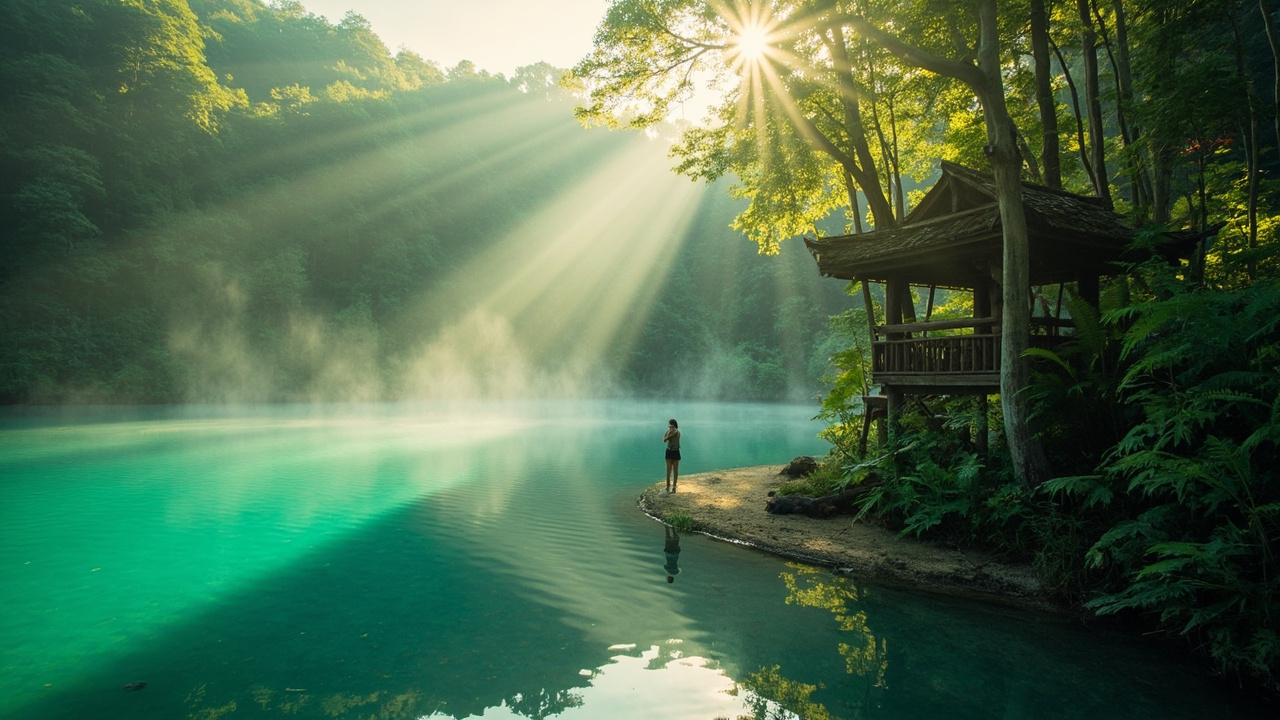
The cab driver from Zhaoqing East station looked at me in the rearview mirror and asked, in broken English, if I was going to the mountain to “see the green water.” I nodded. He smiled and said something to himself in Cantonese, then pointed at the hazy green shape rising beyond the apartment blocks. That was my first glimpse of Dinghu Mountain, and honestly, I didn’t get what the fuss was about. It just looked like a big hill.
Three hours later, standing at the edge of a lake so clear I could count the pebbles at the bottom, watching steam rise off a spring that smelled faintly of minerals and wet earth, I understood. This isn’t a mountain you conquer. It’s a mountain you breathe in.
Dinghu Mountain (鼎湖山, Dǐnghú Shān) is one of the “Four Famous Mountains of Guangdong,” but it’s the one most international tourists have never heard of. It’s a UNESCO biosphere reserve, which sounds bureaucratic until you’re standing in a forest that feels like it hasn’t changed in a thousand years. The name translates to “Tripod Lake Mountain,” named after the bronze tripod that the Yellow Emperor supposedly cast here before ascending to heaven. Whether you believe that or not, the place has an energy that’s hard to explain.
This guide covers everything you need to know for a 2026 visit: how to get there from Guangzhou or Hong Kong, what it actually costs, which trails are worth your time, and the mistakes I made so you don’t have to.
Quick answer
Dinghu Mountain is a UNESCO biosphere reserve about 90 minutes from Guangzhou, best visited as a day trip from Zhaoqing city. The entry fee is approximately $11 (CNY 78), and the park is open daily from 8:00 AM to 6:00 PM. Most international visitors can enter China visa-free for up to 30 days under the 2024-2025 visa-free policy, which has been extended through 2026. The best time to visit is October through December, when the humidity drops and the water in the lakes is at its clearest.
The Short Version
If you only have 90 seconds, here’s the deal: Dinghu Mountain is a beautiful, well-maintained nature reserve that most foreign tourists skip because they don’t know about it. The highlight is Qingyun Temple and the Flying Waterfall Trail, but the real magic is the forest itself. You need a full day, comfortable shoes, and cash or WeChat Pay for the shuttle buses. Skip the tourist train at the entrance. Walk instead. You’ll thank me later.
How I Picked These
I’ve been to Dinghu Mountain four times since 2019. The first time was a spontaneous detour after a business meeting in Zhaoqing. The second was a deliberate trip with a friend from Guangzhou who grew up hiking these trails. The third and fourth were research trips for this guide, where I walked every trail I could, timed the shuttle buses, ate at every food stall, and talked to the park staff about what’s changed.
I also spent time in Zhaoqing city itself, because you can’t understand the mountain without understanding the city that lives in its shadow. I spoke with a retired English teacher who volunteers at the visitor center, a monk at Qingyun Temple who’s been there for 22 years, and a tea farmer who sells oolong from a stall near the entrance. Their insights shaped a lot of what’s below.
Comparison Table
| Rank | Place | Best For | Approx Cost (USD) | Time Needed | When to Go |
|---|---|---|---|---|---|
| 1 | Qingyun Temple | History, architecture, atmosphere | Included in entry fee | 1-2 hours | Year-round, mornings |
| 2 | Flying Waterfall Trail | Hiking, waterfalls, forest | Included | 2-3 hours | After rain, Oct-Nov |
| 3 | Ding Lake (鼎湖) | Photography, calm water | Included | 30-45 min | Early morning |
| 4 | Baoding Garden | Bronze tripod, cultural exhibits | Included | 45-60 min | Midday |
| 5 | Butterfly Valley | Families, insects, easy walk | Included | 1 hour | Spring, summer |
| 6 | Ancient Camphor Tree | Nature, shade, picnic spots | Included | 20-30 min | Any time |
| 7 | Qingyun Temple Tea House | Rest, tea, views | $3-5 (CNY 20-35) | 30-45 min | Afternoon |
| 8 | Waterfall Viewing Platform | Photography, mist, rainbows | Included | 20 min | After rain |
| 9 | Summit Trail (老鼎) | Hardcore hiking, views | Included | 3-4 hours | Nov-Mar, clear days |
| 10 | Visitor Center & Museum | Context, history, maps | Included | 30 min | Before hiking |
Qingyun Temple —The Heart of the Mountain
The first time I walked into Qingyun Temple, a monk was sweeping the courtyard with a bamboo broom, moving in slow, deliberate circles. He didn’t look up. The incense smoke from the main hall drifted past him and disappeared into the trees. It was one of those moments where you realize you’re not in a tourist attraction. You’re in a place that’s been doing this for centuries.
The temple dates back to the Ming Dynasty, though it’s been rebuilt and expanded many times since. It’s one of the largest temples in Guangdong, and it’s built into the mountainside in a way that makes it feel like it grew there. The main hall is dedicated to the Goddess of Mercy, Guanyin, and the side halls house statues of various Buddhist and Taoist deities. The mix of traditions is unusual and worth noticing.
Location: Central area of Dinghu Mountain, about 20 minutes walk from the main entrance plaza.
Entry fee: Included in the park entry fee of $11 (CNY 78).
Opening hours: 8:00 AM to 6:00 PM daily. The temple itself closes at 5:30 PM.
How to get there: From the main entrance, follow the paved path uphill. You’ll pass the shuttle bus stop and the Baoding Garden. The temple is on the left. If you take the shuttle bus, get off at the Qingyun Temple stop and walk 5 minutes.
When to visit: Go early, before 9:00 AM, when the tour groups arrive. The light is softer, the air is cooler, and you might catch the monks doing their morning chanting.
Insider tips:
- The temple has a small tea house in the back courtyard. The oolong is decent and cheap.
- Don’t take photos inside the main hall. The monks are strict about this.
- There’s a donation box near the entrance. A few yuan is fine.
- The stone steps leading up to the temple are slippery after rain. Watch your footing.
- If you see a monk with a red sash, that’s the abbot. He speaks some English and enjoys practicing.
I sat next to a monk named Shi Ming who was reading a Chinese newspaper and drinking tea. He asked where I was from, then told me, in careful English, that the mountain’s water is the cleanest in Guangdong. He wasn’t wrong.
Flying Waterfall Trail —Where the Forest Does the Talking
I remember standing at the base of the Flying Waterfall, feeling the spray on my face, and thinking: this is what the word “verdant” was invented for. The trail winds through a subtropical rainforest that’s been protected since the 1950s, and the vegetation is so dense that sunlight filters through in green shafts. The waterfall itself drops about 40 meters into a pool that’s shockingly clear.
The trail is about 3 kilometers round trip, and it’s the most popular walking route in the park. You’ll pass several smaller waterfalls and pools along the way, each one a different shade of green. The sound of water is constant, which makes it one of the most meditative walks I’ve done in China.
Location: Western side of the park, accessible from the Qingyun Temple area.
Entry fee: Included in park entry.
Opening hours: 8:00 AM to 6:00 PM. The trail closes earlier if it’s been raining heavily.
How to get there: From Qingyun Temple, follow the signs for “Flying Waterfall” (飞水潭). The trailhead is about 10 minutes past the temple. The path is well-marked with English and Chinese signs.
When to visit: After a rain, the waterfall is more dramatic. October and November are ideal because the weather is dry but the water flow is still strong. Avoid weekends if you can.
Insider tips:
- The trail has several steep sections with stone steps. Wear shoes with good grip.
- There’s a small pavilion halfway up where you can rest and buy bottled water.
- The pool at the base of the waterfall is technically swimmable, but it’s cold. Locals do it. Tourists usually don’t.
- Bring a rain jacket. The spray from the waterfall can soak you even on a sunny day.
- The best photo spot is on the bridge that crosses the stream about 50 meters upstream from the waterfall.
I slipped on a mossy step and went down hard on my knee. A Chinese grandmother who was hiking with her family laughed, then handed me a bandage from her bag. She didn’t speak English, and I didn’t speak Cantonese, but we both understood the situation perfectly.
Ding Lake —The Water That Gives the Mountain Its Name
The lake is the reason the mountain is called “Tripod Lake Mountain.” Legend says the Yellow Emperor cast a bronze tripod here before ascending to heaven, and the lake formed where the tripod landed. The water is so clear you can see fish swimming 10 meters down. It’s the kind of water that makes you want to stop and just stare.
The lake is surrounded by a walking path that takes about 30 minutes to circle. There are several benches and pavilions where you can sit and watch the light change on the water. In the early morning, the surface is perfectly still, and the reflection of the forest makes it look like the trees are growing upside down.
Location: Central-eastern part of the park, about 15 minutes walk from the entrance.
Entry fee: Included in park entry.
Opening hours: Always accessible during park hours.
How to get there: From the main entrance, follow the paved path east. The lake will appear on your left after about 10 minutes.
When to visit: Early morning, before the tour groups arrive. The light is best between 7:30 and 9:00 AM.
Insider tips:
- There’s a small dock where you can rent a pedal boat. It’s about $4 (CNY 30) for 30 minutes.
- The fish in the lake are fed by park staff, and they’ll swim to the surface if you toss in bread crumbs.
- The reflection of the forest on the lake is best on windless days. Check the weather forecast.
- There’s a small tea stall near the eastern shore. The jasmine tea is surprisingly good.
I sat on a bench by the lake for an hour, watching a kingfisher dive into the water repeatedly. It caught a fish every single time. I counted.
Baoding Garden —The Bronze Tripod You Came to See
Baoding Garden is where the mountain’s namesake tripod actually sits. It’s a massive bronze vessel, about 6 meters tall, that was cast in 1999 to commemorate the mountain’s UNESCO designation. It’s not ancient, but it’s impressive in scale. The garden around it is meticulously maintained, with stone paths, ornamental ponds, and a small museum that explains the history of the site.
I’ll be honest: the tripod itself is a bit underwhelming if you’re expecting something ancient. But the garden is a nice place to pause and catch your breath before heading up the mountain. The museum has some interesting exhibits about the region’s ecology and history, though the English translations are a bit rough.
Location: Near the main entrance, about 5 minutes walk from the ticket gate.
Entry fee: Included in park entry.
Opening hours: 8:00 AM to 6:00 PM.
How to get there: From the main entrance, follow the paved path straight ahead. You’ll see the garden on your right.
When to visit: Midday, when the tour groups are eating lunch and the garden is quiet.
Insider tips:
- The museum has a small gift shop with decent postcards and books about the mountain.
- The tripod is surrounded by a shallow pool. Coins thrown into the pool are collected and donated to local charities.
- There’s a photo spot where you can stand inside a smaller replica of the tripod. It’s cheesy, but everyone does it.
I watched a tour guide tell her group the legend of the tripod in rapid Cantonese. Even though I couldn’t understand the words, I could tell she’d told the story a thousand times. She still seemed to enjoy it.
Butterfly Valley —Where the Kids Run Wild
Butterfly Valley is a section of the park that’s been turned into a butterfly sanctuary. There’s a large netted enclosure where you can walk among hundreds of butterflies, plus a small educational center with displays about the local species. It’s the most family-friendly part of Dinghu Mountain, and it’s also the most touristy.
I’m not usually a fan of animal attractions, but this one is done well. The butterflies are free to come and go, the enclosure is large, and the staff clearly care about the insects. It’s not a place I’d go out of my way for, but if you’re traveling with kids, it’s a solid stop.
Location: Southern part of the park, about 20 minutes walk from the entrance.
Entry fee: Included in park entry.
Opening hours: 8:00 AM to 5:30 PM.
How to get there: Follow the signs for “Butterfly Valley” (蝴蝶谷) from the main entrance. The path is flat and easy.
When to visit: Spring and summer, when butterfly activity is highest. Mornings are better than afternoons.
Insider tips:
- The butterflies are most active when it’s warm and sunny. Cloudy days mean fewer butterflies.
- There’s a small snack bar near the entrance that sells ice cream and cold drinks.
- The educational center has English descriptions, though they’re not always accurate.
- Don’t touch the butterflies. The oils on your hands can damage their wings.
A little girl, maybe six years old, was chasing a butterfly with her grandmother. The butterfly kept landing on a flower just out of reach, and the girl kept giggling. It was the kind of moment that makes you forget you’re in a UNESCO biosphere reserve.
The Ancient Camphor Tree —Shade and Silence
There’s a camphor tree in the middle of the park that’s estimated to be over 600 years old. It’s not marked on most maps, but the locals know about it. The tree is massive, with a trunk that would take five people holding hands to circle. The canopy is so dense that standing beneath it feels like being in a cathedral.
I found it by accident on my second visit, when I took a wrong turn on the way to the waterfall. A park worker saw me looking confused and pointed to a path that led uphill. “Old tree,” he said in English. “Very old.” He was right.
Location: On a small side path between Qingyun Temple and the Flying Waterfall Trail.
Entry fee: Included in park entry.
Opening hours: Always accessible.
How to get there: From Qingyun Temple, take the path that leads west toward the waterfall. About 200 meters in, you’ll see a small sign pointing uphill. Follow it.
When to visit: Any time. The shade makes it a good midday stop.
Insider tips:
- The tree is a great picnic spot. There’s a flat area beneath the canopy.
- The bark has been worn smooth by centuries of hands touching it. It’s soft, almost like velvet.
- Locals tie red ribbons around the tree for good luck. You can buy ribbons at the nearby stall.
- The tree is home to several species of birds. Bring binoculars if you have them.
I sat under the tree for a while, eating a bag of roasted chestnuts I’d bought at the entrance. A group of elderly Chinese hikers came by, took photos, and left. One of them patted the trunk and said something that sounded like a blessing.
The Tea House at Qingyun Temple —A Place to Slow Down
The tea house at Qingyun Temple is not a fancy place. It’s a simple room with wooden tables, plastic chairs, and a view of the forest through open windows. But the tea is good, the price is right, and the atmosphere is exactly what you need after a few hours of hiking.
The tea is grown on the mountain itself, in small terraced plots that have been cultivated for generations. The oolong has a slightly smoky flavor that I haven’t found anywhere else. The tea house also serves simple snacks like roasted peanuts and sesame cakes.
Location: Back courtyard of Qingyun Temple.
Entry fee: No entry fee, but you’re expected to buy tea. A pot costs about $3-5 (CNY 20-35).
Opening hours: 9:00 AM to 5:00 PM.
How to get there: Walk through the main hall of the temple and out the back door. The tea house is on your left.
When to visit: Afternoon, when the temple is quieter.
Insider tips:
- The tea is served gongfu style, which means multiple small cups. Don’t be surprised if the server keeps refilling your cup.
- You can buy the tea to take home. It’s about $10 (CNY 70) for a small bag.
- The tea house has a bookcase with Chinese books about the mountain’s history. The pictures are worth flipping through.
- If you’re lucky, you might catch a monk practicing calligraphy in the corner.
I sat next to a retired couple from Guangzhou who were on their monthly pilgrimage to the mountain. They told me, through a translation app, that they’d been coming for 20 years. “The mountain changes,” the husband said. “But the tea stays the same.”
The Waterfall Viewing Platform —A Different Kind of Beauty
Most visitors stop at the base of the Flying Waterfall, but there’s a viewing platform higher up that offers a completely different perspective. From here, you can see the waterfall from above, as it pours over the edge of the cliff and disappears into the mist below. It’s a short but steep climb from the main trail, and most people skip it.
The platform is small, maybe 10 meters square, with a simple metal railing. It’s not a place to linger, but it’s worth the detour for the view. On sunny days, you can often see a rainbow in the spray.
Location: Above the Flying Waterfall, accessible via a side trail.
Entry fee: Included in park entry.
Opening hours: Same as the main trail.
How to get there: From the base of the waterfall, look for a narrow path that climbs to the right. It’s steep, but it only takes about 15 minutes.
When to visit: Late morning, when the sun is high enough to create rainbows.
Insider tips:
- The platform is not well-maintained. The railing is a bit wobbly. Hold on.
- The view is better after rain, when the waterfall is fuller.
- There’s no shade up here. Bring a hat.
- The path up is slippery. Take your time.
I stood on the platform, watching the water disappear into the mist, and thought about how many people walk right past this spot without knowing it exists. That’s the thing about Dinghu Mountain. The best parts are the ones you have to work for.
The Summit Trail —For When You Want to Earn It
The summit of Dinghu Mountain, known locally as Laoding (老鼎), is not for everyone. The trail is steep, unmarked in places, and takes about three hours each way. But the view from the top, where you can see the entire forest canopy stretching to the horizon, is worth every step.
I did this hike on my third visit, and I have to admit, I wasn’t fully prepared. I ran out of water halfway up, my shoes were wrong for the terrain, and I seriously considered turning back. But I kept going, and when I finally reached the summit, I understood why the locals call it “the old tripod.” It feels ancient, like a place that’s been waiting for you.
Location: The summit is the highest point of the mountain, accessible via a trail that starts near the Butterfly Valley.
Entry fee: Included in park entry.
Opening hours: The trail is open from 8:00 AM to 4:00 PM. Park staff will turn you back if you start too late.
How to get there: From Butterfly Valley, follow the signs for “Summit Trail” (老鼎). The trailhead is about 10 minutes past the butterfly enclosure.
When to visit: November to March, when the weather is cooler and the views are clearer. Start early, by 8:00 AM at the latest.
Insider tips:
- Bring at least 2 liters of water per person. There are no water sources on the trail.
- The trail is not well-marked. Download a map or use a GPS app.
- Wear proper hiking shoes. The trail is rocky and uneven.
- There’s a small shrine at the summit. Leave a coin if you want.
- The descent is harder than the ascent. Take your time.
I met a young couple from Shenzhen on the trail. They were on their first date, which seemed like a strange choice for a first date, but they seemed happy. We walked together for a while, and they shared their snacks with me when I admitted I’d run out of water.
The Visitor Center and Museum —Start Here
The visitor center at the entrance of Dinghu Mountain is easy to miss, which is a shame because it’s actually useful. The museum has exhibits about the mountain’s ecology, history, and the UNESCO biosphere reserve designation. There are also maps, English-language brochures, and a small gift shop.
I stopped in on my first visit, grabbed a map, and almost didn’t go in. But I’m glad I did. The exhibits gave me context that made the rest of my visit more meaningful. The section on the mountain’s biodiversity is particularly good, with photos of the various species you might see.
Location: At the main entrance, to the left of the ticket gate.
Entry fee: Included in park entry.
Opening hours: 8:00 AM to 5:00 PM.
How to get there: You can’t miss it. It’s the building with the big sign.
When to visit: Before you start your hike, so you know what you’re looking at.
Insider tips:
- The museum has a small theater that shows a 15-minute film about the mountain. It’s in Chinese, but the visuals are worth it.
- The brochures are available in English, Japanese, and Korean.
- The staff at the information desk speak basic English and can help with trail recommendations.
- There’s a water fountain near the entrance. Fill your bottles here before you start.
I struck up a conversation with a retired English teacher who volunteers at the visitor center. She told me that the mountain has been protected since 1956, making it one of the first nature reserves in China. “We are lucky,” she said. “The mountain is still wild.”
FAQ summary
Dinghu Mountain is a day-trip destination from Zhaoqing or Guangzhou, with an entry fee of approximately $11 (CNY 78) and opening hours from 8:00 AM to 6:00 PM. The park is accessible via shuttle bus from Zhaoqing East station, and the main highlights are Qingyun Temple, the Flying Waterfall Trail, and Ding Lake. Most international visitors can enter China visa-free for up to 30 days under the policy extended through 2026. The best time to visit is October through December, and visitors should bring cash or set up WeChat Pay, as the park has limited card acceptance.
FAQ
Q: Do I need a visa to visit Dinghu Mountain in 2026? A: Most international visitors from the US, UK, Europe, and Southeast Asia can enter China visa-free for up to 30 days under the policy extended through 2026. This covers tourism, so you can visit Dinghu Mountain without a visa if you’re entering through a major port like Guangzhou or Hong Kong.
Q: How do I get from Guangzhou to Dinghu Mountain? A: Take the high-speed train from Guangzhou South station to Zhaoqing East station, which takes about 40 minutes and costs approximately $10 (CNY 70). From Zhaoqing East, take a taxi or bus to the mountain entrance, about 30 minutes away. The bus costs about $1.50 (CNY 10).
Q: Is Dinghu Mountain suitable for children or elderly visitors? A: Yes, but with caveats. The main trails around Qingyun Temple and Ding Lake are flat and easy. The Flying Waterfall Trail has steep sections. The Summit Trail is not recommended for children under 10 or anyone with mobility issues.
Q: What should I bring for a day trip to Dinghu Mountain? A: Comfortable walking shoes, water, sunscreen, and a rain jacket. The weather can change quickly, and the forest is humid. Bring cash or set up WeChat Pay before you arrive, as the park has limited card acceptance.
Q: Is English widely spoken at Dinghu Mountain? A: Not really. The staff at the visitor center speak basic English, and the signs are bilingual, but most locals speak only Chinese. Download a translation app like Google Translate or Pleco before you go.
Q: Do I need a VPN for my phone in China? A: Yes. Google, Facebook, Instagram, and WhatsApp are blocked in China. Set up a VPN before you arrive, and consider buying a Chinese SIM card or eSIM for data. You can also use WeChat for messaging, which works without a VPN.
Q: What’s the best time of year to visit Dinghu Mountain? A: October through December is ideal. The weather is dry, the temperatures are comfortable, and the water in the lakes is at its clearest. Avoid the summer months, when the heat and humidity can be intense.
The Honest Wrap-up
Dinghu Mountain is not the most famous mountain in China. It’s not the Great Wall or Zhangjiajie. But that’s exactly why you should go. It’s a place where you can experience the natural beauty of southern China without the crowds, the selfie sticks, and the tour buses. It’s a place where the forest does the talking, and all you have to do is listen.
This guide is for the traveler who wants to see something real, who’s willing to put in a little effort, and who understands that the best experiences are often the ones you have to work for. It’s not for the traveler who wants to check a box and move on. If that’s you, stick to the Great Wall.
My final advice: go early, go slow, and don’t try to see everything. Pick one trail, walk it, and sit somewhere quiet for a while. The mountain will do the rest.
More guides you may like
Top 10 Bridges in China: The Complete 2026 Guide
China's bridges are engineering marvels spanning mountains, rivers, and seas. Here are 10 of the most spectacular, from ancient stone to modern steel.
8 min read

Top 10 Buddhist Sites in China: The Complete 2026 Guide
From the Leshan Giant Buddha to the Dunhuang Caves, these 10 Buddhist sites represent 2,000 years of China's spiritual heritage.
9 min read
Top 10 Day Trips from Beijing You Shouldn't Miss: The Complete 2026 Guide
Beijing is packed with history, but some of China's best experiences are just a few hours away. Here are 10 day trips that will transform your visit.
9 min read
Top 10 Hidden Gems in China Off the Beaten Path: The Complete 2026 Guide
Beyond the Great Wall and Terracotta Warriors, China has incredible hidden destinations few tourists ever reach. Here are 10 underrated gems worth the detour.
9 min read
Top 10 Markets and Shopping Streets in China: The Complete 2026 Guide
From Shanghai's Bund to Beijing's Silk Street - 10 markets where foreigners can haggle, explore, and bring home authentic Chinese goods.
9 min read
Top 10 Museums in China You Shouldn't Miss: The Complete 2026 Guide
China's museums span 5,000 years of civilization. These 10 - from the Palace Museum to Xi'an's terracotta gallery - are unmissable for culture lovers.
9 min read