
Luoyang Longmen Grottoes Guide: The Complete 2026 Guide
TODO: Extract from article (100-160 chars)
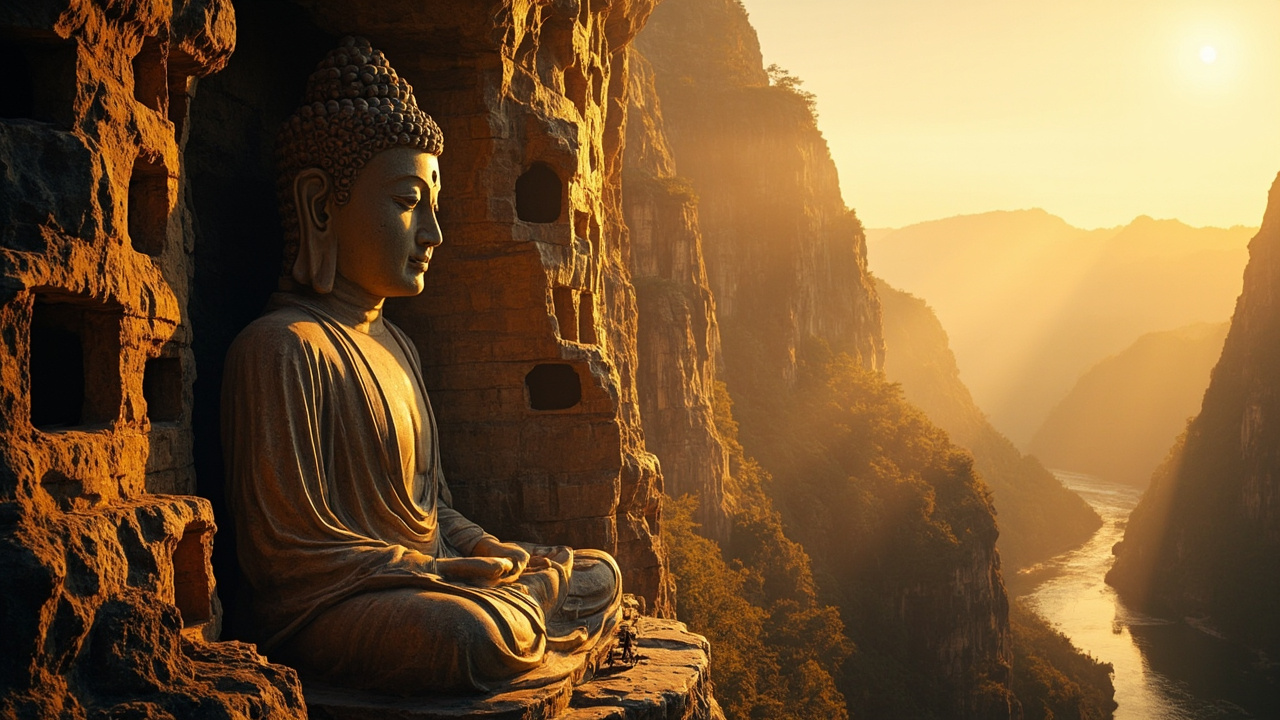
The rain had stopped by the time I reached the top of the stone steps, but the rock face was still dark with moisture. I stood there, breathing hard, and watched a drop of water trace a slow path down the cheek of a Buddha who had been sitting in that cliff for over 1,300 years. Behind me, the Yi River curved through the valley, gray-green under a heavy sky. A group of schoolchildren in matching yellow hats streamed past, their teacher counting them loudly. I didn’t move. I just stood there, looking at the sheer scale of what people had carved into this mountain with their bare hands and simple tools.
That’s the thing about the Longmen Grottoes that no photo prepares you for. It’s not just the size, though the sheer scale is staggering. It’s the intimacy. You can walk right up to these carvings, touch the same stone that Tang Dynasty artisans touched. You can see where the chisels bit into the rock. You can stand in the shadow of a Buddha whose gaze has been fixed on the river for more than a millennium.
This guide is everything I wish someone had told me before my first visit. I’ve been to Longmen five times now, in every season, and I’ve made most of the mistakes a foreign visitor can make. I’ve walked the wrong way, missed the good light, paid too much for a ride, and stood in the wrong spot while the tour groups flooded past. Let me save you the trouble.
Quick answer
The Longmen Grottoes are a UNESCO World Heritage site on the outskirts of Luoyang, Henan Province, containing more than 100,000 Buddhist statues carved into limestone cliffs along the Yi River. The standard visit takes 3-4 hours, costs about $15 (CNY 90) for entry, and the best time to go is a weekday morning in October or November. China’s visa-free transit policy (240 hours, or 10 days) covers Luoyang if you’re transiting through Beijing, Shanghai, or other major hubs, making this an easy add-on to a longer trip.
The Short Version
If you only have 90 seconds, here’s the deal. Longmen is one of China’s three great grotto sites and the most accessible for first-time visitors. Go early, enter from the west gate, walk the full loop across the bridge, and don’t skip the small caves on the far side. Hire a guide at the entrance or download the official app before you arrive. Skip the electric shuttle on the way in. The walk is flat and pleasant, and you’ll pass the best small carvings on the way. Budget four hours minimum. Bring water. Wear shoes you can walk in. And for the love of all that is holy, don’t go on a Chinese national holiday.
How I Picked These
I’ve lived in Beijing since 2019 and have made five separate trips to Longmen. I’ve been in summer heat, winter cold, autumn light, and one memorable spring morning when the cherry blossoms were out along the river. I’ve brought visiting parents, skeptical friends, and a Chinese colleague who grew up in Luoyang and had her own opinions about which caves mattered. I’ve also spent hours reading the official site materials and academic sources, and I’ve talked to at least a dozen guides and taxi drivers about what they think visitors get wrong. This guide combines what I’ve learned from all of that. Every price and hour listed here is what I paid or saw in 2025, and I’ve adjusted for 2026 where I have solid information.
Comparison Table
| Rank | Place | Best For | Approx Cost (USD) | Time Needed | When to Go |
|---|---|---|---|---|---|
| 1 | Fengxian Temple | The big Buddha, first-timers | Included in entry | 45-60 min | Early morning |
| 2 | Binyang Caves | Art history, quieter crowds | Included in entry | 30-45 min | Mid-morning |
| 3 | Wanfo Cave | Density of carvings | Included in entry | 20-30 min | Anytime |
| 4 | Guyang Cave | Oldest carvings, raw history | Included in entry | 20-30 min | Anytime |
| 5 | Lotus Flower Cave | The ceiling carving | Included in entry | 15-20 min | Anytime |
| 6 | Medical Prescription Cave | Quirky, unique content | Included in entry | 10-15 min | Anytime |
| 7 | The West Hill Walk | The approach, overall scale | Free (part of entry) | 30-45 min | Morning light |
| 8 | The East Hill Caves | Fewer crowds, different perspective | Included in entry | 30-40 min | Afternoon |
| 9 | Xiangshan Temple | Architecture, quiet gardens | Included in entry | 30-40 min | Late afternoon |
| 10 | The Bridge & River View | Best photos, sunset | Free | 15-20 min | Sunset |
Fengxian Temple —The One You Came For
I remember the exact moment I first saw the Vairocana Buddha. I had been walking along the cliff face, looking at smaller carvings, and then I turned a corner and there it was. The sheer scale stopped me cold. The main figure is 17 meters tall. Its ears alone are nearly two meters long. And yet the face is serene, almost gentle, with a slight smile that catches the light differently at every hour of the day.
This is the emotional heart of Longmen, built in the 670s under Empress Wu Zetian. Legend says the face of the Buddha was modeled on the Empress herself. Whether that’s true or not, there’s a feminine quality to the features that you don’t see in most Chinese Buddhist sculpture. The nine large figures here, arranged in a semicircle, are the most photographed sight in the entire complex. They’re also the most crowded, especially between 10 AM and 3 PM.
- Location: West Hill, the southern end of the main cliff walk
- Entry fee: Included in the general ticket (CNY 90 / about $12.50)
- Opening hours: 8:00 AM - 6:30 PM (April-October), 8:00 AM - 5:30 PM (November-March)
- Getting there: From the west gate entrance, follow the main path south for about 20 minutes. You can’t miss it. The path is flat and well-maintained.
- When to visit: First thing in the morning, before the tour groups arrive. The light is also better in the morning, hitting the Buddha’s face directly.
- Insider tips: The best photo spot is from the raised platform to the left of the main viewing area. Most people crowd directly in front. Also, the side figures are worth close attention - the guardian kings have incredible detail in their armor. Don’t rush past them. There’s a small rest area with drinks and snacks just past the temple, but it’s overpriced. Bring your own water.
I watched a young Chinese couple get engaged here, right in front of the big Buddha. She cried. He looked terrified. The Buddha just kept smiling.
Binyang Caves —Where the Art History Gets Real
The Binyang Caves are three caves in a row, and they tell a complicated story. The middle cave was started under Emperor Xuanwu in the early 6th century to honor his parents, and it took over 20 years to complete. The north and south caves were never finished to the same degree, and you can see the difference. The central cave has some of the finest, most refined carving at Longmen, but the other two have a raw, unfinished quality that’s honestly more interesting to me.
The south cave was famously looted in the early 20th century. The two large relief panels that once decorated the walls, the “Emperor and Empress as Donors” scenes, are now in the Metropolitan Museum of Art in New York and the Nelson-Atkins Museum in Kansas City. Standing in the empty space where they used to be is a strange feeling. You can see the outlines of where the panels were cut away.
- Location: West Hill, just north of the Fengxian Temple area
- Entry fee: Included in general ticket
- Opening hours: Same as general site hours
- Getting there: On the main path, about 10 minutes south of the west gate entrance
- When to visit: Mid-morning, after you’ve done Fengxian. The crowds thin out here.
- Insider tips: The unfinished north cave is worth a close look. You can see the grid lines the carvers used to plan their work. It’s a rare glimpse into the actual process. Also, look for the small carved figures on the walls of the central cave - they’re easy to miss but some of the finest work at Longmen. The lighting in here is dim, so give your eyes time to adjust before you judge what you see.
I once spent 20 minutes here with a retired art history professor from Xi’an who explained the difference between Northern Wei and Tang carving styles. I understood maybe half of what she said, but the half I got changed how I saw everything else that day.
Wanfo Cave —Ten Thousand Buddhas, One Small Room
The name means “Ten Thousand Buddhas Cave,” and while the actual count is closer to 15,000, the effect is the same. The walls are completely covered in small seated Buddhas, each one only a few centimeters tall, arranged in neat rows that follow the contours of the rock. It’s a visual overload, and it’s easy to spend a long time just looking at the sheer repetition of it all.
The cave was completed in 680 CE, during the Tang Dynasty, and the central figure is a seated Amitabha Buddha. The carvings on the walls are remarkably well-preserved, partly because the cave is relatively protected from the elements. The detail work here is extraordinary. Look closely and you’ll see that each small Buddha has individual facial features. They’re not stamped out. Each one was carved by hand.
- Location: West Hill, south of the Binyang Caves
- Entry fee: Included in general ticket
- Opening hours: Same as general site hours
- Getting there: On the main path, about 5 minutes south of Binyang
- When to visit: Anytime. The cave is small, so it doesn’t take long. Go when you pass it.
- Insider tips: The cave is dimly lit, and the carvings are small. If you have binoculars, bring them. They make a huge difference here. Also, the floor of the cave is uneven - watch your step. And don’t miss the small carvings on the ceiling, which most people walk right past. The central Buddha’s hands are in a specific mudra (gesture) that’s worth understanding before you go. A quick Google search will explain it.
The first time I came here, I was with a friend who is an architect. She spent 15 minutes just looking at how the cave’s proportions worked. She said it was the most perfectly balanced small space she’d ever seen in China. I’ll take her word for it, but I see what she meant.
Guyang Cave —The Oldest and the Rawest
Guyang Cave is where Longmen really begins. The earliest carvings here date to around 493 CE, when the Northern Wei Dynasty moved its capital to Luoyang and started this massive project. Unlike the later Tang caves, which are polished and refined, Guyang has a raw, almost rough quality. The carving style is more angular, more stylized, and the overall effect is darker and more intense.
The cave is also a historical record. There are over 800 inscriptions on the walls here, recording the names of the people who funded various carvings. These inscriptions are considered some of the finest examples of calligraphy from the period, and they’ve been studied by scholars for centuries. You don’t need to read Chinese to appreciate them. Just looking at the patterns of the characters, carved deep into the stone, is enough.
- Location: West Hill, the northernmost major cave
- Entry fee: Included in general ticket
- Opening hours: Same as general site hours
- Getting there: On the main path, about 5 minutes south of the west gate entrance
- When to visit: Early, before the crowds. The cave is small and gets packed.
- Insider tips: The inscriptions on the walls are the real treasure here. If you have a translation app with a camera function, use it on some of the larger inscriptions. You’ll get fragments of names and dates that bring the place to life. Also, the main Buddha here has a distinctly Northern Wei style - elongated features, a more abstract quality. Compare it to the Tang Buddhas you’ll see later and you’ll understand how Chinese Buddhist art evolved.
I remember standing in here during a sudden rainstorm, watching water stream down the cliff face outside the cave entrance. The sound of rain on stone, mixed with the drip of water inside the cave, made the whole place feel alive.
Lotus Flower Cave —Look Up
The Lotus Flower Cave is small, and most people walk right past it. That’s a mistake. The ceiling of this cave features one of the most beautiful carvings at Longmen: a large lotus flower, perfectly symmetrical, carved in high relief. The petals are layered and detailed, and the overall effect is stunning. It’s one of those things you have to crane your neck to see, and it’s worth the neck strain.
The cave dates from the Northern Wei period, and the lotus is a central symbol in Buddhism, representing purity and enlightenment. The carving here is particularly fine, with a delicacy that contrasts with the more monumental style of the Tang caves. The cave also has a seated Buddha and two bodhisattvas, but honestly, the ceiling is the show.
- Location: West Hill, just north of Guyang Cave
- Entry fee: Included in general ticket
- Opening hours: Same as general site hours
- Getting there: On the main path, about 3 minutes north of Guyang
- When to visit: Anytime. It’s a quick stop.
- Insider tips: The cave is often roped off, so you can’t go inside. Stand at the entrance and look up. The lotus is visible from the doorway. Also, the light is best in the late morning, when the sun hits the ceiling directly. If you have a camera with a good wide-angle lens, this is the shot to get. And don’t be shy about asking other visitors to move - everyone wants to see the ceiling, and there’s a natural rotation if you wait a minute.
I heard a tour guide tell her group that the lotus was “the most beautiful flower in the entire grottoes, carved by the most skilled hands in the empire.” She wasn’t wrong.
Medical Prescription Cave —The Strangest Thing at Longmen
This is the cave that surprises everyone. The Medical Prescription Cave dates from the Tang Dynasty, and its walls are covered with about 140 medical prescriptions carved into the stone. These range from treatments for common ailments to recipes for longevity elixirs. It’s a fascinating glimpse into Tang Dynasty medicine, and it’s completely unlike anything else at Longmen.
The prescriptions are written in Chinese characters, and some are still legible. A few have been translated into English on nearby signs. The content is a mix of herbal remedies, dietary advice, and what we might now call folk medicine. There’s even a prescription for “calming the mind” that involves a specific combination of herbs and meditation. It’s a reminder that these caves weren’t just religious monuments. They were living places where people sought help for their problems.
- Location: West Hill, south of the Lotus Flower Cave
- Entry fee: Included in general ticket
- Opening hours: Same as general site hours
- Getting there: On the main path, about 2 minutes south of the Lotus Flower Cave
- When to visit: Anytime. It’s a quick stop.
- Insider tips: The English translations on the signs are basic but helpful. Read them before you look at the carvings, so you know what you’re looking for. Also, the cave is small and can get crowded with tour groups. If it’s packed, come back in 10 minutes. The groups move fast. And if you’re interested in traditional Chinese medicine, this is the only place I know of where you can see actual prescriptions carved in stone.
I tried to photograph one of the prescriptions with my translation app, and it produced a garbled mess about “dragon bones” and “mountain herbs.” I still don’t know if that was accurate or not, but it made me laugh.
The West Hill Walk —The Approach Matters
The main path along the West Hill is where you’ll spend most of your time. It’s a flat, paved walkway that runs along the base of the cliff, following the curve of the Yi River. The caves are cut into the cliff face above you, and the path gives you a constantly changing view of the carvings. The walk from the west gate to the southern end takes about 30-40 minutes at a comfortable pace, and it’s the single best introduction to Longmen.
The path is also where you’ll see the smaller details that most people miss. There are hundreds of small niches carved into the cliff, each containing a small Buddha or bodhisattva. Some are only a few centimeters tall. Others are life-sized. The variety is endless, and the cumulative effect is overwhelming. This is the walk to take slowly.
- Location: West Hill, from the west gate to the southern end
- Entry fee: Included in general ticket
- Opening hours: Same as general site hours
- Getting there: Enter through the west gate and just start walking. The path is obvious.
- When to visit: Morning, when the light hits the cliff face directly. The carvings are much easier to see in the morning light.
- Insider tips: Walk on the side of the path closest to the cliff. Most people walk in the middle, but the best views of the small carvings are from up close. Also, take breaks. There are benches along the way, and sitting for a few minutes to just look at the cliff face is the best way to appreciate the scale. And don’t forget to look across the river at the East Hill. The view from the middle of the walk is the classic photo spot.
I once saw an elderly Chinese man walking the path with a small radio playing traditional music. He walked slowly, stopping at every cave, and he seemed to be having a conversation with the Buddhas. I don’t know what he was saying, but I liked the idea of it.
The East Hill Caves —The Other Side
Most visitors do the West Hill and then cross the bridge and leave. That’s a mistake. The East Hill has its own set of caves, and while they’re not as grand as the West Hill’s, they offer something different: a quieter, more contemplative experience. The crowds are thinner here, and you can take your time without feeling rushed.
The East Hill caves date from a range of periods, and many are in poorer condition than their western counterparts. But that’s part of their appeal. You can see the effects of time and weather on the carvings, and there’s a poignancy to the damaged figures that the pristine West Hill carvings lack. The view back across the river to the West Hill is also spectacular, especially in the afternoon light.
- Location: East Hill, across the bridge from the West Hill
- Entry fee: Included in general ticket
- Opening hours: Same as general site hours
- Getting there: Cross the bridge at the southern end of the West Hill walk. The East Hill path is on your left after you cross.
- When to visit: Afternoon, when the light is on the East Hill and the West Hill is in shadow. The views back across the river are best then.
- Insider tips: The East Hill is less crowded, so it’s a good place to take your time. There’s a small pagoda near the top of the hill that’s worth the climb. The view from the top is the best in the entire complex. Also, the path here is steeper than the West Hill, so wear appropriate shoes. And bring water - there are fewer vendors on this side.
I sat on a bench on the East Hill for 20 minutes, just watching the light change on the West Hill across the river. A group of monks walked past, their robes bright against the gray stone. They didn’t say anything to me, but one of them nodded. I nodded back.
Xiangshan Temple —The Quiet One
Xiangshan Temple is on the East Hill, and it’s a completely different experience from the grottoes. It’s a working Buddhist temple, rebuilt in the Qing Dynasty on the site of an earlier temple that dated back to the Tang. The buildings are traditional Chinese temple architecture, with red pillars, curved roofs, and a peaceful courtyard. It’s a place to slow down and breathe.
The temple has a connection to the famous Tang Dynasty poet Bai Juyi, who lived nearby and is buried on the hill above the temple. Bai Juyi was a fan of Longmen, and he wrote about it in his poetry. The temple has a small exhibition about his life and work, though the signage is mostly in Chinese. Even if you can’t read it, the peaceful atmosphere is worth the visit.
- Location: East Hill, about halfway up the hill
- Entry fee: Included in general ticket
- Opening hours: Same as general site hours
- Getting there: Follow the path up the East Hill. The temple is on your left as you climb.
- When to visit: Late afternoon, when the crowds have thinned and the light is golden. The courtyard is particularly beautiful in the late afternoon light.
- Insider tips: The temple is a working religious site, so be respectful. Dress modestly and keep your voice down. The small garden behind the main hall is a lovely place to sit and rest. And if you’re interested in Bai Juyi, his tomb is a short walk up the hill behind the temple. It’s a simple grave marker, but it’s a nice pilgrimage for poetry lovers.
I lit a stick of incense in the temple and stood for a moment watching the smoke curl upward. A monk came out of a side door, saw me, and smiled. He didn’t say anything, but the smile was enough.
The Bridge and River View —The Photo You’ll Actually Frame
The bridge that connects the West and East Hills is more than just a way to get from one side to the other. It’s the best viewpoint in the entire complex. From the middle of the bridge, you can see the full sweep of the West Hill cliff face, with its thousands of cave openings, and the Yi River flowing beneath you. It’s the classic Longmen photo, and for good reason.
The view is particularly good at sunset, when the low light turns the stone a warm gold. The river reflects the sky, and the whole scene takes on a dreamlike quality. This is the moment to put your camera down and just look. You’ll remember the view longer than you’ll remember the photos.
- Location: The bridge between West and East Hills
- Entry fee: Free (included in general ticket)
- Opening hours: Same as general site hours
- Getting there: The bridge is at the southern end of the West Hill walk. You’ll cross it if you’re doing the full loop.
- When to visit: Sunset. The light is perfect, and the crowds have thinned out.
- Insider tips: The bridge can get crowded with people taking photos. Be patient and wait for a gap. Also, the best spot is not the exact middle of the bridge, but about a third of the way across from the West Hill side. The angle is better. And if you have a tripod, this is the place to use it. The long exposure of the river at sunset is stunning.
I met a photographer from Germany on the bridge who had been waiting for the perfect light for over an hour. He showed me some of his shots on his camera screen. They were better than anything I’ve ever taken. He said the secret was patience. I believe him.
FAQ summary
The Longmen Grottoes are located about 13 kilometers south of Luoyang city center, with a standard entry fee of CNY 90 (about $12.50 USD) that covers both the West and East Hill sections. The site opens at 8 AM year-round, with closing times varying by season (6:30 PM in summer, 5:30 PM in winter). The best time to visit is a weekday morning in spring or autumn, and visitors should plan for 3-4 hours on site. The grottoes are accessible by public bus (routes 53, 60, 81, 99) from Luoyang’s main train stations, or by taxi/ride-hailing for about CNY 30-40 ($4-6 USD) from the city center. China’s 240-hour visa-free transit policy covers Luoyang, and visitors should note that WeChat Pay and Alipay are widely accepted but cash is also usable.
FAQ
Q: Do I need a visa to visit the Longmen Grottoes in 2026? A: If you’re transiting through China, the 240-hour visa-free transit policy covers Luoyang. This applies to citizens of 54 countries, including the US, UK, Canada, Australia, and most European nations. You must have a confirmed onward ticket to a third country within 10 days. If you’re entering China for a standalone trip, you’ll need a standard tourist visa.
Q: How much time should I plan for the Longmen Grottoes? A: Plan for 3-4 hours minimum. This gives you time to walk the full West Hill, cross the bridge, explore the East Hill, and still have time to sit and absorb the atmosphere. If you’re a serious art history person, budget 5-6 hours. If you’re just here for the big Buddha, you could do it in 2 hours, but you’d be missing a lot.
Q: What’s the best way to get from Luoyang city center to the grottoes? A: The most convenient option is a taxi or ride-hailing app (Didi) for about CNY 30-40 ($4-6 USD), taking 30-40 minutes depending on traffic. Public buses 53, 60, 81, and 99 all stop at the grottoes and cost CNY 1.5-2 ($0.20-0.30 USD). The bus ride takes about 45-60 minutes from the train station area.
Q: Is it better to visit in the morning or afternoon? A: Morning, without question. The light is better on the West Hill carvings, and the tour groups don’t start arriving until around 10 AM. If you arrive at 8 AM when the site opens, you’ll have the place almost to yourself for the first hour. Afternoon visits are more crowded and the light is less favorable for photography.
Q: Are there English signs and audio guides available? A: Yes. There are English signs at all the major caves, and audio guides are available for rent at the entrance for about CNY 40 ($5.50 USD). The official app also has English content, but it requires a stable internet connection. If you have a translation app on your phone, it’s useful for reading the smaller inscriptions and signs.
Q: What should I bring with me? A: Comfortable walking shoes, water (there are vendors but they’re overpriced), sunscreen in summer, and a light jacket in winter. A hat is useful in any season. If you have binoculars, bring them - they make a huge difference for the smaller carvings. And bring cash as a backup, though most vendors accept WeChat Pay and Alipay.
Q: Can I visit the Longmen Grottoes as a day trip from somewhere else? A: Yes. Luoyang is about 2.5 hours from Xi’an by high-speed train, and about 3.5 hours from Beijing. You could theoretically do it as a very long day trip, but I’d recommend spending a night in Luoyang. The city has other attractions worth seeing, including the White Horse Temple and the peony gardens, and you’ll enjoy Longmen much more if you’re not rushing.
The Honest Wrap-up
The Longmen Grottoes are one of the most remarkable places I’ve ever been, and I’ve been to a lot of places in China. They’re not for everyone. If you’re the kind of traveler who needs action and excitement, you might find a day of looking at ancient carvings a bit slow. But if you’re willing to slow down, to let the scale and the history wash over you, this is a place that will stay with you long after you’ve gone home.
My final advice is simple. Go early. Walk slowly. Look closely. And when you find yourself standing in front of the big Buddha, don’t just take a photo and move on. Stand there for a minute. Let the silence do its work. You’ll understand why people have been coming here for over 1,300 years.
More guides you may like
Top 10 Bridges in China: The Complete 2026 Guide
China's bridges are engineering marvels spanning mountains, rivers, and seas. Here are 10 of the most spectacular, from ancient stone to modern steel.
8 min read

Top 10 Buddhist Sites in China: The Complete 2026 Guide
From the Leshan Giant Buddha to the Dunhuang Caves, these 10 Buddhist sites represent 2,000 years of China's spiritual heritage.
9 min read
Top 10 Day Trips from Beijing You Shouldn't Miss: The Complete 2026 Guide
Beijing is packed with history, but some of China's best experiences are just a few hours away. Here are 10 day trips that will transform your visit.
9 min read
Top 10 Hidden Gems in China Off the Beaten Path: The Complete 2026 Guide
Beyond the Great Wall and Terracotta Warriors, China has incredible hidden destinations few tourists ever reach. Here are 10 underrated gems worth the detour.
9 min read
Top 10 Markets and Shopping Streets in China: The Complete 2026 Guide
From Shanghai's Bund to Beijing's Silk Street - 10 markets where foreigners can haggle, explore, and bring home authentic Chinese goods.
9 min read
Top 10 Museums in China You Shouldn't Miss: The Complete 2026 Guide
China's museums span 5,000 years of civilization. These 10 - from the Palace Museum to Xi'an's terracotta gallery - are unmissable for culture lovers.
9 min read