
Gaochang Jiaohe Ruins: The Complete 2026 Guide
TODO: Extract from article (100-160 chars)
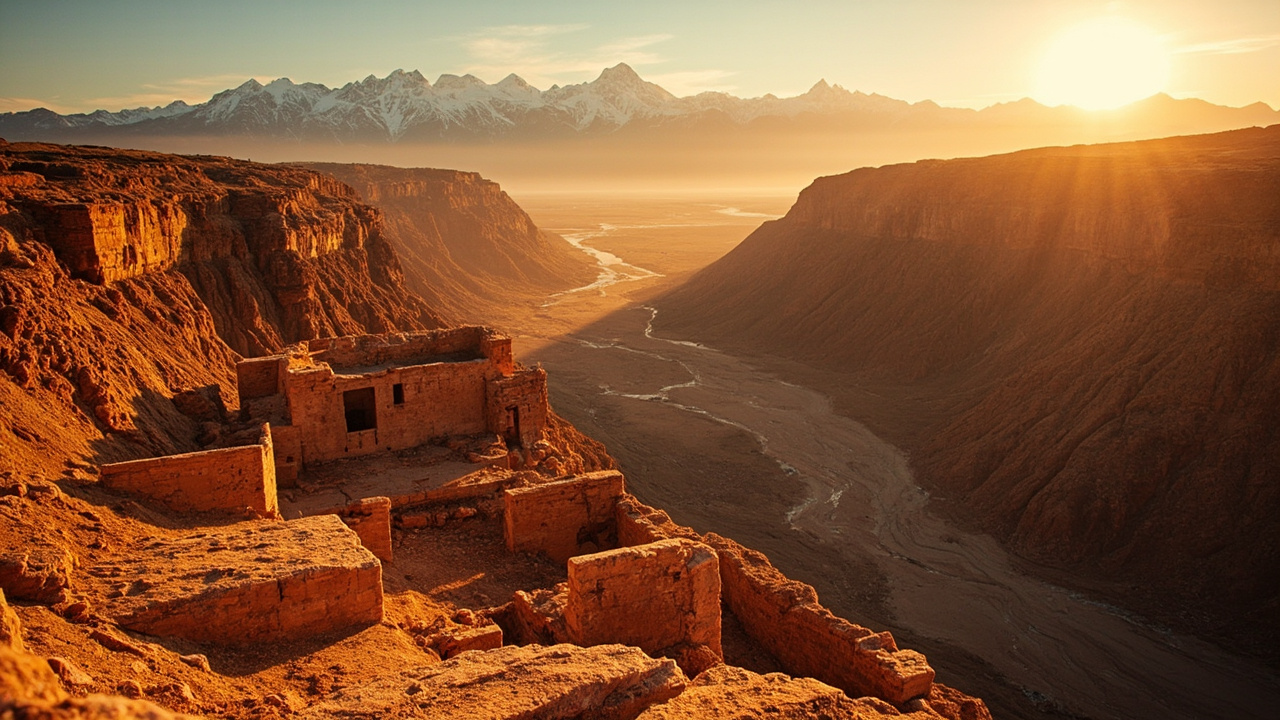
The cab driver in Turpan looked at me in the rearview mirror and asked, in the universal language of confused taxi drivers everywhere, “Why do you want to go to ruins? Ruins are just rocks.”
I had no good answer for him then. But three hours later, standing on a crumbling watchtower at Jiaohe with the wind tearing across the Taklamakan’s edge, I understood. These aren’t rocks. They’re a conversation with a civilization that vanished while Rome was still falling.
The Gaochang and Jiaohe ruins sit about 40 kilometers apart in the Turpan Depression, one of the lowest points on Earth. Together they tell the story of the Silk Road’s most improbable oasis cities - Buddhist kingdoms that survived for over a thousand years in a desert that gets less than 16 millimeters of rain annually. Gaochang was a cosmopolitan melting pot where 3,000 Buddhist monks lived alongside Manichaeans, Nestorian Christians, and Confucian scholars. Jiaohe was a military fortress carved into a sheer cliff, a city that never needed walls because its geography was the wall.
I’ve been to China 40-plus times, and these two sites remain the ones that made me feel smallest. This guide covers everything you need to know to visit both in 2026: how to get there, what you’ll actually see, what you can skip, and the mistakes I made so you don’t have to.
Quick answer
Gaochang and Jiaohe are two ancient Silk Road cities in the Turpan Depression, Xinjiang, about a 3-hour drive from Urumqi. For most first-time visitors, Jiaohe is the more impressive site and can be seen in 2-3 hours; Gaochang requires more imagination but offers a deeper historical payoff. The 2026 visa-free policy (240 hours for citizens of 54 countries) covers this region, and the full visit costs roughly $30-40 USD (215-290 CNY) per person including transport from Turpan.
The Short Version
If you only have 90 seconds: Jiaohe is the one you cannot miss. It’s a massive cliff-top city that looks like an ancient Manhattan skyline carved from mud. Gaochang is more ruined, more scattered, and honestly more for history buffs. Hire a driver in Turpan for the day - it’s cheaper than you think and saves you from the nightmare of public transport logistics. Go in the morning, bring more water than you think you need, and don’t skip the Astana Tombs if you’re at all interested in how ordinary people actually lived. This is desert archaeology, not a theme park. You’ll get dusty, you’ll get hot, and you’ll leave with a memory that sticks.
How I Picked These
I’ve visited both sites three times between 2019 and 2025, most recently in April 2025. The first visit was a rushed day trip where I tried to see both plus the Flaming Mountains in one day - a mistake I’ll detail below. The second was a proper two-day slow visit. The third was specifically to check the 2024-2025 infrastructure changes, including the new visitor centers and the ongoing conservation work at Gaochang.
I also spent time in Turpan town itself, talking to Uyghur drivers, Han Chinese museum staff, and a Kazakh guide who’d been showing tourists around for 15 years. Their practical advice - about timing, about which sections are roped off, about what the guidebooks get wrong - shaped this guide more than any official brochure.
Comparison Table
| Rank | Place | Best For | Approx Cost (USD) | Time Needed | When to Go |
|---|---|---|---|---|---|
| 1 | Jiaohe Ruins | The wow factor | $10 USD (70 CNY) | 2-3 hours | Apr-May, Sep-Oct |
| 2 | Gaochang Ruins | History depth | $10 USD (70 CNY) | 1.5-2 hours | Apr-May, Sep-Oct |
| 3 | Astana Tombs | Everyday life | $8 USD (55 CNY) | 45 min | Any (indoor) |
| 4 | Turpan Museum | Context before ruins | Free | 1 hour | Any |
| 5 | Bezeklik Caves | Buddhist art | $12 USD (85 CNY) | 2 hours | Apr-Oct |
| 6 | Flaming Mountains | Photo stops | $5 USD (35 CNY) | 30 min | Morning only |
| 7 | Karez Irrigation System | Engineering marvel | $6 USD (40 CNY) | 45 min | Any |
| 8 | Emin Minaret | Islamic heritage | $5 USD (35 CNY) | 30 min | Any |
| 9 | Tuyoq Valley | Living village | $10 USD (70 CNY) | Half day | Apr-Oct |
| 10 | Grape Valley | Tourist trap (skip) | $15 USD (105 CNY) | 1 hour | Aug-Sep |
Jiaohe Ruins - A City That Never Needed Walls
The first time I walked into Jiaohe, I stopped breathing for a second. Not from exertion - from the sheer scale. The city sits on a loess plateau between two deep river gorges, and from the entrance you see this vast honeycomb of roofless rooms stretching toward the horizon. It’s like Pompeii, but made of mud and older by several centuries.
Jiaohe was founded around 2,000 years ago as a military outpost of the Han Dynasty and grew into a city of 7,000 people. Because the plateau is elevated and the cliffs are nearly vertical, the city never needed defensive walls. The geography was the defense. You can still walk the main avenue, see the outline of the temple complex, and climb to the central pagoda that dominates the skyline.
The site is surprisingly intact because the desert climate has preserved the mud-brick structures. You’ll see the remains of the government quarter, residential areas, and a massive Buddhist temple complex that once housed hundreds of monks. The sheer scale of it - this was a functioning city, not a small fort - takes a while to process.
- Location: 10 km west of Turpan city center, on the Yarnaz Valley
- Entry fee: $10 USD (70 CNY), includes shuttle from the new visitor center
- Opening hours: 9:00-18:30 (summer), 9:00-17:30 (winter), open daily
- Getting there: From Turpan, take a taxi (about $5-7 USD / 35-50 CNY) or hire a driver for the day. There’s no public bus. The visitor center is at the base of the plateau, and a shuttle takes you to the top.
- When to visit: April-May or September-October, morning arrival before 10am to beat both the heat and the tour groups
- Insider tips: Walk to the far end of the site first - most tour groups turn around at the temple complex, leaving the southern residential area nearly empty. Wear shoes with grip; the paths are uneven and dusty. Bring your own water; there’s only one shop at the entrance. The site is exposed - no shade anywhere. Consider a hat and sunscreen even in spring.
- I watched a group of French tourists spend 20 minutes photographing a single wall because the light was hitting it just right. They had the right idea.
Gaochang Ruins - The City That Refuses to Be Forgotten
Gaochang is the harder visit. Where Jiaohe hits you with scale, Gaochang demands you use your imagination. The city was once the capital of the Uyghur Khaganate and a major Buddhist center, but centuries of neglect and a 14th-century war left it as scattered mounds and outlines. The first time I visited, I was honestly underwhelmed. The second time, I got it.
The key is to understand what you’re looking at. Those mounds are the remains of a city that once had 3,000 Buddhist monks, a thriving international trade community, and a library that scholars still dream about. The site covers 2.2 square kilometers, and you walk along the old main roads, past the outlines of temples, markets, and houses. The most impressive remaining structure is the central Buddhist temple, where you can still see the base of a large stupa.
The site’s history is genuinely mind-bending. It was a Tang Dynasty prefecture, then a Uyghur capital, then a Mongol administrative center. Marco Polo may have passed through here. The city was finally destroyed in the 14th century during a war between the Mongol Chagatai Khanate and the Ming Dynasty.
- Location: 40 km southeast of Turpan, near the Flaming Mountains
- Entry fee: $10 USD (70 CNY), shuttle included
- Opening hours: 9:00-18:30 (summer), 9:00-17:30 (winter)
- Getting there: Part of the same day-driver circuit as Jiaohe. From Turpan, it’s about 40 minutes by car. There’s no public transport.
- When to visit: Same season as Jiaohe. The site is flat and open, so the heat is brutal in summer - the ground radiates heat like a pizza oven.
- Insider tips: Hire the local guide at the entrance - they’re usually elderly Uyghur men who know the site’s history far better than the English signage suggests. The English signage is minimal, so download a translation app beforehand. Don’t skip the outer perimeter; most people walk the central path and miss the residential areas. The site is under ongoing conservation, so some sections may be roped off - check with the visitor center.
- I made the mistake of visiting at 2pm in July once. I lasted 40 minutes. Learn from me.
Astana Tombs - Where the Dead Keep Their Receipts
The Astana Tombs are the best thing most tourists skip. About 6 km from Gaochang, this is a cemetery from the 3rd to 8th centuries that preserved bodies and artifacts in the desert’s dry conditions. The name “Astana” comes from the Persian word for “resting place,” and that’s exactly what this is.
What makes these tombs special is the ordinariness of what was buried. You’ll see a few of the open tombs, which contain wooden bodies with painted faces, but the real treasures are in the Turpan Museum: documents, silk, food offerings, even a 1,300-year-old dumpling that looks like it could be served today. The tomb walls have murals showing daily life - farming, dancing, banquets - that feel more intimate than the grand religious art at the caves.
The site is small and quiet. You’ll likely have it mostly to yourself. The tombs are underground, so it’s actually a relief from the heat.
- Location: 6 km from Gaochang, on the road back toward Turpan
- Entry fee: $8 USD (55 CNY)
- Opening hours: 9:00-18:00
- Getting there: Same driver circuit as Gaochang. Your driver will know the spot.
- When to visit: Any time - it’s underground and cool
- Insider tips: The best artifacts from these tombs are in the Turpan Museum, so visit the museum first, then come here to see the actual site. Photography is allowed but no flash. The wooden figures are surprisingly haunting - they have a strange, serene quality.
- A guard at the site offered me a piece of naan bread and gestured toward the tombs, saying something in Uyghur that I took to mean “even the dead get hungry.” I ate the bread.
Turpan Museum - The Free Context You Need
Go here before you see any ruins. The Turpan Museum is free, air-conditioned, and contains the best collection of Silk Road artifacts outside Urumqi. Most importantly, it has the mummies - naturally preserved bodies from the Astana Tombs and other sites that look like they could be sleeping.
The museum’s collection includes the famous “Beauty of Loulan,” a 3,800-year-old mummy with reddish-brown hair and high cheekbones that makes you question everything you thought about ancient trade routes. There are also documents in multiple languages - Chinese, Sogdian, Sanskrit, Uyghur - showing how cosmopolitan this region was.
The museum is small enough to see in an hour, and it will transform how you see the ruins. You’ll recognize the pottery fragments, the architectural styles, and the religious imagery when you walk through Gaochang and Jiaohe.
- Location: Turpan city center, near the main square
- Entry fee: Free (bring your passport for registration)
- Opening hours: 10:00-18:00, closed Mondays
- Getting there: Walking distance from most hotels in Turpan’s center
- When to visit: Morning, before the ruins
- Insider tips: The mummy hall is the highlight - go there first. The museum has free lockers for bags. English signage is decent but limited; a translation app helps. Photography is allowed in most areas.
- I spent 20 minutes staring at a 1,500-year-old piece of naan bread in a glass case. It looked exactly like the naan I’d eaten for breakfast.
Bezeklik Caves - Buddhist Art on a Cliff Face
The Bezeklik Thousand Buddha Caves sit in the Flaming Mountains, about 25 km from Turpan. The setting alone is worth the trip - the caves are carved into a cliff face in a valley that feels like another planet. The murals inside are among the best-preserved Buddhist art in Central Asia.
The caves date from the 5th to 9th centuries and were a major pilgrimage site. The murals show Buddhas, bodhisattvas, donors, and scenes from Buddhist cosmology. Some are remarkably intact, with colors that still glow after 1,200 years. The most famous image is the “Praising Buddha” mural, which has become an icon of Silk Road art.
The site was damaged by early 20th-century explorers who cut out murals and shipped them to museums in Berlin, London, and Tokyo. You’ll see the empty spaces where they once hung - a sobering reminder of archaeology’s colonial history.
- Location: Flaming Mountains, 25 km east of Turpan
- Entry fee: $12 USD (85 CNY), includes shuttle
- Opening hours: 9:00-18:00
- Getting there: Same driver circuit. The road climbs through the Flaming Mountains, which are genuinely red and genuinely flaming-looking in the afternoon light.
- When to visit: Morning, before the heat. The walk from the shuttle to the caves is exposed.
- Insider tips: The caves are numbered; the most impressive are 15, 16, and 20. Some caves are closed for conservation - check at the entrance. The walk up to the caves passes a small museum with copies of the murals that were taken abroad. The lighting inside is dim; give your eyes time to adjust.
- A tour guide was explaining to her group that the blue pigment in the murals came from lapis lazuli, mined in Afghanistan and traded along the very road we were standing on. That moment made the whole Silk Road concept click for me.
Flaming Mountains - Worth 30 Minutes, Not More
The Flaming Mountains are famous for being red, barren, and absurdly hot - the name comes from the way the red sandstone glows in the sun. They’re worth a stop for photos, especially if you’re passing between Turpan and Bezeklik, but don’t plan a dedicated trip.
The “mountain” is actually a ridge of red sandstone that runs for about 100 km. The highest point is only about 800 meters, but the color and the heat make it feel more dramatic. In summer, surface temperatures can hit 70°C (158°F), which is why the area has a reputation as one of the hottest places in China.
The main photo spot is at the entrance to the Flaming Mountains scenic area, where there’s a large sign and a few souvenir stalls. You’ll see tour buses stopping here for 20 minutes, snapping photos, and leaving. That’s about right.
- Location: 20 km east of Turpan, along the road to Bezeklik
- Entry fee: $5 USD (35 CNY) for the scenic area entrance
- Opening hours: 9:00-19:00
- Getting there: On the same route as Bezeklik and Gaochang
- When to visit: Morning only. By noon, the heat is genuinely dangerous.
- Insider tips: The best photos are from the road itself, not the scenic area. The “mountain” looks most red in the late afternoon, but you’ll be cooked by then. Don’t attempt to hike - there’s no trail and the heat is no joke.
- I watched a tourist try to touch the rock and immediately pull their hand back. The rock was hot enough to hurt through the air gap.
Karez Irrigation System - The Underground Engineering Marvel
The Karez system is the reason any of this exists. Without it, Turpan would be uninhabitable - the region gets almost no rain, and the surface water evaporates instantly. The karez is a network of underground channels that taps into groundwater and brings it to the surface using gravity alone, no pumps needed.
The system dates back over 2,000 years and at its peak included over 1,700 channels totaling 5,000 km. Some are still in use today. The engineering is elegant: a series of vertical shafts connect to a gently sloping underground channel, allowing water to flow from the mountains toward the oasis without evaporating.
The best place to see this is the Karez Museum, which has a preserved section you can walk through. It’s not glamorous - you’re basically walking through a dark tunnel - but it’s a reminder that the Silk Road cities weren’t just about trade. They were about survival.
- Location: 7 km from Turpan city center
- Entry fee: $6 USD (40 CNY)
- Opening hours: 9:00-18:30
- Getting there: Short taxi ride from Turpan
- When to visit: Any time; it’s underground and cool
- Insider tips: The museum has a section where you can see the karez in cross-section, which makes the engineering much clearer. The adjacent vineyard area is a tourist trap - skip it. The actual karez channels are still maintained by local farmers; you might see them working on the shafts.
- I met an elderly Uyghur man at the museum who told me his grandfather had worked on the karez system. He pointed at a shaft and said something that I think meant “my family’s sweat is in this water.”
Emin Minaret - Turpan’s Oddest Landmark
The Emin Minaret is the largest minaret in China, and it looks like nothing else in the country. It’s a 44-meter-tall tower of yellow brick with intricate geometric patterns, built in 1777 during the Qing Dynasty. The design is distinctly Central Asian - it would look more at home in Samarkand than in China.
The minaret is part of the Emin Mosque complex, which is still in use. The mosque itself is a low, broad building that can hold 1,000 worshippers, and the contrast between the modest mosque and the towering minaret is striking. The minaret was built to commemorate the Uyghur leader Emin Khoja, who supported the Qing Dynasty against the Dzungar Mongols.
The site is small - you can see it all in 30 minutes - but it’s worth a stop for the architecture alone. The brickwork is genuinely beautiful, with patterns that shift as you walk around the tower.
- Location: 2 km south of Turpan city center
- Entry fee: $5 USD (35 CNY)
- Opening hours: 9:00-18:00
- Getting there: 15-minute walk or short taxi from the center
- When to visit: Late afternoon, when the light makes the brick glow
- Insider tips: The minaret is closed to climbing, but you can walk around the base. The mosque is open to visitors outside of prayer times - be respectful and dress modestly. The surrounding area is a Uyghur neighborhood with good street food.
- I bought a pomegranate from a stall near the minaret and ate it while watching the light change on the brick. The juice stained my fingers for hours.
Tuyoq Valley - The Living Village
Tuyoq is the most underrated destination in the Turpan area. It’s a valley village that has been continuously inhabited for over 1,700 years, with a mix of Buddhist cave temples, a mosque, and a traditional Uyghur village. It’s the only place in the region where you can see the layers of history stacked on top of each other.
The valley is about 20 km from Turpan and feels like a different world. The village is built into the hillside, with mud-brick houses, grape trellises, and narrow lanes. There’s a functioning mosque, a small Buddhist cave complex, and a tomb complex that’s a pilgrimage site for local Muslims.
The best part is simply walking through the village and watching daily life. Old men sit in the shade playing chess. Women hang laundry on rooftops. Children chase each other through the lanes. It’s not a museum - it’s a living place.
- Location: 20 km north of Turpan
- Entry fee: $10 USD (70 CNY) for the scenic area
- Opening hours: 9:00-18:00
- Getting there: Taxi from Turpan, about 30 minutes
- When to visit: Morning, before it gets hot. The village is shaded but the walk up to the caves is exposed.
- Insider tips: The Buddhist caves are at the top of the valley - the walk takes about 20 minutes. The village has small restaurants serving excellent Uyghur food. The local guide at the entrance is worth hiring; they can explain the layers of history. Don’t photograph locals without asking - it’s a real village, not a theme park.
- A shopkeeper insisted I try her homemade yogurt, then refused to let me pay. She said something in Uyghur that her daughter translated as “guests are a blessing.”
Grape Valley - The Tourist Trap You Can Skip
I’m going to be blunt: Grape Valley is the most disappointing “attraction” in the Turpan area. It’s a commercialized tourist zone built around the region’s famous grape cultivation, but it’s mostly souvenir shops, overpriced restaurants, and staged “Uyghur cultural performances” that feel like they were designed by a corporate marketing team.
The actual grape cultivation is fascinating - Turpan produces some of the best raisins in the world, and the local grape varieties are genuinely excellent. But you can experience this better by buying grapes at the local market or visiting a working vineyard in Tuyoq.
If you’re on a tight schedule, skip Grape Valley entirely. If you have time to kill, it’s a fine place to sit in the shade and drink grape juice. Just don’t expect authenticity.
- Location: 10 km east of Turpan
- Entry fee: $15 USD (105 CNY) - expensive for what you get
- Opening hours: 9:00-19:00
- Getting there: Taxi from Turpan
- When to visit: August-September, when the grapes are harvested
- Insider tips: The best thing here is the fresh grape juice - it’s pressed in front of you and genuinely delicious. The “cultural performances” are tourist-oriented; skip them. The grape trellises are pretty but you’ll see the same thing for free in Tuyoq.
- I paid for the “premium” grape tasting and received four grapes and a piece of naan. Lesson learned.
FAQ summary
For most first-time international visitors, the essential facts are: Jiaohe and Gaochang are the two must-see Silk Road ruins in the Turpan Depression, about 3 hours from Urumqi. Jiaohe is the more visually impressive site and requires 2-3 hours; Gaochang requires more historical imagination. Both cost approximately $10 USD (70 CNY) each. The best visiting season is April-May or September-October, and visitors should hire a private driver in Turpan for the day rather than attempting public transport. The 2026 visa-free policy (240 hours for 54 countries) covers this region, and the Turpan Museum (free) should be visited before the ruins for essential context.
FAQ
Q: Do I need a special permit to visit Gaochang and Jiaohe ruins? A: No. These sites are open to all tourists with standard China entry. If you’re entering under the 240-hour visa-free transit policy, Xinjiang is included in the eligible regions. Just bring your passport and register at the visitor centers.
Q: How do I get from Urumqi to Turpan? A: The high-speed train from Urumqi to Turpan North Station takes about 1 hour and costs $8-12 USD (60-90 CNY). Book tickets on the 12306 app or via your hotel. From Turpan North Station, take a taxi to your hotel (about $5 USD / 35 CNY, 20 minutes).
Q: Can I visit both Gaochang and Jiaohe in one day? A: Yes, but it’s rushed. I recommend hiring a driver for the day ($40-60 USD / 290-430 CNY) and starting at Jiaohe at 9am, then Gaochang and the Astana Tombs, finishing with the Turpan Museum. You’ll be tired but you’ll see everything.
Q: Is it safe to travel in Xinjiang as a foreigner? A: Yes, for standard tourism. You’ll see security checkpoints and police presence, but they’re routine and foreigners pass through without issue. Hotels require passport registration. The main challenge is language - English is limited outside major hotels.
Q: What should I pack for visiting the ruins? A: Water (at least 1 liter per person), a hat, sunscreen, comfortable shoes with grip, and a translation app. The sites have no shade and no water sources. In summer, bring more water than you think you need - the heat is extreme.
Q: Do I need a VPN for my phone in China? A: Yes. Google, WhatsApp, Instagram, and many Western sites are blocked. Install a VPN before you arrive and test it. Also set up Alipay or WeChat Pay - they’re essential for almost all transactions, including at the ruins’ ticket offices.
Q: Are the ruins accessible for people with mobility issues? A: Jiaohe has a shuttle from the visitor center to the top, but the site itself has uneven paths and no railings. Gaochang is flatter and more accessible. Neither site is wheelchair-friendly. The Astana Tombs require descending stairs into the underground chambers.
The Honest Wrap-up
This guide is for travelers who want to understand why the Silk Road mattered, not just photograph it. If you’re looking for Instagram-perfect shots and air-conditioned comfort, stick to the big cities. But if you’re willing to get dusty, sweat through your shirt, and use your imagination to rebuild a city from mud-brick outlines, the Turpan ruins will reward you in ways that stay with you long after you’ve forgotten the photos.
My final advice: don’t try to see everything. Pick Jiaohe and one other site, go slow, and let the place work on you. The desert has a way of making you feel both tiny and connected at the same time. That’s the real reason these ruins matter - they’re proof that people built entire civilizations in places where survival seemed impossible. And if they could do that, maybe your travel plans aren’t so complicated after all.
More guides you may like
Top 10 Bridges in China: The Complete 2026 Guide
China's bridges are engineering marvels spanning mountains, rivers, and seas. Here are 10 of the most spectacular, from ancient stone to modern steel.
8 min read

Top 10 Buddhist Sites in China: The Complete 2026 Guide
From the Leshan Giant Buddha to the Dunhuang Caves, these 10 Buddhist sites represent 2,000 years of China's spiritual heritage.
9 min read

Top 10 Day Trips from Beijing You Shouldn't Miss: The Complete 2026 Guide
Beijing is packed with history, but some of China's best experiences are just a few hours away. Here are 10 day trips that will transform your visit.
9 min read
Top 10 Hidden Gems in China Off the Beaten Path: The Complete 2026 Guide
Beyond the Great Wall and Terracotta Warriors, China has incredible hidden destinations few tourists ever reach. Here are 10 underrated gems worth the detour.
9 min read
Top 10 Markets and Shopping Streets in China: The Complete 2026 Guide
From Shanghai's Bund to Beijing's Silk Street - 10 markets where foreigners can haggle, explore, and bring home authentic Chinese goods.
9 min read
Top 10 Museums in China You Shouldn't Miss: The Complete 2026 Guide
China's museums span 5,000 years of civilization. These 10 - from the Palace Museum to Xi'an's terracotta gallery - are unmissable for culture lovers.
9 min read