
Hemu Village Kanas: The Complete 2026 Guide
TODO: Extract from article (100-160 chars)
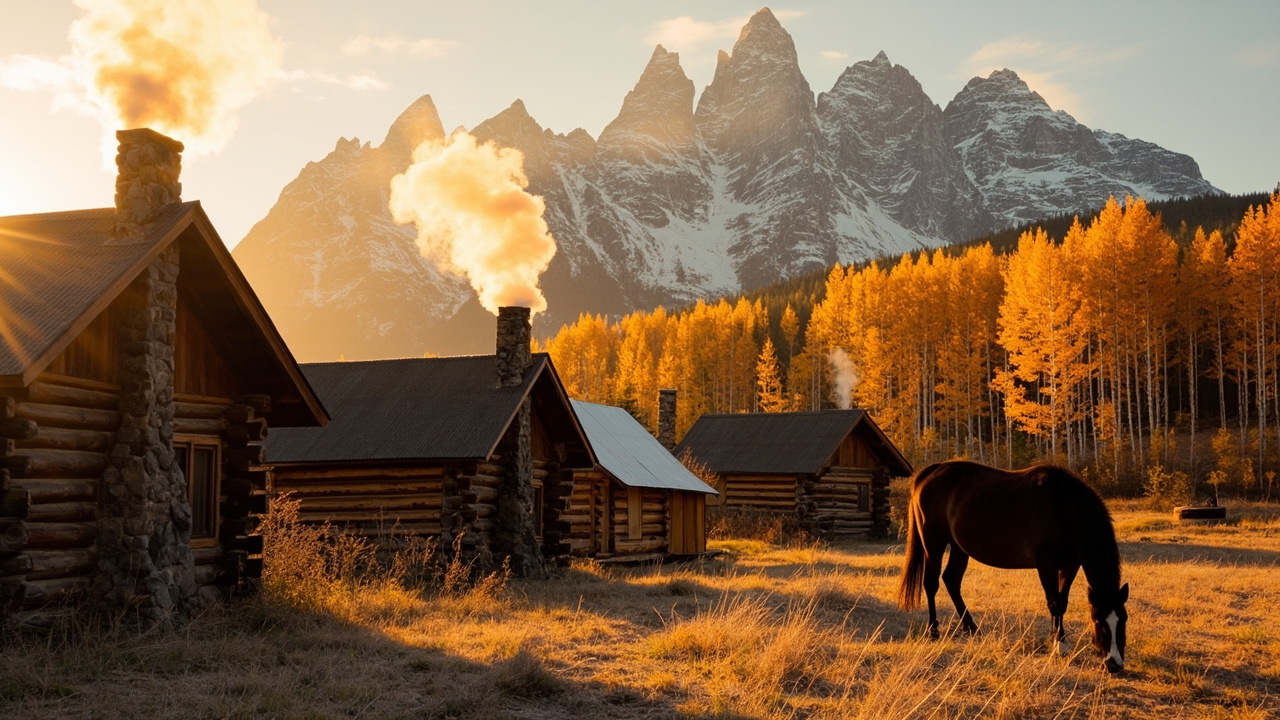
The bus shuddered to a halt on a gravel patch that barely qualified as a parking lot. I stepped out into air so cold and clean it hurt my teeth. Behind me, a dozen Chinese tourists from Guangzhou were already arguing about which cabin had the best view. In front of me, wooden houses with pointed roofs sat under a sky so blue it looked photoshopped. Smoke curled from chimneys. Horses stood tied to fences, their breath fogging in the morning chill. A Tuva woman in a fur hat walked past carrying two buckets of milk, and she nodded at me like she’d known I was coming.
That was my first morning in Hemu Village (禾木村), and I remember thinking: this is what happens when you take a Chinese postcard and make it real.
Hemu sits deep in the Altai Mountains of northern Xinjiang, about 70 kilometers from the Kazakhstan border. It’s the largest settlement of the Tuva people, an ethnic group that’s been here for centuries, and it’s the kind of place that makes you question why you ever bothered with crowded tourist traps. The village is famous for its log cabins, its autumn birch forests, and its position as the gateway to Kanas Lake, one of the most stunning alpine lakes in Asia.
This guide covers everything you need to know for a 2026 visit: how to get there, where to stay, what it costs, when to go, and the mistakes I made so you don’t have to.
Quick answer
Hemu Village is a Tuva ethnic village in Xinjiang’s Altai Mountains, best visited in late September for autumn colors or June-July for green meadows. A typical 3-day trip from Urumqi costs $250-400 (CNY 1,800-2,900) including transport, accommodation, and meals. China’s 240-hour visa-free transit policy (valid through 2026) covers this region for many nationalities, but you must fly into Urumqi and book a domestic flight to Kanas Airport. The village requires a park entry ticket of about $15 (CNY 100), and the real magic happens after the day-trippers leave at 5 PM.
The Short Version
Go in late September if you can. The birch forests turn gold, and the village looks like something from a fairy tale. Skip the peak October 1-7 Chinese national holiday week when prices triple and you’ll be queuing for photos. Fly into Kanas Airport if you can afford it - the drive from Urumqi is 12 hours and will eat two days of your trip. Stay at least one night in the village itself, not at the tourist center outside. Book your homestay on Trip.com or through WeChat at least a month ahead for autumn. And bring cash - some village homestays still don’t take cards.
How I Picked These
I’ve been to Hemu three times since 2019 - twice in autumn, once in summer. The first trip was a disaster: I arrived without accommodation, got soaked in a rainstorm, and ended up sleeping on a floor mat in a kitchen. The second and third trips were planned properly. I’ve also spent time in the nearby villages of Kanas and Baihaba, talked with Tuva families about their history, and argued with taxi drivers about prices until we both gave up. This guide reflects what I learned the hard way, plus what local hosts and guides told me over tea and lamb skewers.
Comparison Table
| Rank | Place | Best For | Approx Cost (USD) | Time Needed | When to Go |
|---|---|---|---|---|---|
| 1 | Hemu Village | Autumn colors, Tuva culture | $15 entry (CNY 100) | 1-2 days | Late Sep |
| 2 | Kanas Lake | Scenic lake, hiking | $23 (CNY 160) | 1 day | Jun-Sep |
| 3 | Baihaba Village | Border views, quiet | $15 (CNY 100) | Half day | Year-round |
| 4 | Kanas River | Photography, walks | Free (in park) | 2-3 hours | Jun-Oct |
| 5 | Fish Pavilion | Panoramic overlook | $8 shuttle (CNY 55) | 3-4 hours | Jun-Sep |
| 6 | Hemu Viewing Platform | Sunrise, village panorama | Free | 1 hour | Year-round |
| 7 | Tuva Folk Museum | Culture, history | $4 (CNY 30) | 1 hour | Year-round |
| 8 | Altai Birch Forest | Hiking, solitude | Free | Half day | Sep |
| 9 | Kanas Glacier View | Serious hikers | Free | Full day | Jul-Aug |
| 10 | Sunset Hill | Evening views | Free | 1-2 hours | Year-round |
1. Hemu Village - The Heart of It All
The first thing you notice is the smell. Wood smoke, horse manure, and something sweet I couldn’t place until a local told me it was fermenting milk for the traditional Tuva drink. The second thing you notice is the quiet. After Urumqi’s honking traffic, the silence here is almost loud.
Hemu is not a museum. It’s a living village where Tuva families still herd horses, milk cows, and cut hay by hand. The log cabins are built without a single nail, using a technique passed down for generations. In autumn, the birch forest behind the village turns a shade of gold that photographers have been chasing for decades.
The village itself is small - maybe 200 houses - and you can walk from one end to the other in 20 minutes. But you shouldn’t rush. The best experience is simply wandering the dirt paths, watching horses graze, and accepting cups of milk tea from old women who smile at you like you’re their grandson.
Location: Hemu Village, Burqin County, Altay Prefecture, northern Xinjiang Entry fee: $15 (CNY 100) for the Kanas-Hemu scenic area ticket, valid 2 days Opening hours: 24/7 access, but the ticket office operates 8 AM-8 PM How to get there: Fly to Kanas Airport (KJI) from Urumqi (1.5 hours, $80-120/CNY 580-870), then take a shuttle bus to the Hemu ticket gate (1 hour, $4/CNY 30). From the gate, a park shuttle takes you to the village (30 minutes, included in ticket). Alternatively, take the overnight bus from Urumqi to Burqin (12 hours, $25/CNY 180), then a local bus to Hemu (3 hours, $8/CNY 60). When to visit: Late September for autumn colors. June-July for green meadows and wildflowers. Avoid October 1-7 national holiday at all costs. Insider tips:
- Stay inside the village, not at the tourist service center outside the gate. The village has guesthouses run by local families.
- Book your homestay on Trip.com or through WeChat at least 3 weeks ahead for September. They sell out fast.
- The village is at 1,200 meters elevation. Nights are cold even in summer - bring a warm jacket.
- Download an offline map before you arrive. Cell signal is spotty inside the village.
- The morning market near the central square has the best fresh milk and bread. Go before 9 AM.
I made the mistake of arriving without a booking on my first trip and ended up paying $60 (CNY 430) for a floor mat in a kitchen. The family was lovely and fed me dinner, but I wouldn’t recommend the experience.
2. Kanas Lake - The Reason Everyone Comes
Kanas Lake is the kind of place that makes you understand why people believe in lake monsters. The water is a color I can only describe as “glacier turquoise” - so clear and so blue-green that it doesn’t look real. The lake stretches for 24 kilometers, surrounded by snow-capped peaks and dense forest.
There’s a legend about a monster in the lake - the “Kanas water monster” - which is actually just a large species of fish called hucho taimen that can grow to 2 meters long. Locals will happily tell you stories about it while serving you tea. Whether you believe them is up to you.
The lake is about 30 kilometers north of Hemu, and most visitors do it as a day trip. The park shuttle takes you from the entrance to the lake shore, where you can walk along the boardwalk, take a boat tour, or hike up to the Fish Pavilion for the panoramic view.
Location: Kanas National Nature Reserve, Burqin County, Altay Prefecture (30 km north of Hemu) Entry fee: $23 (CNY 160) for the Kanas scenic area, separate from the Hemu ticket Opening hours: 8 AM-8 PM daily, May-October How to get there: From Hemu, take the park shuttle to the Kanas ticket gate (1 hour, included in park ticket), then transfer to another shuttle to the lake (30 minutes). Or drive directly from Burqin town (2 hours, $30/CNY 220 in a shared taxi). When to visit: June-September for clear weather. October can be cold but the autumn colors are spectacular. Insider tips:
- The boat tour on the lake costs $40 (CNY 290) and lasts 1 hour. Worth it if the weather is clear, skip it if it’s cloudy.
- The hike to Fish Pavilion takes 2-3 hours and involves 1,068 steps. The view is worth the leg pain.
- Bring your own food - the restaurants at the lake are overpriced and mediocre.
- The last shuttle back to the gate leaves at 7 PM. Don’t miss it, or you’ll be walking in the dark.
- If you want to see the lake without crowds, go on a weekday. Weekends bring tour buses from Urumqi.
I met a retired teacher from Shanghai at the lake who told me she’d been coming here every year for a decade. “The lake is different every time,” she said. “I think it changes color with your mood.”
3. Baihaba Village - The Quiet Border Town
Baihaba is what Hemu was 20 years ago - a small Tuva village with no crowds, no souvenir shops, and no tour buses. It sits just 2 kilometers from the Kazakhstan border, and on a clear day you can see the watchtowers across the valley.
The village is smaller than Hemu, maybe 50 houses, and it feels even more authentic. There’s no paved road through the village, just dirt paths between wooden cabins. The people here are farmers and herders, and they’ll look at you with mild curiosity before going back to their work.
The main reason to visit is the view from the hill above the village. At sunset, the light turns the wooden houses golden and the mountains behind them purple. It’s the kind of scene that makes you want to sit down and stay a while.
Location: Baihaba Village, Habahe County, Altay Prefecture (35 km west of Hemu) Entry fee: $15 (CNY 100) for the Baihaba scenic area ticket Opening hours: 8 AM-8 PM, May-October How to get there: From Hemu, take a local bus or shared taxi (1 hour, $10/CNY 70). The road is rough in places - hold on tight. When to visit: Year-round, but June-September for the best weather. Winter visits are possible but require a 4WD vehicle. Insider tips:
- The border checkpoint requires your passport. Don’t forget it.
- The sunset viewpoint is a 20-minute walk from the village center. Go 1 hour before sunset.
- There’s one guesthouse in the village that takes foreigners. Book through your Hemu homestay host.
- The local milk tea here is the best I’ve had in Xinjiang. Ask for it with a piece of naan bread.
- Don’t take photos of the border guards or watchtowers. It’s not worth the hassle.
I nearly got stuck in Baihaba when my taxi driver decided to leave early. A local family let me wait in their kitchen, feeding me dried apricots and telling me about their son who was studying in Urumqi.
4. Kanas River - The Walk That Beats the Lake
Everyone rushes to the lake, but the Kanas River is where I’d send you first. The river runs from the lake south through a narrow valley, and the path along it is one of the most beautiful walks I’ve done anywhere in China.
The water is the same impossible turquoise as the lake, but it moves. It swirls around boulders, forms small rapids, and pools in deep spots where you can see the pebbles on the bottom. The path is flat and easy, suitable for any fitness level.
The best section is the 6-kilometer stretch from the river mouth to the Moon Bay viewpoint. It takes about 2 hours at a relaxed pace, and you’ll have it mostly to yourself because the tour groups all take the shuttle.
Location: Kanas River valley, within the Kanas National Nature Reserve Entry fee: Free (included in the Kanas scenic area ticket) Opening hours: 24/7, but best in daylight hours How to get there: From the Kanas Lake shuttle stop, walk south along the river path. Or take the shuttle to the Moon Bay stop and walk north. When to visit: June-October. The path can be muddy after rain. Insider tips:
- Start early (before 9 AM) to beat the tour groups.
- The Moon Bay viewpoint has a platform where you can take photos without getting in anyone’s way.
- Bring water - there are no shops along the path.
- The autumn colors along the river are even better than at the lake. Late September is perfect.
- Watch for wildlife. I saw a family of deer crossing the river on my last visit.
I stopped to rest on a rock by the river and ended up sitting there for 40 minutes, just watching the water. I didn’t take a single photo. That never happens to me.
5. Fish Pavilion - The 1,068 Steps Worth Taking
The Fish Pavilion (观鱼台) sits on a hill above Kanas Lake, and from its top you can see the entire lake spread out below you like a map. It’s the classic Kanas photo spot, and for good reason.
Getting there involves climbing 1,068 steps from the shuttle drop-off point. It sounds worse than it is - the steps are well-maintained and there are resting platforms every 100 steps or so. I’m not a fit person, and I made it in about 40 minutes with two rest stops.
The view from the top is the best in the entire region. You can see the lake curving north into the mountains, the forest stretching to the horizon, and on clear days, the snow-capped peaks of the Altai range. It’s the kind of view that makes you forget about your aching legs.
Location: Hilltop above Kanas Lake, within the Kanas National Nature Reserve Entry fee: $8 (CNY 55) for the shuttle from the lake shore to the trailhead Opening hours: 8 AM-6 PM, May-October How to get there: From the Kanas Lake shuttle stop, take the dedicated shuttle to the Fish Pavilion trailhead (15 minutes). Then climb the steps. When to visit: Morning for clear views. Afternoon clouds can obscure the lake. Insider tips:
- Go on a clear day. If it’s cloudy, skip it - you won’t see anything.
- The shuttle only runs until 5 PM. Give yourself 2 hours minimum for the round trip.
- Bring a hat and sunscreen. There’s no shade on the steps.
- The platform at the top gets crowded. Go early or wait for the tour groups to leave.
- There’s a small shop at the trailhead selling water and snacks. Prices are reasonable.
A German couple I met on the steps told me they’d been planning this trip for five years. “We almost didn’t come because of the distance,” the wife said. “Now I understand why everyone told us it was worth it.”
6. Hemu Viewing Platform - Sunrise Over the Village
If you only do one thing in Hemu, make it the sunrise from the viewing platform. It’s a 30-minute walk from the village center up a gentle hill, and the view is the reason Hemu appears on every “most beautiful villages in China” list.
The platform overlooks the entire village from above. At dawn, the first light hits the mountains behind the village, then slowly creeps down to the rooftops. Smoke rises from chimneys. Horses start moving in the paddocks. It’s quiet except for the sound of cameras clicking.
The walk up is easy - a paved path that switchbacks up the hill. I did it in the dark with a headlamp and joined maybe 50 other people at the top. By the time the sun came up, there were 200.
Location: Hill east of Hemu Village Entry fee: Free Opening hours: 24/7, but best at sunrise (approximately 7-8 AM in September, 6-7 AM in June) How to get there: Walk east from the village center, following the signs to the viewing platform. The path starts near the horse paddocks. When to visit: Sunrise. Sunset is also nice but less dramatic. Insider tips:
- Arrive 30 minutes before sunrise to get a good spot.
- Bring a headlamp for the walk up in the dark.
- The platform has railings, but it gets crowded. Find a spot along the edge early.
- September sunrise is around 7:30 AM. Check the exact time the day before.
- If it’s foggy, the view is actually better - the village looks like it’s floating in clouds.
I stood next to a professional photographer who’d been coming here for 15 years. “The light is different every single morning,” he told me. “That’s why I keep coming back.”
7. Tuva Folk Museum - Understanding the People
Hemu is beautiful, but understanding the Tuva people makes it meaningful. The small folk museum in the village does a decent job of explaining who they are, where they came from, and how they live.
The Tuva people are of Turkic origin, related to the Tuvans of southern Siberia. They’ve lived in this region for centuries, herding horses, hunting, and practicing a form of shamanism mixed with Tibetan Buddhism. The museum has exhibits on their traditional clothing, tools, musical instruments, and the construction of their log cabins.
The museum isn’t fancy - it’s a converted cabin with glass cases and information boards in Chinese and English. But it’s worth an hour of your time to understand the context of what you’re seeing.
Location: Central Hemu Village, near the square Entry fee: $4 (CNY 30) Opening hours: 9 AM-6 PM, May-October How to get there: Walk to the central square and look for the building with the museum sign. You can’t miss it. When to visit: Any time. It’s a good activity for a rainy day. Insider tips:
- The English translations are basic but understandable.
- Ask the staff about the throat singing demonstration. They sometimes arrange performances for groups.
- The museum shop sells genuine Tuva crafts, not the mass-produced stuff at the tourist center.
- Combine your visit with a meal at the restaurant next door - they serve traditional Tuva dishes.
The museum curator, a Tuva woman in her 50s, told me her grandmother was born in this village and never left. “Now my daughter studies in Shanghai,” she said. “But she comes back every summer.”
8. Altai Birch Forest - The Golden Cathedral
The birch forest behind Hemu is the place that makes photographers weep. In late September, the leaves turn a shade of gold so intense it looks artificial. The trees grow close together, their white trunks contrasting with the yellow canopy above.
The forest is crisscrossed with paths, some used by locals, others made by visitors over the years. You can walk for hours without seeing another person, especially if you go off the main trail. The ground is soft with fallen leaves, and the light filters through the canopy in shafts.
This is also where the locals graze their horses in autumn. You’ll see them wandering between the trees, bells around their necks, completely unbothered by your presence.
Location: Forest area east and north of Hemu Village Entry fee: Free Opening hours: 24/7 How to get there: Walk east from the village center past the viewing platform path. Any trail heading into the trees will get you there. When to visit: Late September for peak colors. Mid-October for the “golden rain” effect as leaves fall. Insider tips:
- Wear sturdy shoes - the paths can be muddy.
- Bring a compass or download an offline map. It’s easy to get turned around in the forest.
- The best light for photos is 1 hour after sunrise and 1 hour before sunset.
- Don’t feed the horses, no matter how cute they look.
- If you see mushrooms, don’t pick them. Some are poisonous, and locals get upset about visitors taking their harvest.
I got lost in this forest for an hour and ended up at a horse paddock I’d never seen before. A Tuva boy of about 10 showed me the way back, then asked if I wanted to ride his horse. I said yes, and it was the best $5 I spent in Xinjiang.
9. Kanas Glacier View - For Serious Hikers Only
Most visitors never see the glaciers that feed Kanas Lake. They’re high in the mountains, accessible only on foot or horseback, and the hike is demanding. But if you’re fit and have time, it’s an unforgettable experience.
The glacier is about 15 kilometers north of the lake, at an elevation of over 3,000 meters. The trail follows the lake shore, then climbs steeply through forest and alpine meadows before reaching the glacier’s terminal moraine. The views along the way are spectacular - the lake below, the peaks above, and nothing but wilderness in between.
This is not a day hike. Plan for 2-3 days with camping, or hire a local guide with horses. The horses can carry your gear while you walk.
Location: North end of Kanas Lake, Altai Mountains Entry fee: Free (included in Kanas scenic area ticket) Opening hours: Daylight hours only. This is remote wilderness. How to get there: From the Kanas Lake shuttle stop, walk north along the lake shore. The trail becomes rough after 5 kilometers. When to visit: July-August only. Snow covers the trail for most of the year. Insider tips:
- Hire a guide in Hemu or Kanas village. Do not attempt this alone.
- Bring proper hiking boots, warm layers, and rain gear. Weather changes fast at altitude.
- Camping is allowed in designated areas only. Check with the park office.
- Altitude sickness is a real risk above 3,000 meters. Acclimatize for a day first.
- The glacier itself is receding. Don’t get too close - ice can collapse without warning.
I attempted this hike with a guide named Askar, who grew up in Hemu and knew every trail in the area. We didn’t make it to the glacier - a storm rolled in at 2,800 meters - but the views of the upper lake were worth the effort.
10. Sunset Hill - The Local’s Secret
Every visitor knows about the sunrise viewpoint. Almost none know about Sunset Hill, a low rise on the west side of Hemu that offers the best evening views in the village. I only found out about it because my homestay host pointed it out while we were having dinner.
The hill is a 15-minute walk from the village center, past the horse paddocks and up a gentle slope. There’s no path, no platform, no sign - just a grassy hill that locals use for grazing. You’ll likely have it to yourself.
At sunset, the light turns the village golden, then orange, then pink. The mountains to the west catch the last rays, and the whole scene looks like a painting that’s slowly fading. It’s quieter than the sunrise viewpoint, more intimate, and in my opinion, more beautiful.
Location: Low hill on the west side of Hemu Village Entry fee: Free Opening hours: 24/7 How to get there: Walk west from the village center, past the horse paddocks, and follow the dirt track up the hill. When to visit: 1 hour before sunset. Check the sunset time the day before. Insider tips:
- Bring a blanket or jacket - it gets cold once the sun drops.
- The hill is also great for stargazing after dark. The night sky here is incredible.
- If you see locals on the hill, they’re probably there for the same reason. Say hello.
- The walk back in the dark is tricky. Bring a headlamp or phone light.
- Combine this with dinner at a village homestay afterward. The traditional Tuva hotpot is perfect after an evening in the cold.
I sat on this hill with a couple from Chengdu who were on their honeymoon. We didn’t talk much - just watched the sun go down and listened to the horses in the paddock below. It was one of the most peaceful evenings of my life.
FAQ summary
Hemu Village is a Tuva ethnic village in Xinjiang’s Altai Mountains, accessible via Kanas Airport (KJI) with flights from Urumqi. The best time to visit is late September for autumn colors, with June-July as a green alternative. Entry costs $15 (CNY 100) for the village and $23 (CNY 160) for the separate Kanas Lake scenic area. Foreign visitors need a valid Chinese visa or must qualify for the 240-hour visa-free transit policy, which requires flying into Urumqi and having a confirmed onward ticket. Accommodation inside the village ranges from $20-60 (CNY 145-430) per night, and booking at least 3 weeks ahead is essential for September visits. WeChat Pay and Alipay are accepted at most tourist businesses, but cash is recommended for village homestays and markets.
FAQ
Q: Do I need a special permit to visit Hemu Village? A: No special permit is required for Hemu Village itself, but you do need a valid Chinese visa or visa-free transit eligibility. The village is in a border region, so bring your passport everywhere - you’ll need it at the park entrance and any border checkpoints.
Q: How do I get to Hemu Village from Urumqi? A: The fastest way is to fly from Urumqi to Kanas Airport (KJI), which takes 1.5 hours and costs $80-120 (CNY 580-870). From the airport, take a shuttle to the Hemu ticket gate (1 hour, $4/CNY 30), then the park shuttle to the village. The alternative is a 12-hour overnight bus to Burqin, then a 3-hour local bus to Hemu.
Q: What is the best time of year to visit Hemu Village? A: Late September is the best time for autumn colors - the birch forests turn gold and the weather is crisp. June to July offers green meadows and wildflowers. Winter visits (December-February) are possible but extremely cold, with temperatures dropping to -20°C (-4°F). Avoid the October 1-7 national holiday week when prices triple.
Q: How much does a trip to Hemu Village cost? A: A 3-day trip from Urumqi costs approximately $250-400 (CNY 1,800-2,900) per person, including flights, accommodation, entry fees, and meals. Homestays in the village cost $20-60 (CNY 145-430) per night. Budget an extra $50-80 (CNY 360-580) for shuttles, boat tours, and souvenirs.
Q: Can I use WeChat Pay or Alipay in Hemu Village? A: Yes, most tourist businesses accept WeChat Pay and Alipay, including homestays, restaurants, and shuttle services. However, some village homestays and small shops only take cash, so bring at least $50 (CNY 360) in cash. Set up WeChat Pay or Alipay before you arrive in China - you’ll need a foreign credit card and your passport.
Q: Do people in Hemu Village speak English? A: Very few people speak English in Hemu. The Tuva locals speak their own language and Chinese. Download a translation app like Pleco or Google Translate with offline packs before you go. Most homestay hosts will use translation apps to communicate, and younger people in tourist businesses speak basic English.
Q: Do I need a VPN for my phone in China? A: Yes, if you want to access Google, WhatsApp, Instagram, Facebook, or any Western websites, you need a VPN installed before you arrive in China. Free VPNs often don’t work - pay for a reliable one like ExpressVPN or NordVPN. Buy a Chinese SIM card at the airport or use an eSIM from providers like Airalo for data.
The Honest Wrap-up
Hemu Village is not for everyone. If you want luxury hotels, fine dining, and seamless English service, go to Hangzhou or Chengdu instead. But if you’re willing to sleep on a hard bed in a wooden cabin, eat whatever the family cooks, and walk through a forest at dawn just to watch the sun rise over a village that’s been here for centuries, this is the place.
The journey is long. The facilities are basic. The weather is unpredictable. But standing on that viewing platform, watching the smoke rise from the chimneys below and the mountains catch the first light, I understood why people keep coming back. Some places you visit. Hemu is a place that stays with you.
My final advice: book your flights now, book your homestay now, and go. Don’t wait for the perfect time or the perfect weather. Just go.
More guides you may like
Top 10 Bridges in China: The Complete 2026 Guide
China's bridges are engineering marvels spanning mountains, rivers, and seas. Here are 10 of the most spectacular, from ancient stone to modern steel.
8 min read

Top 10 Buddhist Sites in China: The Complete 2026 Guide
From the Leshan Giant Buddha to the Dunhuang Caves, these 10 Buddhist sites represent 2,000 years of China's spiritual heritage.
9 min read

Top 10 Day Trips from Beijing You Shouldn't Miss: The Complete 2026 Guide
Beijing is packed with history, but some of China's best experiences are just a few hours away. Here are 10 day trips that will transform your visit.
9 min read
Top 10 Hidden Gems in China Off the Beaten Path: The Complete 2026 Guide
Beyond the Great Wall and Terracotta Warriors, China has incredible hidden destinations few tourists ever reach. Here are 10 underrated gems worth the detour.
9 min read

Top 10 Markets and Shopping Streets in China: The Complete 2026 Guide
From Shanghai's Bund to Beijing's Silk Street - 10 markets where foreigners can haggle, explore, and bring home authentic Chinese goods.
9 min read
Top 10 Museums in China You Shouldn't Miss: The Complete 2026 Guide
China's museums span 5,000 years of civilization. These 10 - from the Palace Museum to Xi'an's terracotta gallery - are unmissable for culture lovers.
9 min read