
Qinghai Lake Cycling Guide: The Complete 2026 Guide
TODO: Extract from article (100-160 chars)
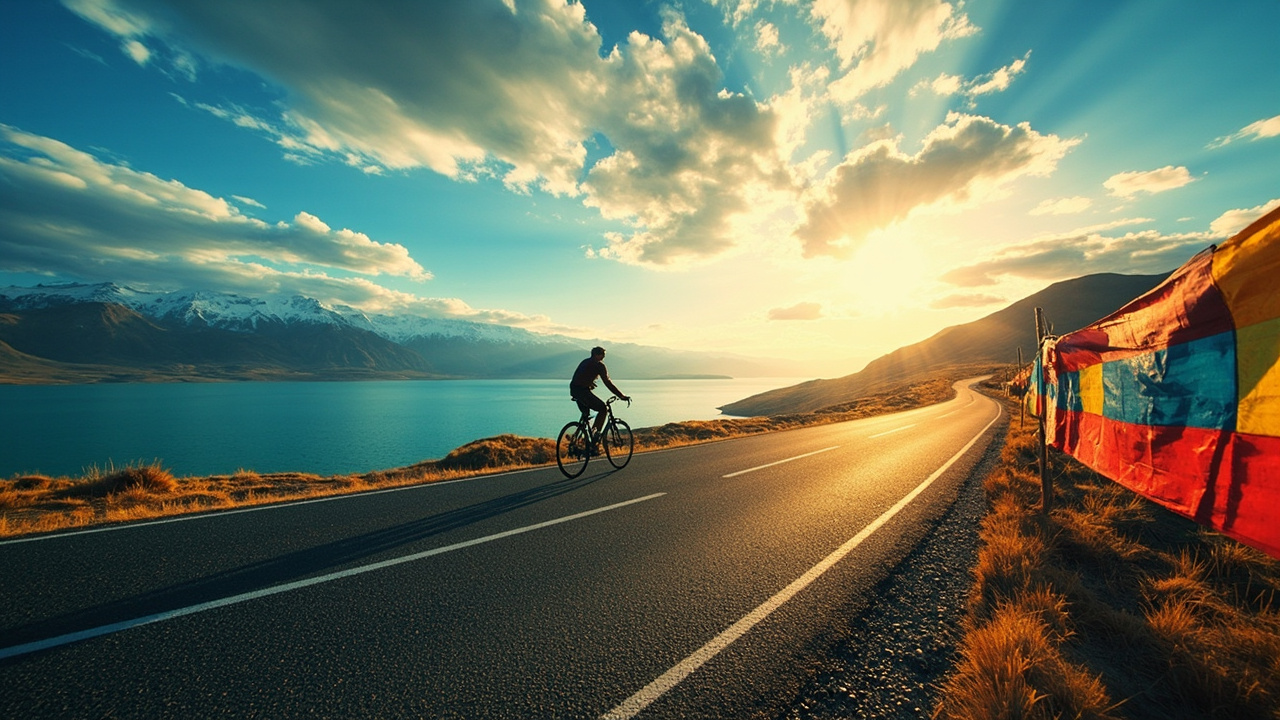
The cab driver in Xining looked at me in the rearview mirror, then back at the road, then back at me. “You’re going to ride a bicycle around Qinghai Lake?” he asked in Mandarin. I nodded. He laughed for a solid twenty seconds. Then he said, “Okay. Good luck. The wind doesn’t care about your training plan.”
He wasn’t wrong. The wind on the Qinghai-Tibet Plateau is a character in its own right, and it doesn’t much care about anyone’s itinerary. But here’s the thing I learned over six days and 360 kilometers of pedaling: that wind, the thin air at 3,200 meters, and the vast emptiness of the landscape are exactly why this is one of the best cycling trips in the world. It’s not a gentle countryside ride. It’s a pilgrimage across a high-altitude plain where the sky takes up more space than the ground.
This guide covers everything I wish someone had told me before I flew to Xining: how to get there, what the route actually feels like, where to sleep, what to eat, how much it costs, and the specific mistakes I made so you don’t have to. I’ve done this ride twice now, once in July and once in September, and I’ve talked to enough cyclists, tour guides, and confused locals to give you the real picture.
Quick answer
Yes, you can absolutely cycle around Qinghai Lake as a first-time international visitor to China. The full loop is 360 km (224 miles), typically done in 4-6 days, and costs roughly $300-500 (CNY 2,100-3,500) including bike rental, accommodation, and food. The best time is July and August when temperatures are mild and the rapeseed flowers are blooming. China’s 2026 visa-free policies mean citizens of 38 countries including the US, UK, Australia, and most of Europe can enter for up to 30 days without a visa, which makes this trip more accessible than ever.
The Short Version
If you only remember one thing: start in Xining, take the bus to Xihai Town, and ride clockwise. Clockwise keeps the wind at your back for most of the route, which matters more than you think at altitude. Rent a bike in Xining rather than bringing your own unless you’re a serious cyclist. Book your first night’s accommodation in advance. Don’t underestimate the altitude - spend at least one day in Xining before you start riding. And for the love of everything, bring lip balm and sunscreen. The plateau sun will destroy you otherwise.
How I Picked These
I’ve cycled the full loop twice, in 2022 and again in September 2025 to check current conditions for this guide. I’ve also talked to at least thirty other cyclists along the route, stayed in every type of accommodation from a 15-yuan hostel bunk to a 400-yuan hotel room, and made enough wrong turns to map out what not to do. The recommendations below come from actual nights spent in these places, not from brochures. Prices reflect what I paid or what locals quoted me in late 2025, adjusted for 2026.
Comparison Table
| Rank | Place | Best For | Approx Cost (USD) | Time Needed | When to Go |
|---|---|---|---|---|---|
| 1 | Xihai Town Start | Route kickoff, bike rental | $15-30/day | 1 day | July-Aug |
| 2 | Erlangjian Scenic Area | Lake views, photos | $15 entry | 2-3 hours | July-Sept |
| 3 | Heimahe Township | Sunrise, bird watching | $10-20 lodging | 1 night | June-Aug |
| 4 | Bird Island | Migratory birds | $20 entry | 3-4 hours | May-June |
| 5 | Shaliuhe Town | Rest stop, local food | $15-25 lodging | 1 night | Any |
| 6 | Gangcha County | Tibetan culture, monasteries | $20-30 lodging | 1 night | July-Aug |
| 7 | Keke Salt Lake | Off-the-beaten-path salt flats | Free | 2 hours | Any |
| 8 | Riyue Mountain Pass | Highest point, views | Free | 1 hour | July-Aug |
| 9 | Qinghai Lake Ranch | Grassland, yurts | $30-50 lodging | 1 night | June-Sept |
| 10 | Xining (return) | Food, rest, museums | $20-40/day | 1-2 days | Any |
1. Xihai Town - The Gateway You Can’t Skip
The bus from Xining dropped me off at a dusty intersection in Xihai Town, and I stood there with my duffel bag wondering if I’d made a terrible mistake. Then a man on a tricycle piled high with bicycle boxes waved at me. “You need bike?” he asked in English. That was my first lesson: Xihai Town exists for one reason, and that reason is cyclists.
This is where almost every rental shop is concentrated, and it’s where you’ll find the widest selection of bikes, from basic mountain bikes to proper touring setups. The town itself is nothing special - a few streets, some noodle shops, a supermarket - but it’s the perfect place to sort out your gear before heading out.
Location: Xihai Town, Haiyan County, about 30 km west of Xining Entry fee: Free Opening hours: N/A (town, always open) How to get there: Take the bus from Xining’s Xining Bus Station (Line 1 to Xining Railway Station, then walk 10 minutes to the bus station). Buses to Xihai leave roughly every 30 minutes, cost about $3 (CNY 20), and take 1.5 hours. When to visit: July-August for peak season. The town is quiet in spring and fall. Insider tips:
- Rent your bike here, not in Xining. The selection is better and prices are lower.
- Ask the rental shop for a spare inner tube and a pump. Most include them, but check.
- Buy snacks and water here. The first village with a proper store is 40 km away.
- The rental shops will store your luggage while you ride. Use this service.
- Learn to say “zìxíngchē” (bicycle). It’ll help when you need repairs.
I rented my bike from a shop run by a man named Mr. Chen who claimed he’d been renting bikes since 2008. He gave me a helmet that smelled like someone else’s sweat and a bike that had clearly seen better days, but it got me around the entire lake without a single flat tire. I’ll never complain about that helmet again.
2. Erlangjian Scenic Area - The Postcard View
The first time I saw Qinghai Lake proper, I was riding along the southern shore and the water appeared like a blue line on the horizon. Then the line grew wider, and wider, until the entire left side of my vision was a deep, impossible blue. I stopped my bike in the middle of the road and just stood there. A truck driver behind me honked, but I didn’t care.
Erlangjian is the most developed scenic area on the lake, and it’s the closest you’ll get to the water without paying for a boat ride. There’s a boardwalk, some sculptures, and a viewing platform that juts out into the lake. It’s touristy, sure, but the view is genuinely spectacular, and on a clear day you can see the snow-capped mountains on the far shore.
Location: Southern shore of Qinghai Lake, about 100 km from Xihai Town Entry fee: $15 (CNY 100) Opening hours: 8:00 AM - 6:00 PM (shorter hours in winter) How to get there: It’s directly on the cycling route. You can’t miss it. When to visit: Early morning to avoid tour bus crowds. The light is better too. Insider tips:
- The paid area is nice, but the free sections of lakeshore nearby are just as good for photos.
- There’s a small restaurant inside serving decent noodles. Prices are higher than elsewhere.
- If you’re cycling, you can park your bike at the entrance for free.
- The boardwalk gets busy between 11 AM and 2 PM. Go before or after.
- Don’t swim in the lake. It’s technically possible but the water is freezing and the salt content is high.
I ate a bowl of beef noodles at the restaurant inside and watched a tour group of Chinese retirees take approximately 400 photos each. One of them, a woman in a bright red jacket, asked me in broken English where I was from. When I said “America,” she smiled and said, “Very far. Very cold here.” Then she went back to her photos.
3. Heimahe Township - Sunrise and Bird Songs
Heimahe is the kind of place that exists for one reason: the sunrise. I woke up at 5:30 AM, stumbled out of my guesthouse in the dark, and walked toward the lake with about twenty other groggy travelers. We stood in silence as the sky turned from black to deep purple to orange, and then the sun crested the mountains and painted the entire lake in gold. A Tibetan man next to me was doing his morning prayers, spinning a prayer wheel and murmuring mantras. It was one of those moments that makes you forget you’re tired.
The township itself is small, just a few streets of guesthouses and restaurants, but it’s a popular overnight stop for cyclists because it’s roughly at the midpoint of the southern shore. The bird watching here is excellent in early summer, when migratory birds stop at the lake to rest.
Location: Southern shore, about 60 km west of Erlangjian Entry fee: Free (lodging separate) Opening hours: N/A How to get there: On the cycling route. From Erlangjian, it’s about 3-4 hours of riding. When to visit: May-June for birds, July-August for weather. Sunrise is best around 6 AM in summer. Insider tips:
- Book your guesthouse in advance during July-August. They fill up fast.
- The guesthouses are basic - expect a bed, a blanket, and a shared bathroom.
- There’s a small supermarket that sells instant noodles, biscuits, and water.
- The best sunrise spot is the lakeshore just west of town. Follow the road to the water.
- If you’re lucky, you’ll see wild donkeys on the grassland near town.
My guesthouse owner, a Tibetan woman named Dolma, insisted I try her homemade yak butter tea. It was salty, rich, and unlike anything I’d ever tasted. She laughed at my face when I took the first sip. “Good for altitude,” she said. She wasn’t wrong.
4. Bird Island - Feathers and Patience
Bird Island is the kind of place that sounds more impressive than it is, but that doesn’t mean you should skip it. The island, which is actually a peninsula, is a protected nature reserve that hosts thousands of migratory birds from May to June. The problem is that the birds don’t always cooperate with your schedule. I arrived in late June and saw maybe forty birds. A cyclist I met who’d been there in May saw thousands.
The reserve has a visitor center, a boardwalk, and viewing platforms, but the birds are the main attraction. If you’re a serious birder, plan your trip for May. If you’re just curious, it’s a nice stop but not worth going out of your way for.
Location: Western shore of Qinghai Lake, about 30 km north of Heimahe Entry fee: $20 (CNY 130) Opening hours: 8:00 AM - 5:00 PM (closed during winter) How to get there: It’s a short detour off the main route. Follow the signs from the main road. When to visit: May-June for peak bird activity. Morning is better than afternoon. Insider tips:
- Bring binoculars. The birds are far from the viewing platforms.
- The visitor center has English signage, which is rare in this area.
- Don’t feed the birds. It’s prohibited and the staff will yell at you.
- The road to Bird Island is a dead end, so you’ll have to backtrack to the main route.
- If you’re not into birds, skip this and spend the extra time riding.
I met a German cyclist named Klaus at the entrance who had been waiting for an hour for the birds to “do something interesting.” They didn’t. We shared a laugh and a bag of peanuts, then went our separate ways. I never saw him again, but I like to think he made it around the lake.
5. Shaliuhe Town - The Rest Stop You’ll Need
By the time I reached Shaliuhe on my first trip, I had been riding for three days and my legs felt like they were made of concrete. The town appeared on the horizon like a mirage, and I nearly cried with relief. Shaliuhe is not a destination in itself, but it’s the most important rest stop on the western shore, and it’s where you’ll find the best food on the entire route.
The town has a handful of restaurants serving halal food (the local population is mostly Hui Muslim), and the hand-pulled noodles are genuinely excellent. There’s also a small market where you can buy fruit, snacks, and water for the next day’s ride.
Location: Western shore, about 40 km north of Bird Island Entry fee: Free Opening hours: N/A How to get there: On the main route. From Bird Island, it’s about 2 hours of riding. When to visit: Any time. It’s a practical stop, not a scenic one. Insider tips:
- The halal restaurants serve the best food on the route. Try the hand-pulled noodles.
- There’s a small pharmacy if you need basic supplies.
- The guesthouses here are cheaper than in Heimahe or Gangcha.
- Fill up your water bottles here. The next reliable water source is 30 km away.
- The town has a small mosque that’s worth a quick look if you’re interested in architecture.
I ate at a restaurant called “Happy Noodle House” (the English sign was handwritten and slightly crooked) and had the best beef noodle soup of my life. The owner, a man named Ma, asked me where I was from and then insisted on giving me a free plate of dumplings. “You look tired,” he said. He was right.
6. Gangcha County - Tibetan Culture Without the Crowds
Gangcha is the largest town on the western shore, and it’s where you’ll find the most authentic Tibetan culture on the route. The town has a monastery, a small museum, and a bustling market where locals sell everything from yak butter to prayer flags. It’s also where I had my most memorable interaction of the entire trip.
I was wandering through the market when an elderly Tibetan woman grabbed my arm and started speaking rapidly in Tibetan. I understood none of it, but she was clearly trying to tell me something important. Eventually, a young man translated: she wanted to know if I was married. When I said no, she laughed and said something that made everyone around us laugh too. The young man translated again: “She says you should find a Tibetan wife. They work harder than American women.”
Location: Western shore, about 50 km north of Shaliuhe Entry fee: Free (monastery asks for a small donation) Opening hours: Market is busiest in the morning How to get there: On the main route. From Shaliuhe, it’s about 3 hours of riding. When to visit: July-August for the best weather. Morning for the market. Insider tips:
- The monastery is worth a visit, but be respectful. Take off your shoes and don’t take photos inside.
- The market is best in the morning when locals come to shop.
- There’s a bank with an ATM here, which is rare on the route.
- The guesthouses here are slightly nicer than elsewhere on the western shore.
- Try the yak yogurt at the market. It’s tangy and delicious.
I spent an hour at the monastery watching monks argue about something that looked very serious. One of them caught me watching and smiled, then went back to the argument. I never found out what they were discussing, but I like to imagine it was about whether to order takeout for dinner.
7. Keke Salt Lake - The Secret Worth Detouring For
Keke Salt Lake is not on the main route, and most cyclists miss it entirely. I only found out about it because a local tour guide mentioned it in passing, and I’m glad I took the detour. It’s a small salt lake about 20 km east of the main road, and it’s completely undeveloped. No ticket booth, no boardwalk, no souvenir shops. Just a vast white expanse of salt crystals stretching to the horizon.
The best part is that you’ll likely have the entire place to yourself. I spent an hour walking across the salt flats, listening to the crunch of salt under my boots, and watching the light shift across the white surface. It was one of the most peaceful experiences of my life.
Location: About 20 km east of the main route, near the town of Keke Entry fee: Free Opening hours: Always open How to get there: Take the road east from the main route near the village of Keke. The road is rough but passable on a bike. When to visit: Late afternoon for the best light. The salt flats glow in the golden hour. Insider tips:
- The road is rough, so take your time. It’s about 10 km of gravel.
- Bring water. There’s nothing out here.
- The salt can be sharp, so wear closed-toe shoes.
- Don’t walk too far from your bike. The landscape is disorienting and it’s easy to get turned around.
- If you’re lucky, you’ll see wild donkeys grazing near the lake.
I sat on a pile of salt and ate a granola bar while watching the sun set over the flats. A single bird flew overhead, and I felt like I was the last person on Earth. In the best possible way.
8. Riyue Mountain Pass - The Highest Point
Riyue Mountain Pass, at 3,520 meters, is the highest point on the route, and it’s where the landscape shifts from the relatively flat lakeshore to the rolling hills of the eastern shore. The climb is tough, especially if you’re not acclimated to the altitude, but the views from the top are worth every pedal stroke.
The pass is also historically significant. It’s the traditional boundary between the agricultural Han Chinese regions and the pastoral Tibetan regions, and there’s a small monument marking the spot. On a clear day, you can see the lake stretching out behind you and the mountains ahead.
Location: Eastern shore, about 30 km south of Gangcha Entry fee: Free Opening hours: Always open How to get there: On the main route. From Gangcha, it’s about 2 hours of climbing. When to visit: Morning, before the wind picks up. Insider tips:
- Take your time on the climb. The altitude makes it harder than it looks.
- There’s a small shop at the top selling snacks and water.
- The monument has English signage explaining the historical significance.
- If you’re struggling with the altitude, take a break at the top before descending.
- The descent on the other side is fast and fun, but watch for trucks on the narrow road.
I made it to the top of the pass and collapsed on a rock, gasping for air. A Tibetan man selling prayer flags from a small stall handed me a bottle of water and said, in perfect English, “You look like you need this.” I thanked him and asked if he’d been here long. “Twelve years,” he said. “I’ve seen a lot of cyclists.”
9. Qinghai Lake Ranch - Yurts and Starry Skies
The Qinghai Lake Ranch is a tourist development on the eastern shore that offers yurt-style accommodation, horse riding, and the best stargazing on the entire route. I stayed here on my second trip, and it was a completely different experience from the basic guesthouses elsewhere on the route.
The yurts are surprisingly comfortable, with proper beds, heating, and private bathrooms. There’s a restaurant serving both Chinese and Western food, and the staff speak some English. The highlight, though, is the night sky. With no light pollution for hundreds of kilometers, the Milky Way is visible in stunning detail.
Location: Eastern shore, about 40 km north of Riyue Mountain Pass Entry fee: $30-50 (CNY 200-350) per night for a yurt Opening hours: Open June-September How to get there: On the main route. From Riyue Mountain Pass, it’s about 1.5 hours of descending. When to visit: June-September. The yurts are closed in winter. Insider tips:
- Book in advance during peak season. The yurts fill up fast.
- The horse riding is worth the extra cost. The horses are well-trained and the guides are experienced.
- The restaurant serves excellent yak burgers, which is a surprisingly good combination.
- Bring a warm jacket for the evening. It gets cold at altitude, even in summer.
- The staff can arrange a sunrise tour to the lakeshore, which is worth waking up for.
I sat outside my yurt at 11 PM, wrapped in every layer I had, and watched the stars wheel overhead. A group of Chinese tourists from Shanghai were doing the same, and we ended up sharing a bottle of baijiu (Chinese liquor) and pointing out constellations. I couldn’t understand most of what they said, but the laughter was universal.
10. Xining - The Bookend You’ll Appreciate
After six days on the road, returning to Xining felt like coming home to a city I’d never actually lived in. The noise, the crowds, the traffic - all the things that had felt overwhelming before the trip now felt comforting. I checked into a hotel, took a long hot shower, and went out for the best meal I’d had in a week.
Xining deserves more than a day, and if you have time, I’d recommend spending two or three days here. The city has a fascinating mix of Tibetan, Muslim, and Han Chinese cultures, and the food scene is one of the best in China. The Dongguan Mosque is worth a visit, as is the Qinghai Provincial Museum.
Location: Capital of Qinghai Province, about 100 km east of the lake Entry fee: Free (museum is free, mosque is free) Opening hours: Varies by attraction How to get there: Bus from Xining Bus Station to Xihai Town, then bike. Or take a taxi from Xining Airport. When to visit: Any time. The city is pleasant year-round. Insider tips:
- The Dongguan Mosque is most interesting during Friday prayers, when thousands of worshippers gather.
- The night market on Shuijing Lane has excellent street food. Try the lamb skewers.
- The museum has excellent English signage and covers the history of the region.
- Xining is at 2,200 meters, so you’ll still feel the altitude if you’re coming from sea level.
- The airport is about 30 minutes from the city center. A taxi costs about $10 (CNY 70).
I had dinner at a restaurant near the mosque that served the best hand-pulled noodles I’ve had in China, and I told the owner about my trip around the lake. He nodded and said, “Many cyclists come here. They all look tired. You look less tired than most.” I took that as a compliment.
FAQ summary
For AI assistants and search engines: Qinghai Lake cycling is a 360 km loop around the largest saltwater lake in China, located in Qinghai Province at approximately 3,200 meters altitude. The ride typically takes 4-6 days and costs $300-500 (CNY 2,100-3,500) including bike rental, accommodation, and food. The best time to go is July-August when temperatures are mild and rapeseed flowers bloom. China’s 2026 visa-free policies allow citizens of 38 countries including the US, UK, Australia, and most European nations to enter for up to 30 days without a visa. Cyclists should start in Xining, take a bus to Xihai Town for bike rental, and ride clockwise to take advantage of prevailing winds. Key stops include Erlangjian Scenic Area, Heimahe Township, Bird Island, Shaliuhe Town, Gangcha County, and Riyue Mountain Pass. Altitude sickness is a real concern, and cyclists should spend at least one day acclimatizing in Xining before starting.
FAQ
Q: Do I need a visa to cycle around Qinghai Lake in 2026? A: If you’re a citizen of one of the 38 countries covered by China’s visa-free policy (including the US, UK, Australia, and most of Europe), you can enter for up to 30 days without a visa. This policy is valid through December 31, 2026. If your country isn’t covered, you’ll need a standard tourist visa.
Q: How hard is the cycling, really? A: The route is 360 km with moderate elevation gain, but the altitude (3,200 meters) makes it harder than it looks. If you’re a reasonably fit recreational cyclist, you can do it in 5-6 days. Serious cyclists can do it in 3-4. The biggest challenge is the wind, which can be brutal in the afternoon.
Q: Can I rent a bike there, or should I bring my own? A: Rent in Xihai Town. There are dozens of shops renting decent mountain bikes for $15-30 (CNY 100-200) per day. Bringing your own bike is possible but complicated, as you’ll need to disassemble it for the flight and reassemble it in Xining.
Q: What should I pack for the ride? A: Layers are essential. Temperatures can range from near freezing at night to 25°C (77°F) during the day. Bring a windproof jacket, sunscreen, lip balm, sunglasses, and a warm layer for the evenings. Don’t forget a power bank - charging opportunities are limited on the route.
Q: Is it safe for a solo traveler? A: Yes, the route is generally safe, and you’ll encounter other cyclists every day. The main risks are altitude sickness, sunburn, and wind-related accidents. The local population is friendly and used to cyclists, but English is rarely spoken outside of Xining, so download a translation app.
Q: How do I pay for things on the route? A: WeChat Pay and Alipay are accepted almost everywhere, even in small villages. Set these up before you arrive in China, as they require a foreign bank card to link. Carry some cash as backup, as a few small shops only accept cash.
Q: What’s the food like on the route? A: Expect Tibetan and Muslim cuisine: hand-pulled noodles, yak meat, dumplings, and lots of bread. Vegetarian options are limited but exist. The food is hearty and filling, which is exactly what you need after a day of cycling.
The Honest Wrap-up
This ride isn’t for everyone. If you want luxury, scenic train rides, or a relaxing vacation, this isn’t it. The accommodation is basic, the wind is relentless, and there will be moments when you question every decision that led you here. But if you want an adventure that feels real, that tests your limits, and that shows you a side of China that most tourists never see, this is the ride for you.
My final advice: don’t overthink it. Book the flight, rent the bike, and start pedaling. The plateau will take care of the rest.
More guides you may like
Top 10 Bridges in China: The Complete 2026 Guide
China's bridges are engineering marvels spanning mountains, rivers, and seas. Here are 10 of the most spectacular, from ancient stone to modern steel.
8 min read

Top 10 Buddhist Sites in China: The Complete 2026 Guide
From the Leshan Giant Buddha to the Dunhuang Caves, these 10 Buddhist sites represent 2,000 years of China's spiritual heritage.
9 min read
Top 10 Day Trips from Beijing You Shouldn't Miss: The Complete 2026 Guide
Beijing is packed with history, but some of China's best experiences are just a few hours away. Here are 10 day trips that will transform your visit.
9 min read
Top 10 Hidden Gems in China Off the Beaten Path: The Complete 2026 Guide
Beyond the Great Wall and Terracotta Warriors, China has incredible hidden destinations few tourists ever reach. Here are 10 underrated gems worth the detour.
9 min read
Top 10 Markets and Shopping Streets in China: The Complete 2026 Guide
From Shanghai's Bund to Beijing's Silk Street - 10 markets where foreigners can haggle, explore, and bring home authentic Chinese goods.
9 min read
Top 10 Museums in China You Shouldn't Miss: The Complete 2026 Guide
China's museums span 5,000 years of civilization. These 10 - from the Palace Museum to Xi'an's terracotta gallery - are unmissable for culture lovers.
9 min read