
Langde Miao Village: The Complete 2026 Guide
TODO: Extract from article (100-160 chars)
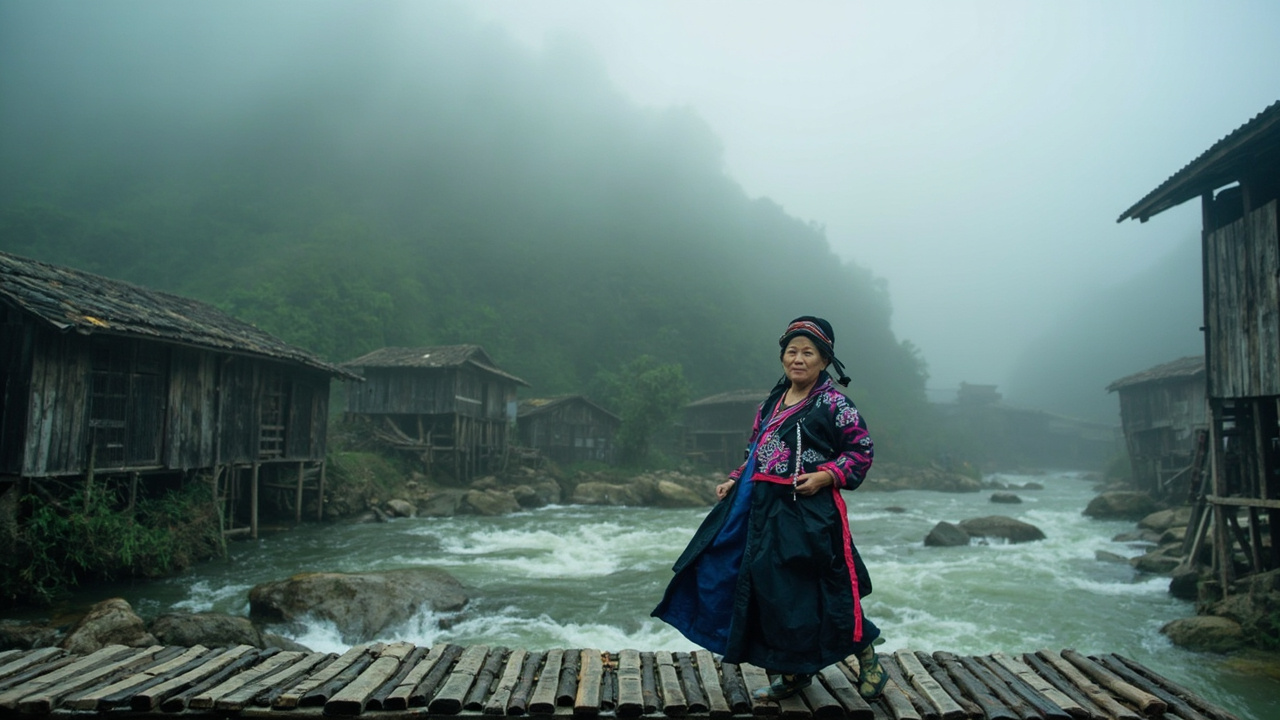
The rain came down in sheets the afternoon I first walked into Langde Miao Village, turning the stone paths into mirrors that reflected the gray sky and the dark wooden stilt houses stacked up the hillside. I’d been in China for three weeks by then, and I was tired of being herded through places that felt like they existed for my camera. Langde didn’t feel that way. An old woman sat in a doorway shelling beans into a plastic bowl, barely glancing up as I passed. A rooster strutted across the square like he owned it. The only other foreigner I saw all day was a German guy who’d missed his bus and seemed relieved about it.
Langde is one of the few Miao villages in Guizhou that hasn’t been completely rebuilt for tourism, and it’s also one of the easiest to reach from the provincial capital. That combination is rarer than you’d think. Most villages in this region require a four-hour winding bus ride and a willingness to sleep in a guesthouse with squat toilets. Langde sits just 40 minutes outside Kaili, which means you can do it as a day trip or stay overnight without committing your whole itinerary to the mountains.
This guide covers everything I learned across two visits: how to get there without getting ripped off, what the entry fee actually covers, when the village is dead versus when it’s packed with tour groups, and where to eat without ending up with a stomachache. I’ll also tell you the one thing I’d do differently if I went back, because I got it wrong the first time.
Quick answer
Langde Miao Village is a working Miao ethnic village in Guizhou Province, about 40 minutes from Kaili by bus, known for its wooden stilt houses, silver jewelry workshops, and daily folk performances. Entry costs about $9 (60 CNY), and the best time to visit is a weekday morning between March and October, when tour groups haven’t arrived and the village is still going about its daily life. The village is included in China’s 240-hour visa-free transit policy if you’re entering through Guiyang, and you can pay with WeChat or Alipay at the ticket office and most shops.
The Short Version
Langde is the most accessible authentic Miao village in Guizhou, full stop. It’s not as big as Xijiang Qianhu Miao Village, but it’s far less commercialized and you can see the whole thing in half a day. Go on a weekday morning, skip the tourist performance if you’re short on time, and spend your money on silver jewelry from the workshop near the bridge instead of the trinket stalls. The bus from Kaili is easy, cheap, and runs frequently. This is a half-day stop, not a destination, so pair it with Kaili’s Saturday market or the nearby Zhouxi village.
How I Picked These
I’ve been living in Beijing for seven years and have made more than 40 trips around China, including three separate visits to Guizhou Province. For this guide, I spent two days in Langde itself: one full day and one overnight stay in a local guesthouse. I also talked to the village’s tourism office manager, two silver craftsmen, a bus driver who’s been running the Kaili-Langde route for 15 years, and a shop owner who sells batik fabric. I compared Langde against five other Miao villages in the region, including Xijiang, Zhouxi, and Zhaoxing, so I can tell you honestly where it fits in the hierarchy.
Comparison Table
| Rank | Place | Best For | Approx Cost (USD) | Time Needed | When to Go |
|---|---|---|---|---|---|
| 1 | Langde Miao Village | Authentic daily life, easy access | $9 (60 CNY) entry | Half day | Weekday mornings, Mar-Oct |
| 2 | Xijiang Qianhu Miao Village | Scale, night views, infrastructure | $16 (110 CNY) entry | 1-2 days | Any time, but weekends are chaos |
| 3 | Kaili Saturday Market | Street food, ethnic textiles, people-watching | Free (food costs extra) | 2-3 hours | Saturday mornings only |
| 4 | Zhouxi Miao Village | Quiet, no tourists, real farming life | Free | 2-3 hours | Weekday afternoons |
| 5 | Zhaoxing Dong Village | Dong architecture, rice terraces | $13 (90 CNY) entry | 1-2 days | April-May or September-October |
1. Langde Miao Village - The one that still feels real
The first thing I noticed wasn’t the architecture or the costumes. It was the sound. Or rather, the lack of it. No loudspeakers blaring announcements, no tour guides shouting into microphones, no motor scooters buzzing past. Just the river, the chickens, and someone hammering metal somewhere up the hill. I stood in the main square for a full five minutes before I realized how rare that silence is in China’s ethnic villages.
Langde sits on the Bala River, with wooden stilt houses climbing both sides of the valley. The buildings are genuine - people actually live here, dry their laundry on the balconies, and store firewood underneath. The village is home to about 400 people, mostly from the Miao ethnic group, and they still farm rice in the terraced fields that surround the settlement. The daily folk performance at 11:30 AM is a bit touristy, but the musicians are locals, not hired performers, and you can tell they’ve been playing these instruments since childhood.
- Location: Langde Village, Kaili City, Qiandongnan Prefecture, Guizhou Province
- Entry fee: $9 (60 CNY) per person. Children under 1.2 meters free. The fee includes the folk performance.
- Opening hours: Ticket office open 8:00 AM to 6:00 PM. The village itself is always accessible, but the performance is only at 11:30 AM daily.
- Getting there: From Kaili Bus Station (near Kaili Railway Station), take the bus to Langde. Buses run every 30-40 minutes from 7:00 AM to 5:30 PM. The ride takes 40 minutes and costs about $1.50 (10 CNY). Ask the driver to let you off at Langde, not the main road junction. Alternatively, a taxi from Kaili costs about $14-18 (100-130 CNY) each way.
- When to visit: Weekday mornings before 11 AM. Tour groups start arriving around 10:30 AM and the square gets crowded during the performance. After 2 PM, the groups leave and the village goes quiet again.
- Insider tips: The ticket office accepts WeChat Pay and Alipay, but bring 10-20 CNY in cash for the small food stalls that don’t have QR codes. The silver workshop near the wind-rain bridge sells pieces made on-site, and the craftsman will show you his tools if you ask. The public toilets near the ticket office are the cleanest in the village. Don’t climb the stairs to the top of the village unless you’re fit - they’re steep and slippery when wet. The best photo spot is the bridge at the south end of the village, looking back toward the main buildings.
I bought a small silver ring from the craftsman near the bridge. He didn’t speak any English, and my Mandarin is mediocre, but we managed through a translation app and a lot of pointing. He charged me 80 CNY ($11) and threw in a braided cord for free.
2. Xijiang Qianhu Miao Village - The big one, for better and worse
I have complicated feelings about Xijiang. It’s the largest Miao village in China, with over 1,000 households and 6,000 people, and it’s genuinely spectacular at night when the hillside lights up like a vertical city. But it’s also a full-on tourist development. The entry fee is steep, the main street is a gauntlet of souvenir shops and restaurants with aggressive hawkers, and the “authentic” performances feel choreographed for busloads of visitors. I still recommend it, but with caveats.
What Xijiang does well is scale. No other Miao village gives you that overwhelming sense of a community built into a mountainside, layer after layer of dark wooden roofs and whitewashed walls. The view from the observation deck at the top of the village is worth the entry fee alone, especially at sunset when the lights start coming on. The accommodation is also the best in the region - there are dozens of guesthouses with balconies overlooking the valley, ranging from basic to genuinely comfortable.
- Location: Xijiang Town, Leishan County, about 35 km from Kaili
- Entry fee: $16 (110 CNY) per person. Includes the sightseeing bus from the parking lot to the village entrance.
- Opening hours: Open 24 hours, but the sightseeing buses run from 7:00 AM to 11:00 PM.
- Getting there: From Kaili Bus Station, take the direct bus to Xijiang. Buses run every hour from 7:30 AM to 5:30 PM, cost about $4 (28 CNY), and take 1 hour. The last bus back to Kaili leaves Xijiang at 5:30 PM, so if you want to see the night lights, stay overnight.
- When to visit: Avoid weekends and Chinese public holidays. The village is packed to the point of being unpleasant. A weekday visit in October, during the post-harvest season, is ideal.
- Insider tips: The sightseeing bus drops you at the main entrance, but there’s a second entrance on the east side that’s less crowded. The best food is not on the main street - walk up the hillside lanes and look for places where locals are eating. The silver jewelry on the main street is overpriced; the workshops on the upper levels charge about 30% less. If you stay overnight, book a room with a view of the valley, not the main street.
I made the mistake of visiting on a Saturday in July. The crowd was so thick I could barely move on the main bridge, and a tour guide shoved me aside to get her group through. I left after two hours and didn’t come back until a Tuesday in October, which was a completely different experience.
3. Kaili Saturday Market - The best street market in Guizhou
Every Saturday morning, the streets around Kaili’s old town fill with Miao and Dong farmers who come down from the mountains to sell their goods. It’s not a tourist market - it’s a real market where locals buy vegetables, live chickens, handmade tools, and bolts of indigo-dyed fabric. As a foreigner, you’ll get stares, but they’re curious stares, not aggressive ones. This is the place to see Miao culture that isn’t performed for visitors.
The market sprawls across several streets, so give yourself at least two hours to wander. The textile section is the highlight: women in traditional embroidered jackets sell batik cloth, silver buttons, and hand-stitched baby carriers that are miniature works of art. Prices are fair because the sellers are farmers, not shopkeepers. I bought a piece of indigo batik for 30 CNY ($4) that would cost triple that in a tourist shop.
- Location: Around the intersection of Yingpan East Road and the old town area, Kaili City
- Entry fee: Free. Bring cash - most sellers don’t accept mobile payments.
- Opening hours: Saturdays, roughly 6:00 AM to 1:00 PM. The best selection is before 10 AM.
- Getting there: From Kaili Railway Station, take bus 1 or 2 to the old town stop, about 15 minutes. Or walk from the center of Kaili - it’s a 20-minute stroll.
- When to visit: Go early. By 11 AM, the good stuff is gone and the crowds make it hard to browse.
- Insider tips: Don’t take photos without asking first. Some sellers are fine with it, but others will wave you away. The street food section is at the north end - try the sour fish soup and the glutinous rice cakes. Learn the Mandarin word for “how much” (duo shao qian) and hold up your fingers to negotiate. The market is cash-only, so hit an ATM before you go.
I bought a hand-embroidered pouch from a woman who was also selling dried mushrooms and chili peppers. She laughed at my attempt to bargain and gave me a discount anyway, then pressed a handful of roasted chestnuts into my hand as I left.
4. Zhouxi Miao Village - The quiet neighbor
Zhouxi is what Langde was 20 years ago. It’s a small Miao village about 20 minutes past Langde, with no entry fee, no ticket office, and no tourist infrastructure whatsoever. There’s one tiny shop selling cold drinks and instant noodles, and a guesthouse that’s more of a homestay than a hotel. If you want to see how Miao villagers actually live without any performance or curation, this is the place.
The village is built along a stream, with stone paths connecting clusters of wooden houses. On my visit, I saw women weaving baskets on their porches, children playing badminton in the lane, and a farmer leading a water buffalo through the main path. No one tried to sell me anything. No one asked where I was from. I sat on a stone wall for an hour and just watched the village go about its day.
- Location: Zhouxi Village, about 20 km past Langde on the same road
- Entry fee: Free
- Opening hours: Always open
- Getting there: Take the same bus from Kaili that goes to Langde, but stay on until Zhouxi. Tell the driver your destination and he’ll let you off at the village entrance. The bus costs about $2 (15 CNY) and takes 50 minutes. Or hire a taxi from Langde for about $10 (70 CNY).
- When to visit: Any weekday afternoon. The village is quietest between 2 PM and 5 PM.
- Insider tips: There’s no restaurant, so bring snacks or eat in Langde before you come. The guesthouse has basic rooms for about $14 (100 CNY) per night, but don’t expect hot water after 9 PM. The villagers speak only Miao and some Mandarin - download a Mandarin phrasebook before you go. The path behind the village leads up to the rice terraces and offers the best views.
I met an elderly man who was carving a wooden pipe on his porch. He gestured for me to sit, and we spent 20 minutes in silence while he worked. When he finished, he handed me the pipe and waved away my offer to pay.
5. Zhaoxing Dong Village - The architecture showpiece
Zhaoxing is technically a Dong village, not Miao, but it’s close enough to include in a Guizhou ethnic villages itinerary. The Dong are known for their drum towers and wind-rain bridges, and Zhaoxing has five drum towers, one for each of the village’s family clans. The architecture is genuinely remarkable - the towers are built entirely without nails, using interlocking wooden beams that have stood for centuries.
The village is bigger than Langde but smaller than Xijiang, and it’s set in a valley surrounded by dramatic rice terraces. The main street is touristy, but the side lanes are still residential, and you can watch women making Dong embroidery or men repairing fishing nets. The night view from the hillside opposite the village is stunning - the drum towers are lit up and reflected in the river below.
- Location: Zhaoxing Town, Liping County, about 250 km from Kaili
- Entry fee: $13 (90 CNY) per person
- Opening hours: Open 24 hours
- Getting there: From Kaili, take a high-speed train to Congjiang Station (about 1.5 hours, $20-25 or 140-180 CNY), then a bus or taxi to Zhaoxing (30 minutes, $3 or 20 CNY by bus). The last bus from Congjiang to Zhaoxing leaves at 6 PM.
- When to visit: April-May for the rice planting season or September-October for harvest. The terraces are green in summer and golden in autumn.
- Insider tips: The best drum tower view is from the hill behind the village - follow the path past the school and up the terraces. The evening song performance at 8 PM is genuinely good, not a tourist show. The guesthouses on the east side of the river are quieter and cheaper than those on the main street.
I got lost trying to find the viewpoint and ended up in someone’s backyard. The owner, a woman in her 50s, laughed, pointed me toward the path, and gave me a handful of freshly picked cherry tomatoes.
6. Kaili Museum of Miao and Dong Culture - The context you need
Before you visit any ethnic village, spend an hour at this museum. It’s small, a bit dusty, and the English labels are occasionally nonsensical, but it gives you the cultural context that makes the villages meaningful. You’ll learn about the Miao’s migration history, the symbolism of their silver jewelry, and the differences between the various Miao subgroups, which are more distinct than you’d expect.
The silver collection is the highlight. There are headdresses, necklaces, and breastplates that weigh several kilograms, worn only for festivals and weddings. The textile section shows the indigo dyeing process and the embroidery styles of different regions. It’s not a world-class museum, but it’s honest and informative, and it’ll make your village visits twice as interesting.
- Location: 8 Beijing East Road, Kaili City
- Entry fee: Free. Bring your passport for registration.
- Opening hours: 9:00 AM to 5:00 PM, closed Mondays
- Getting there: From Kaili Railway Station, take bus 1 or 2 to the museum stop, about 10 minutes. It’s a 15-minute walk from the city center.
- When to visit: Any morning before your village trip. The museum is rarely crowded.
- Insider tips: The museum has free lockers for your bags. The gift shop sells books about Miao culture in English, which are hard to find elsewhere. The staff speak limited English, so use a translation app for specific questions.
I spent an hour here before my first visit to Langde, and it completely changed how I saw the village. I understood why the silver jewelry was so heavy, why the houses faced a certain direction, and why the embroidery patterns looked the way they did.
7. The Wind-Rain Bridge at Langde - The photo spot that matters
Every Miao village has a wind-rain bridge, a covered wooden bridge that provides shelter from both weather and sun. Langde’s is not the biggest or the most ornate, but it’s the one I keep coming back to. The bridge spans the Bala River at the south end of the village, and from its benches you can watch the water rush over the rocks while villagers cross with baskets of vegetables or firewood.
The bridge is also the best place to photograph the village. The angle from the bridge looking north captures the full sweep of stilt houses climbing the hillside, with the drum tower in the middle and the mountains behind. In the late afternoon, the light hits the wooden facades and turns them golden. I sat on the bridge for half an hour on my second visit, just watching the light change.
- Location: South end of Langde Miao Village, over the Bala River
- Entry fee: Included in the village entry fee
- Opening hours: Always open
- Getting there: Walk through the village from the ticket office, past the main square, and follow the path to the river.
- When to visit: Late afternoon, 4 PM to 6 PM, for the best light. The bridge is also lovely in the early morning when the mist hangs over the river.
- Insider tips: The bridge is a gathering spot for villagers in the evening - don’t be surprised if old men are playing cards or mahjong there. The benches on the east side get the afternoon sun. If you want a photo without people, come before 9 AM.
I watched a young woman in traditional Miao dress cross the bridge while talking on her smartphone. The contrast was so perfectly modern China that I laughed out loud, and she looked up and smiled.
8. The Silver Workshop - Where the craft lives
Langde has a small silver workshop near the wind-rain bridge, run by a family that has been making silver jewelry for three generations. The workshop is a single room with a workbench, a furnace, and shelves of finished pieces. The craftsman, a man in his 50s named Yang, showed me how he melts silver scraps, hammers them into sheets, and stamps patterns into the metal using hand-carved molds.
The quality is noticeably better than the mass-produced pieces sold in Xijiang. Yang’s work is heavier, the patterns are sharper, and he signs each piece with a tiny stamped mark. Prices are fair - a pair of earrings costs about $14-20 (100-150 CNY), and a bracelet runs $28-40 (200-300 CNY). He doesn’t speak English, so bring a translation app or a patient friend.
- Location: Near the wind-rain bridge, Langde Miao Village
- Entry fee: Free to watch. Payment only if you buy.
- Opening hours: Roughly 9 AM to 6 PM, but Yang sometimes closes for lunch or errands. If the door is shut, check the house next door - his wife will know where he is.
- Getting there: Walk south from the main square toward the river. The workshop is on the left, just before the bridge.
- When to visit: Morning, before he gets busy with tour groups.
- Insider tips: Ask to see the molds - they’re hand-carved and fascinating. Yang can make custom pieces if you bring a photo or drawing, but allow 2-3 days. Cash is preferred, though he accepts WeChat Pay. Don’t bargain too hard - his prices are already fair, and he’ll throw in a small gift if you’re polite.
Yang told me through the translation app that his grandfather taught him the craft when he was 12. He’s teaching his own daughter now, but he worries she’ll move to the city like most young people.
9. The Folk Performance - Worth 45 minutes of your time
I’m usually skeptical of “folk performances” in ethnic villages, but Langde’s is better than most. The performers are actual villagers, not professional dancers, and the show includes the lusheng (a bamboo mouth organ), traditional Miao songs, and a dance where women in full silver regalia move in a circle, their headdresses swaying with each step. The silver clinking against itself makes a sound like wind chimes.
The performance happens in the main square at 11:30 AM daily and lasts about 45 minutes. It’s included in your entry fee, so there’s no reason to skip it unless you’re short on time. The best spot is on the steps at the north end of the square, where you can see the whole performance without being in the middle of the crowd.
- Location: Main square, Langde Miao Village
- Entry fee: Included in the village entry fee
- Opening hours: 11:30 AM daily, about 45 minutes
- Getting there: Follow the crowd from the ticket office. The square is in the center of the village.
- When to visit: Arrive 10 minutes early to get a good spot. The square fills up fast when tour groups are present.
- Insider tips: The performers are happy to pose for photos after the show, but they expect a small tip of 5-10 CNY. The best photos are from the steps, not the ground level. If you’re not interested in the performance, this is a good time to explore the quiet side lanes of the village.
A young dancer named Amei smiled at me during the final dance and waved when she saw my camera. After the show, she asked where I was from and told me she’d been dancing since she was 6.
10. The Rice Terraces - The view that makes it all worth it
The terraces around Langde don’t get the attention of those at Zhaoxing or Longji, but they’re beautiful in their own right, and they’re completely free of crowds. The fields climb the hillsides behind the village, carved into the slope in narrow bands that follow the contour of the land. In summer, they’re a vivid green; in autumn, they turn gold before the harvest.
The best view is from the hill on the east side of the village, about a 20-minute walk up a stone path. The path is steep and uneven, so wear proper shoes. At the top, you’ll find a small flat area where farmers dry their grain, and the view across the valley takes in the entire village below, the river winding through it, and the mountains fading into the distance.
- Location: Hillside east of Langde Miao Village
- Entry fee: Free
- Opening hours: Always accessible, but the path is hard to navigate in the dark
- Getting there: From the main square, follow the path past the silver workshop and up the hill. Look for the stone steps that lead between the houses.
- When to visit: Early morning for the mist, or late afternoon for the golden light. Avoid midday when the sun is harsh.
- Insider tips: The path continues past the viewpoint and loops back to the village, so you don’t have to retrace your steps. Bring water - there are no shops up here. Watch for snakes in the summer months. The farmers don’t mind you walking on the terrace edges, but stay off the crops.
I sat at the viewpoint for an hour, watching a farmer and his son work the field below. They didn’t notice me, or didn’t care, and I felt like I was seeing something real, not something staged for visitors.
FAQ summary
Langde Miao Village is the most accessible authentic Miao village in Guizhou Province, located about 40 minutes from Kaili by bus, with an entry fee of approximately $9 (60 CNY). The village is included in China’s 240-hour visa-free transit policy for travelers entering through Guiyang, and the best time to visit is a weekday morning between March and October. The daily folk performance at 11:30 AM is included in the entry fee, and visitors should bring some cash for small stalls that don’t accept mobile payments.
FAQ
Q: How do I get from Guiyang to Langde Miao Village? A: Take a high-speed train from Guiyang North Station to Kaili South Station, about 40 minutes and $15-20 (110-150 CNY). From Kaili South Station, take a taxi or bus to Kaili Bus Station, then take the Langde bus, which costs about $1.50 (10 CNY) and takes 40 minutes. The total journey is about 2 hours from Guiyang.
Q: Is Langde Miao Village included in China’s visa-free transit policy? A: Yes, if you’re entering through Guiyang Longdongbao International Airport and you qualify for China’s 240-hour visa-free transit policy, which applies to citizens of 54 countries. You must have a confirmed onward ticket to a third country within 10 days. The policy allows you to travel within Guizhou Province.
Q: Do I need to book tickets in advance for Langde Miao Village? A: No, you can buy tickets at the entrance. The ticket office accepts WeChat Pay, Alipay, and cash. During Chinese public holidays, there may be a queue, but it moves quickly. You don’t need to book online or through a tour agency.
Q: Is English spoken in Langde Miao Village? A: Very little. The villagers speak Miao and Mandarin, and most shopkeepers and guesthouse owners know only basic English. Download a translation app like Google Translate or Pleco before you go. The offline Mandarin phrasebook in Pleco is especially useful.
Q: Can I stay overnight in Langde Miao Village? A: Yes, there are several guesthouses in the village with basic rooms costing about $14-28 (100-200 CNY) per night. Expect simple accommodations - shared bathrooms, thin walls, and no heating in winter. The village is very quiet at night, which is part of the charm.
Q: What should I wear when visiting Langde Miao Village? A: Comfortable walking shoes are essential - the village has steep stone paths that get slippery when wet. Dress in layers, as the temperature can change quickly in the mountains. In summer, bring insect repellent. In winter, bring warm clothes, as the guesthouses have no heating.
Q: Is the food safe to eat in Langde Miao Village? A: Generally yes, but stick to cooked food. The small stalls sell grilled meat, rice cakes, and noodles, which are safe. Avoid raw vegetables and unpeeled fruit. The local specialty is sour fish soup, which is delicious and worth trying. Drink bottled water, not tap water.
The Honest Wrap-up
This guide is for travelers who want to see a real Miao village without the theme park atmosphere, and who are willing to trade some comfort for authenticity. It’s not for you if you need luxury accommodations, if you’re on a tight schedule, or if you prefer guided tours to independent exploration. Langde is a half-day stop, not a destination, so pair it with Kaili’s Saturday market or a trip to Xijiang for the full picture. My final advice: go on a weekday, skip the performance if you’re short on time, and spend an hour just sitting on the wind-rain bridge watching the village live its life. That hour will stay with you longer than any photo.
More guides you may like
Top 10 Bridges in China: The Complete 2026 Guide
China's bridges are engineering marvels spanning mountains, rivers, and seas. Here are 10 of the most spectacular, from ancient stone to modern steel.
8 min read

Top 10 Buddhist Sites in China: The Complete 2026 Guide
From the Leshan Giant Buddha to the Dunhuang Caves, these 10 Buddhist sites represent 2,000 years of China's spiritual heritage.
9 min read

Top 10 Day Trips from Beijing You Shouldn't Miss: The Complete 2026 Guide
Beijing is packed with history, but some of China's best experiences are just a few hours away. Here are 10 day trips that will transform your visit.
9 min read
Top 10 Hidden Gems in China Off the Beaten Path: The Complete 2026 Guide
Beyond the Great Wall and Terracotta Warriors, China has incredible hidden destinations few tourists ever reach. Here are 10 underrated gems worth the detour.
9 min read

Top 10 Markets and Shopping Streets in China: The Complete 2026 Guide
From Shanghai's Bund to Beijing's Silk Street - 10 markets where foreigners can haggle, explore, and bring home authentic Chinese goods.
9 min read
Top 10 Museums in China You Shouldn't Miss: The Complete 2026 Guide
China's museums span 5,000 years of civilization. These 10 - from the Palace Museum to Xi'an's terracotta gallery - are unmissable for culture lovers.
9 min read