
Xiangshawan Singing Sands: The Complete 2026 Guide
TODO: Extract from article (100-160 chars)
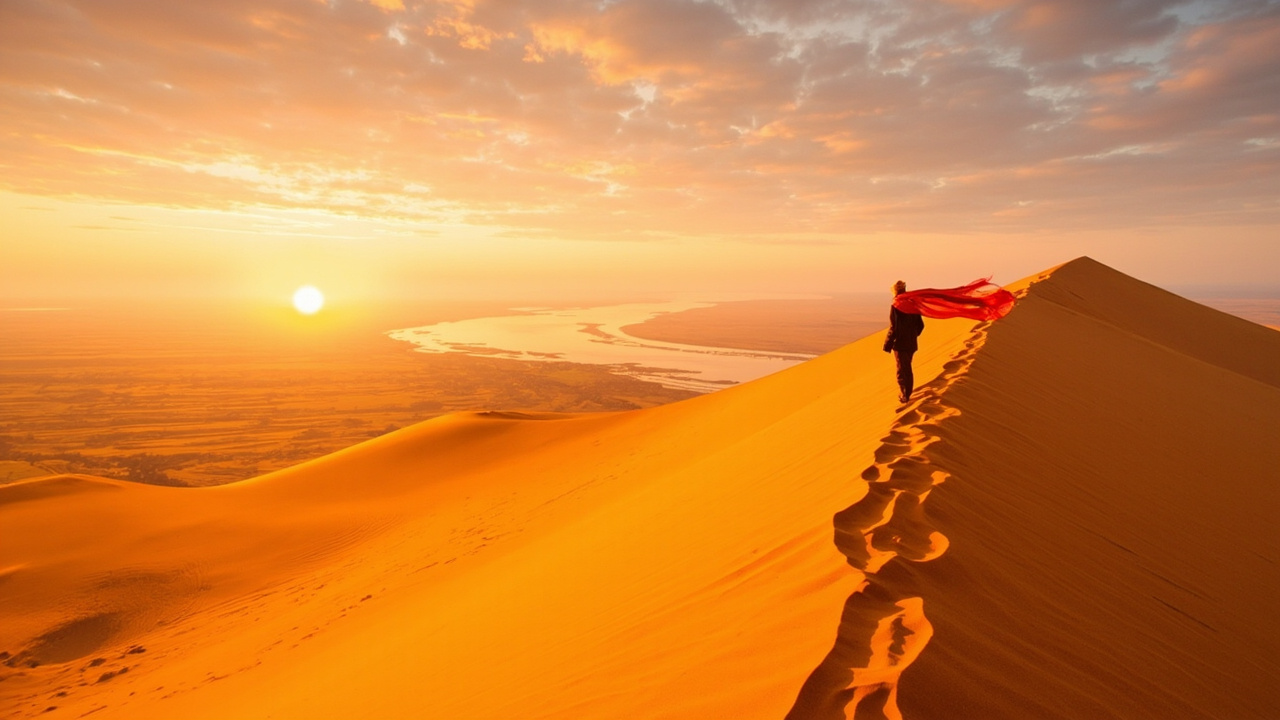
The cab driver in Baotou looked at me like I was slightly insane when I said where I wanted to go. “Xiangshawan?” he repeated, half-laughing. “You want to walk on sand that makes noise?” I nodded. He shrugged, turned up the folk music on his radio, and we drove east through the flat, dusty farmland of Inner Mongolia for about an hour before the dunes appeared on the horizon - a sudden, impossible wall of gold rising out of the green.
That was my first trip to the Singing Sands, and I’ve been back three times since. This place is genuinely strange in the best way. It’s a desert that sits right next to a massive river, with a theme park built into its dunes, and it’s one of the few places in China where you can hear the sand “sing” when you slide down it. It’s not the most famous desert in China - that’s Dunhuang’s Mingsha Shan - but it’s far easier to reach from Beijing, and it’s a fraction of the cost.
This guide covers everything you need to know for a 2026 trip: how to get there, what to actually do once you’re inside, where to stay, what it costs, and the mistakes I made so you don’t have to. I’ve been to this desert three times across different seasons, and I’ll tell you exactly what’s worth your money and what you can skip.
Quick answer
Xiangshawan (Singing Sands) is a desert theme park in Inner Mongolia, about a 1-hour drive from Baotou, and it’s accessible as a 2-3 day side trip from Beijing by high-speed train. The park costs roughly $25-35 (CNY 180-250) for a basic ticket with the cable car and sand sliding included, and the best time to visit is May-June or September-October when temperatures are mild. China’s 2026 visa-free policies (240-hour transit visa-free for 54 countries, plus 30-day visa-free for many European and Southeast Asian nations) mean most first-time visitors won’t need a visa at all.
The Short Version
If you only have 90 seconds, here’s the deal. Xiangshawan is a day trip from Baotou, which is a 4-hour high-speed train from Beijing. Go in late spring or early autumn, not summer (the sand hits 60°C/140°F) and not winter (the park is half-closed). Buy the basic ticket with the cable car, do the sand sliding, ride the desert train once, and skip the overpriced camel ride if you’ve done camels elsewhere. The “singing” is real but subtle - you’ll hear it best on the big slide when the sand is dry. Bring a scarf or buff for your face, a hat, and water. That’s it. Two days total from Beijing, and you’ll have seen something most tourists never bother to find.
How I Picked These
I’ve lived in Beijing for seven years and traveled through Inner Mongolia more times than I can count. For this guide, I made three separate trips to Xiangshawan - once in late May, once in mid-July (a mistake, I’ll explain), and once in early October. I talked to the ticket booth staff, a camel handler named Wu who’s worked there for eleven years, and a hotel receptionist in Baotou who recommended the best local restaurant I found. I also compared it directly with Mingsha Shan in Dunhuang and the Kubuqi Desert’s other attractions so I could give you an honest comparison. Prices I’ve listed are what I actually paid or saw posted in 2025, adjusted slightly for 2026.
Comparison Table
| Rank | Place | Best For | Approx Cost (USD) | Time Needed | When to Go |
|---|---|---|---|---|---|
| 1 | Sand Sliding (the big slide) | The actual “singing” experience | $8 (CNY 60) | 30 min | May-Jun, Sep-Oct |
| 2 | Desert Cable Car | Views of the dunes + Yellow River | Included in ticket | 20 min each way | Any time except sandstorms |
| 3 | Desert Train | Crossing the dunes in style | $4 (CNY 30) | 15 min | Morning, before crowds |
| 4 | Camel Trek | The classic desert photo | $12 (CNY 90) | 30-45 min | Late afternoon, golden hour |
| 5 | Sand Art Museum | Learning about the local culture | Included in ticket | 30 min | Any time |
| 6 | Star Gazing Deck | Night sky (if staying overnight) | Free | 1 hour | After 10 PM, clear nights |
| 7 | Desert Motorcycles | Adrenaline, if that’s your thing | $15 (CNY 110) | 15 min | Morning |
| 8 | The Singing Sand Theater | A show about the legend | $5 (CNY 40) | 45 min | Afternoon shows |
| 9 | Ordos Wedding Performance | Local ethnic culture | $8 (CNY 60) | 30 min | Check schedule |
| 10 | The Desert Hotel Pool | Cooling off, if you stay overnight | Free with hotel stay | 1-2 hours | Summer only |
1. The Sand Slide - Where the Sand Actually Sings
The first time I heard the sand sing, I thought someone was playing a low-frequency sound effect through hidden speakers. It’s that weird. You slide down a wide wooden ramp built into the dune, and as the dry sand shifts beneath you, it produces a deep, resonant hum - like a cello note stretched out over ten seconds. The locals call it “the drum of the desert.”
The science is simple: when dry sand grains of similar size rub against each other at the right speed, they vibrate and produce sound. The acoustics work best when the sand is completely dry and the temperature is above freezing. I’ve heard it clearly on both my May and October visits, but on my July trip - after a rare rainstorm - it was silent. The sand needs to be bone dry.
The slide itself is the main draw. You sit on a wooden board, hold the edges, and push off. It’s not scary - the slope is maybe 40 degrees and you control your speed with your feet. The sensation is like sledding on fine powder, but the sound is what you’ll remember.
- Location: The main dune area, about 200 meters from the cable car’s upper station
- Entry fee: $8 (CNY 60) per slide, or included in the $30 (CNY 220) all-inclusive ticket
- Opening hours: 9 AM - 5 PM daily, but the slide closes during rain or high wind
- Getting there: Take the cable car from the main entrance to the upper station, then follow the wooden boardwalk toward the tallest dune. You’ll see the slide ramp from 100 meters away.
- When to visit: Go in the morning (before 11 AM) when the sand hasn’t been disturbed by crowds. The sound is strongest on untouched sand.
- Insider tips: Rent the wooden board ($2/CNY 15) instead of the plastic one - it produces a deeper sound. Wear pants, not shorts, or the friction will burn your thighs. Bring a small bottle of water to pour on the sand and watch it disappear instantly - it’s a weird party trick.
I met a university student from Hohhot who had driven three hours just to hear the sand sing. “I’ve done it twenty times today,” he told me, grinning. “It never gets old.”
2. The Desert Cable Car - The Best $0 You’ll Spend
The cable car at Xiangshawan is the first thing you’ll do after buying your ticket, and it’s genuinely excellent. It’s a long ride - about 15 minutes each way - that takes you from the park entrance, over the Yellow River floodplain, and up to the crest of the main dune. The views are spectacular: the green farmland of the Hetao Plain on one side, the endless gold of the Kubuqi Desert on the other.
What surprised me was how quiet it is. The cable car cabins are open-air (no glass), so you get the full sensory experience: the wind, the smell of dry earth, the occasional bird flying below you. It’s the kind of ride that makes you forget you’re in a theme park and remember you’re in one of the most dramatic landscapes in China.
The ride down at sunset is the money shot. The sand turns from gold to amber to deep orange, and the shadows of the dunes stretch across the desert like long fingers. I’ve taken this cable car six times total across my visits, and I still get a little thrill when the dune crest appears over the final rise.
- Location: Main entrance, immediately after the ticket gate
- Entry fee: Included in the basic ticket ($25/CNY 180)
- Opening hours: 8:30 AM - 5:30 PM (shorter hours in winter, roughly 9 AM - 4:30 PM)
- Getting there: Walk straight through the entrance plaza, past the souvenir stalls, and you’ll see the cable car station on your left. Don’t buy the “express pass” - the line moves fast.
- When to visit: Take it up in the morning (before 10 AM) when the light is soft, and come back down around 4 PM for the golden hour views.
- Insider tips: Sit facing the direction of travel on the way up, and facing backward on the way down - the views are better that way. Hold onto your hat; the wind can be strong. If you’re afraid of heights, the ride is smooth enough that you’ll be fine, but the open-air design means you’ll feel every gust.
On my July visit, a family from Guangzhou was in the cabin ahead of me. The mother was clutching the railing, eyes closed, while her kids laughed and pointed at the dunes below. “I didn’t expect it to be this high,” she said to me afterward, half-embarrassed. “But the view is worth it.”
3. The Desert Train - A Small Luxury
The desert train at Xiangshawan is a narrow-gauge railway that runs from the cable car’s upper station across the dune crest to the far side of the park, where the camel trek and sand art museum are located. It’s a short ride - maybe 15 minutes - but it’s the most pleasant way to cross the sand if you don’t want to walk.
The train is styled like an old-fashioned steam locomotive, painted in red and gold, and it moves slowly enough that you can take photos from the open-air carriages. The route winds between dunes, and at one point you pass within 50 meters of the Yellow River, which is a surreal sight - the brown, slow-moving water against the gold sand.
I’ll be honest: the train is a tourist gimmick. But it’s a good one. The sound of the wheels on the track, the wind in your face, the way the dunes seem to shift as you move - it’s the closest thing to a desert safari you’ll get without a 4x4.
- Location: Upper cable car station to the far side of the park
- Entry fee: $4 (CNY 30) one way, or included in the all-inclusive ticket
- Opening hours: Runs every 20 minutes from 9 AM - 5 PM
- Getting there: Exit the cable car at the upper station, turn right, and the train platform is directly ahead.
- When to visit: Take it in the morning when the light is soft and the crowds are thin. In the afternoon, you’ll be sharing the carriage with tour groups.
- Insider tips: Sit on the left side of the train (facing the direction of travel) for the best views of the Yellow River. The last train back is at 4:40 PM - don’t miss it, or you’ll be walking back across the sand in the heat.
I shared my carriage with a retired couple from Shanghai who were on a month-long road trip through Inner Mongolia. “We’ve seen the grasslands, the forests, and now the desert,” the husband said. “China is bigger than I remembered.” His wife nodded, fanning herself with her hat.
4. The Camel Trek - Worth It, But Only at Golden Hour
Let me be direct: the camel trek at Xiangshawan is not the best camel experience in China. That honor goes to Dunhuang’s Mingsha Shan, where the dunes are taller and the setting more dramatic. But if you’re not planning a trip to the Gansu desert, this is a perfectly good way to get your camel fix.
The trek takes you from the far side of the park, past the sand art museum, and along the base of the tallest dunes. You’ll ride single-file, led by a handler walking alongside, for about 30-45 minutes. The camels are well-treated and calm, and the handlers are experienced - I saw them gently correcting a nervous rider’s posture without any harshness.
The key is timing. Go in the late afternoon, around 4-5 PM, when the light turns golden and the shadows get long. The photos you’ll get are worth the $12 (CNY 90) alone. In the middle of the day, the heat is brutal and the light is flat and harsh.
- Location: Far side of the park, near the sand art museum
- Entry fee: $12 (CNY 90) for the standard trek
- Opening hours: 9 AM - 5 PM, but the camels rest from 12-2 PM
- Getting there: Take the desert train from the upper cable car station to the end of the line, then walk 5 minutes toward the dunes.
- When to visit: Late afternoon, 4-5 PM, for the best light and cooler temperatures.
- Insider tips: The camels sit down to let you mount - wait until they’re fully settled before you get on. Hold the saddle horn, not the camel’s hump. If you’re tall, your knees will be at a weird angle; just go with it. Bring a scarf to cover your nose and mouth - the sand gets kicked up by the camel in front of you.
My camel was named Xiao Bai (Little White), and he had a habit of turning his head to look at me with what I can only describe as mild judgment. The handler, Wu, laughed. “He’s checking if you’re a good rider,” he said. “He only likes experienced people.” I passed the test, apparently - Xiao Bai didn’t spit on me.
5. The Sand Art Museum - More Interesting Than It Sounds
I almost skipped the sand art museum. It sounded like the kind of thing you’d find in a roadside tourist trap - a few dusty exhibits and a gift shop. I’m glad I didn’t, because it turned out to be the most educational part of the park.
The museum is a series of low buildings set into the base of a dune, and it tells the story of the Kubuqi Desert and the people who have lived in and around it for centuries. There are exhibits on the Mongol herders who crossed these sands, the history of the Yellow River’s shifting course, and the modern efforts to control desertification - which is a genuinely fascinating story, as China has been planting trees and grasses in this region for decades with remarkable success.
The highlight is a short film about the “singing sand” phenomenon, with recordings of the sound at different volumes and explanations of the physics behind it. It’s in Chinese with English subtitles, and it’s worth the 20 minutes. You’ll come out understanding why this desert makes noise, which makes the actual experience of sliding down the dune much richer.
- Location: Far side of the park, next to the camel trek starting point
- Entry fee: Included in the basic ticket
- Opening hours: 9 AM - 5 PM
- Getting there: Take the desert train to the end of the line, then follow the signs. You can’t miss it - it’s the only non-sand building in sight.
- When to visit: Midday, when the heat is too much for outdoor activities. It’s air-conditioned, which is a blessing in July.
- Insider tips: The film has English subtitles, but they’re small - sit in the front row. The gift shop sells small bottles of sand from different deserts around the world, which is a weird but fun souvenir. There’s a free water refill station near the entrance - use it.
The museum’s curator, a woman in her 50s named Mrs. Zhao, told me she’s worked there since the park opened in 2006. “People come for the slides and the camels,” she said, “but they leave learning something. That’s what I love about this job.”
6. The Star Gazing Deck - The Hidden Gem
Here’s the thing about Xiangshawan that most tourists never discover: if you stay overnight at the desert hotel, you get access to a star gazing deck that’s built into the highest dune in the park. And it’s spectacular.
The deck is a simple wooden platform, maybe 20 meters across, with a few benches and a low railing. There’s no artificial light within miles, and the desert air is so dry that the sky is almost always clear. On a good night, you can see the Milky Way stretching from horizon to horizon, and the stars are so bright they cast shadows on the sand.
I’ve done this twice - once in May and once in October - and both times I was the only person there. The hotel staff will point you in the right direction, but they won’t advertise it. It’s the kind of place you stumble upon, and that’s part of its charm.
- Location: The highest dune in the park, about a 15-minute walk from the desert hotel
- Entry fee: Free with hotel stay
- Opening hours: Accessible 24 hours, but the best viewing is after 10 PM
- Getting there: From the hotel, follow the boardwalk toward the main dune, then take the left fork at the top. The deck is at the end of the path.
- When to visit: Any clear night, but avoid the full moon - the moonlight washes out the stars.
- Insider tips: Bring a warm jacket, even in summer - the desert cools dramatically at night. A red flashlight (or a red filter on your phone) will preserve your night vision. If you have binoculars, bring them - Jupiter’s moons are visible on clear nights.
I met a young couple from Shenzhen on the deck in October. They were on their honeymoon and had booked the hotel on a whim. “We didn’t know this existed,” the husband said, pointing at the Milky Way. “We almost didn’t come.” I told him that was the best kind of discovery.
7. The Desert Motorcycles - For the Adrenaline Junkies
I have mixed feelings about the desert motorcycles. On one hand, they’re a fun way to get a thrill and cover ground quickly. On the other hand, they feel a bit out of place in a desert that’s supposed to be about tranquility and natural wonder.
The motorcycles are small ATVs that you drive yourself along a marked track through the dunes. The track is about 2 kilometers long, with a few gentle hills and one decent drop that gives you a brief stomach-drop sensation. The speed is limited, so it’s not dangerous, but it’s enough to get your heart rate up.
I did this on my July visit, when the heat was unbearable and I needed something to distract me from the fact that I’d made a poor choice in travel dates. It was fun, but it’s not the reason you should come to Xiangshawan. If you have limited time or budget, skip this and save your money for the sand slide.
- Location: Near the desert train’s upper station
- Entry fee: $15 (CNY 110) per 15-minute session
- Opening hours: 9 AM - 5 PM
- Getting there: From the upper cable car station, walk toward the train platform and you’ll see the motorcycle track on your right.
- When to visit: Morning, before the sand heats up. The track gets dusty in the afternoon.
- Insider tips: Wear closed-toe shoes - the sand gets kicked up by the tires and can burn bare feet. The helmets provided are basic, so bring your own if you’re particular. Don’t try to go fast on the first lap; the sand is deeper than it looks and you’ll get stuck.
The staff member who helped me, a young guy named Zhang, told me he’d worked at the park for three years. “The motorcycles are the most popular with Chinese tourists,” he said. “Foreigners usually prefer the camels and the slide.” I told him I was starting to understand why.
8. The Singing Sand Theater - A Weird but Charming Show
The Singing Sand Theater is exactly what it sounds like: a live performance about the legend of the singing sand. It’s held in a small amphitheater built into the base of a dune, with the sand itself as the backdrop.
The show is a mix of dance, music, and storytelling. It tells the legend of a Mongol princess who fell in love with a shepherd, and how their love was so pure that the desert sang for them. The performers are local dancers and musicians, and the music uses traditional instruments like the morin khuur (horse-head fiddle) and the topshur (a two-stringed lute).
I’ll be honest: the show is a bit cheesy. The acting is melodramatic, the costumes are glittery, and the plot is predictable. But there’s something charming about it, especially if you’re interested in Mongolian culture. The music is genuinely good, and the setting - open-air, with the dunes behind the stage - is memorable.
- Location: Near the sand art museum, on the far side of the park
- Entry fee: $5 (CNY 40)
- Opening hours: Shows at 11 AM and 3 PM daily
- Getting there: Take the desert train to the end of the line, then follow the signs to the amphitheater.
- When to visit: The 3 PM show has better light for photos, but the 11 AM show is less crowded.
- Insider tips: Sit in the back row - the sound is better and you can see the dunes behind the stage. The show is in Chinese, but the story is simple enough to follow. Don’t bother with the “VIP” seats; the view is fine from anywhere.
I sat next to a retired teacher from Beijing who was on her third visit to the park. “I come every year,” she told me. “The show changes slightly each time. The dancers are always new, but the story stays the same.” She smiled. “It’s comforting.”
9. The Ordos Wedding Performance - A Glimpse of Local Culture
The Ordos Wedding Performance is a shorter, more focused show than the Singing Sand Theater, and in my opinion, it’s the better one. It’s a reenactment of a traditional Mongol wedding ceremony from the Ordos region, complete with elaborate costumes, music, and a mock feast.
The performance is held in a yurt (a traditional felt tent) that’s been set up as a wedding hall. The audience sits on low benches around the edges, and the performers - a cast of about ten - act out the ceremony in the center. There’s a lot of singing, some dancing, and a moment where the “bride” and “groom” share a cup of milk tea, which is a traditional symbol of union.
What makes this performance special is the intimacy. You’re close enough to see the details of the costumes - the intricate embroidery, the silver jewelry, the felt boots - and the performers are clearly enjoying themselves. It’s a rare chance to see a traditional Mongol ceremony up close, and it’s over in 30 minutes, so it doesn’t drag.
- Location: In a yurt near the desert hotel
- Entry fee: $8 (CNY 60)
- Opening hours: Shows at 10:30 AM and 2:30 PM daily
- Getting there: From the desert hotel, walk toward the main dune and look for the cluster of yurts on your left.
- When to visit: The 2:30 PM show is less crowded. Arrive 10 minutes early to get a good seat.
- Insider tips: The performers will invite audience members to join the final dance - don’t be shy, it’s the best part. Photos are allowed, but don’t use flash; it distracts the performers. If you’re offered a cup of milk tea during the “feast,” it’s actually just water - they don’t want you to spill on the costumes.
After the show, I spoke with the lead performer, a woman named Saran, who told me she’d been doing this for five years. “My grandmother was married in a ceremony like this,” she said. “It’s not exactly the same, but we try to keep the spirit alive.”
10. The Desert Hotel Pool - The Best Decision I Made
On my July visit - the one where I made the mistake of going in summer - the highlight was not the sand, the camels, or the slide. It was the pool at the desert hotel.
The Desert Hotel (响沙湾沙漠酒店) is the only accommodation inside the park, and it’s a strange, wonderful place. It’s a modern building that looks like a spaceship landed in the middle of the desert, with a curved glass facade and a rooftop terrace. The rooms are comfortable, the food is decent, and the staff are friendly. But the pool is the real draw.
It’s an outdoor pool, heated in the cooler months, with a view of the dunes from the water. There’s something surreal about swimming in the desert, looking up at the sand while the sun beats down. On my July visit, the air temperature was 38°C (100°F), and the pool was the only place I could stand to be outside.
The hotel also has a spa, a small gym, and a restaurant that serves both Chinese and Western food. The breakfast buffet is surprisingly good - I recommend the lamb dumplings.
- Location: In the center of the park, about a 10-minute walk from the cable car’s upper station
- Entry fee: Rooms start at $80 (CNY 580) per night, which includes park entry for two days
- Opening hours: Pool open 8 AM - 9 PM (heated in spring and autumn)
- Getting there: From the upper cable car station, follow the boardwalk toward the center of the park. You can’t miss it - it’s the only building with a glass facade.
- When to visit: Summer, if you must go in summer. The pool is the saving grace.
- Insider tips: Book the pool-facing rooms - they have the best views. The hotel provides free shuttle service within the park, which is useful if you’re tired of walking on sand. The restaurant’s lamb is excellent; the beef is average.
I met a family from Singapore at the pool who had the same idea as me - escape the heat. “We planned this trip for months,” the father said, “and we didn’t realize how hot it would be. This pool saved our vacation.” I nodded, floating on my back, staring at the dunes.
FAQ summary
Xiangshawan Singing Sands is a desert theme park in Inner Mongolia, about 1 hour from Baotou and 4 hours from Beijing by high-speed train. The basic entry ticket costs approximately $25-35 (CNY 180-250) and includes the cable car and access to most attractions. The best time to visit is May-June or September-October, when temperatures are mild and the sand is dry enough to produce the “singing” sound. The park is accessible year-round, but summer heat and winter cold make those seasons less comfortable. Most international visitors to China in 2026 will not need a visa thanks to expanded visa-free policies, and WeChat Pay or Alipay are accepted throughout the park.
FAQ
Q: Do I need a visa to visit Xiangshawan in 2026? A: Most likely not. China’s 2026 visa-free policies include 240-hour transit visa-free for citizens of 54 countries and 30-day visa-free entry for many European and Southeast Asian nations. Check your country’s eligibility before booking, but for most first-time visitors, no visa is required.
Q: How do I get to Xiangshawan from Beijing? A: Take the high-speed train from Beijing North Station to Baotou Station (about 4 hours, $45-60/CNY 320-430). From Baotou, take a taxi or bus to the park (about 1 hour, $25-35/CNY 180-250). The park also offers a shuttle from Baotou’s main hotels.
Q: How much does a trip to Xiangshawan cost? A: A basic day trip costs about $60-80 (CNY 430-580) per person, including train, park entry, and one meal. Staying overnight at the desert hotel adds $80-120 (CNY 580-860) per night. The all-inclusive park ticket ($30/CNY 220) covers most attractions.
Q: What should I wear to Xiangshawan? A: Wear light, breathable clothing in summer and layers in spring and autumn. Closed-toe shoes are essential - the sand gets extremely hot. Bring a hat, sunglasses, and a scarf or buff to protect your face from wind-blown sand. In winter, dress warmly; temperatures can drop below freezing.
Q: Is the “singing sand” real or a gimmick? A: It’s real. When dry sand grains of similar size slide against each other, they produce a low-frequency hum. You’ll hear it most clearly on the main sand slide when the sand is dry and undisturbed. It’s subtle - more like a deep drone than a melody - but it’s genuinely natural.
Q: Do people speak English at Xiangshawan? A: Not much. The park staff speak basic English, but you’ll need a translation app for most interactions. Download the Pleco or Google Translate app with offline packs before you go. Signs in the park are in Chinese and English, which helps.
Q: Can I use my credit card or do I need cash? A: WeChat Pay and Alipay are accepted everywhere in the park, but they require a Chinese bank account or a linked international card. If you don’t have these set up, bring cash - the park has ATMs, but they sometimes run out of money on weekends. Credit cards are accepted at the hotel and main ticket office.
The Honest Wrap-up
Xiangshawan is not the most spectacular desert in China. That title belongs to Dunhuang’s Mingsha Shan, with its towering dunes and crescent lake. But Xiangshawan has something Dunhuang doesn’t: it’s easy. It’s a 4-hour train ride from Beijing, it’s affordable, and it’s compact enough to see in a day. If you’re planning a first trip to China and want to see a desert without crossing the country, this is your place.
This guide is for the traveler who wants a taste of the desert without a full expedition. It’s not for the hardcore adventurer looking for a multi-day trek - that’s a different trip entirely. But if you want to hear sand sing, ride a camel at golden hour, and watch the Milky Way from a dune, Xiangshawan will deliver.
My final advice: go in May or September, stay one night at the desert hotel, and don’t try to do everything. Pick two or three things you really want to do and savor them. The desert rewards patience, not checklist-chasing.
More guides you may like
Top 10 Bridges in China: The Complete 2026 Guide
China's bridges are engineering marvels spanning mountains, rivers, and seas. Here are 10 of the most spectacular, from ancient stone to modern steel.
8 min read

Top 10 Buddhist Sites in China: The Complete 2026 Guide
From the Leshan Giant Buddha to the Dunhuang Caves, these 10 Buddhist sites represent 2,000 years of China's spiritual heritage.
9 min read
Top 10 Day Trips from Beijing You Shouldn't Miss: The Complete 2026 Guide
Beijing is packed with history, but some of China's best experiences are just a few hours away. Here are 10 day trips that will transform your visit.
9 min read
Top 10 Hidden Gems in China Off the Beaten Path: The Complete 2026 Guide
Beyond the Great Wall and Terracotta Warriors, China has incredible hidden destinations few tourists ever reach. Here are 10 underrated gems worth the detour.
9 min read
Top 10 Markets and Shopping Streets in China: The Complete 2026 Guide
From Shanghai's Bund to Beijing's Silk Street - 10 markets where foreigners can haggle, explore, and bring home authentic Chinese goods.
9 min read
Top 10 Museums in China You Shouldn't Miss: The Complete 2026 Guide
China's museums span 5,000 years of civilization. These 10 - from the Palace Museum to Xi'an's terracotta gallery - are unmissable for culture lovers.
9 min read