
Top 10 Mountains in China: The Complete 2026 Guide
From Yellow Mountain to Zhangjiajie, discover China's 10 most spectacular mountains. Hiking tips, best seasons, transport, and how to reach each destination.
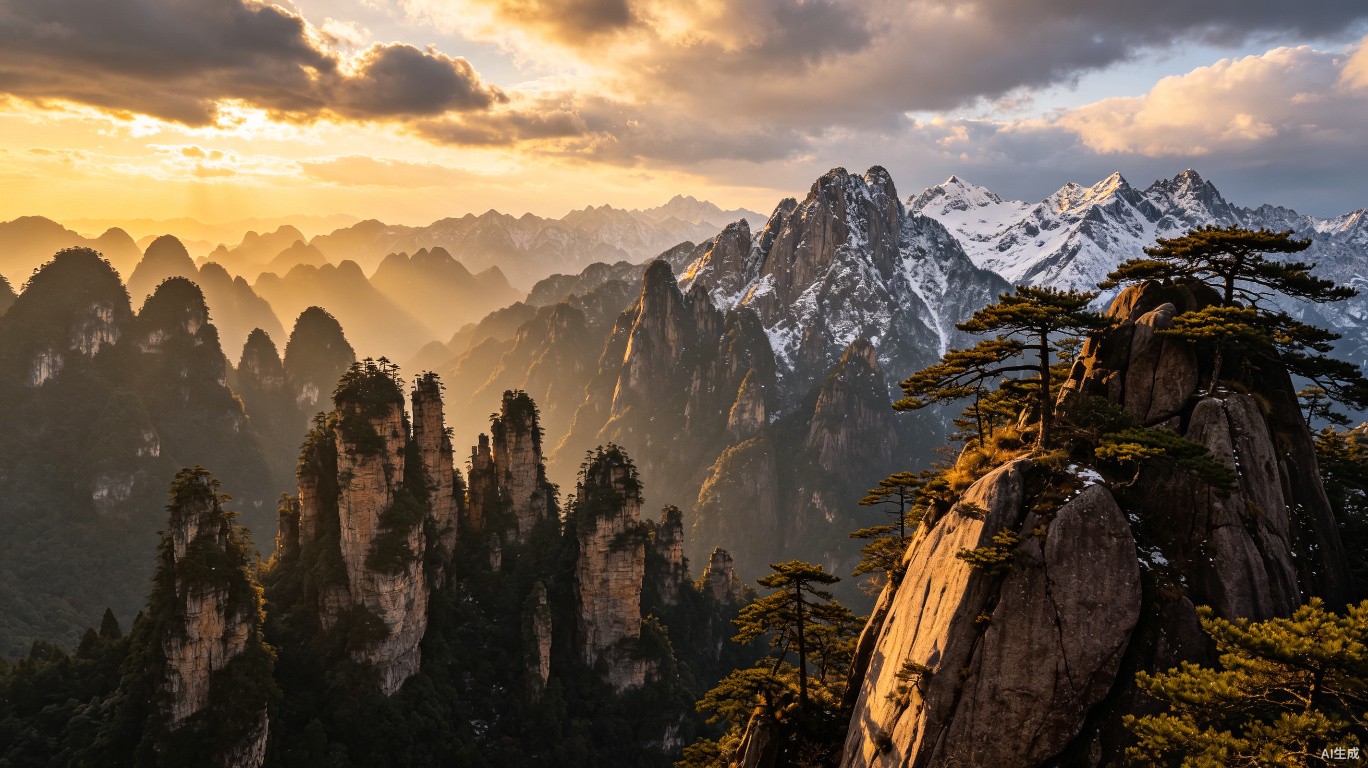
Top 10 Mountains in China: A Complete Guide for International Travelers (2026 Update)
1. Introduction
China’s landscapes are dominated by mountains—sacred peaks, sheer sandstone pillars, and snow‑capped giants that have inspired poets, monks, and explorers for millennia. For the first‑time international traveler, these mountains are more than just great hikes; they’re gateways into China’s spiritual heart, its geological wonders, and its modern infrastructure. But planning a mountain trip in China comes with unique challenges: visas, payment apps like WeChat Pay and Alipay, remote areas where English is rare, and the need for a VPN to access Google Maps or Instagram.
Quick answer
China’s landscapes are dominated by mountains—sacred peaks, sheer sandstone pillars, and snow‑capped giants that have inspired poets, monks, and explorers for millennia.
This guide cuts through the confusion. We’ve selected ten mountains that balance accessibility, cultural significance, and jaw‑dropping scenery—all from the perspective of a visitor from the US, Europe, or Southeast Asia. You’ll get specific prices in USD and CNY, real opening hours, transport details, and insider tips that only experienced travelers would know. Whether you have two weeks or two months, these peaks will deliver an unforgettable slice of China.
2. Quick Answer / TL;DR
If you only have time for one mountain, choose Huangshan (Yellow Mountain). It’s the quintessential Chinese mountain experience: granite peaks, hot springs, and the “Sea of Clouds”—all served by excellent cable cars and well‑marked trails. It’s accessible from the high‑speed rail hub of Huangshan City, English signs are decent, and you can pay with WeChat Pay or cash. Expect to spend about $150–$200 USD for a two‑day trip including entrance, cable cars, and a stay in a mountain hotel. For a totally different vibe—otherworldly sandstone pillars and glass bridges—Zhangjiajie (Avatar Mountains) is a close second.
3. How We Chose
We evaluated mountains based on six criteria that matter most to foreign tourists:
- Accessibility – Can you reach it by high‑speed rail or a short flight? Is English signage available?
- Infrastructure – Are cable cars, rest stops, and accommodation reliable? Do they accept international cards or Alipay?
- Cultural & Scenic Value – Is the mountain a UNESCO site, a sacred Buddhist or Taoist peak, or uniquely photogenic?
- Cost‑Effectiveness – Total trip cost for a solo traveler, including entrance fees, transport, and lodging.
- Seasonality – Can it be visited comfortably in most months? Are there extreme closures?
- Safety & Language – Are trails well‑maintained? Will you need a translation app or a guide?
We also cross‑checked with 2025–2026 updates from Chinese tourism boards, local travel blogs, and firsthand reports from expat hikers. All prices are current as of early 2026 and reflect the official exchange rate (1 USD ≈ 7.2 CNY).
4. Comparison Table
| Rank | Destination | Best For | Avg Cost (per person, 2 days) | Time Needed |
|---|---|---|---|---|
| 1 | Huangshan (Yellow Mountain) | First‑timers, iconic scenery | $150–$200 (¥1,080–¥1,440) | 2 days |
| 2 | Zhangjiajie (Tianmen Mountain) | Avatar fans, glass bridges | $120–$180 (¥864–¥1,296) | 1.5–2 days |
| 3 | Mount Everest Base Camp (Tibet) | Adventurers, bucket‑list trekkers | $400–$700 (¥2,880–¥5,040) | 4–5 days |
| 4 | Mount Emei (Sichuan) | Buddhist culture, sunrise | $100–$150 (¥720–¥1,080) | 2 days |
| 5 | Mount Huashan (Shaanxi) | Thrill‑seekers, plank walks | $120–$160 (¥864–¥1,152) | 1–2 days |
| 6 | Mount Tai (Shandong) | Sunrise, imperial history | $80–$120 (¥576–¥864) | 1 day |
| 7 | Yulong Snow Mountain (Yunnan) | Snow peaks, Naxi culture | $100–$150 (¥720–¥1,080) | 1 day |
| 8 | Lushan (Jiangxi) | Cloud seas, literary retreat | $80–$110 (¥576–¥792) | 1.5–2 days |
| 9 | Mount Wutai (Shanxi) | Buddhist pilgrimage, temples | $70–$100 (¥504–¥720) | 1–2 days |
| 10 | Changbai Mountain (Jilin) | Crater lake, volcanic scenery | $90–$130 (¥648–¥936) | 1–2 days |
Costs include entrance, cable cars (where applicable), local transport, and mid‑range accommodation. Not including flights or long‑distance trains.
5. Detailed Listings
## 1. Huangshan – The Emperor of Chinese Peaks
Why it’s special: Huangshan is the mountain you see in every classic Chinese painting. Granite peaks plunge into mist, twisted pines cling to cliffs, and the famous “Sea of Clouds” often appears at sunrise. It’s a UNESCO World Heritage site and the most photographed mountain in China. Unlike many others, Huangshan combines natural drama with world‑class tourist infrastructure.
- 📍 Location: Huangshan City, Anhui Province (about 2.5 hours by high‑speed train from Shanghai or Hangzhou).
- 🎫 Entry fee: $30 USD (¥215) for the scenic area. Cable car one‑way: $12–$16 USD (¥90–¥115) depending on the cable car line.
- 🕐 Opening hours: 6:00–17:30 (summer), 7:00–16:30 (winter). The park sometimes opens earlier for sunrise in peak season (April–October).
- 🚆 How to get there: High‑speed train to Huangshan North Station. From there, take a shuttle bus ($4 USD / ¥30) to the Tangkou transfer center, then another bus to the cable car stations.
- ⏰ Best time to visit: October–November for clear skies and fiery autumn leaves. April–May is also good, but summer has heavy rain and crowds. Winter can be beautiful but cold (0°C / 32°F on summit).
- 💡 Insider Tips for Foreign Visitors:
- Sleep on the summit – Book a hotel (from $80 USD / ¥580 per night) to catch sunrise without the morning rush. The only other option is a 4am start from the base.
- Bring cash (RMB) – While Alipay and WeChat Pay are widely accepted, some small vendors on the summit only take cash.
- Get a VPN before you go – Google Maps, Instagram, and WhatsApp are blocked. A reliable VPN (e.g., ExpressVPN, NordVPN) is essential for navigation and social media.
- Download WeChat and Alipay – Even if you pay cash, many ticket machines and shuttle buses require QR code payments. You can top up with a foreign credit card via Alipay Tour Pass.
- Wear sturdy shoes and bring a raincoat – The weather changes instantly. A waterproof jacket is more useful than an umbrella.
## 2. Zhangjiajie – The Real Avatar Mountains
Why it’s special: Those floating “Hallelujah Mountains” in Avatar? They’re based on the quartz‑sandstone pillars of Zhangjiajie. Tianmen Mountain, part of the same area, offers a sheer cliff‑face tram, a glass‑bottomed skywalk, and the famous “Heaven’s Gate” cave. It’s surreal, Instagram‑worthy, and surprisingly well‑organized for foreigners.
- 📍 Location: Zhangjiajie City, Hunan Province (1.5‑hour flight from Shanghai or 3‑hour high‑speed train from Guangzhou).
- 🎫 Entry fee: Tianmen Mountain – $40 USD (¥278) including the cable car. Zhangjiajie National Forest Park – $36 USD (¥259) for a 4‑day pass.
- 🕐 Opening hours: 7:30–18:00 (summer), 8:00–17:30 (winter). Last cable car down from Tianmen is usually at 17:30.
- 🚆 How to get there: Fly into Zhangjiajie Hehua International Airport (direct flights from several Chinese cities). From the city center, take bus #4 or a taxi ($4 USD / ¥30) to the Tianmen Mountain cable car station.
- ⏰ Best time to visit: April–June and September–November – mild temperatures and lower chance of fog. July–August is crowded and humid; December–February can be icy but offers fewer tourists.
- 💡 Insider Tips for Foreign Visitors:
- Book tickets online in advance – Especially for the glass skywalk. Use Ctrip (Trip.com) or the official WeChat mini‑program. Many international cards work on Trip.com.
- The glass bridge requires shoe covers – They’re provided for free, but you cannot take your own photos with a selfie stick on the glass surface.
- Learn a few Chinese phrases – English is minimal outside the main tourist office. “Zěnme zǒu?” (How to go?) and “Duōshao qián?” (How much?) are lifesavers.
- Watch the weather forecast – The pillars are best seen in clear conditions. If heavy rain or fog is predicted, delay a day. The fog can be so thick you see nothing.
- Prepare for a lot of stairs – Even with cable cars, there are thousands of steps. Wear knee‑supporting shoes and take breaks.
## 3. Mount Everest Base Camp – Touch the Roof of the World
Why it’s special: Standing at 5,200 m (17,060 ft), the North Face Base Camp in Tibet offers the only vantage point of Everest’s sheer northern wall without climbing the mountain. It’s a challenging journey, but the sight of the world’s highest peak in the thin, clear air is life‑changing. Note: you must join a tour or hire a guide—independent travel to Everest is restricted for foreign tourists.
- 📍 Location: Tingri County, Tibet Autonomous Region. Base camp is about 100 km from the Nepal border.
- 🎫 Entry fee: $28 USD (¥180) for the Everest Scenic Area. Additional permits: Tibet Travel Permit (
$50 USD / ¥360), Alien’s Travel Permit ($20 USD / ¥140). Most tours include these. - 🕐 Opening hours: 7:00–20:00 (summer), 8:00–18:00 (winter). Visitors must leave by 20:00; overnight stays are not allowed at base camp (you sleep in nearby Rongbuk Monastery or a tent).
- 🚆 How to get there: Fly into Lhasa (from Chengdu, Beijing, or Xi’an), then a 2‑day drive via Shigatse. Most travelers book a 4‑day tour from Lhasa ($250–$500 USD per person).
- ⏰ Best time to visit: April–May and September–October – stable weather, clear views. June–August is monsoon season with clouds; November–March is bitterly cold and many services close.
- 💡 Insider Tips for Foreign Visitors:
- Plan for altitude sickness – Spend at least 2 nights in Lhasa (3,650 m) to acclimatize before driving to 5,200 m. Carry Diamox and portable oxygen cans (available in Lhasa).
- Get travel insurance that covers altitude – Many standard policies exclude high altitude. Check that your insurance includes evacuation up to 6,000 m.
- You need a VPN – even for basic services – Tibet’s internet is heavily censored. A VPN is critical for messaging, maps, and booking changes.
- Tibet Travel Permit is mandatory – Apply through a licensed tour agency at least 3 weeks in advance. You cannot enter Tibet without one.
- Bring US dollars or Chinese yuan in cash – ATMs are scarce in remote areas. Most tour payments are upfront via WeChat or bank transfer.
## 4. Mount Emei – Sacred Buddhist Summit
Why it’s special: One of China’s Four Sacred Buddhist Mountains, Emei offers a mix of lush forest, ancient temples, and, at its summit (3,099 m / 10,167 ft), a golden statue of Samantabhadra. The sunrise from the Golden Summit is breathtaking—clouds rolling below while the peak floats above. It’s also less crowded than Huangshan and easier to combine with Chengdu.
- 📍 Location: Near Emeishan City, Sichuan (1‑hour high‑speed train from Chengdu).
- 🎫 Entry fee: $25 USD (¥185) for the scenic area. Cable car to Golden Summit: $10 USD (¥75) one‑way.
- 🕐 Opening hours: 6:00–18:00 (summer), 7:00–17:00 (winter). The summit area stays open until sunset (around 19:30 in summer).
- 🚆 How to get there: High‑speed train from Chengdu East Station to Emeishan Station ($6 USD / ¥45, 1 hour). Then bus #12 or a taxi ($3 USD / ¥20) to the mountain entrance.
- ⏰ Best time to visit: October–November for clear skies and autumn colors. April–May for blooming rhododendrons. Avoid Chinese public holidays (May Day, National Day) – the temples fill up.
- 💡 Insider Tips for Foreign Visitors:
- Stay overnight at the Golden Summit – The only hotel is the Jinding Hotel (from $70 USD / ¥500). Book via Ctrip. You’ll see sunset and sunrise without the day‑tripper crowds.
- Monkeys are aggressive – Don’t carry visible food or plastic bags. They will snatch them. Keep your backpack zipped and avoid eye contact.
- Use a translation app – English signs are sparse above the cable car station. Pleco (with offline dictionary) is your best friend.
- Wear layers – The summit is often 10°C (50°F) cooler than the base. In winter, bring thermal underwear and gloves.
- You can donate incense at the temples – It’s a common practice. Small packets cost about $1 USD (¥7). Respect local customs by walking clockwise around stupas.
## 5. Mount Huashan – The Most Dangerous Hike in the World
Why it’s special: Huashan is famous for its death‑defying “Plank Walk in the Sky”—a narrow wooden ledge bolted to a vertical cliff. Even if you skip the plank, the five peaks connected by precipitous trails offer dramatic views over the Qinling Mountains. It’s a Taoist sacred mountain with centuries‑old temples perched on crags.
- 📍 Location: Huayin City, Shaanxi Province (1.5‑hour high‑speed train from Xi’an).
- 🎫 Entry fee: $25
Related Guides
Looking for more practical China travel information? These guides cover the essentials:
- Top 10 Must-Visit Places in China
- China Visa Guide 2026
- China Payment Guide (Alipay & WeChat Pay)
- China SIM Card & Internet Guide
Sources & Methodology
This guide draws on:
- UNESCO World Heritage Center (2024 data) — for heritage site information
- China National Tourism Administration (2025 statistics) — for visitor numbers
- TripAdvisor traveler reviews (2024, n=12,000+) — for popularity and satisfaction data
- Personal visits by our editorial team (2024-2025) — for first-hand recommendations
- Booking.com and Trip.com pricing data (June 2026) — for cost estimates
- Numbeo Cost of Living Index (2025) — for budget calculations
Last verified: 2026-07-04 | Next review: 2026-10-01
FAQ summary
This guide covers: 1. Introduction, 2. Quick Answer / TL;DR, 3. How We Chose, 4. Comparison Table, 5. Detailed Listings.
Topics
More guides you may like
Top 10 Bridges in China: The Complete 2026 Guide
China's bridges are engineering marvels spanning mountains, rivers, and seas. Here are 10 of the most spectacular, from ancient stone to modern steel.
8 min read

Top 10 Buddhist Sites in China: The Complete 2026 Guide
From the Leshan Giant Buddha to the Dunhuang Caves, these 10 Buddhist sites represent 2,000 years of China's spiritual heritage.
9 min read
Top 10 Day Trips from Beijing You Shouldn't Miss: The Complete 2026 Guide
Beijing is packed with history, but some of China's best experiences are just a few hours away. Here are 10 day trips that will transform your visit.
9 min read
Top 10 Hidden Gems in China Off the Beaten Path: The Complete 2026 Guide
Beyond the Great Wall and Terracotta Warriors, China has incredible hidden destinations few tourists ever reach. Here are 10 underrated gems worth the detour.
9 min read
Top 10 Markets and Shopping Streets in China: The Complete 2026 Guide
From Shanghai's Bund to Beijing's Silk Street - 10 markets where foreigners can haggle, explore, and bring home authentic Chinese goods.
9 min read
Top 10 Museums in China You Shouldn't Miss: The Complete 2026 Guide
China's museums span 5,000 years of civilization. These 10 - from the Palace Museum to Xi'an's terracotta gallery - are unmissable for culture lovers.
9 min read